Iranian House of Cinema and French Embassy Ready to Implement Cultural and Cinematic Programs
Read more
Tehran Times
www.tehrantimes.com

Iranian House of Cinema and French Embassy Ready to Implement Cultural and Cinematic Programs

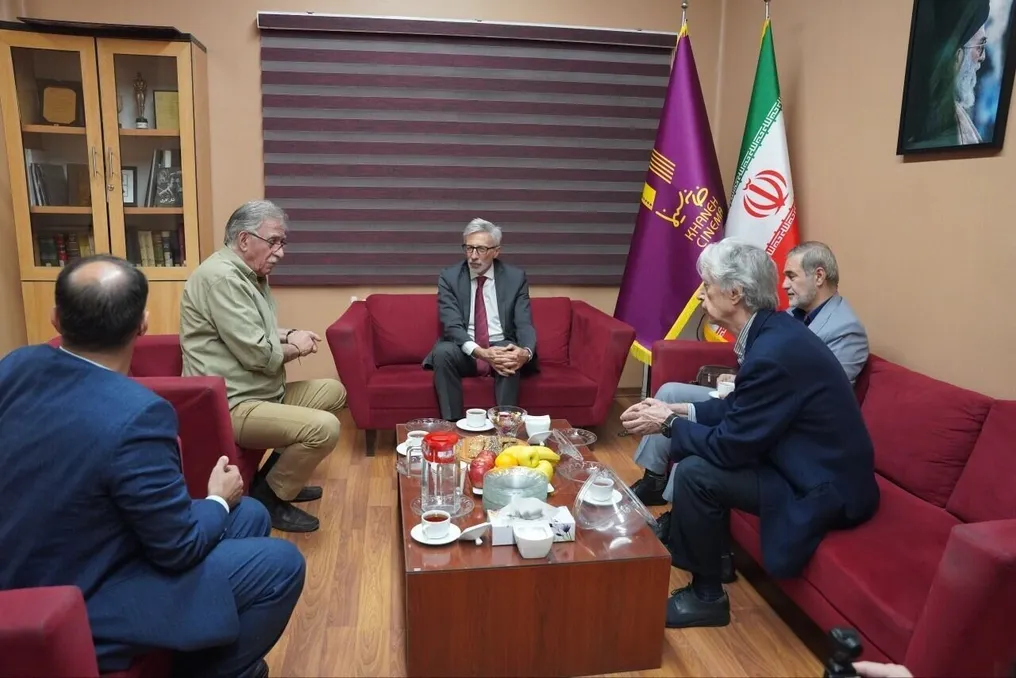
Homayoun Asadian, Director General of the Iranian House of Cinema, met with Pierre Cosher, the French Ambassador to Tehran, during the 'Nouvelle Vague' session in Tehran. During this meeting, the possibility of expanding cultural cooperation and organizing joint film programs was discussed.

During the meeting on Wednesday, Asadian expressed his pleasure at the ambassador's visit to the headquarters of this professional institution, which organizes various cultural events. He mentioned that everyone is familiar with the French New Wave, including directors such as Godard and Truffaut, as well as works like 'Breathless.'

Referring to the historical significance of the French New Wave, Asadian emphasized that it is one of the peaks of cinematic history and an influential movement in world cinema. He stated that holding programs like 'Dialogism' and studying materials about the French New Wave helps to increase cinematic knowledge and strengthen cultural ties between nations.

He presented the structure and responsibilities of the institution, explaining that the Iranian House of Cinema oversees 33 professional guilds, managing guild-related affairs and insurance matters for their members. In addition to professional activities, the institution organizes diverse cultural events. Weekly documentary screenings are held, and the Screenwriters Guild organizes script analysis programs. Furthermore, as part of social responsibility, various events are held, such as a performance dedicated to the Minab school tragedy earlier this year.

Commenting on the differences between American and European cinema regarding narrative and character development, Asadian added that American cinema usually depicts the world in a binary opposition of good and evil and rarely delves into the grey areas of character and situation. Conversely, in European cinema, the boundaries between good and evil are not clearly defined.

He also spoke about the history of French filmmakers in Iran, noting that Albert Lamorisse directed the documentary 'Wind of Lovers' in Iran before tragically passing away due to an incident in the country.

Speaking about the state of Iranian cinema, Asadian noted that last year's outbreak of war led to some decline in Iranian cinema. In the current situation, which is neither war nor peace, investing in any activity, including cinema, faces difficulties. Nevertheless, screening conditions have improved, and some films have achieved good box office returns. In times like these, it is crucial to gather and engage in dialogue, and this should be a priority.

Asadian concluded his presentation by mentioning his studies at the Institute of Intellectual Development of Children and Youth (Kanun), where the study and viewing of works by directors such as Jacques Tati and Robert Bresson were always central themes.

Following this, Pierre Cosher stated that the French Embassy is ready to cooperate with the Iranian House of Cinema in implementing cultural programs. He suggested that if opportunities arise, they could organize programs virtually in collaboration with French experts. The ambassador expressed hope for creating a structure that allows civil society organizations to expand their cultural connections.

Reflecting on his experience in Iran, the ambassador added that about thirty years ago, during the presidency of Hashemi Rafsanjani, he worked at the French Embassy in Iran and holds warm memories of that era. He noted that he returned to Iran a year and a half ago.

Regarding the state of Iranian cinema, Cosher observed that Iranian cinema is well known in France. He and France share similarities in supporting independent cinema, as both countries follow somewhat similar systems.

Mentioning France's support for independent films, the ambassador noted that the French film industry resists 'American influence.' There is also a union across Europe dedicated to supporting independent European cinema. Independent cinema holds a special place in Europe, and figures like Woody Allen have also succeeded there.

Finally, mentioning the importance of performing arts in Iran, Cosher said that theater also has a significant presence in Iran, and people show great interest in this art form.

In the concluding part of the meeting, Bahman Namvar Motlagh, a scholar and professor, commented on the status of French cinema, stating that it possesses a unique character. The central theme of the programs they organize is 'Dialogism,' and they intend to spread this approach into Iranian cinema.

The third session of the 'Dialogism in World Cinema' cycle, dedicated to the French New Wave, took place at the Iranian House of Cinema in Tehran. Attendees included Ruhollah Hosseini, Deputy for Technological Development and Cinematographic Studies of the Film Organization, and Farzad Motamen, a film director.

At the beginning of the session, Maysam Yazdi, the program's scientific secretary, announced that the third program of the 'Dialogism in World Cinema' cycle, organized jointly with the Iranian Association for Comparative Studies of Art and Literature, was dedicated to the French New Wave.

Referencing Richard Linklater's film 'New Wave,' she added that this work by the American filmmaker was one of the notable entries at the Cannes Film Festival in 2025. This film provides an opportunity for dialogue between American and French cinema.

During the session, excerpts from Richard Linklater's film 'New Wave' were shown to the attendees. Maysam Yazdi, emphasizing the educational value of Linklater's 'New Wave,' noted that this film is a textbook with many nuances and details that can be useful to film students. She also mentioned that Jean-Luc Godard passed away in September 2022, and Linklater's film is a frame-by-frame reconstruction of segments from Godard's 'Breathless.'

Farzad Motamen, discussing the production costs and conditions of making 'Breathless,' reported that the film was shot with a budget of 400,000 francs, equivalent to $80,000. Given current exchange rates, this amount would be approximately $876,000 today—which is not a very large sum for film production. The film was shot in just 22 days. As François Truffaut once said, 'Breathless' divided cinema into 'before' and 'after.'

Later in the session, Ruhollah Hosseini discussed the stylistic features of the French New Wave, stating that it is usually recognizable by characteristics such as handheld street shooting, low production costs, improvised or semi-improvised dialogue, jump cuts, and similar elements. However, the New Wave absorbed these stylistic traits through a series of dialogues with various other fields. Essentially, these stylistic characteristics are the result of the 'dialogism' form.
Similar stories

Tehran hosts international exhibition of mining, construction, and related industries
Read more
www.tehrantimes.com

Tehran hosts international exhibition of mining, construction, and related industries

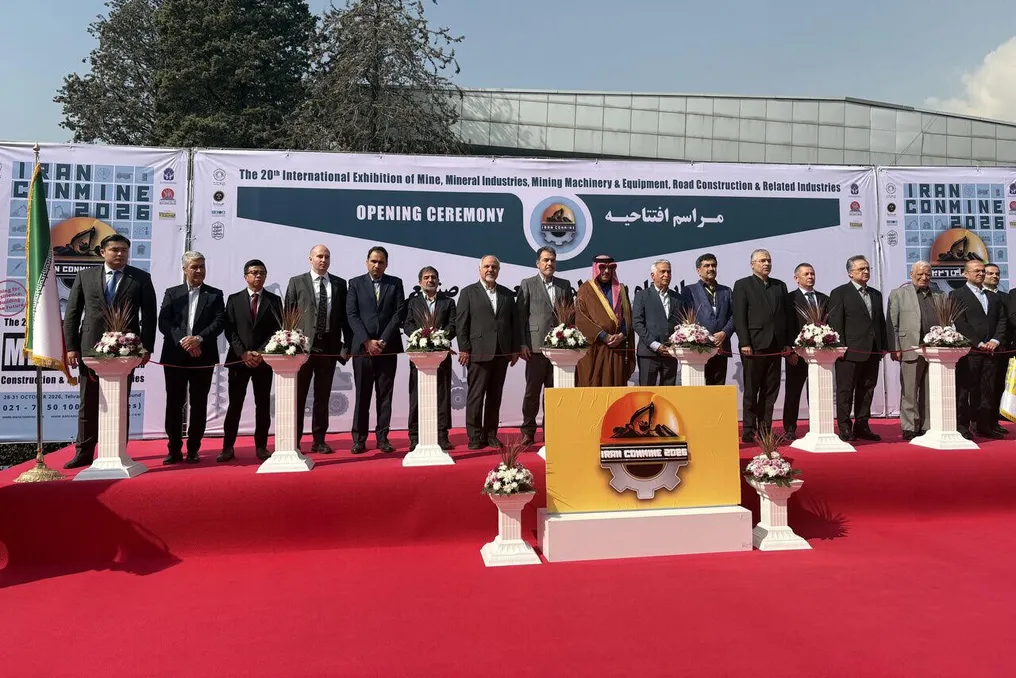
The 20th International Exhibition of Iranian Mining, Construction Equipment, and Related Industries (IRAN CONMINE 2026) opened in Tehran. The event began on Wednesday with the participation of Mohammad Reza Bahramian, Chairman of the Iranian Mining House, Kasra Nouri, CEO of the Iranian International Exhibition Company, as well as ambassadors from Saudi Arabia, Tajikistan, Kazakhstan, and Indonesia, a representative from the Russian embassy, members of the Iranian Chamber of Directors, and industry specialists.

During the ceremony, Mohammad Reza Bahramian emphasized that this exhibition is a crucial event for the country's mining sector and plays a significant role in achieving the state's economic goals. He noted that IRAN CONMINE serves as a platform for exchanging experience between domestic and foreign figures, developing international cooperation, and seeking new investment opportunities in mineral extraction.

The Chairman of the Iranian Mining House announced that under the Seventh Development Plan, the mining sector is projected to grow by 13 percent. This year's exhibition will focus primarily on finding practical solutions to achieve this goal and removing obstacles to the industry's development. Bahramian also announced an approximate 30 percent increase in the number of exhibitors compared to the previous edition, noting that through planning and optimal management of the exhibition space, it was possible to attract more companies and specialists covering the entire value chain in the mining industry—from exploration and extraction to processing.

Highlighting the international nature of the event, Bahramian stated that representatives from 36 countries will participate in this edition, and the presence of ambassadors and foreign economists will help strengthen international ties and expand cooperation in the mining industry. He also drew attention to the difficulties associated with sanctions, noting that overcoming these conditions requires realistic solutions and political stability, as well as attention to the sector's real and potential capacity.

According to an IRNA report, the 20th International Mining Exhibition of Iran took place over four days at the permanent site of the Tehran International Exhibition, with the participation of 128 domestic and foreign companies. Foreign participants included representatives from China, Japan, and India. IRAN CONMINE functions as a specialized event for the mining industry, showcasing equipment, machinery, products, and services related to mineral extraction.

At the beginning of September, the CEO of the Mining Investment Insurance Fund reported that the fund supports 960 private mines, and 2,815 mining machines have been allocated for procurement and modernization. Ali Khatibi explained in an exclusive interview with IRNA that most operating mines are in the hands of the private sector. Of the total 6,451 operating mines, 6,005 belong to this sector, and the fund has already provided support to 960 mines by issuing credit insurance policies. The purpose of this support is not only to provide financial resources but also to reduce investment risks, which allows mines to be equipped, production capacities to be increased, and production continuity to be guaranteed.

The CEO of the Fund also pointed out exploration as one of the riskiest stages of mining activities. The Fund has insured 1,141 exploration zones, and in the Iranian year 1404 (starting March 2025), 33 exploration investment policies were issued, under which over 65,000 hectares of covered areas entered the exploration phase. Khatibi added that reducing exploration risk enables investors to conduct operations such as drilling and trenching with greater confidence, increasing the probability of discovering and developing new reserves. The Fund also focuses on supporting deep drilling, especially operations at depths exceeding 1,000 meters.

Another area of the Fund's support is equipment modernization. Furthermore, at the end of July, a representative from the Ministry of Industry, Mining, and Trade announced the reactivation of 1,200 inactive mines in the country. A basis was laid for broader private sector participation in the mining industry by delegating some headquarters powers to provinces, streamlining administrative procedures, and offering investment packages.

Ezzatollah Zarei noted in an interview with IRNA that state financial resources alone cannot meet the sector's needs. Therefore, it is necessary to create economic attractiveness and pool resources to attract the private sector to exploration and exploitation of deposits. He emphasized that developing private investment benefits both economic entities and government interests, as mine operation generates revenues such as state royalties, ownership rights, and taxes.

Zarei also stated that the mining industry, alongside the oil industry, can play a significant role in the country's economy. He clarified that the mining industry cannot completely replace oil but has the potential to occupy a larger, or even larger, share in the economy and revenue generation alongside oil. The representative of the Ministry of Industry, Mining, and Trade, citing the goals of the Development Program Law, stated that the mining sector's growth should reach 13.5 percent by the end of the period. Measures have been initiated to achieve this goal, including mine activation, infrastructure development, and simplifying the investment process. Specifically, 1,200 inactive mines have been reactivated, and some powers related to mining areas, inactive mines, and permit transfers have been delegated to provinces to accelerate decision-making.

Tehran and Doha Discuss Expansion of Energy Cooperation
Read more
www.tehrantimes.com

Tehran and Doha Discuss Expansion of Energy Cooperation

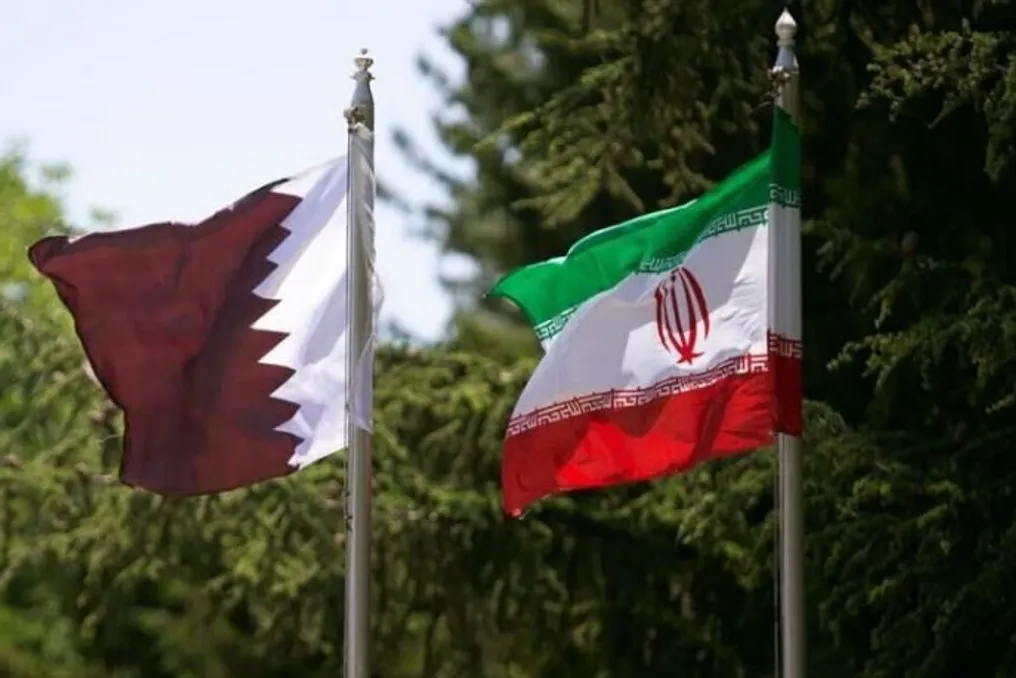
The Acting Iranian Minister of Oil, Hamid Bovard, met with the Qatari Minister of Energy, Saad bin Sharida Al-Qaabi, on Tuesday, October 27. This meeting took place on the sidelines of the eighth Gas Exporting Countries Forum (GECF) summit in Moscow and focused on developing cooperation between Iran and Qatar in the energy sector.

During the negotiations, Bovard highlighted strategic proposals from the Islamic Republic of Iran for the GECF and called for effective interaction among forum members, especially among major gas producers and exporters. The goal of this interaction is to strengthen rapprochement and develop bilateral and multilateral dialogues.

Previously, during his visit to Doha and meeting with the Qatari Minister of Energy, the head of the Ministry of Petroleum emphasized the need to develop relations and cooperation between the two countries in the field of energy.

The eighth GECF summit was held on October 27 in Moscow with the participation of heads of state and high-ranking representatives of these countries. This meeting provided an opportunity to discuss strategic issues of the gas industry and strengthen cooperation between the producing and exporting countries of this energy source.

It is worth noting that on October 19, the Acting Iranian Minister of Oil and the Qatari Minister of Energy held talks on cooperation between Tehran and Doha.

According to a report by Shana, citing the Qatari Ministry of Energy, Hamid Bovard and Saad bin Sharida Al-Qaabi held discussions in Doha, the capital of Qatar. According to the ministry's statement, energy ties and cooperation between Iran and Qatar were among the topics discussed.

Furthermore, on July 5, Abbas Abdolhani, Iran's Commercial Attaché in Qatar, announced the resumption of operations at Al Ruwais Port in Qatar for Iranian goods and the resumption of maritime trade between the two countries.

The Iranian Commercial Attaché in Doha, commenting on the resumption of trade between Iran and Qatar, stated that after approximately five months of suspension of the maritime transport route for goods between the port of Dayir in Iran and the port of Al Ruwais in Qatar, thanks to constant monitoring by the Embassy of the Islamic Republic of Iran in Doha and coordination with relevant Qatari officials, Al Ruwais Port has resumed accepting Iranian goods.

He also noted the importance of this trade route, adding that Al Ruwais Port is considered one of the most important gateways for importing Iranian goods into the Qatari market, and the resumption of activity on this sea route will play a significant role in facilitating trade, reducing transportation costs, increasing the speed of goods delivery, and increasing the volume of commercial exchanges between the two countries.

Popular