Study shows that a decline in rare mammal and bird species below 50 individuals does not lead to extinction
Read more
N+1
nplus1.ru

Study shows that a decline in rare mammal and bird species below 50 individuals does not lead to extinction

Zoologists concluded that rare mammal and bird species whose populations have decreased to below 50 individuals due to human activity are not doomed to inevitable extinction.

This conclusion is based on the study of the fate of 141 such species. It was noted that direct conservation measures were implemented for 51 of these species. These measures include captive breeding of animals, as well as combating invasive predators and competitors.

Thanks to these efforts, the population of 31 species, which accounts for 61 percent of the total number, was able to recover to a level of 100 individuals or more.

In contrast, among the 90 species for which no protective measures were applied, only two species managed to restore their population to 100 or more individuals. Furthermore, 33 species became completely extinct.

The results of this scientific study were officially published in the journal Proceedings of the Royal Society B: Biological Sciences.

Similar stories

Yerevan's Approach to Nature at COP17 Criticized for Lack of Financial Details
Read more
chinadialogue.net

Yerevan's Approach to Nature at COP17 Criticized for Lack of Financial Details

The UN Convention on Biodiversity COP17 concluded in Yerevan, Armenia, causing disappointment among many delegates as the urgency of the issue was not adequately reflected in the adopted decisions. Although the meeting was intended to be a moment to correct the course in combating the causes of species extinction, genetic diversity, and ecosystem loss, observers noted that the multilateral system still lacks the ability to solve problems, only to voice opinions about them.

Four years ago, governments agreed on ambitious goals for 2030 under the Global Biodiversity Framework. However, according to the Global Assessment presented earlier this year, none of these goals are moving in a fully positive direction. At COP17, governments adopted the 'Yerevan Pathway' to address this gap, but experts agreed that it largely relies on previously agreed text and does not provide clear practical guidelines.

Alfred DeGhemmes, Director of International Policy at Wildlife Conservation Society, stated that 'obstructionist policies of climate discussions' have emerged in biodiversity negotiations. Observers also reported that Russia repeatedly tried to weaken wording concerning indigenous peoples' rights, the open sea, and harmful subsidies, while Saudi Arabia and India resisted mentions of subsidy reform.

Negotiators excluded earlier formulations calling for the transformation of economic and financial systems and the reform of harmful practices. Instead, the text merely calls for 'enhanced action to address the root causes of biodiversity loss.' Developed countries and those 'able to do so' are 'strongly encouraged' to increase support for developing countries, but the document specifies no concrete amounts.

It is estimated that there is a deficit of $700 billion between what is needed to solve the biodiversity crisis and what has actually been raised. COP17 President Hambardzum Matevosyan noted at a press conference that while what was achieved is not sufficient, it exceeds expectations.

Yerevan was smaller and quieter than the previous COP16 summit in Cali, Colombia. About 9,300 people registered compared to over 23,000 in Cali, and protests were limited and held indoors. Nevertheless, the negotiations themselves were tense. In Cali, the meeting could not officially conclude after going into overtime; delegates started leaving, and a quorum was lost, requiring the meeting to resume in Rome several months later. In Yerevan, the process proceeded more smoothly, concluding early Saturday morning instead of the planned Friday evening, following a final plenary session that lasted almost 12 hours.

Countries spent two exhausting weeks of negotiations, facing sharp differences of opinion on how to close the gaps in biodiversity conservation efforts. Panama's Environment Minister Juan Carlos Navarro stated at a press conference that those who support forests cannot bear the burden, while high-emitting and consuming countries evade responsibility. Ireland's Minister for Nature, Christopher O'Sullivan, emphasized that some countries, still classified as developing, 'obviously must play their part' in nature protection financing.

Under the Global Biodiversity Framework, developed countries committed to allocating at least $20 billion annually from public funds by 2025, rising to $30 billion by 2030. The Global Assessment showed that this goal was likely not met. OECD data indicates that in 2024, funding reached approximately $19 billion, but averaged around $16 billion per year between 2023 and 2025.

The JUSCANZ coalition of developed countries proposed 'expanding the contribution base' to include developing economies such as China and India in the list of countries funding nature protection. Ultimately, states wishing to join the donor list were invited to express interest, while others could make voluntary contributions without being included in this list.

Debates over insufficient funding hide another problem: where existing funds are going. Governments spend about $1.8 trillion annually on subsidies that harm nature, such as those promoting deforestation. Goal 18 of the Global Biodiversity Framework calls for reducing harmful incentives by at least $500 billion annually by 2030. Progress in this area has been particularly limited. Earlier Global Assessment reports called for more decisive action, but the final text of the Yerevan Pathway only 'encourages' countries to 'accelerate' the implementation of this goal based on their 'national circumstances.'

The coalition, co-chaired by Colombia and Finland, known as Friends of Target 18, was also created to help countries find solutions. Greenpeace expert on biodiversity policy Anne Lambrechts noted that 'the prevalence of the topic [harmful subsidies] in negotiations is a positive sign,' adding that industries profiting from nature destruction should also participate.

A similar logic underlies the Cali Fund, established at COP16, which aims to make companies pay for genetic data, but after two years, it remains almost empty. According to the fund's terms, companies are asked to voluntarily contribute 1% of their profits or 0.1% of their revenue to raise $1 billion annually for nature conservation. Half of these funds are designated for indigenous peoples and local communities. However, by the end of COP in Yerevan, only about $10,500 was promised.

Countries were supposed to finalize details such as which specific companies—small, medium, or large—should contribute to the fund and how the funds would be distributed. However, decisions were postponed until the following year due to the inability of countries to reach an agreement. June Rubis, a scientist and member of the International Indigenous Peoples Forum on Biodiversity, stated that 'indigenous peoples and local communities cannot wait while companies use nature's genetic information for free.'

Nevertheless, they achieved some progress in their specific area. Countries agreed on the functioning of a permanent body for indigenous peoples and local communities, established at COP16. This body can make recommendations at COP, but final decisions remain with governments. Inara Vati Sateré-Mave, deputy coordinator of COIAB, an indigenous organization in Brazil, stated at COP: 'Yes, we are present here, but a colonial state sits at the negotiating table. We do not have the conditions for this.'

Countries also adopted a document on biodiversity and climate change, which calls on governments to consider new voluntary guidelines for expanding nature-oriented solutions. However, following objections, references to last year's advisory opinion of the International Court of Justice on climate change and the assessment of IPBES, the UN's scientific advisory body on biodiversity, were removed from the text. A representative of the European Union at the closing of the plenary session expressed 'deep concern' over attempts at 'undermining science' and the reduction of IPBES's contribution, calling it one of the 'best compasses.'

Negotiations on marine biodiversity were also contentious. Russia opposed mentions of the agreement on marine biodiversity beyond national jurisdiction, known as the High Seas Treaty, which entered into force in January and has been ratified by over 100 countries. The final Yerevan text on marine biodiversity merely noted the treaty's entry into force rather than welcoming it, although countries agreed to create an informal consultative group on the convention's work in the open sea. Brianna Fruan, a climate and ocean activist from Samoa, stated that this development is extremely disappointing: 'The world is losing time while political leaders argue over words and punctuation.'

The next opportunity to address these gaps will be at COP18 in Quito, Ecuador, in 2028, two years before the 2030 deadline. An official representative of the Ecuadorian Ministry of Environment told the plenary session that the country would work 'transparently and constructively.' For Astrid Schomaker, head of the UN Convention on Biological Diversity, the current test is what governments will change upon returning home. She stated that 'we cannot protect nature while continuing to finance its destruction. Resources must flow to the countries and communities that need them. And biodiversity must become part of everyday economic decisions.'

Two Australian koalas, Andi and Kingsley, are transferred to the São Paulo Aquarium
Read more
viagemeturismo.abril.com.br

Two Australian koalas, Andi and Kingsley, are transferred to the São Paulo Aquarium

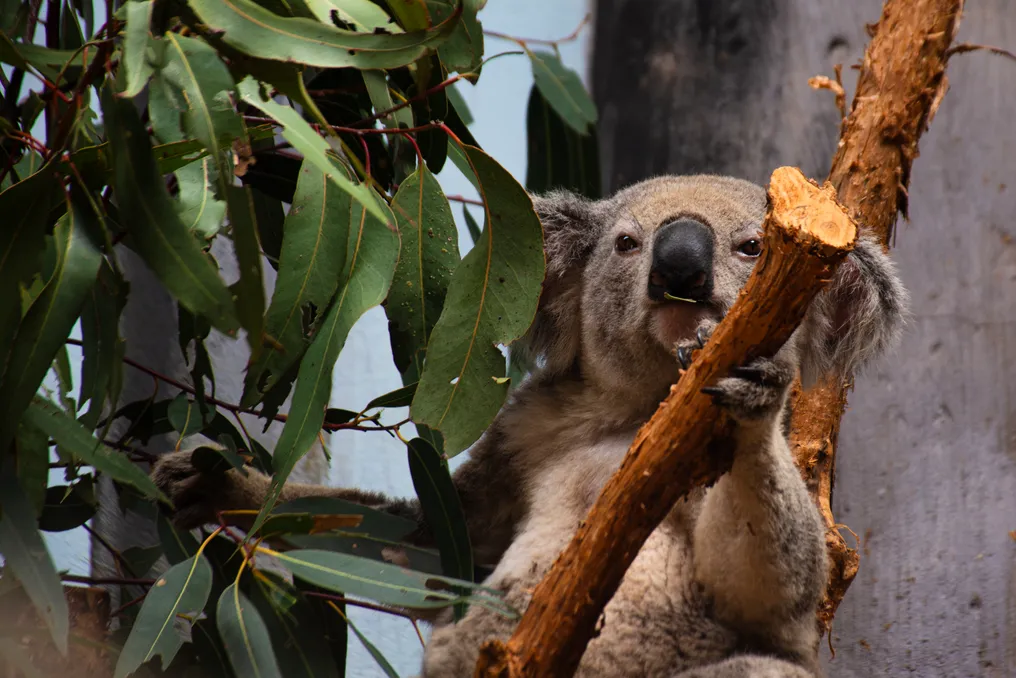
The São Paulo Aquarium, located in the Ipiranga neighborhood, has welcomed two new residents, adding a touch of charm to its collection. They are Andi, a female, and Kingsley, a male, both three-year-old koalas, who were brought from a zoo in Australia to reside in the capital city of São Paulo. Visitors have had the opportunity to meet the pair since Thursday, the 29th, observing them spending a large part of their time sleeping.

The arrival of these animals required several modifications to the aquarium. Before receiving the koalas, the facility underwent rigorous evaluations to meet the requirements set by the Australian government. These assessments covered everything from enclosure preparation to the training of teams responsible for handling and veterinary care.

The space was properly equipped with structures that replicate the trees where the species spends most of its life. The branches feature multiple ramifications, allowing the animals to find comfortable places to rest. Sleeping is a central activity for koalas, potentially lasting up to 18 hours daily.

The koalas' diet is strictly controlled, consisting solely of eucalyptus leaves, and they can consume over half a kilogram daily. At the aquarium, these leaves are changed twice a day, while the team monitors both the amount ingested and the animals' adaptation to the different varieties offered.

In addition to nutrition, Andi and Kingsley receive constant monitoring from veterinarians and behavior specialists, including regular health check-ups. Care includes preventive measures and vigilance against diseases affecting the species, such as those related to the Chlamydia bacterium and Koala Retrovirus.

Koalas, native to Australia, are classified as vulnerable to extinction by the International Union for Conservation of Nature (IUCN). In certain areas of the country, such as Queensland and New South Wales, the situation is even more critical, with populations categorized as 'Endangered,' indicating a high risk of disappearance in the wild.

The main threats to the species involve habitat destruction, the advance of urbanization, the incidence of diseases, and the impacts of climate change. Because they depend on eucalyptus trees for shelter and food, koalas are particularly sensitive to vegetation degradation. This problem was intensified by the bushfires that ravaged Australia between 2019 and 2020, coupled with prolonged droughts and heatwaves that compromise animal survival.

The arrival of Andi and Kingsley at the aquarium integrates the São Paulo Aquarium's Koala Conservation Program. This initiative encompasses eight areas of work, focusing on the reproduction, health, and well-being of the animals, in addition to including genetic studies and collaboration with other international institutions.

The program also aims to raise public awareness about the challenges faced by the species. It is hoped that visiting will help attendees understand the effects of urban expansion and climate change on biodiversity, reinforcing the need to protect natural ecosystems.

Visitors can already observe Andi and Kingsley in an enclosure specifically adapted for the species, accessible from the public viewing area. Access to the interior of the enclosure is restricted only to the professionals responsible for animal care.

Promotional tickets cost R$ 150 for adults and R$ 120 for children aged 2 to 12 years, with reduced fares available for seniors, teachers, and people with disabilities. Purchases can be made through the official São Paulo Aquarium website, where scheduling conditions can also be checked. The aquarium operates daily from 9 am to 5 pm, located at Rua Huet Bacelar, 407, approximately 590 meters from the Santos-Imigrantes station on Line 2-Green of the subway.

Study shows over 100 thousand species of wildlife are traded globally
Read more
noticiasaominuto.com

Study shows over 100 thousand species of wildlife are traded globally

A recent study revealed that more than 107,000 species of wildlife are traded globally, which is double previous estimates. Analysts note that the lack of data may indicate that the actual number could be 'much higher.'

Previously, it was estimated that around 50,000 species were traded worldwide. However, a new comprehensive assessment, based on intersectoral data from wildlife trade monitoring programs, established the figure at 107,356 species. This is reported in a statement about the research published by the University of Melbourne in Australia.

This study, described as the 'first comprehensive assessment of species sold among plants, animals, and fungi,' was published today in the journal Science Advances, published by the American Association for the Advancement of Science (AAAS).

Alice Hughes, a lead researcher from the Australian university's School of Life Sciences, explains that wildlife trade covers a wide range of goods: 'from timber, seafood, and medicinal plants to pets, cut flowers, ornamental fish, and fungi,' although many primarily imagine the smuggling of elephants, tigers, and pangolins.

Citing the statement, the scientist notes that 'most of this trade is legal' and generates 'about ten times more than the illegal trade.' According to the findings presented in November 2025, illegal trade was estimated at $360 billion ($323 billion euros) annually.

Highlighting the problem of insufficient information on wildlife trade, the study acknowledges that the stated figure of 107,356 species may be significantly lower than the actual volume. The researcher points out that 'for most of these species we have little or no data,' adding that 'there is no data on quantity and origin, let alone population level, to assess whether the trade poses a risk to species survival.'

She also emphasizes: 'Without better data, we cannot accurately assess the risks to biodiversity or determine when trade leads to species decline.'

In Alice Hughes' view, the huge gaps in the global wildlife trade monitoring system identified in the study 'underscore the need for a radical change in how trade is accounted for and reported.'

The scientist draws attention to the fact that despite the existence of a global biodiversity agreement, expert assessments show that it 'accounts for only about two or three percent of traded species, leaving the other 97 percent out.'

The Convention on International Trade in Endangered Species of Wild Fauna and Flora (CITES) provides different levels of protection for over 40,000 species of animals and plants, regardless of whether they are sold as live specimens or as derivative products.

Wildlife trade also carries risks such as the import of pests and pathogens, as well as invasive species.

To change the current situation, the study advocates for the necessity of 'unifying trade data collection,' suggesting that reusing 'existing customs and veterinary sanitary processes' would allow countries to 'develop a robust system for monitoring trade.'

Collaboration between scientists, government agencies, companies dealing in wild species, and consumers driving demand is also critically important. Alice Hughes concludes: 'If we consider it important to stop the loss of biodiversity, we need much more comprehensive, transparent, and globally coordinated reports on wildlife trade.'

Popular