Iran announces roadmap for regional energy diplomacy
Read more
Tehran Times
www.tehrantimes.com

Iran announces roadmap for regional energy diplomacy

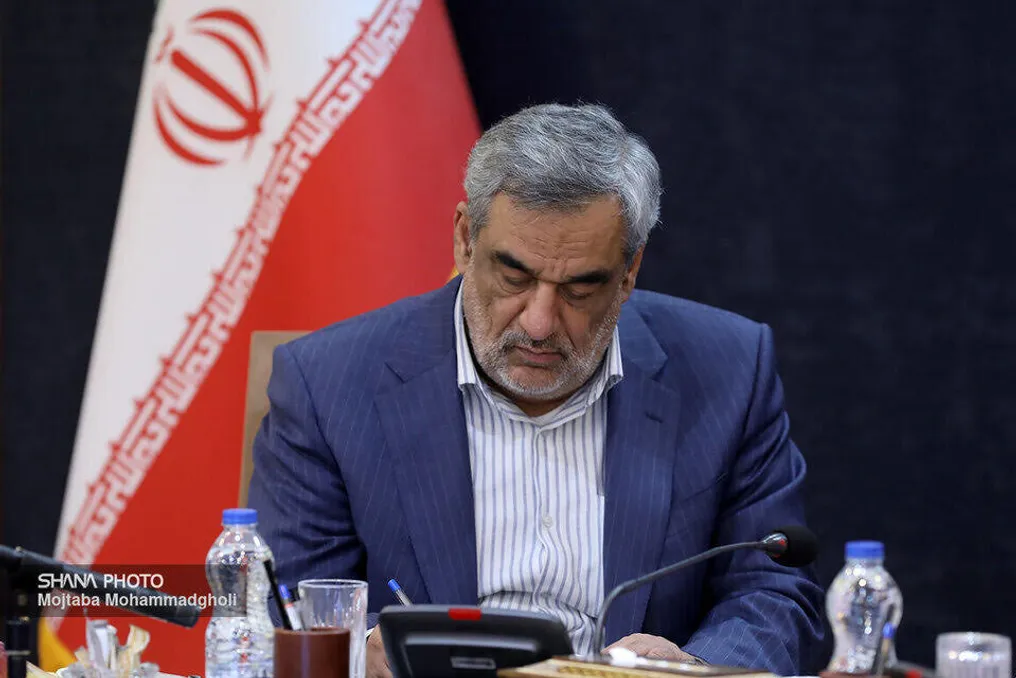
The acting Minister of Oil of Iran announced the approval and presentation of the document and roadmap for Iran's regional energy diplomacy to the Strategic Headquarters for Regional Energy Trade. He noted that this document outlines the country's action plan in the fields of oil, petroleum products, gas, and petrochemicals, specifying concrete indicators.

Announcement of Iran's Regional Energy Diplomacy Roadmap

In an interview with SHANA, Hamid Bavard, referencing the approval of the document and the roadmap for the regional energy diplomacy of the Islamic Republic of Iran by the Strategic Headquarters for Regional Energy Trade, headed by First Vice President Mohammad Reza Aref, stated that this document was prepared under the guidance of the Ministry of Oil and in accordance with clause (T) of Article 44 of the Seventh Development Law, and was subsequently announced after approval by this headquarters.

Speaking about the executive approach provided for in the document, he added that based on the roadmap for regional energy diplomacy, a detailed action plan for Iran in the areas of oil, gas, refining, and petrochemicals has been developed, along with a set of indicators. This allows actions related to regional energy trade to be implemented in a coordinated manner and in line with market changes.

The acting Minister of Oil explained the indicators embedded in the document. Among the important metrics considered during the development of the action plan are the activities of the private sector in regional energy trade, attention to technical development in the regional and global energy markets, the link between energy trade and domestic issues of the country, technopolitics, as well as diplomatic and strategic marketing and market creation.

Bavard emphasized the significance of private sector participation in the development of regional energy trade. He specified that this system takes into account the capabilities of non-state entities alongside state sectors, and changes in regional and global energy markets will be taken into consideration when drafting and revising action plans.

He recalled that among the directions for implementing this roadmap is also consideration of the interconnection between energy trade and domestic issues, the study of technopolitics aspects, and the utilization of the potential of diplomatic and strategic marketing and market creation.

The acting Minister of Oil described the mechanism for implementation and supervision of the document. It was determined that the Deputy for Planning of the Ministry of Oil is assigned to the specialized secretariat of the Strategic Headquarters for Regional Energy Trade, and the Institute of International Energy Studies of the Ministry of Oil is responsible for the permanent center of working groups for monitoring actions and developing flexible energy diplomacy programs.

He continued that this mechanism is designed for continuous monitoring of actions, receiving feedback, and developing programs that correspond to the development of the energy sector every 3 and 6 months. This will ensure the updating of the country's executive programs in accordance with the conditions and trends of regional energy markets.

Bavard, stressing the importance of the continuity of this process, noted that for the first time in the country, constant regulation and implementation of actions across various energy sectors involving state and non-state entities in the field of energy trade will take place. Furthermore, within this mechanism, processes of feedback, reporting, and problem-solving will be conducted.
Similar stories

Iran and Belarus Sign Memorandum of Cooperation in the Energy Sector
Read more
www.tehrantimes.com

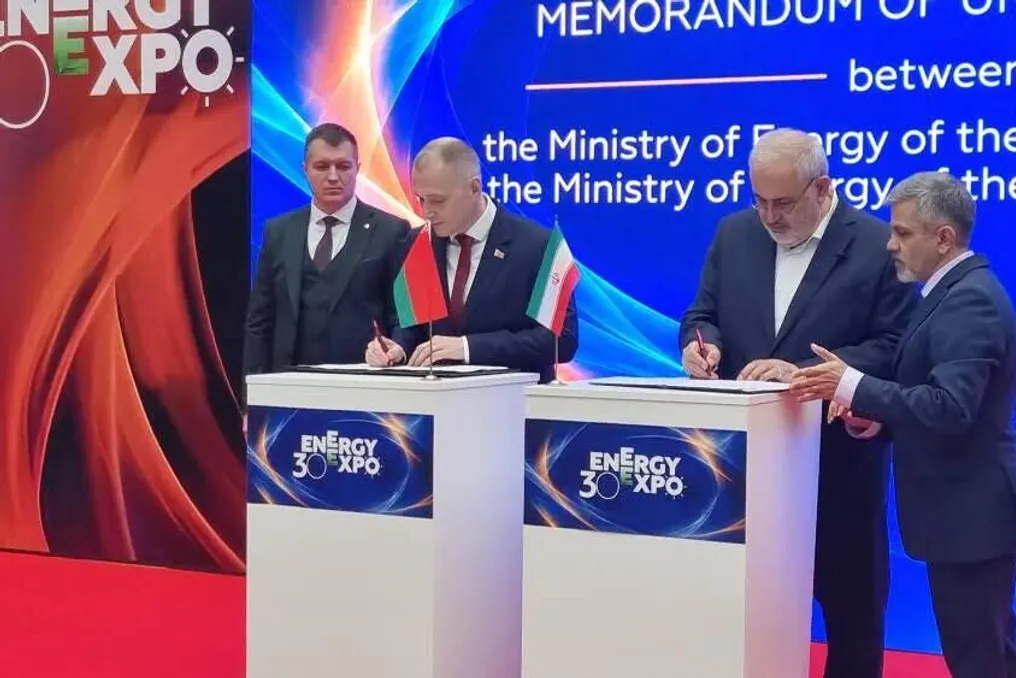
Iran and Belarus Sign Memorandum of Cooperation in the Energy Sector

An agreement on cooperation was signed in Tehran between the Iranian Minister of Energy, Abbas Aliyabadi, and the Minister of Energy of Belarus. The purpose of this memorandum is to establish partnership relations between the parties in the energy sector for mutual benefit.

According to the IRNA report from the Ministry of Energy, the main areas of this agreement include promoting joint work in sustainable energy development, including renewable energy. It also provides for the development of cooperation in the field of energy infrastructure contracts and services, as well as experience exchange, training, and technical support.

Furthermore, the memorandum covers cooperation in the construction and management of energy infrastructure, electricity distribution and transmission systems. The parties agreed to jointly participate in seminars, conferences, and exhibitions to attract investment in the energy industry, as well as to exchange information on engineering and consulting issues, and to organize visits by high-ranking officials and technical experts.

Previously, in June, the Iranian Minister of Industry, Mining, and Trade met with the Deputy Minister of Industry of Belarus. At this meeting, the development of bilateral cooperation in the fields of industry, trade, transport, and logistics, as well as joint production, was emphasized. The parties noted the need to increase the volume of trade operations and seek new opportunities for cooperation in various production sectors.

The Iranian Minister of Industry pointed to the production capabilities of both countries and proposed cooperation in the supply of mining equipment. Issues of joint tractor production in Iran, as well as urban and intercity buses and trucks involving companies from both countries, were also discussed. The Minister noted that the development of transport infrastructure and simplification of communications are necessary to expand economic ties, and called for the opening of direct flights between Iran and Belarus, as well as the simplification of the visa issuance process for traders and citizens.

Within the same meeting, Iran expressed readiness to export medical equipment, medicines, and healthcare products to Belarus. Additionally, special attention was paid to developing logistical cooperation and utilizing the capacities of the International North-South Corridor as an important area of joint work, which facilitates trade and reduces transport costs.

In mid-August, the Deputy Minister of Agriculture of Iran for Planning and Economic Affairs held a meeting with the Minister of Agriculture and Food of Belarus. This meeting took place during the 7th session of the Eurasian Economic Union Council on Agricultural and Industrial Policy in Almaty, Kazakhstan. The parties reviewed the potential for agricultural and economic cooperation and stressed the importance of strengthening bilateral contacts.

One of the key points of the negotiations was the continuation and development of cooperation in the supply and trade of potash and phosphate fertilizers. The use of existing capacities to expand trade and search for directions for joint investment in agrochemical production was discussed. The Iranian side emphasized the need to diversify supply sources to ensure agricultural sustainability by utilizing the capacities of EAEU member states.

Joint potential in the field of agricultural machinery and equipment was also discussed. Both sides agreed to identify production capacities and private sector activists to develop exchanges, technology transfer, and joint investments in this area. Another focus was the trade of agricultural and food products, including poultry, dairy products, and fruits, to facilitate trade and expand producers' presence in each other's markets.

In early July, the Iranian Minister of Agriculture also stressed the need to expand bilateral agricultural cooperation and accelerate the holding of a joint agricultural committee. Gholamreza Nouri Gezeldj, a representative of Iran, met with Dmitry Kaltsov, the Ambassador of Belarus in Tehran. The parties discussed ways to develop bilateral cooperation in agriculture, taking into account the extensive capabilities of both countries in production, animal husbandry, and machine building.

Nouri and Kaltsov agreed to expedite the holding of a joint agricultural committee, which will serve as a platform for implementing agreements and increasing the level of technical, economic, and trade interaction between Tehran and Minsk.

} ,
Iranian Oil Minister in Moscow Discussed Trilateral Energy Cooperation and Gas Exchange with Russia via Azerbaijan
Read more
www.tehrantimes.com

Iranian Oil Minister in Moscow Discussed Trilateral Energy Cooperation and Gas Exchange with Russia via Azerbaijan

Hamid Bavard, the acting Minister of Oil, made a statement on the position of the Islamic Republic of Iran at the 28th meeting of the Gas Exporting Countries Forum. During this event, he held bilateral and multilateral consultations aimed at strengthening Iran's cooperation with other countries possessing energy reserves.

According to an IRNA report, Hamid Bavard continued the line of contacts and trilateral interaction between Iran, Russia, and the Republic of Azerbaijan, which was previously conducted at the level of the heads of state of these countries in Turkmenistan.

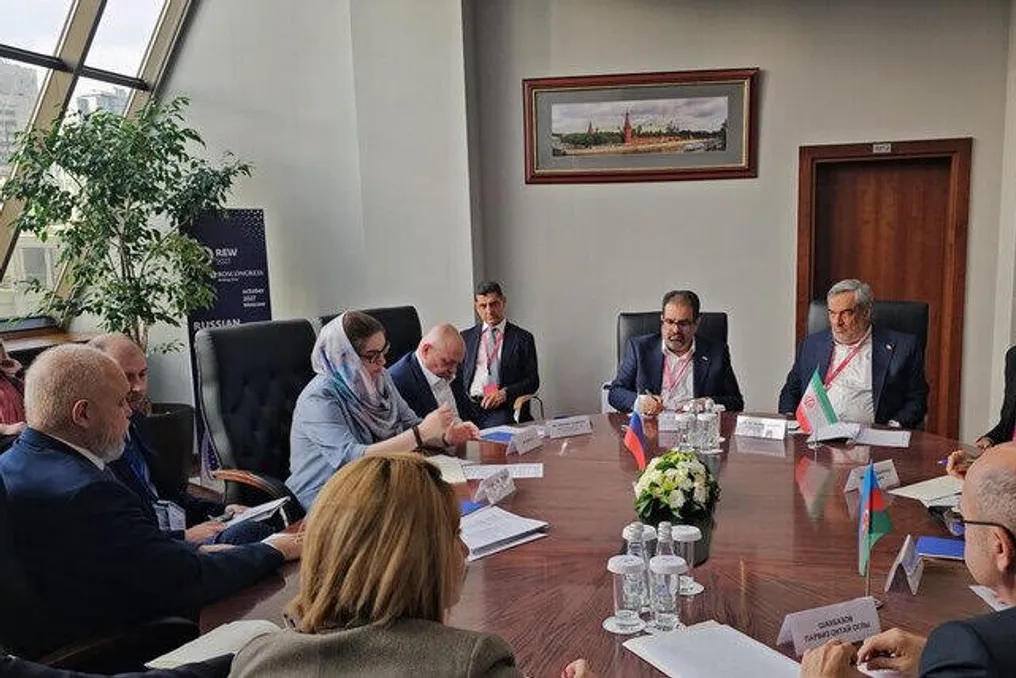
The trilateral meeting involved the acting Minister of Oil, the Russian Minister of Energy, and the Minister of Energy of the Republic of Azerbaijan. The parties discussed ways to strengthen partnership in the energy sector and increase efficiency in gas market presence.

Bavard, Sergey Tsivilev, the Russian Minister of Energy, and Parviz Shahbazov, the Azerbaijani Minister of Energy, exchanged views on methods for developing trilateral cooperation between Tehran, Moscow, and Baku.

At this meeting, the acting Minister of Oil stated that a general agreement had been reached on gas exchange between Iran and Russia through the Republic of Azerbaijan, and the technical stages of implementing this agreement are currently underway and nearing completion.

Bavard added that he hopes that after the completion of the pipeline gas transmission program implemented by the Russian side through the Republic of Azerbaijan, there will be an opportunity for gas exchange between Iran and Russia in the near future.

During the bilateral meeting with the Russian Minister of Energy, the acting Minister of Oil expressed satisfaction with the development of bilateral cooperation. He noted that the agreement between Tehran, Moscow, and Baku to conclude a contract for gas trade between Iran and Russia is promising news, and efforts to finalize this contract have accelerated.

The meeting was also dedicated to considering the issue of attracting investment from Russian companies for the development of Iranian oil and gas fields. Furthermore, both sides examined existing obstacles to fulfilling agreements reached at the 19th meeting of the Joint Economic Committee of Iran and Russia and discussed solutions to eliminate these barriers.

The Russian Minister of Energy also announced that the next meeting of the Joint Economic Committee of the two countries will be held in Russia.

The Joint Economic Committee of Iran and Russia is one of the key mechanisms for promoting and developing cooperation between the two states in various economic areas. A significant portion of issues concerning energy, investment, trade, and joint project implementation is resolved within this commission.

The 19th meeting of the Joint Economic Committee of Iran and Russia took place in Tehran in Bahman 1404. A wide range of topics was considered, including the completion of the International North-South Transport Corridor, gas transmission from Russia to Iran, as well as the development of cooperation in the fields of space industry, nuclear energy, commercial and economic affairs, finance and banking, customs, industry and mining, agriculture, healthcare, culture and tourism, and science and technology.

Popular