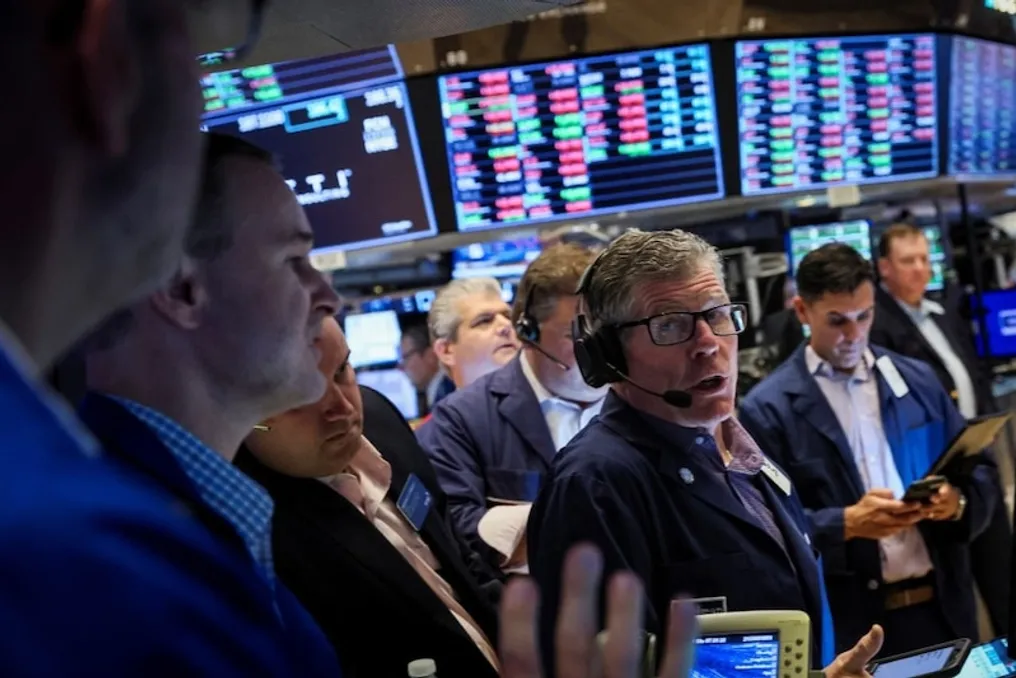
The financial market appears to have focused its attention on artificial intelligence, with the shares of the seven largest technology corporations in the United States registering significant declines on major global exchanges. Tesla (TSLA) suffered the most from the retraction, losing 10.8% of its value. Nvidia (NVDA) also showed a drop of 9.3%, accompanied by depreciation registered by Meta (META) and Microsoft (MSFT).
In the Nasdaq index, which mainly concentrates American technology companies, there was a drop of 5.52% on Thursday, November 5th, marking the largest daily devaluation since April 2025. This selling trend extended to Asia on November 6th. The Japanese Nikkei closed down by 5.96%, while the South Korean Kospi lost 6.02%, after reaching a drop of 8.55% during trading, which forced the suspension of trading on the South Korean stock exchange for twenty minutes.
Among the tech giants, Apple (AAPL) demonstrated the smallest loss, with its stocks falling by only 1.53%. This more stable performance is attributed to the manufacturer's lower dependence on the current race for AI infrastructure. Semiconductor producing companies also faced considerable losses; AMD retreated by 17.3%, and the Philadelphia chip industry index plummeted by 12.2%. In Asia, South Korea's SK Hynix lost 10.4%, and Samsung Electronics recorded a drop of 6.4%.
The main reason behind this devaluation lies in investor uncertainty about the amount of capital needed to sustain AI expansion. Investors are seeking clarity on when the billions of dollars invested in technology will begin to generate profits, both for system developers and for suppliers of components and equipment.
According to a Reuters survey, Amazon (AMZN), Meta, Microsoft, and Alphabet (GOOGL), Google's parent company, jointly increased their investments in infrastructure from US$113 billion to US$207 billion over a one-year period. It is projected that these four companies will inject another US$232 billion in the next quarter, potentially bringing the group's capital expenditures to US$740 billion in 2026. Most of these resources are dedicated to building data centers, acquiring processors, and increasing data storage and processing capacity—facilities that house thousands of computers essential for training and running artificial intelligence systems.
However, the sector's expansion faces a new risk element in the United States: the possibility of implementing stricter regulations for the construction of these structures. The midterm elections held on Tuesday (November 3rd) resulted in a Democratic Party majority in the US Congress, raising investor apprehension about possible legislative changes that could decrease demand for chips.