Earth gains temporary moonlet—asteroid 2026 QQ8 will leave orbit in December
Read more
Olhar Digital
olhardigital.com.br

Earth gains temporary moonlet—asteroid 2026 QQ8 will leave orbit in December

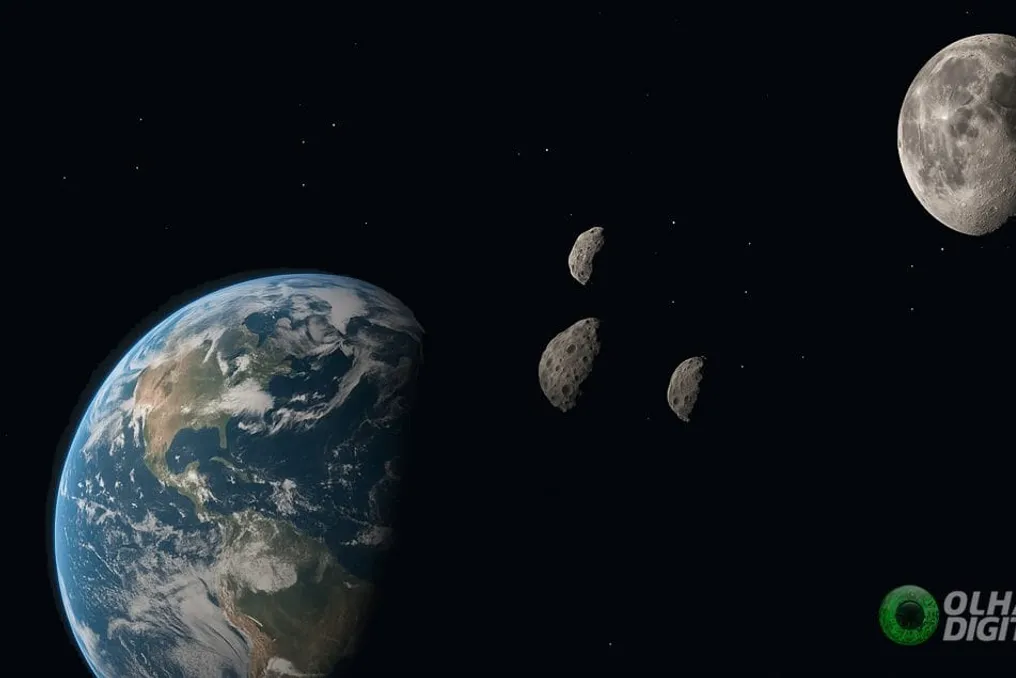
Earth has acquired a new temporary moonlet—asteroid 2026 QQ8, which was temporarily captured by the planet's gravity. This object, with a diameter of only 1 meter, could initially have been mistaken for space debris but was later identified as a natural body.

The Hungarian astronomer, Krisztián Szarnéczki, discovered this asteroid on August 20. According to calculations, the object will remain near Earth for about a month before leaving the planet's gravitational influence on December 13.

Last week, the Minor Planet Center at the International Astronomical Union confirmed the object's natural origin. It approached Earth in April, passed by the planet on May 1, and was captured by Earth's gravity.

There is no collision risk. The minimum distance recorded during the flyby was 537 thousand kilometers on August 18, which is approximately 1.5 times greater than the distance between the Earth and the Moon. The asteroid is not expected to approach closer during this current passage. When it leaves Earth's vicinity, it will be at a distance of about 1.35 million kilometers from the planet.

In a statement, the Minor Planet Center reported that orbital calculations indicate a temporary connection of the object with Earth. Furthermore, the institution stated that it found no connection between this body and any known artificial object, and recommended further observation and study of its trajectory.

The Moon is Earth's only permanent natural satellite, but other small bodies also pass through the planet's vicinity. Depending on their trajectory, they can be classified as moonlets or quasi-moons.

Moonlets are small asteroids or comets temporarily captured by the planet's gravity. They may complete one or more orbits around the planet before breaking free and continuing their journey in the Solar System. Quasi-moons follow a different dynamic: although they appear to orbit Earth, they are not gravitationally bound to the planet. They also orbit the Sun, following our planet on its annual journey. Earth's gravity influences their trajectories but does not hold them in orbit.

Examples of these two categories help to understand their differences. Moonlets provide an opportunity to study asteroids close to Earth at relatively short distances. Through such observations, researchers can better characterize these celestial bodies and study their properties. These studies also contribute to understanding the formation of the Solar System. This knowledge has another application—planetary defense. Observing asteroids passing near Earth can contribute to research on objects that might eventually come too close to the planet.

The history of 2026 QQ8 is also attracting attention. According to the EarthSky website, astronomers were able to reconstruct some of its previous approaches, which apparently occur every ten years. In 1965, the asteroid passed close to Earth but not close enough to be captured. It is predicted to approach again in 2058, again without reaching the distance required to become a moonlet.
Similar stories

November Astronomical Calendar: Notable Events Include Voyager 1's Historic Distance and End of Mercury Retrograde
Read more
olhardigital.com.br

November Astronomical Calendar: Notable Events Include Voyager 1's Historic Distance and End of Mercury Retrograde

The month of November begins with several important astronomical events, including the end of Mercury's last retrograde motion of the year, a meteor shower, the observation of Uranus at its best time, and the arrival of a Supermoon. Concurrently, space exploration records an unprecedented feat with the Voyager 1 probe reaching a distance of one light-day from Earth.

It is important to note that all mentioned times and dates are referenced to an observer in Brasília (DF) and may vary slightly depending on the location. To ensure the accuracy of observations, it is recommended to use applications such as Star Walk, Stellarium, or SkySafari, which indicate the exact position of celestial bodies according to the observer's location.

On November 9th, Carl Sagan's birthday will be celebrated, a date dedicated to honoring the contributions of the astrophysicist and the legacy of scientific outreach he left behind.

On November 13th, Mercury's retrograde motion ends. Due to its relatively short orbit, completing one trip around the Sun every 88 days, the planet often appears to move backward in the sky for about three weeks as it overtakes Earth.

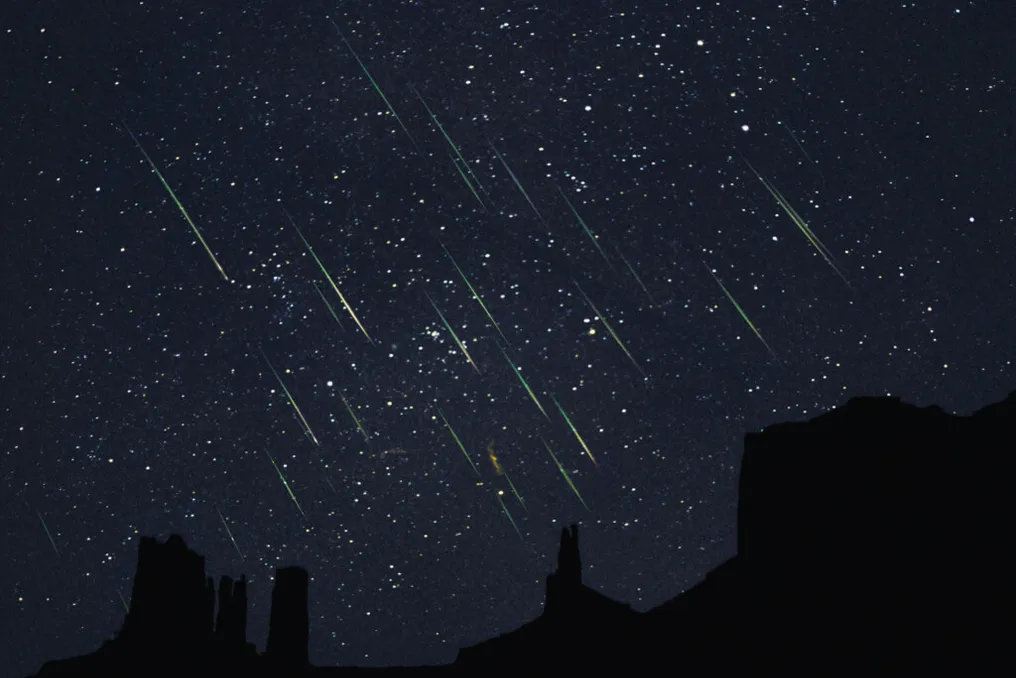
The peak of the Leonids meteor shower is expected on November 18th. On this day, with the Moon showing 61% illumination in the early evening, but setting before the ideal visibility time, the phenomenon can be seen in both the Southern and Northern Hemispheres.

Additionally, on November 25th, the Castor Supermoon will occur. This event happens when the Full Moon coincides with perigee, the orbital point closest to Earth, causing the lunar disk to appear slightly larger and up to 14% brighter than a common full moon. The name refers to periods when animals accumulated reserves for winter.

During this month, the Hera probe will arrive at the Didymos-Dimorphos asteroid binary system for the first encounter. This European Space Agency (ESA) spacecraft will study the consequences of the DART mission, conducted by NASA, assisting in improving planetary defense methods, and will release two cubesats before beginning its scientific activities in 2027.

Another milestone is the insertion of BepiColombo into Mercury's orbit. This collaborative mission between the ESA and the Japan Aerospace Exploration Agency (JAXA) will use the Mercury Planetary Orbiter (MPO) and the Mercury Magnetospheric Orbiter (MIO) to investigate the planet's magnetic field, interior, and surface.

Finally, around the 15th, the NASA's Voyager 1 probe will reach the mark of one light-day from Earth. Nearly fifty years after its launch in 1977, the spacecraft will be 25.9 billion kilometers from our planet, the time required for light to travel that distance.

NASA's Swift Telescope Rescue Mission Fails; Satellite Set to Re-enter Earth on November 6
Read more
www.aajtak.in

NASA's Swift Telescope Rescue Mission Fails; Satellite Set to Re-enter Earth on November 6

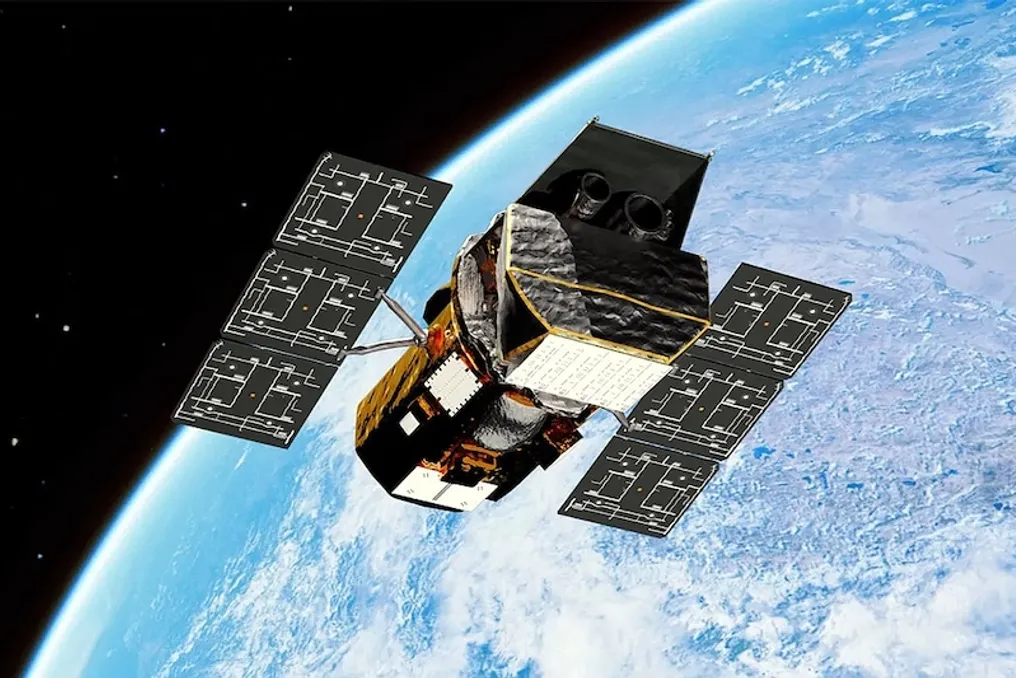
NASA's Swift space observatory is concluding its mission as its final journey will result in atmospheric entry into Earth. According to the US Military Space Forces, the observatory may enter the planet's atmosphere on November 6, marking the end of its 22-year service life. This scientific instrument, weighing 1.5 tons, was launched in 2004 and successfully recorded the most powerful events in the universe.

After the completion of scientific experiments, the satellite's orbit began to gradually decay. NASA attempted to save Swift, but this effort proved unsuccessful due to technical issues. Most of the spacecraft is expected to burn up in the atmosphere, with remaining fragments falling into the sea.

Swift was specifically designed to study gamma-ray bursts—the fastest and most powerful energy releases in the universe. In such bursts, energy equivalent to the entire energy output of the Sun over its lifespan is released in mere seconds. The observatory detected over two thousand gamma-ray bursts and approximately fourteen hundred supernovae.

These discoveries have helped scientists gain new insights into the origin of the universe, the death of stars, and black holes, as well as record numerous other astronomical phenomena. Such prolonged activity is considered a major success for any scientific project. Even after the observatory's return, the vast amount of data it collected will assist astronomers for many years.

The orbits of satellites in space for long periods gradually decrease due to weak atmospheric drag. Swift faced a similar situation. NASA initiated a unique commercial mission to raise its orbit by striking a deal with Catalyst Space Technologies worth thirty million dollars. It was planned that a spacecraft named Robotic Link would approach Swift, capture it, and lift it into a higher orbit. This was the first attempt at commercially rescuing a scientific observational instrument in this manner.

However, technical malfunctions occurred in August. The robotic spacecraft could not approach Swift closely enough, forcing NASA to cancel the operation. US Military Space Forces continue to monitor Swift. It is anticipated that it will enter the atmosphere around Friday, November 6. The exact time and location remain uncertain due to changing atmospheric conditions. Most of the spacecraft should burn up at altitude due to intense heating caused by high speed and friction.

Some sturdy parts might survive, but the probability is low, and they are expected to fall into the ocean. There is no expectation of major damage. Nevertheless, space agencies closely track such re-entries to rule out risk to Earth. This incident demonstrates how complex the task of rescuing old satellites is. The experience of commercial companies in conducting complex robotic operations in space is still limited. If the Swift rescue mission had succeeded, it would have allowed many other satellites to be used for extended periods, which would also help reduce the problem of space debris. Since this attempt failed, it has served as a lesson for the scientific community and space agencies about the need for better preparation for similar challenges in future missions, as well as the necessity of planning the end-of-life for new satellites in advance.

Even if Swift physically ceases to exist, its scientific contribution will not disappear. The data it collected remains accessible, and researchers will use it for new discoveries. The foundations laid in the study of gamma-ray bursts and supernovae will be useful for coming generations. NASA and other agencies are developing new missions in this direction that will help deepen the understanding of mysterious universal phenomena, similar to those studied by Swift. Overall, the return of Swift marks the end of an era. This observatory has become not only a symbol of scientific discovery but also demonstrated the limits of commercial space efforts. Now, it is necessary to allow its final journey to conclude peacefully so that its contribution can be preserved and the way paved for future missions.

Popular