Government defines Selective Tax rates for cars in 2027; BYD launches ultra-fast model
Read more
FlatOut
flatout.com.br

Government defines Selective Tax rates for cars in 2027; BYD launches ultra-fast model

The automobile is already among the most heavily taxed products in Brazil, but starting in 2027, it will be classified among goods whose consumption the government aims to discourage. This tax is known as the Selective Tax, popularly called the 'sin tax,' and was introduced by the 2023 tax reform to apply to items considered harmful to health or the environment.

In a Provisional Measure published by the federal government on Wednesday (4), number 1,399/2026, the rules and collection rates for the tax during its first year of validity were established. In the automotive segment, this new tax will replace the current taxation done by the IPI, using the calculation structure of the so-called Green IPI.

Definition of the 'sin tax' rates for automobiles in 2027

The base rate will be determined based on specific vehicle characteristics, such as power, propulsion type, energy efficiency, safety equipment, and recycling capacity. For passenger cars, the base rate is 6.3%, while for certain light commercial vehicles, it is 3.9%. The resulting value must be multiplied by a conversion factor of 1.21, which serves to compensate for disparities between the calculation bases of the two taxes.

To illustrate the operation, consider two fictional cars, one flex-fuel and one electric, both with 100 kW (136 hp), without any additional adjustments for efficiency, safety, or recyclability. In the case of the flex-fuel car, the initial rate would be 7.05% (6.3% of the base plus 0.75 percentage points for power), resulting in a final rate of 8.53% after multiplying by 1.21. For the electric car, there would be a deduction of two percentage points due to the propulsion, leading to an initial rate of 5.05% and a final rate of 6.11%.

With a hypothetical calculation base of R$ 100 thousand for each vehicle, the Selective Tax would be R$ 8,530.50 for the flex-fuel car and R$ 6,110.50 for the electric car. It is important to note that these amounts do not correspond to the tax charged on the final price of the cars, nor do they allow for calculating price variations compared to the current system.

This implies that vehicles of similar prices may pay different rates depending on their technical specifications. Electric cars will also be affected by the Selective Tax, even if they do not emit pollutants in operation, and some compact models may obtain a zero rate if they meet the criteria of the Sustainable Car program. Furthermore, exemptions are foreseen for vehicles acquired by people with disabilities and taxi drivers, respecting legal conditions. Trucks weighing over 3,500 kg are exempt, but pickup trucks do not fall under this exception.

The government claims that the rates defined for 2027 aim to generally maintain the current tax level, preventing an immediate increase in the tax burden during the transition period. The conversion factor of 1.21 does not mean an automatic 21% increase to the currently paid tax; its function is to balance the difference between the taxable bases. New rates must be established starting in 2028, when the Selective Tax will more directly exercise its function of discouraging the consumption of certain products. However, this does not guarantee that all models will have the same taxation as today.

Although the provisional measure has the force of law since its publication, it still requires analysis by the National Congress. Collection is scheduled to begin on February 2, 2027.

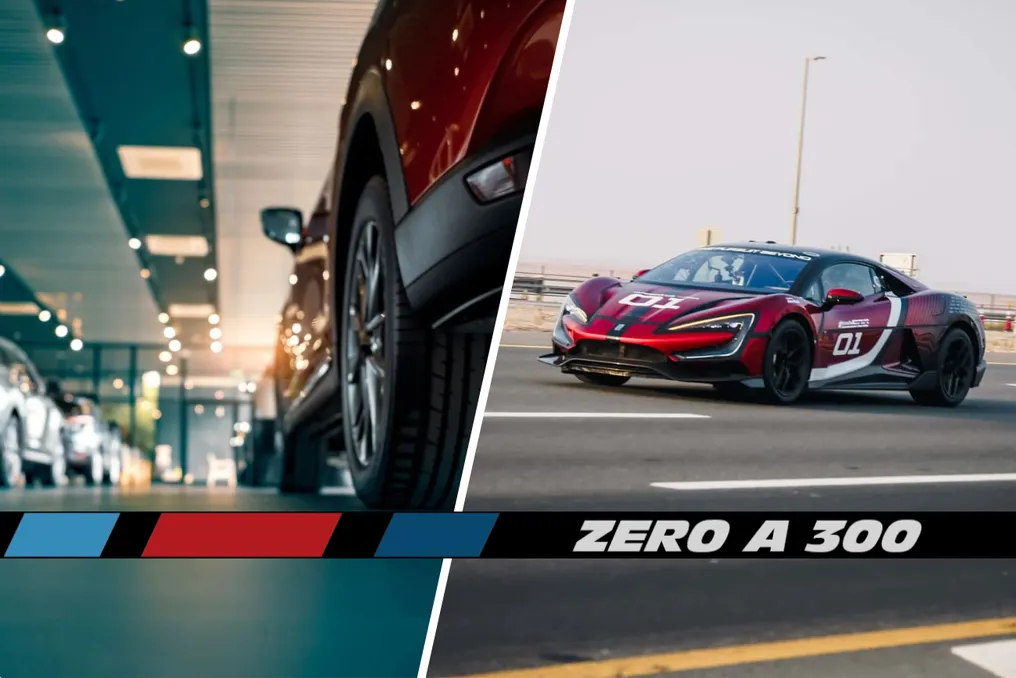
BYD Yangwang U9 Extreme exceeds 500 km/h and remains the world's fastest car

The Yangwang U9 Extreme has become the fastest mass-produced car on the planet. Developed by BYD's luxury and high-performance division, the vehicle reached an impressive 503.17 km/h on November 1st, on a closed section of the Sheikh Khalifa Bin Zayed International Road (E11), in the Al Dhafra area of Abu Dhabi.

The German driver Marc Basseng conducted the test. He was not new to the feat, as in September of the previous year, he had driven the same car to 496.22 km/h on the ATP Papenburg test track in Germany. On that occasion, the U9 Extreme surpassed the Bugatti Chiron, which held the previous record by reaching 490.48 km/h in August 2019. This record was formally recognized by the FIA, which issued a statement on its official portal.

Despite the achievement, the question arose about the practical sense of continuing to raise the physical limits of maximum speed. The Bugatti Veyron, two decades ago, surprised the world by exceeding 400 km/h with its eight-liter W16 quad-turbo engine, powerful at 1,011 hp.

Currently, the Chinese electric vehicle requires four electric motors, generating 3,019 hp, to exceed 500 km/h, which is more than double the 1,299 hp of the standard (non-Extreme) U9 version. Furthermore, the tires, the component most vulnerable to the stress of such high speeds, were developed specifically for this record, in collaboration with Giti Tire, receiving special treatment to prevent wheel detachment.

The challenges of the U9 Extreme were not only mechanical. Before reaching the 503 km/h mark, the U9 Extreme suffered a significant accident on the same straight section in Abu Dhabi. Test driver Jiang Wen lost control and collided with the side barrier of the track at 450 km/h. Despite this, Wen emerged unharmed, attesting to the quality of the car's structure and safety cell. However, the U9 Extreme, valued at over US$ 3 million, was completely destroyed. The date of the incident was not disclosed.

Audi A8 production ended after 32 years

The gradual decline of luxury sedans continues with the end of production of the A8, Audi's top-of-the-line model, after 32 years of sales. The end of the A8 occurred in phases. Initially, its continued presence was questioned after the disclosure of the lowest sales figures in history last year, a clear sign of the market's preference for luxury SUVs. At that time, Audi itself admitted to having no certainty about the immediate future of the competitor to the Mercedes-Benz S-Class and BMW 7 Series.

Subsequently, in March of this year, it was made public that Audi stopped accepting orders for the A8 in Germany. Anyone wishing for an example would have to look through dealership stock themselves or try their luck in other countries. Now, the German publication Auto motor und Sport reports that the last Audi A8 left the production line in Neckarsulm in mid-October. The manufacturer redirected the resources that were destined for the A8 to increase the production of the A5 and A6 models.

Launched in 1994, the sedan went through four generations, with the last one, launched in 2017, already showing signs of wear from time. Currently, there are no concrete plans for a replacement or a new generation of the A8. There are rumors that an eventual return could use the Porsche Panamera platform. Another possibility, more aligned with the current scenario, involves a partnership with the Chinese company Huawei, which makes sense given that the Volkswagen Group seeks to intensify collaboration with partners in China to reduce costs and speed up the development of new models. In this scenario, it would not be uncommon to imagine that a new A8 would be restricted to the Chinese market, where luxury sedans still maintain a relevant share of the market, contrary to the global trend.

Corvette C8 finally receives a manual gearbox—but not from GM

When Chevrolet launched the Corvette C8 in 2019, the change was not limited only to the engine position. For the first time, no version of the Corvette could be equipped with a manual gearbox. GM justified this by stating that 'the eight-speed dual-clutch automated transmission allowed for faster shifts and better utilized the car's performance.'

However, the demand for a manual option persisted. After seven years, an American tuner solved the problem independently. Peitz Performance, located in Texas, presented the first Corvette C8 equipped with a functional six-speed manual gearbox at SEMA 2026. The transmission used is the Tremec TR-9060, a transaxle designed for mid-engine sports cars, presented at the 2025 edition of the SEMA Show.

This assembly includes a clutch and a locking differential, supports 138 kgfm of torque, and is capable of operating with engines spinning up to 8,600 rpm. The main challenge lay in integrating it with the rest of the vehicle, as the C8 was designed exclusively for the dual-clutch transmission. Thus, Peitz had to develop the mechanical controls and adapt the electronic management.

The gear lever was built from a mechanism used by Porsche, and the clutch pedal was adapted from the Cadillac CT4-V Blackwing, with modifications to the support and hydraulic actuation. McLeod developed a specific engine flywheel, reusing components from the original Corvette flywheel. The electronic part required an equally complex solution, replacing the original management with MoTeC modules: an M182 controls the engine, while an M150 manages functions related to the transmission, such as ignition cuts during shifts and automatic accelerations during downshifts. The goal is for the final conversion to maintain the operation of instruments, ABS, electric steering, and other original systems.

The prototype displayed at SEMA is optimized for the track, but it has already been driven by John McGann, editor of Hot Rod magazine. He reported that the clutch engagement is relatively heavy, although the shifts are short and precise. McGann acknowledges that the original dual-clutch transmission probably maintains higher speed, but considers the experience of driving the manual Corvette much more immersive.

The adaptation, however, is neither simple nor economical. Peitz Performance has already announced the kit for US$ 74,528.99, a price close to that of a new Corvette Stingray in the United States. The definitive electronic system should be ready in the first quarter of 2027, and the availability of the transmission for customers is expected in July.

Mazda Miata with 13 rotors is real (but has a secret)

The Mazda MX-5 Miata is one of the most appreciated sports cars worldwide for various reasons, but its strongest appeal lies in its universal attractiveness to any enthusiast: a light vehicle, with a naturally aspirated engine, rear-wheel drive, and excellent dynamics, designed to provide driving joy, not necessarily by achieving extreme speeds, but by its cornering performance.
Similar stories

EUA seek to ban Chinese cars; death of Alan Jones and automotive news
Read more
flatout.com.br

EUA seek to ban Chinese cars; death of Alan Jones and automotive news

Automobile manufacturers are pressuring the US Congress with the aim of imposing an outright ban on the sale of Chinese vehicles in their territory. This request comes from the manufacturers operating in the American market and seeks to block the entry of competitors that have gained global prominence, configuring a dispute with clear commercial motives and protectionist trends.

However, besides the ideological issue, there is a crucial aspect to consider: contemporary automobiles do not only serve for transport; they function as devices for collecting and producing personal data. Systems such as internal and external cameras, sensors, microphones, GPS, and connectivity allow tracking of a vehicle's location, routes, and frequented places, potentially capturing images of public roads.

Much of this data is sent to the manufacturers' servers, and remote software updates enable changes to the operation of various car components. Thus, the connected vehicle transcends the status of a mere industrial product, becoming an information collection tool. The risk is not limited to individual monitoring or recording images of strategic and military infrastructures; the aggregated analysis of data from millions of vehicles allows mapping of travel patterns, times, population concentrations, and economic habits of an entire region.

Manufacturers' pressure to ban Chinese cars

It is under this argument that the Alliance for Automotive Innovation, an organization representing giants such as General Motors, Ford, Toyota, Volkswagen, Honda, and Stellantis (noting that only GM and Ford are American), is pressuring the US Congress. John Bozzella, the entity's president, points out that Chinese vehicles bring surveillance risks and access to sensitive data, in addition to threatening the local industry, which competes with companies supported by state subsidies.

Although there is no proof that Chinese cars are spying on owners, the electronic architecture and connectivity of these vehicles can generate vulnerabilities exploitable by foreign governments or corporations. The US has already implemented previous restrictions: a regulation by President Joe Biden prevents the marketing of certain connected vehicles of Chinese or Russian origin starting from 2027 models, as well as the use of autonomous driving software linked to these countries. Hardware restrictions will come into effect in 2030.

The manufacturers are now seeking to transform these administrative limitations into permanent legislation. The bill, named the Connected Vehicle Security Act of 2026, was introduced by Senators Bernie Moreno, Republican, and Elissa Slotkin, Democrat, and received unanimous approval in the Senate Commerce Committee in July. The proposal aims to limit the import, manufacturing, and marketing of connected vehicles and their components originating from nations considered adversaries of the US, and its approval is desired before the end of the current legislative session in December.

The commercial motivation is also evident. The association cited that the European Union imported more than 1.1 million Chinese cars in the first eight months of 2026, surpassing the total of the previous year. Although Chinese electric vehicles already face 100% import tariffs in the United States, the American industry wants to prevent these companies from entering the market even if they establish factories in the country.

Therefore, it is possible to reconcile the manufacturers' protectionist interest with national security. The risk of data collection is not exclusive to Chinese cars, as American, European, Japanese, and Korean vehicles also have similar systems. The distinction made by the American government lies in the possibility that companies subject to the legislation and the influence of an adversarial country may be compelled to share information or allow access to the systems. The discussion, thus, transcends the mere permission to sell cars in the US, encompassing who can access the data and the behavioral patterns generated by millions of vehicles circulating in the territory.

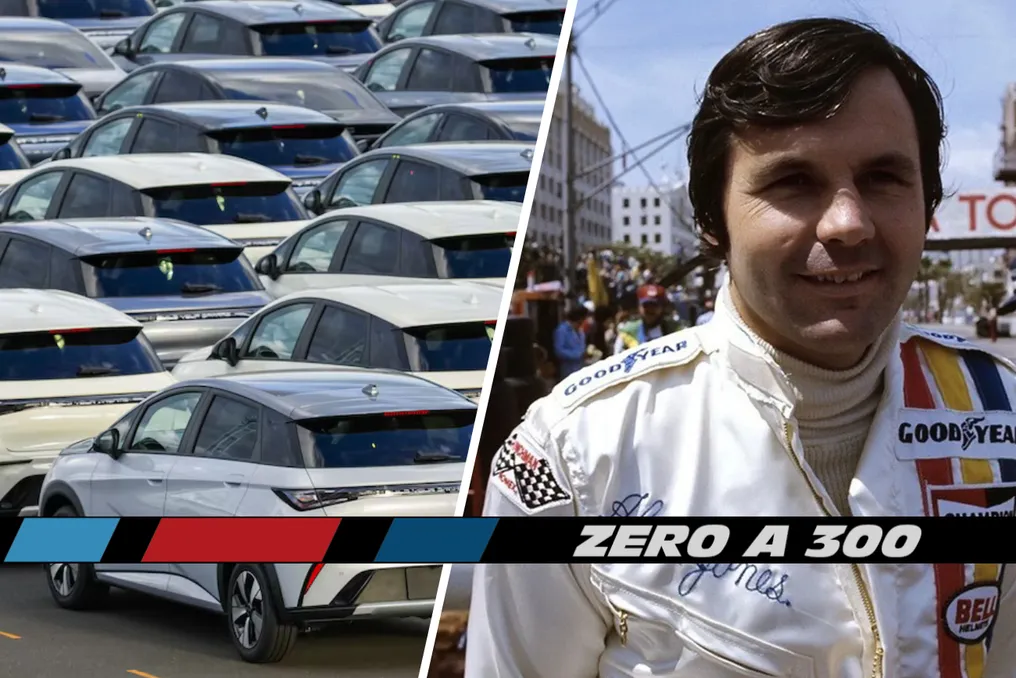
Death of Alan Jones, Williams champion

Alan Jones, the Australian driver who was fundamental in transforming Williams into a winning team, passed away this Thursday (5th) at the age of 80, just three days after his birthday. His death was confirmed by the family through Motorsport Australia, after a brief period of illness. Before ascending to Formula 1 glory, Williams needed a driver capable of elevating the team's status from promising to champion.

Born in Melbourne in 1946, Jones was the son of driver Stan Jones and moved to Europe in 1970 seeking a career in motorsport. He debuted in Formula 1 in 1975 with Hesketh and went through teams such as Hill, Surtees, and Shadow. It was with Shadow that he achieved his first victory, during the Austrian Grand Prix in 1977, in a race held under variable track conditions. This performance attracted the attention of Ferrari, which considered hiring him for 1978 but opted for Gilles Villeneuve. Jones then secured a spot at Williams, which was still in the consolidation phase of the championship.

The collaboration with Frank Williams and designer Patrick Head soon yielded good results. In 1979, Jones won four races with the Williams FW07, one of the cars that best exploited ground effect in that generation of Formula 1, finishing the championship in third place. In the following year, using the FW07B, he won five of the 14 rounds—Argentina, France, Great Britain, Canada, and the United States—and became champion with a rescheduled race, surpassing Nelson Piquet of Brabham. This achievement also helped Williams secure its first Constructors' Championship.

Jones remained with the team until the end of 1981, when he decided to retire for the first time. He would return to Formula 1 later, competing with Arrows and Beatrice Haas, definitively ending his career in the category in 1986. His history includes 116 starts, 12 victories, and 24 podium finishes. After F1, he continued competing in Australia, winning the national Sports Sedan and GT championship in 1982 with a Porsche 935 and conquering the 12 Hours of Bathurst in 1993 with a Mazda RX-7.

Alan Jones is the second Australian to win the Formula 1 World Championship, succeeding Jack Brabham, and remains the last driver from the country to achieve such a feat.

Lamborghini Temerario receives special

Volkswagen Tukan set for early 2027 with four versions, while Nissan adapts V6 biturbo engine to Datsun 240Z
Read more
flatout.com.br

Volkswagen Tukan set for early 2027 with four versions, while Nissan adapts V6 biturbo engine to Datsun 240Z

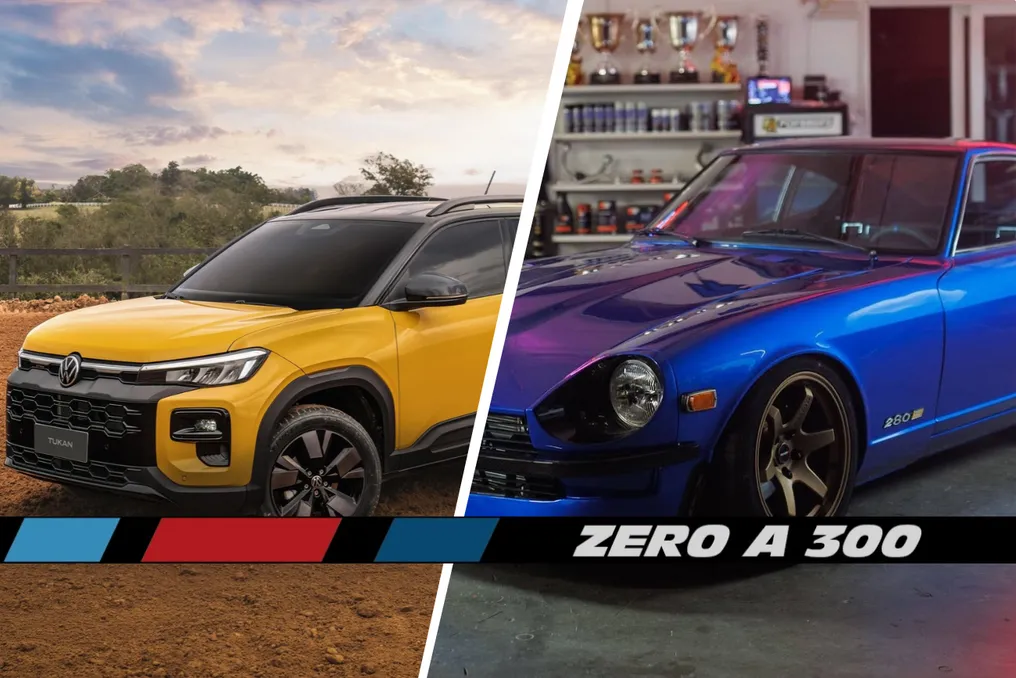
The Volkswagen Tukan, the automaker's long-awaited monocoque pickup truck, has finally received a launch date. Ricardo Ploguer, Vice President of Product Development for Volkswagen South America, announced at an event in Germany that the vehicle will be introduced in early 2027.

In Brazil, the Tukan will be offered in four configurations: two double-cab and two single-cab. When exhibited in Barretos (SP), the pickup was seen in the Extreme variant, featuring a double cab and premium trim, and the Robust variant, focused on work, characterized by unpainted bumpers and stamped steel wheels without hubcaps.

During the same event in Germany, VW also presented the Tukan Magnet, its more economical double-cab option. Compared to the Extreme, this Magnet version eliminates the glossy black paint on the grille and replaces the 17-inch wheels with a 16-inch set. The displayed model had body-colored mirrors, side steps, and front LED lighting, although it was not confirmed whether these items would be standard or optional.

The name for the intermediate single-cab version, which is above the Robust, has not yet been officially announced by Volkswagen, despite examples seen in tests bearing the 'Iron' emblem. So far, the press has only had access to the exterior of the Tukan, leaving the dashboard design a mystery. However, since the pickup uses the MQB-A0 platform, shared with the Taos, T-Cross, and Nivus, a similar internal architecture is expected.

Regarding mechanics, complete details are unavailable, but it is known that the VW Tukan will debut with a 12V mild-hybrid system for the more expensive versions, while the Tukan Robust should retain the 1.6 MSI engine from the Saveiro.

Possibility of Chinese electric vehicle in Brazil

Continuing the topic of the Volkswagen event in Germany, the manufacturer mentioned the possibility of forming a partnership with Chinese companies to introduce a more affordable electric model to the Brazilian market. The goal would be to compete directly with the BYD Dolphin Mini, one of the main drivers of entry-level electric vehicles in the country.

Other brands are already moving in this sector: it is speculated that Chevrolet will bring the Wuling Bingo Pro under the name Joy EV, and Stellantis is evaluating the Leapmotor A05 and B03X models to create its own entry-level electric vehicle in Brazil.

For Volkswagen, the chances of collaboration lie in its current partnerships in China, such as Saic, FAW, and JAC. Two of these companies have ties to Brazil: Saic assisted in the development of the VW Taos (derived from the Chinese VW Tharu) and supplied the platform used in the future Amarok; and FAW is involved in the project for the future hybrid VW Taos, scheduled for 2028 in Brazil. The connection with JAC is currently limited to China, but it is relevant because they are responsible for the entire line of electric vehicles built on the MEB platform sold by VW in China.

Although the project is still in the initial stages of development and the final solution is not defined, the plan is for it to be ready and available for sale within the next two years.

Nissan adapts V6 biturbo engine to classic Datsun 240Z

Nissan will present at SEMA in Las Vegas a reinterpretation of the first Z, the Datsun 240Z, originally launched in 1969. This project, named Datsun S30 Concept, was developed in collaboration with Formula Drift three-time champion Chris Forsberg, combining the classic sports car body with the mechanical package of the contemporary Nissan Z.

The original inline six-cylinder engine was replaced by the three-liter, twin-turbo V6 VR30DDTT from the modern Z. This engine was equipped with Garrett PMAX turbos, Nismo intake and intercooler, and mated to the new Z's six-speed manual transmission, which includes a dual-disc clutch and Nismo R200 locking differential. The exact power output of the unit was not disclosed, but the original Z engine reaches 400 hp (405 hp) in the standard version.

In addition to the engine, the S30 received suspension improvements, including adjustments, new anti-roll bars, and revised geometry, along with modified steering and Wilwood brakes with six-piston calipers in the front and four in the rear. The body maintained the original proportions but featured carbon fiber hood, fenders, bumpers, and tailgate, along with 17-inch Nismo forged wheels. The interior features OMP racing seats, analog instruments, and a sports steering wheel.

The Datsun S30 Concept will be displayed alongside two other Nissan projects for SEMA: a Z prepared for the SCCA Touring 2 category and a 300 hp Sentra Spec-V with a manual transmission and competition components.

BAIC confirms B30 hybrid for Brazil in 2027

BAIC, the Chinese manufacturer that began operations in Brazil in August with the Arcfox T1 and T5 electric vehicles, confirmed the launch of its first hybrid model in the country, the B30. This SUV, inspired by robust designs like Defender/Wrangler and focused on off-road use, is scheduled to arrive between March and April 2027.

Known as the BJ30 in other markets, the vehicle has a length of 4.73 meters, a wheelbase of 2.82 meters, and a ground clearance of 220 mm. Its powertrain combines a 1.5-liter turbocharged gasoline engine with two electric motors, one on each axle, utilizing a two-speed DHT transmission. The manufacturer announces a total power of 409 hp from the three motors, but has not yet specified the effective combined power of the unit. According to factory data, it can accelerate from zero to 100 km/h in 6.9 seconds.

BAIC is also working with Bosch on developing a flex hybrid version for the Brazilian market, but this is only expected to launch in 2028. In the future, the brand plans to introduce the B60, a larger SUV that will use electric propulsion supplemented by a combustion engine acting as an autonomy extender. Sales prices have not yet been disclosed.

Alpine does not rule out combustion engine for new A110

It is common for manufacturers to announce new sports cars as fully electric, promising to replicate the experience of a combustion engine car. After public reaction, some companies reconsider, opting to keep the traditional engine. Alpine is the focus of this discussion.

The French company had previously indicated that the next generation of the A110 would be exclusively electric. However, it seems the company took into account enthusiast feedback, who considered it a waste to transform such a well-designed car, as seen at the Paris Motor Show, into a battery-only vehicle.

Philippe Krief, Global Head of Alpine, and Nicola Burnside, Brand Director in the UK, stated that the manufacturer has not ruled out the possibility of including a combustion engine in the structure of the new car, aiming to facilitate its commercialization in various global markets. In an interview with TopGear.com, Burnside clarified that the brand's new architecture, called APP (Alpine Performance Platform), was designed to offer flexibility. Although the brand is fully committed to the initial electric launch, believing it can elevate the status of the sports car, she emphasized that it is not closing any doors.

If the 100% electric path is followed, engineering guarantees the maintenance of the lightness and agility that defined the coupe. Burnside confirmed that the new electric A110 will have a maximum weight of 1,500 kg and will maintain the low driving position of the current model, thanks to an arrangement that distributes batteries between the front and rear around the driver, preventing the feeling of being on a heavy block. Additionally, the APP platform was designed to support various body types (such as convertibles and 2+2 versions) and unique engine configurations at the rear or dual.

The executive invited the most rigorous critics to test the battery model before passing judgment, summarizing the French manufacturer's goal for the future: 'My vision is that we become the electric brand of choice for petrolheads.'

Popular