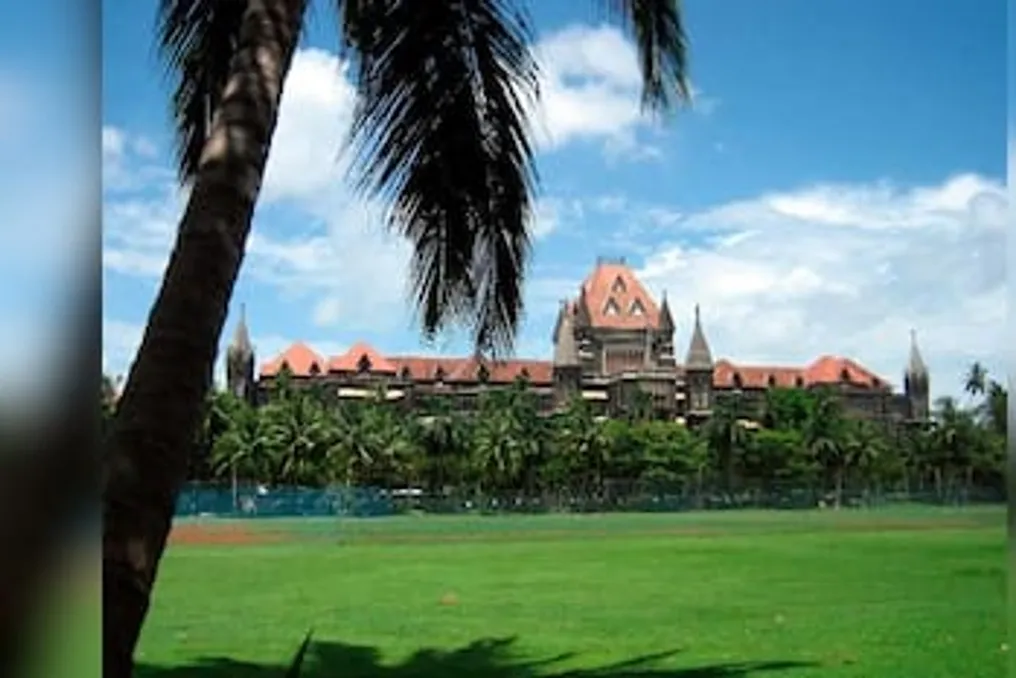
Petition in Bombay High Court demands Reserve Bank of India directives on listing of Tata Sons shares
Read more
Business Standard
business-standard.com

Petition in Bombay High Court demands Reserve Bank of India directives on listing of Tata Sons shares

A petition has been filed in the Bombay High Court demanding directions from the Reserve Bank of India (RBI) regarding the necessity of listing the shares of Tata Sons Private Limited on the Bombay Stock Exchange (BSE) and the National Stock Exchange (NSE). The plaintiffs argue that keeping the company as an unlisted private entity contradicts public interest.

As part of this lawsuit, lawyers Rohini Amin and L Ramanathan are also seeking the removal of Noel Tata from leadership positions in Tata Trusts and as a director of Tata Sons. Furthermore, they insist on developing a scheme to regulate the activities of Tata Sons and Tata Trusts.

The matter is scheduled for hearing in the High Court on December 2nd to decide on its admissibility.

Arguments and Grounds of the Suit

The plaintiffs base their position on the fact that approximately 67 percent of Tata Sons belongs to Tata Trusts—public charitable foundations established to support philanthropic activities, including healthcare, education, and aid for the underprivileged. They contend that since the ultimate beneficiaries of these trusts are citizens, the assets of the Tata group cannot be considered purely private property.

According to the petition, the conversion of Tata Sons from a public to a private company in September 2017 was done without consulting or considering the opinion of the trust beneficiaries. Although the National Company Law Tribunal (NCLT) in Mumbai approved this change on July 9, 2018, the plaintiffs questioned the process that led to this decision.

They point out that the NCLT's decision was challenged in the National Company Law Appellate Tribunal (NCLAT) and subsequently reached the Supreme Court in a dispute concerning former Chairman of Tata Sons Cyrus Mistry. Nevertheless, the plaintiffs assert that the interests of the public, who are the ultimate beneficiaries of Tata Trusts, were never represented or considered during these proceedings.

The petition also argues that the Supreme Court's ruling in the Cyrus Mistry case cannot serve as a precedent (res judicata) against the plaintiffs, as they did not participate in that process.

Listing Requirements and Regulatory Issues

The plaintiffs further state that Tata Sons, being the principal investment company classified as a top-tier Non-Banking Financial Company (NBFC-UL), is obligated to list its shares according to the RBI's scale-based regulatory system. They argue that the company failed to meet the listing requirement despite having assets exceeding 2 lakh crore rupees.

Additionally, the plaintiffs accuse the RBI of inaction regarding their appeals for regulatory intervention under Sections 45ID and 45IE of the Reserve Bank of India Act. These provisions were used to demand measures against the company's directors and board of directors.

The suit also raises issues of jurisdiction of the NCLT and the Charity Commissioner in resolving complaints. The plaintiffs request declarations clarifying the powers of civil courts and the Charity Commissioner on this matter.

Interim Measures and Concerns

As an interim measure, the plaintiffs seek an injunction preventing Noel Tata from proceeding with the proposed merger of Tata Electronic Systems Solutions Limited and Tata Consulting Engineers Limited with Tata Sons. They fear that the proposed restructuring could change Tata Sons' classification as a principal investment company and NBFC, potentially allowing it to bypass the mandatory listing requirement.

Tata Sons continues to be registered as a private limited company, and its annual report for the financial year 26 shows that its shares are not traded on any recognized stock exchange.

[ ]
Similar stories

Noel Tata approached Tata Sons with a proposal to reorganize the business and requested financing from SP Group
Read more
yourstory.com

Noel Tata approached Tata Sons with a proposal to reorganize the business and requested financing from SP Group

Noel Tata sent a letter to Tata Sons requesting consideration of a business reorganization plan he presented to avoid the public listing of the holding company. Furthermore, he raised the issue of a partial exit by the Shapoorji Pallonji group to raise ₹25,000 crore at the next board meeting scheduled for November 26.

According to sources close to the matter, Noel, who heads Tata Trusts, sent two separate letters to Suprakash Mukhopadhyay, Secretary of Tata Sons and a board member. It was noted that any member has the right to put an item on the agenda with 15 days' notice.

The first letter asks for a discussion and vote on the reorganization plan. Under this plan, Tata Electronic Systems and Tata Consulting Engineers will be merged into Tata Sons Private Limited. This structure could help prevent the listing of the holding group, which the Reserve Bank of India (RBI) views as a capital investment company rather than an operating one.

In the letter, Noel also requests a discussion of the RBI's letter dated September 11, which makes the listing of Tata Sons mandatory by rejecting the delisting application. He informs that after this letter, the two largest trusts under Tata Trusts submitted this reorganization proposal on September 26.

Under the proposed plan, Tata Sons would become an operating company through the merger of electronic and engineering divisions, thereby ending its status as an NBFC-CIC, which is what triggers the regulator's listing requirement.

The issue of Tata Sons' listing is central to the disagreements between Noel and the Tata Sons board of directors. The board voted against the position of the head of the largest ownership group, supporting compliance with the RBI's mandate at its meeting on September 17.

Noel's side insists on maintaining the character of this more than 150-year-old group, arguing that private status allows it to avoid pressure from demanding investors and facilitates long-term decision-making. However, Tata Sons management states that it is compelled to follow regulatory requirements.

If the reorganization plan is accepted by Tata Sons, the merger proposal will require approval from the RBI, the National Company Law Tribunal, and the Ministry of Corporate Affairs of the Central Government.

Both letters from Noel's side arrived at the end of a very tense week. This week began with reconciliation talks between Noel and Tata Sons Chairman N. Chandrasekaran at the latter's residence in South Mumbai on Sunday. This was followed by a letter from Noel to Tata Sons on Monday, challenging Chandrasekaran's reappointment as chairman. The situation took a political turn when opposition leader Rahul Gandhi sharply criticized the government for interfering in the matter.

In the second letter, Noel requests information from Tata Sons management regarding the progress of the SP Group's letter concerning the partial divestment of its assets to raise ₹25,000 crore. He asked for details of the valuation of this proposal and attached a draft resolution.

Nawal Tata challenges decision to reappoint Chandrasekaran as Chairman of Tata Sons
Read more
yourstory.com

Nawal Tata challenges decision to reappoint Chandrasekaran as Chairman of Tata Sons

Nawal Tata, Chairman of Tata Trusts, challenged on Monday the decision to reappoint N. Chandrasekaran as Chairman of Tata Sons. This decision was made at a board meeting of the holding company of the country's largest conglomerate on September 17.

Nawal Tata sent a letter to Tata Sons Company Secretary Supraksha Mukhopadhyay on Monday, challenging the extension of Chandrasekaran's term after February 2027. This dispute has brought to light disagreements within the board of directors of the over hundred-year-old conglomerate.

Sources familiar with the development reported that Nawal deemed the five-year reappointment invalid. His argument is based on several factors, including lack of notification and the absence of this issue from the meeting agenda.

According to Nawal, the reappointment was out of turn and did not appear on the meeting agenda at all; sources added that it was limited to the report of the nominations and remuneration committee.

Emails sent to Tata Sons and Tata Trusts requesting comments on this matter have not received an immediate response.

Nawal, who heads Tata Trusts, which own two-thirds of Tata Sons shares, had previously opposed Chandrasekaran's reappointment when the issue was put to a vote. Venu Srinivasan, one of the directors of Tata Trusts on the Tata Sons board, supported the majority vote in favor of the reappointment.

Other directors who voted for the extension of Chandrasekaran's term at the meeting included Anita George, Harish Manwani, and Saurabh Agarwal.

According to the Tata Sons Charter, Nawal asserted that nominated directors of Tata Trusts must give their positive consent for any decision to be adopted.

In his letter, Nawal also requested an unedited video recording of the board meeting, according to sources.

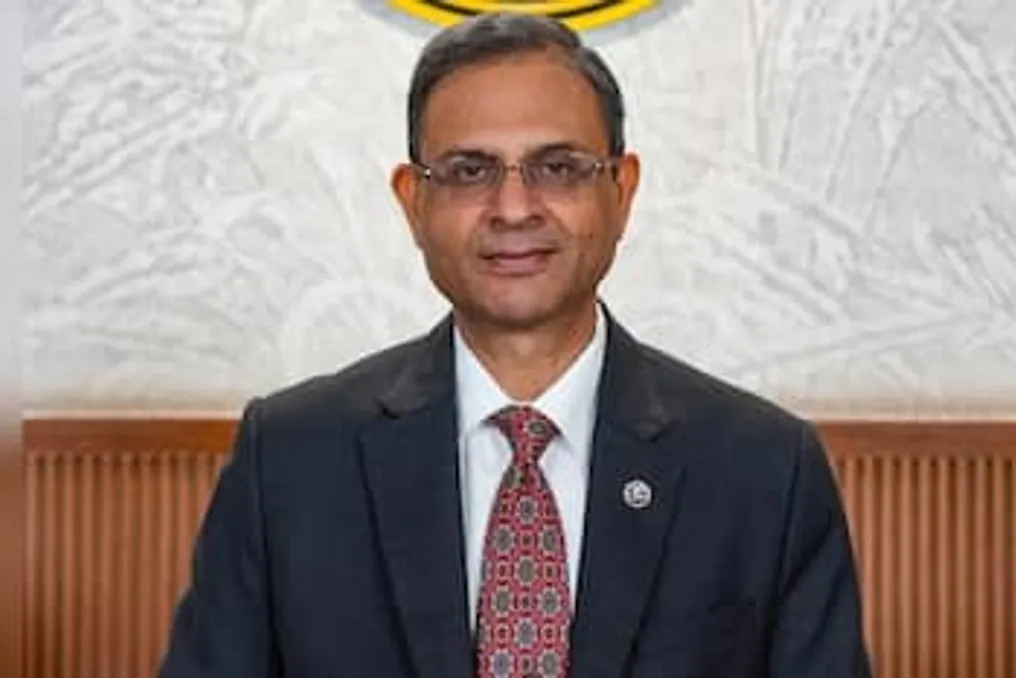
RBI Governor Sanjay Malhotra states that top-tier NBFCs must be listed on stock exchanges
Read more
business-standard.com

RBI Governor Sanjay Malhotra states that top-tier NBFCs must be listed on stock exchanges

Reserve Bank of India (RBI) Governor Sanjay Malhotra announced on Friday that companies classified as Central Investment Companies (CIC) which access public funds, directly or indirectly, are required to register with the central bank. Furthermore, top-tier Non-Banking Financial Companies (NBFCs) must be included in the stock exchange listings.

These statements came amid discussions regarding whether a public offering is required for Tata Sons, the holding company of India's largest conglomerate, the Tata Group.

Malhotra noted at the NDTV World summit in New Delhi: 'We do not answer questions concerning any specific regulated entity.' However, he added that NBFCs and CICs, such as Tata Sons, are required to register with the RBI due to systemic risks. This is because they are at the top of group companies where they can raise funds by using the balance sheets of these companies for repayment.

When separately asked about the rules governing top-tier NBFCs, Malhotra clarified: 'As long as it is an NBFC within our definition, it is a CIC, it has access to funds, directly or indirectly, it is obligated to be registered, and if it is at the top tier, then it is obligated to be listed.' He also emphasized that registration is only not required if the CIC does not have direct or indirect access to public funds.

The central bank classified Tata Sons as a top-tier NBFC in 2022, granting the company three years until 2025 to go public. Instead, the company repaid its outstanding debts and requested the cancellation of its CIC registration. Nevertheless, last month, the RBI rejected this request and demanded that Tata Sons comply with the requirements applicable to top-tier NBFCs.

For its part, Tata Trusts, which controls Tata Sons, proposed merging Tata Electronics Systems Solutions (TESS) and Tata Consulting Engineers (TCE) into a holding company. The goal of this proposal is to avoid an Initial Public Offering by restructuring Tata Sons in a way that, according to the Trusts, would cause it to cease meeting the criteria for an NBFC or CIC. This plan requires approval from the Tata Sons board of directors and consent from the RBI.

Turning to monetary policy, Malhotra stated that the RBI generally does not use interest rates to solve financial stability issues, relying instead on macroprudential measures. However, he did not rule out the possibility of applying monetary policy in certain situations, noting that the decision remains with the Monetary Policy Committee (MPC). He added that the effectiveness of such intervention would depend on the circumstances and would be reviewed by the MPC.

In its latest meeting this month, the MPC raised the key repo rate by 25 basis points to 5.50 percent and changed its stance from neutral to 'calibrated tightening.' The Governor also acknowledged growing cybersecurity risks to the financial system, as banks report data breaches in the dark web. Separately, he expressed concern over the impact of Artificial Intelligence (AI) on financial stability, stating: 'These risks are real. They cannot be ignored, so I will not downplay these risks.'

Malhotra highlighted two main areas of concern: data security and cyberattacks capable of disrupting or disabling systems. He noted that the RBI has a robust regulatory and supervisory system to address both issues, but the rapid pace of software development means vulnerabilities may continue to emerge.

Popular