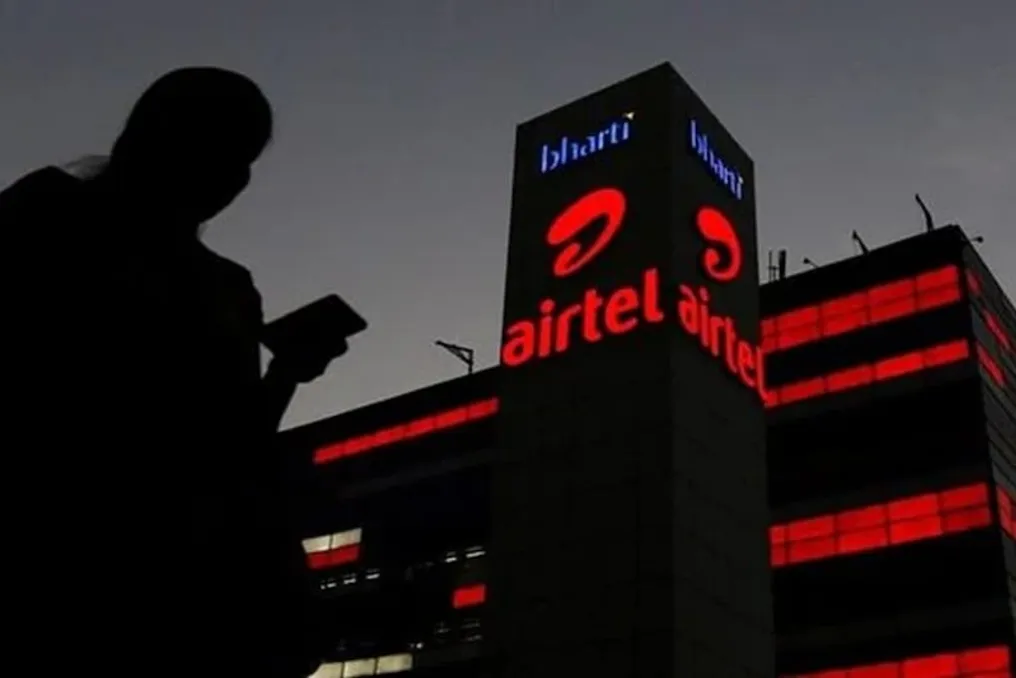
Bharti Airtel has brought back its introductory 28-day tariff plan priced at 299 rupees, which had been withdrawn in August. This decision was made against the backdrop of slowing net customer additions in the second quarter of the fiscal year 2027.
During the quarterly call, CEO Shashwat Sharma noted that changes in tariffs were observed. The company will now focus efforts on other areas, such as price hikes, value-added services, international roaming, and balance top-ups, to sustain growth in Average Revenue Per User (ARPU) in subsequent quarters.
The operator's ARPU remained the highest among competitors, reaching 271 rupees in the second quarter, surpassing Reliance Jio's figure of 218.8 rupees. Reliance Jio debuted on the Indian stock market on October 28.
The net customer addition for the second-largest operator decreased by almost two-thirds, amounting to 716,000 people in the second quarter compared to 3.3 million in the first quarter. Meanwhile, customer churn consistently increased by three basis points to 2.9 percent. Management added that signs of recovery began to appear in the third quarter.
Shashwat Sharma also mentioned that rising smartphone prices negatively impacted customer acquisition, especially when transitioning from 2G to 4G or 5G. However, he noted the strong growth in the refurbished device market in India, which supports the upgrade of entry-level smartphones.
The CEO emphasized that operators will ultimately have to move away from offering unlimited voice traffic and data at relatively low prices towards a model that better monetizes actual data consumption. Furthermore, the operator is scaling back its Fixed Wireless Access (FWA) expansion for home broadband, using it only as a temporary solution until fiber optic connectivity reaches the required area.
Data Centers and Growth Strategies
Executive Vice Chairman Gopal Vittal explained that a new land parcel for data centers in Vizag will allow for the construction of a 400–500 MW capacity center. The company plans to explore other locations, aiming to increase total capacity to over 1 GW, as demand from the US may be directed to India. Modular installations are being used to accelerate data center development.
He added that they are considering building edge data centers on larger plots of land. The 'GPU as a Service' direction is also being explored, which requires more software and orchestration, similar to some neo-clouds.
Airtel is also looking into providing its artificial intelligence services as a stack to existing customers on top of cloud technologies and data centers. Sharma added that financial services through Airtel Money, Airtel Finance, and Airtel Payments Bank, along with future investments in data centers and Airtel Cloud, will remain growth priorities.
He concluded that the company leverages synergies in networks, technologies, operations, and supply chains across various businesses, including Indus Towers, which is expanding in Africa.