Delhi High Court lifts ban on lawyers and court staff in NCR from using vehicles not meeting BS VI standards
Read more
Business Standard
business-standard.com

Delhi High Court lifts ban on lawyers and court staff in NCR from using vehicles not meeting BS VI standards

The Delhi High Court has ruled that lawyers and court staff will be exempted from movement restrictions imposed by municipal authorities regarding vehicles registered before the BS-VI standard and not registered in Delhi.

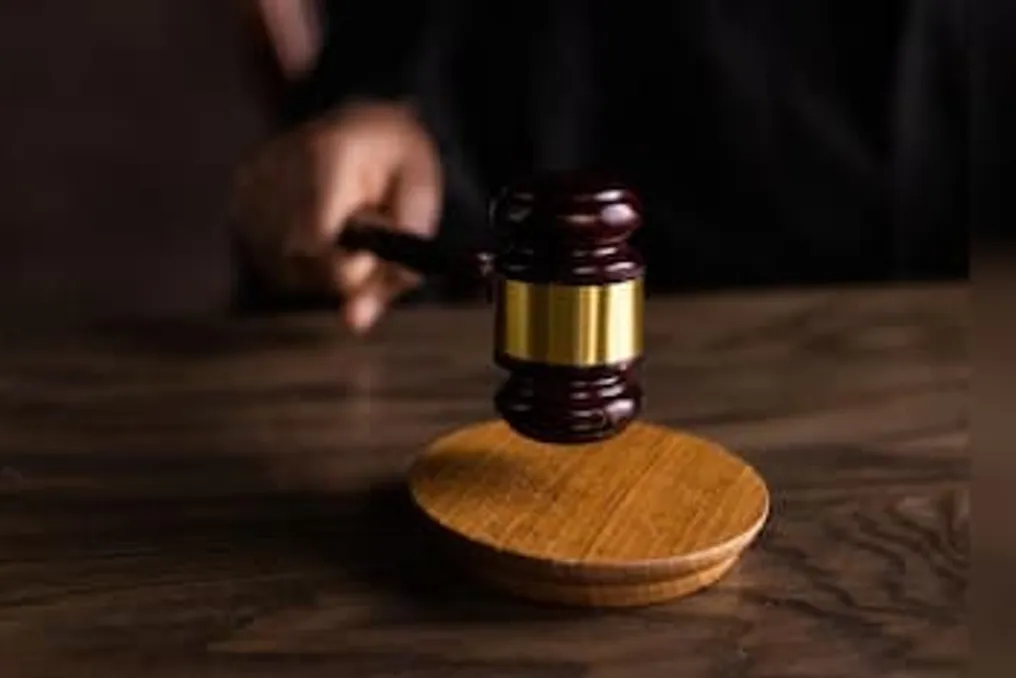
Judge Amit Mahajan made this decision upon a petition filed by the Delhi High Court Bar Association (DHCBA). The judge specified that this exemption will only be valid on court working days.

Previously, citing air pollution issues, the Delhi government decided on June 23 to ban entry into the capital for all non-regional vehicles that do not meet the BS-VI environmental norms, effective from November 1 to January 31.

DHCBA's Request

The DHCBA's petition requested an exception for vehicles that are 'lawfully used by lawyers residing in the NCR and traveling to Delhi to perform legitimate professional duties.' The President of DHCBA, Senior Advocate N. Harikharan, stated that a large number of lawyers travel to Delhi courts from NCR regions, including Gurugram, Faridabad, Noida, and Ghaziabad, to carry out 'judicial functions.'

He objected to the complete ban, asking: 'How can there be a complete ban? We perform judicial functions. If half of us cannot come here, how will the courts function?'

In its submission, DHCBA emphasized that while clean air is vital, and the state has the authority to regulate vehicle emissions, lawyers must be exempted from the Delhi government's decision in the interest of ensuring justice. The association cited a precedent where the Supreme Court recognized access to justice as part of Articles 14 and 21, asserting that this fundamental principle requires authorities to consider whether regulated restrictions can reasonably balance competing interests.
Similar stories

Changes in school meals can reduce greenhouse gas emissions by up to 56%
Read more
super.abril.com.br

Changes in school meals can reduce greenhouse gas emissions by up to 56%

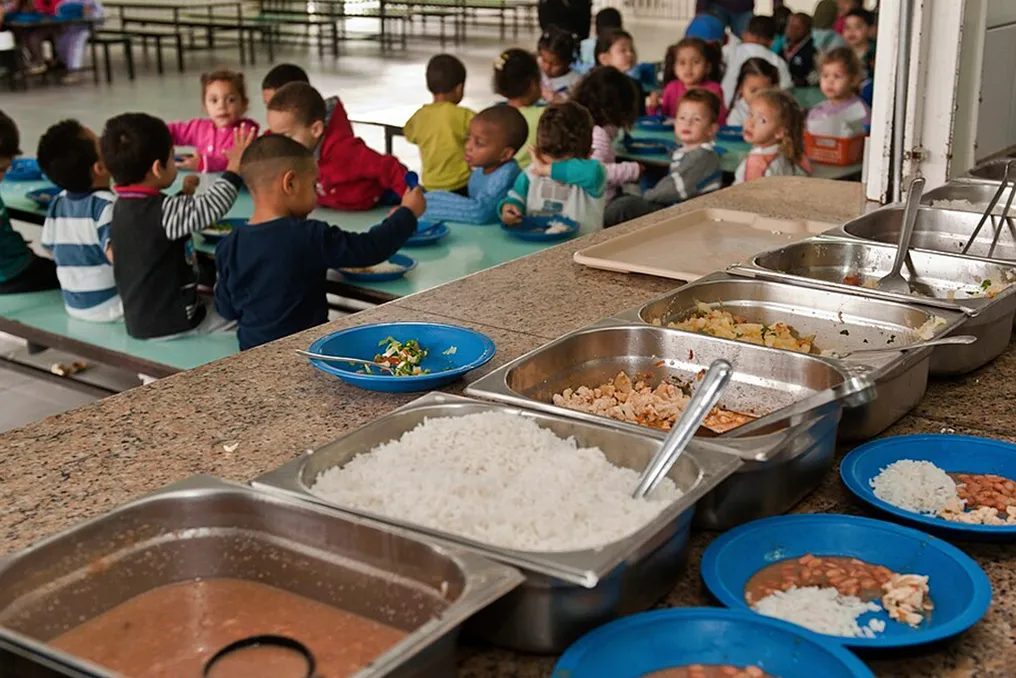
Changes in the procurement of meat and eggs financed with federal resources in the National School Feeding Program (PNAE), between 2013 and 2022, are linked to the emission of 58.1 million tons of CO₂ equivalent. This volume of emissions is comparable to the total emitted by Hungary in 2025.

The study points out that replacing 20% of beef purchased with other sources of animal protein, such as poultry, pork, fish, and eggs, would result in a 16% reduction in emissions. If this substitution were made halfway, the reduction would reach 41% of the gases. Furthermore, eliminating the purchase of meats whose production is associated with deforestation would decrease emissions by about 31%. The combination of these two strategic approaches has the potential to reduce emissions by approximately 56%.

The findings were made by researchers from the Federal University of ABC, the University of São Paulo, and collaborators, and were published in the journal Public Health Nutrition. The research analyzed almost 10.5 million invoices for public purchases made by the federal government during the period from 2013 to 2022, obtained through the Accountability Management System. Greenhouse Gas (GHG) emissions were calculated and converted into carbon dioxide equivalent (CO₂e) to allow for accurate comparison.

In the decade evaluated, 815 thousand tons of meat and eggs were acquired, generating 58.1 million tons of CO₂ equivalent. Although representing only 35.3% of the total volume acquired, beef was responsible for 77.8% of the estimated emissions. The volume of poultry purchased was similar (35.1%), but contributed only 5.4% of the emissions.

The magnitude of the impact surprised the researchers. Author Jaqueline Pereira commented that the accumulation over ten years approaches the emissions of a country like Hungary in a single year, which was about 57 million tons in 2025. She emphasized that only beef accounted for 45.2 million tons accumulated during this period, a value higher than that emitted by Uruguay in 2025. These comparisons serve to illustrate the importance of school feeding purchasing decisions in combating climate change.

The results demonstrate the relevance of considering not only what foods are purchased, but also how they are produced, indicating several paths to mitigate climate impact. Pereira concluded that sustainability requires attention to both the selected food and its origin and production method. Therefore, nutritionists, managers, suppliers, and producers must collaborate in creating solutions that integrate the environmental dimension with the commitment to adequate nutrition, maintaining meal quality, considering food culture, costs, and the reality of each school institution. The study reinforces that school feeding can benefit both new generations and the planet.

Preparation for artificial rain trials in Delhi after Diwali to improve air quality
Read more
www.aajtak.in

Preparation for artificial rain trials in Delhi after Diwali to improve air quality

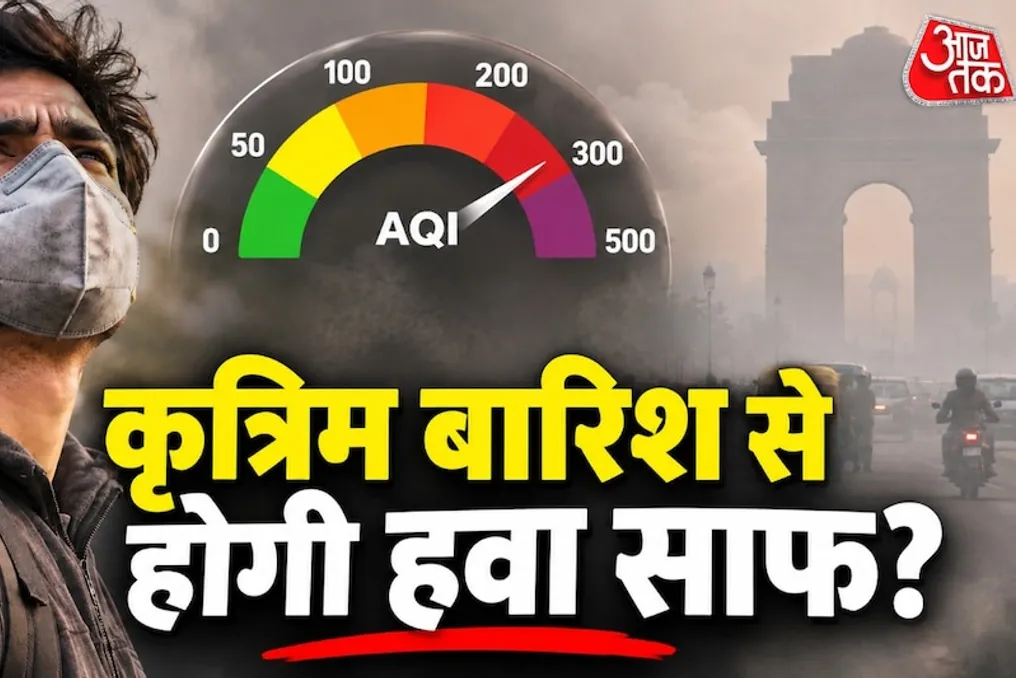
The capital city of Delhi is once again placing hopes on artificial rain to alleviate the toxic air conditions. The national capital is suffocating under a thick layer of smog, and the air quality has dropped to the 'very poor' category. According to sources, if pollution levels worsen, the Delhi government, led by the Bharatiya Janata Party (BJP), may conduct cloud seeding trials after the festivals of Diwali and Chhath Puja.

Although artificial rain can wash away some pollutants for only one day, it cannot resolve long-standing policy failures. The real test is whether the government can help achieve clean air throughout the year by going beyond seasonal measures.

Representatives from the Central Government and the Delhi government told the publication Aaj Tak that there is a possibility of conducting trials after the festive season, but no official announcement will be made before Diwali.

For instance, on November 5, the average Air Quality Index (AQI) in Delhi was 367, which falls into the 'very poor' category. In Jahangirpuri, the AQI reached 459, and at the Indian Institute of Technology Delhi and Punjabi Bagh, a reading of 445 was recorded. Among the concerns, poor visibility and breathing difficulties remain, with PM 2.5 being the main factor causing discomfort among the population.

Cloud seeding involves spraying chemicals such as silver iodide and sodium chloride into suitable clouds. This is done to form water droplets and trigger rainfall.

This experiment in Delhi is not new. The government formalized cooperation with IIT Kanpur through a Memorandum of Understanding (MoU) on September 25, 2025. Last year, in October, two rounds of trials were conducted, during which eight chemical charges containing silver iodide and sodium chloride were released, but these experiments were unsuccessful in attracting rain.

Meanwhile, environmental experts warn that cloud seeding should not be considered a magic solution. The main task is to control emissions from transport, construction dust, industrial pollution, waste burning, and crop residue burning. Every winter, the drop in temperature, slow air movement, and atmospheric inversion trap pollutants close to the ground, turning the capital into a gas chamber.

Architectural practice SWA developed a set of tools for creating more pedestrian-friendly cities
Read more
designindaba.com

Architectural practice SWA developed a set of tools for creating more pedestrian-friendly cities

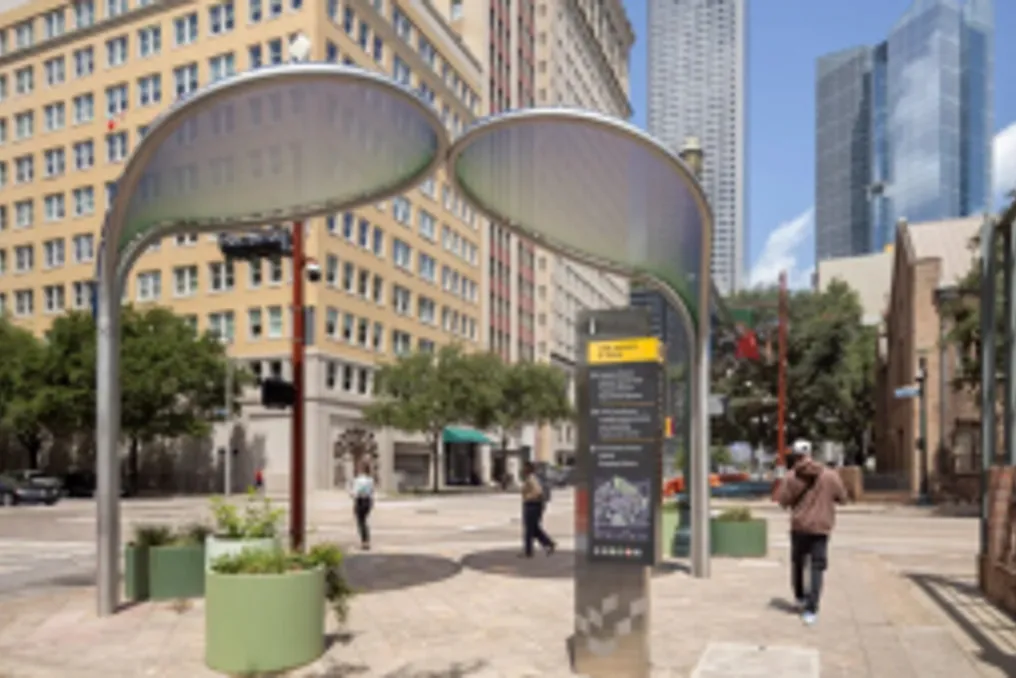
Architectural practice SWA is developing toolkits to create more pedestrian-friendly urban spaces. The practice has rethought the pedestrian experience, naming it 'Cool & Connected Corridors,' and created modular street furnishing elements that integrate cooling infrastructure, greenery, and public lighting into the urban environment.

The 'Cool and Connected' toolkit was implemented in Houston, Texas, in response to rising temperatures in the city. It represents an adaptive solution combining three main components: petal-shaped shade pavilions, modular planters, and integrated lighting designed to enhance pedestrian safety at night.

This project launched as part of Houston's broader Public Space Action Plan, which aims to transform fifteen blocks of Texas Avenue into a more comfortable and walkable urban area.

The sculptural pavilions, designed by Höweler + Yoon Architecture, are made of polished stainless steel with sandblasting and covered with mesh membranes in gradients of blue, green, and purple. Their canopy-like shape provides shade during the day, while the built-in lighting turns them into glowing urban landmarks at night. These structures can function individually or be grouped to create larger compositions, simultaneously forming visual connections along the pedestrian route.

These interventions provide measurable environmental benefits. According to SWA reports, thermal imaging data shows a reduction in average ground surface temperature by 5°C under the pavilions, reaching as low as 16°C in some areas. Furthermore, the use of drought-resistant plantings that support pollinators and the planting of new trees contribute to achieving the project's ecological goals. Future expansions are planned along Texas Avenue and other central streets, making 'Cool & Connected Corridors' a compelling tool for climate-aware urban design development.

Popular