Rupee continued to weaken in Samvat 2082 amid FPI outflows, and 10-year bond yields rose
Read more
Business Standard
business-standard.com

Rupee continued to weaken in Samvat 2082 amid FPI outflows, and 10-year bond yields rose

Throughout Samvat 2082, the rupee demonstrated steady weakening, losing 6.37 percent against the US dollar. This was caused by global uncertainty, the outflow of Foreign Portfolio Investors (FPI), and the widening trade deficit. It is worth noting that in the previous Samvat, the Indian currency fell by 4.4 percent against the dollar.

Investor sentiment was influenced by the introduction of mutual tariffs by the US on Indian goods, uncertainty surrounding trade negotiations, the strengthening dollar, and a constant outflow of foreign capital. Furthermore, the escalation of geopolitical tensions in the Middle East since late February exacerbated the rupee's weakening, as rising crude oil prices raised concerns about India's current account and import bill.

In May 2026, the national currency reached an all-time low of 96.96 per dollar, which occurred amidst high oil prices, weak capital inflows, and a strong dollar.

Market Forecasts

Madan Sabnavis, Chief Economist at Bank of Baroda, noted that the past Samvat was volatile for markets, where global upheavals largely determined the dynamics of stocks, currencies, and bonds. He emphasized the unprecedented interconnectedness reflecting the high strength of globalization. Stocks generally declined as investors favored other countries, and Indian markets recorded a larger outflow of FPI than inflow. The rupee faced continuous pressure due to the negative FPI position, the widening trade account, and the strengthening dollar.

To curb excessive volatility, the Reserve Bank of India (RBI) intervened in the foreign exchange market. In June, it also launched a special dollar-rupee swap mechanism to attract new non-resident deposits in foreign currency and support the national currency.

By the end of Samvat 2082, the rupee recovered, closing at 93.91 per dollar on November 6, which was the strongest level since April 22. Nevertheless, it remained 6.37 percent weaker than at the beginning of the period, when its rate was 87.9325.

VRC Reddy, Head of Treasury at Karur Vysya Bank, commented that the departing Samvat was challenging for Indian markets, marked by geopolitical tension, high crude oil prices, global yield pressure, and FPI outflows. Bond yields remained unstable, peaking at 7.50 percent, while the rupee faced constant devaluation pressure, reaching an all-time high of 96.96.

Government Bond Market

The government bond market saw rising yields, driven by global bond movements, concerns over domestic inflation, and expectations of monetary policy tightening. The yield on the benchmark 10-year government bond increased by 69 basis points to 7.19 percent on November 6, compared to 6.50 percent at the start of the period.

Yields were influenced by changes in US Treasury yields, actions by the RBI and the US Federal Reserve, as well as domestic liquidity conditions. Pressure intensified due to expectations of higher global interest rates, foreign investor outflows, and concerns about government borrowing.

Although RBI measures to lower rates and inject liquidity initially supported the debt market, inflation concerns and rising crude oil prices limited gains. The conflict in the Middle East towards the end of the year further fueled fears of imported inflation.

In October, the RBI raised the repo policy rate by 25 basis points to 5.50 percent and changed its stance to calibrated tightening, signaling a shift in interest rate outlook. Following this, the 10-year yield reached 7.48 percent on October 26 before falling to 7.19 percent by November 6, thanks to easing crude oil prices and declining global yields, which improved market sentiment.


Similar stories

Experts believe new Samvat opens investment opportunities in mutual funds, stocks, and gold
Read more
business-standard.com

Experts believe new Samvat opens investment opportunities in mutual funds, stocks, and gold

Despite global uncertainty, geopolitical tensions, and market volatility, experts note that India's growth story remains strong. With the start of the new Samvat, coinciding with Diwali, investors may find opportunities in the mutual fund, stock, and gold sectors.

It is advised to maintain a balance between stocks, gold, and debt instruments while monitoring the improvement in large companies' profits and global events. It is necessary to carefully assess the potential of small-cap stocks and the defense sector, as well as continue using Systematic Investment Plans (SIPs) even during market downturns. Experts also emphasized the importance of understanding risks before investing in new instruments, such as Specialized Investment Funds (SIFs).

A three-session webinar organized by Business Standard Hindi was dedicated to analyzing the prospects and investment opportunities in gold, stocks, and mutual funds. Participants agree that India's long-term growth prospects remain robust, with opportunities expected in sectors such as energy, artificial intelligence, manufacturing, renewable energy, financial services, and consumption.

How SIPs have changed investor behavior

The first session focused on mutual funds. Venkat N Chalasaney, CEO of the Association of Mutual Funds in India (AMFI), stated that SIPs have played a key role in changing investor behavior, encouraging regular and disciplined investments. He noted that during market declines, investors can acquire more units at lower prices.

Chalasaney also reported that about 65 percent of India's population is under 35 years old, which could support consumption growth. Despite numerous challenges, the country's economic growth rate has held steady at 7.2–7.3 percent. He urged investors to remain confident in India's long-term growth trajectory.

Rahul Singh, Chief Equity Investment Officer at Tata Mutual Fund, pointed to signs of improving profit metrics in large-cap companies. Although profit growth in such companies was weak for some time, an acceleration is now expected, which could positively impact the market.

Jitendra Shriram, Senior Equity Fund Manager at Baroda BNP Paribas Mutual Fund, added that consistent participation from domestic investors has helped maintain market liquidity and partially offset the impact of foreign investor selling. He also noted that the profits of small companies have recovered well in recent years.

Large-cap stocks can provide growth

The second session focused on the stock market. Harendra Kumar, Managing Director at Elara Securities, forecasts positive market prospects for the next three years. In the long term, large-cap stocks could potentially yield around 12 percent annually.

Kumar suggested that with the return of foreign investors to the market, large private banks, as well as stocks in the automotive, discretionary consumer goods, internet, and energy sectors, could benefit. He advised that holding a combination of large and mid-cap stocks could constitute approximately 75–80 percent of an equity portfolio.

Jinesh Desai, Chief Executive Officer for Institutional Equities at Centrum Broking, believes that large-cap stocks look attractive from a valuation perspective. The average valuation of the Nifty index over the last ten years was around 20 times earnings, whereas it currently stands at about 18 times. According to Desai, this creates opportunities for long-term investors in high-quality, large-cap stocks.

New Samvat may offer an opportunity to buy gold

The third session was dedicated to gold. Apoorva Shet from Samco Securities indicated that the level of $4000 per ounce provides strong support for gold in the international market. He predicts that in the medium term, gold could reach $4600 per ounce, with potentially even more significant growth possible over the next three to five years.

The recent decline in gold prices created a buying opportunity for new investors, according to Shet. However, investors who already hold a sufficient share of gold in their portfolio might find stocks more appealing right now. He recommended that gold should constitute 15–20 percent of the portfolio. Investors without gold exposure can take advantage of the current correction to begin purchases, while those with adequate metal allocation may seek better opportunities in equities.

Shet also warned investors about the need to consider the higher volatility and risk associated with investing in silver.

Indian bonds attract buyers as 10-year yield approaches 2022 levels
Read more
business-standard.com

Indian bonds attract buyers as 10-year yield approaches 2022 levels

The yield on troubled Indian government bonds is approaching a level that some investors consider attractive for purchase. The yield on the benchmark 10-year issue has reached 7.50%, a level not seen in four years.

Over the past 11 weeks, the yield on the 10-year issue has risen, reaching 7.498% on Tuesday. High oil prices continue to fuel inflation concerns and support forecasts of another rate hike by the Reserve Bank of India in December, possibly by 50 basis points.

Rupee difficulties are exacerbating these expectations. Investors are taking into account comments from RBI Governor Sanjaya Malhotra, who links price stability with financial stability and acknowledges that monetary policy cannot be entirely separated from the latter.

For India, an energy importer, key risks remain the price of Brent crude, currently around $115 per barrel, and the weak rupee. Nevertheless, some fixed-income investors in India believe that the bond sell-off has reached a stage where this asset class offers a more favorable risk-reward ratio.

Sachin Bajaj, Director of Investments at Axis Max Life Insurance, stated: 'We consider the 7.50% level an attractive entry point for the medium term.' He also noted that the yield could exceed 7.50% in the current cycle, setting a short-term trading range between 7.25% and 7.75%.

The last time the Indian 10-year bond issue had a yield above 7.50% was in 2022, following an aggressive rate-hiking cycle by the RBI.

VRC Reddy, Head of Treasury at Karur Vysya Bank, reported that the bank intends to increase its positions once yields cross the 7.50% mark, with further purchases likely if they rise to 7.60%.

Rahul Bhuskute, Director of Investments at Bharti AXA Life Insurance, supported this view, noting that yields of 7.50% and above are attractive, and the insurance company will opportunistically build positions in tranches. According to Bhuskute, although inflation risks are likely to persist over the next year, most of these risks are already reflected in prices.

The Indian swap market is pricing in a 125 basis point policy hike over the next 12 months, which some investors deem excessive. The current RBI repo rate stands at 5.50% after a 25 basis point hike earlier this month. Bhuskute expects the terminal repo rate to be in the range of 6.00%–6.25%, which is below swap market expectations. He added: 'We see a fair value for the 10-year bond yield in the range of 7.15%–7.45% over the next 6–12 months.'

USD/UZS exchange rate forecast depends on decisions by the Federal Reserve and the Central Bank of Uzbekistan on interest rates
Read more
uzdaily.uz

USD/UZS exchange rate forecast depends on decisions by the Federal Reserve and the Central Bank of Uzbekistan on interest rates

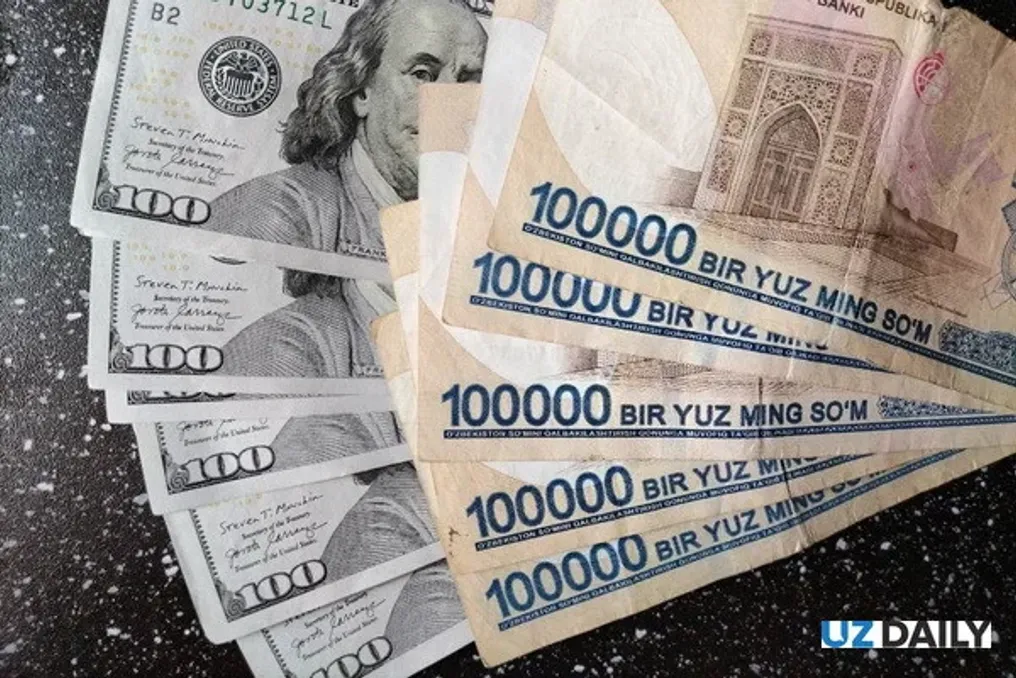
The USD/UZS exchange rate exceeded the 12,000 sum mark per US dollar in October, followed by partial stabilization. At the time of this report, the pair was trading below 11,900, remaining approximately 1% below the start-of-year level.

Economic growth is not the main factor pressuring the national currency. The International Monetary Fund (IMF) raised its economic growth forecast for Uzbekistan in 2026 from 6.8% to 7.8%, and for 2027—from 6% to 6.5%. The World Bank expects growth at 7.9% this year. In the first half of the year, the economy demonstrated an expansion of 8.5%.

The primary source of pressure on the sum remains the situation with trade and the balance of payments. According to the revised IMF assessment, Uzbekistan's current account deficit in 2026 will reach 5.1% of GDP, compared to 3.9% the previous year. Earlier in June, the fund predicted that the deficit would narrow to 3.2% of GDP. The updated forecast indicates that the country continues to spend more abroad on imports and other payments than it earns, which supports demand for foreign currency.

Inflation increased to 6.4% in September compared to 6.2% in August, marking the first acceleration in three months. This figure remains above the target level set by the Central Bank of Uzbekistan at 5%. Gasoline prices rose by 20% year-on-year, while propane gas prices increased by nearly 49%.

Uzbekistan's key rate is set at 14%, and the next monetary policy decision is scheduled for October 28. Given the acceleration in inflation, a rate cut appears unlikely. High real interest rates continue to play one of the main roles in supporting the Uzbek sum.

Over 90% of the Central Bank of Uzbekistan's international reserves consist of gold reserves. Consequently, falling gold prices reduce the value of these reserves, even if there is no actual sale of gold. Gold prices continued to fall this week. On Friday, they dropped below $4,000 per troy ounce and briefly fell below $3,990, reaching the lowest level since mid-July. This followed a drop of almost 3% in the previous session.

The decline in gold prices was linked to weakening investor interest in artificial intelligence-related assets. Market participants increased gold sales to cover losses on other investments. Although the probability of the US Federal Reserve raising rates at its next meeting is estimated to be less than 10%, this has not yet supported the precious metal.

Gold is also under pressure from high oil prices, which support inflationary risks. Since the end of February, when the conflict between the United States and Iran began, gold prices have fallen by more than 20%, increasing the risk of further decline in the value of Uzbekistan's gold and currency reserves.

The oil market, conversely, shows growth. Brent crude oil traded around $114 per barrel, increasing by almost 4% in a week and approaching the third consecutive weekly rise. Despite oil flows through the Strait of Hormuz almost returning to pre-crisis levels, reports of possible new attacks on Iran following US midterm elections maintain a geopolitical risk premium in prices. This factor may keep oil prices above $100 per barrel until the end of 2026 and maintain upward pressure on fuel prices in Uzbekistan.

Key events next week will be the interest rate decisions by the US Federal Reserve and the Central Bank of Uzbekistan, both scheduled for October 28. Analysts predict that USD/UZS will trade in the range of 11,800–12,100 during the coming week. Maintaining the policy rate unchanged will help preserve high real interest rates and limit the rise of the dollar. However, further acceleration of inflation, additional reserve drawdowns, or another surge in oil prices could increase the likelihood of the exchange rate moving towards 12,100 sums per US dollar.

Popular