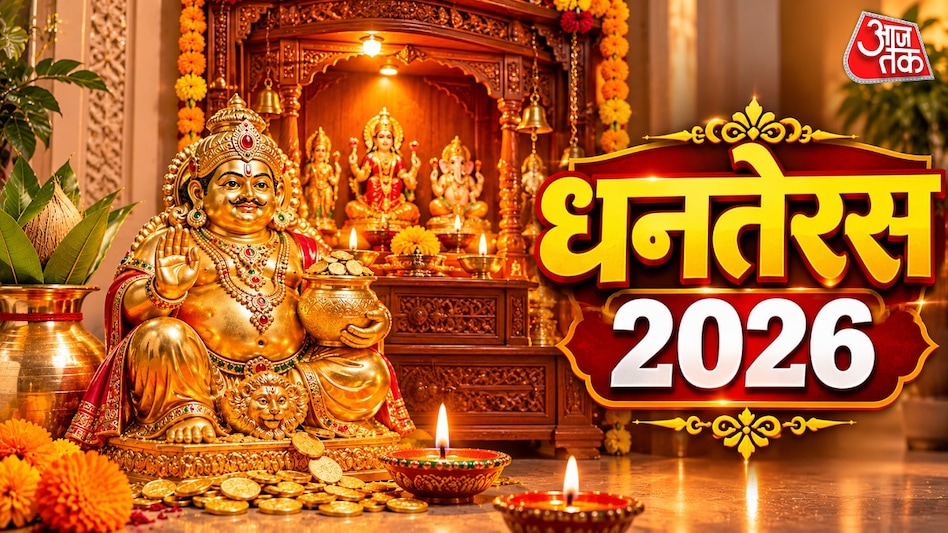
According to Vastu, why one should not place the Kubera statue in the home shrine
Read more
Aaj Tak
www.aajtak.in

According to Vastu, why one should not place the Kubera statue in the home shrine

When setting up a home shrine, attention is often paid to the direction of placing deities. The northeast corner, known as Ishan Kona, is considered particularly auspicious for creating a sanctuary. This is why placing the shrine in this direction is considered fortunate.

However, instead of placing the god of wealth, Kubera, in the home shrine, it is recommended to place him in the northern direction. This is related not only to religious principles but also to the principles of Vastu and astrology.

Kubera is recognized as the ruler of the north direction and the treasurer of the gods, serving as the guardian of material wealth. The northern direction, associated with the water element, is linked to financial activities, trade, new opportunities, and sources of income. Therefore, placing Kubera in this area holds special significance. When Kubera is placed in his own designated spot—the north—it creates a favorable atmosphere for the inflow and preservation of wealth and economic prosperity in the home.

Furthermore, the northern direction is connected to the planet Buddha. Buddha governs intellect, trade, calculations, communication, writing, business acumen, and decision-making ability. For this reason, the northern direction is viewed not merely as a place to store money or a safe, but as a gateway to new life opportunities. The north is associated with prospects such as promotions at work, attracting new clients in business, expanding commercial activities, establishing new contacts, and opening new avenues for income.

It is much better to designate separate places for both the home shrine and for placing Kubera, rather than combining them. The northeast, or Ishan Kona, is considered a place for spiritual energy, meditation, and worship of deities, so creating a shrine there is considered prosperous. Meanwhile, the northern direction is Kubera's own domain. Goddess Lakshmi is revered as the goddess of wealth, splendor, luxury, and abundance, whereas Kubera acts as the guardian of treasures and the treasurer of the gods.

Consequently, if a shrine is present in the house located in Ishan Kona, placing an image or statue of Kubera in it is undesirable. Instead, he should be placed in a clean and orderly spot in the north. When installing the figure, it can be positioned so that its face is turned towards the south, allowing the worshipper to pray while looking north. It is important to remember that the north must remain free from clutter, unnecessary items, or dirt.

Similar stories

Unlike Kubera, Hanuman possesses nine treasures that are absent from Kubera's eight treasures
Read more
www.aajtak.in

Unlike Kubera, Hanuman possesses nine treasures that are absent from Kubera's eight treasures

In the Hanuman Chalisa Goswami Tulasi Das wrote that he is the bestower of eight siddhis and nine nidhis. According to this, Sita's mother bestowed a blessing upon Hanuman, which enabled him to bestow eight siddhis and nine nidhis.

However, Kubera possesses only eight nidhis. Hanuman has nine nidhis: Padma, Mahapadma, Shankha, Makara, Kachchapa, Mukunda, Kunda, Nila, and Harva. Whereas Kubera has eight nidhis: Mahapadma, Padma, Shankha, Makara, Kachchapa, Mukunda, Nanda, and Nila. The Kunda nidhi is present in Hanuman's nine nidhis but is absent in Kubera's eight nidhis.

This means that Hanuman has nine nidhis, while the God Kubera has eight nidhis. Both figures are associated with wealth, status, and grandeur, but their spiritual significance and meaning differ. Hanuman is considered to possess not only strength and devotion but also all forms of wealth.

The spiritual meaning is that through Hanuman's grace, a devotee can attain not only material wealth but also happiness, satisfaction, capability, security, and spiritual progress in life. These nidhis symbolize various forms of wealth, precious stones, precious metals, splendor, and abundance.

When it comes to wealth and property, the God Kubera is mentioned first. As the treasurer of the gods, Kubera stores not only treasures of gold, silver, and gemstones but also possesses eight special nidhis called Ashtanidhi. It is believed that these eight nidhis contain various aspects of wealth, splendor, prosperity, knowledge, and affluence. This is why traders and people desiring wealth have worshipped Kubera since ancient times.

1. Mahapadma Nidhi: A symbol of immense wealth and grandeur; this is prosperity that lasts for generations.

2. Padma Nidhi: Padma means lotus; it is associated with valuable assets such as gold, silver, gemstones, and jewelry.

3. Shankha Nidhi: The conch shell is considered a symbol of auspiciousness and prosperity; it is related to obtaining comfort and wealth.

4. Makara Nidhi: Makara is an aquatic creature; it symbolizes hidden treasures, precious items, and material resources.

5. Kachchapa Nidhi: Kachchapa, meaning tortoise, is a symbol of patience and stability; it is associated with safe and long-term property.

6. Mukunda Nidhi: Related to precious metals, stones, and material splendor.

7. Nanda Nidhi: Considered a nidhi that brings joy, happiness, prosperity, and well-being to the family.

8. Nila Nidhi: Nila is associated with gemstones, especially sapphires, and valuable property.

From a religious perspective, the message of the Ashtanidhi is that true prosperity lies not only in accumulating wealth but also in preserving it, increasing it correctly, and using it for the good of society. This is the spiritual message of worshipping Kubera.

Popular