Tips from an experienced guide on how to plan a safari in Africa
Read more
Viagem e Turismo
viagemeturismo.abril.com.br

Tips from an experienced guide on how to plan a safari in Africa

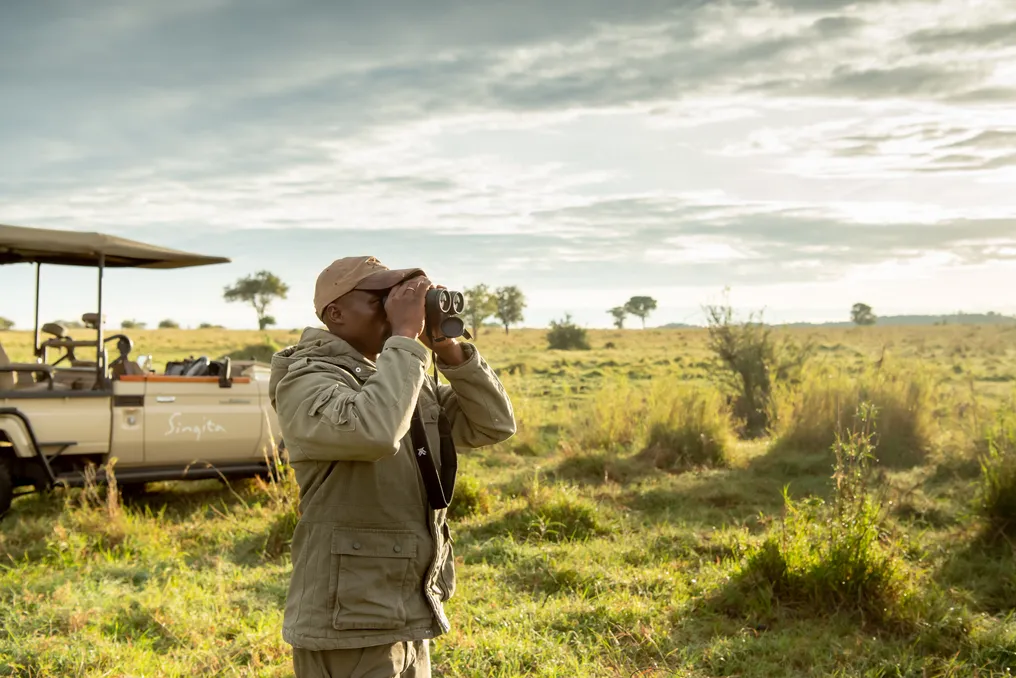
Taking a safari in Africa requires attention to various details, ranging from choosing the time of year to observing weather conditions and selecting the correct clothing for the trips. For those organizing their first trip, we spoke with Garry Bruce, chief guide at Singita Kruger National Park, South Africa. He shared valuable advice on what to pack, the best times to spot wildlife, and crucially, safety guidelines.

Born in Plettenberg Bay, on the southeastern coast of South Africa, Garry encountered Kruger National Park during family vacations. It was through these experiences that he developed an appreciation for birdwatching and the savanna environment. Before joining Singita, he worked as a guide in the Pafuri and MalaMala regions, and today he dedicates his time to observing elephants and tracking lion prides.

Comfort and practicality are the pillars when packing for a safari. Bruce recommends opting for light and comfortable clothing, using neutral and natural tones such as beige, khaki, olive green, and brown, as these colors help blend into the savanna landscape.

It is essential to dress in layers, especially in places like Kruger, where mornings can be cold, but the day quickly becomes extremely hot. Essential items include a warm jacket, comfortable trousers, a hat, and appropriate walking shoes.

He advises avoiding very bright colors and overly perfumed body products, as these can be noticed by animals in the savanna. Furthermore, he suggests taking as few personal belongings as possible during observation trips, as large bags or noisy packaging can be distracting.

Bruce emphasizes that there is no need to dress like a wildlife documentary character; the main focus should be comfort, adequate sun protection, and preparation for climatic variations.

Generally, early morning and late afternoon are considered the most fruitful periods for wildlife viewing, as animals tend to be more active when temperatures are milder, and many predators use these times to hunt.

However, he stresses that there is no intrinsically superior time, as the beauty of the savanna lies in its unpredictability. He recounts having fantastic sightings in the middle of the day because he was in the right place at the right time, and believes that a common mistake is getting fixated on finding a specific animal.

The early hours of the morning are notable because the savanna is waking up: temperatures are pleasant, the lighting is beautiful, birds begin to move, and there is a chance to follow trails left the previous night. In the afternoon, the landscape transforms as the heat subsides.

Regarding the best time, Bruce states that there is no universally ideal period, as each season presents distinct characteristics. During the dry winter months in Kruger, the vegetation is sparser, concentrating animals around water sources, which facilitates species viewing, in addition to offering ideal temperatures for long periods in the savanna and being good for seeing large mammals.

Summer provides a distinct setting: the landscape becomes greener, migratory birds return, and many animals give birth, making the savanna more vibrant. With greater availability of water and food, animals disperse over larger areas, requiring more patience to find them.

Transition seasons are also very interesting, as the first rains can rapidly alter the landscape, allowing observation of animal reactions to climate changes, the emergence of insects, and the movement of various birds.

Instead of questioning what the best time is, he suggests asking: 'What would you most like to experience?', as a more effective way to define the timing and destination of the safari.

Wild animals are constantly reacting to the availability of water and food resources, temperature changes, and the presence of other species, keeping the savanna in constant flux.

During the dry season, water is a determining factor in animal movement, causing herbivores to gather near sources, which attracts predators looking for prey and generates good opportunities for observing large groups.

In the rainier months, the abundance of water and food allows animals to spread out over larger territories. Although the vegetation becomes denser, hindering sightings, this period is rich in observations of young animals, insects, flowers, reptiles, and a wide range of birds.

As guides, they monitor natural signs—tracks, droppings, warning sounds, avian behavior, vegetation, and water levels—to understand the ecosystem and what happened before arriving at the location.

Rain does not necessarily imply the cancellation of the safari; in many cases, it can enrich the experience. Even typical summer rain can be fascinating aboard an open vehicle, instantly transforming the savanna with the smell of wet earth and the change in scenery.

Road conditions also change drastically with heavy rains, potentially making sections muddy or inaccessible, requiring prior assessment by the guides.

Additionally, precipitation alters animal behavior, making tracks more visible and causing predators to take advantage of the distraction caused by climatic changes.

The primary directive is to obey the guide. Wild animals are unpredictable, even when they seem accustomed to human presence. Visitors must never leave the vehicle without permission and must remain seated under guidance.

Speaking softly is important, as it aids in appreciating the experience and allows hearing warning signs, bird calls, and other sounds that may indicate the proximity of animals.

It is strictly forbidden to feed, try to attract, or make sudden movements towards the animals. At the accommodation, guests must also follow safety rules for walks and nighttime movements, requesting staff accompaniment when necessary.

Bruce explains that the role of the guide transcends merely locating animals; they facilitate the interaction between humans and wildlife, making it vital to respect this dynamic.

To conclude, he advises three points: firstly, approach the trip with an open mind, without a rigid list of species to see; secondly, maintain patience, as the savanna follows its own rhythm; and third, immerse yourself fully in the experience, occasionally putting away the camera just to listen and observe, capturing the feeling of the moment.

As a Singita guide, he considers a successful safari not just by the number of animals seen, but by the deep understanding the guest gains about the wild savanna.

_


Similar stories

Coordinators for Seven Areas of the Student Council Elected in Surkhandarya
Read more
uza.uz

Coordinators for Seven Areas of the Student Council Elected in Surkhandarya

Elections were held at the regional level in Surkhandarya for the Student Council with the aim of increasing students' social activity, supporting their initiatives, and developing leadership qualities.

As a result of the elections, coordinators for seven areas of the Student Council were appointed.

How to protect yourself from mosquitoes during spring outings with repellent products
Read more
g1.globo.com

How to protect yourself from mosquitoes during spring outings with repellent products

The arrival of spring encourages spending more time outdoors, whether in parks or yards, but this can bring concerns about mosquito bites. To avoid these bites without leaving the skin feeling sticky, it is important to have an easy application option to prepare before going out.

The ÉX! Repellent line, manufactured by H2O Evolution, offers versions for both adults and children, including aerosol presentations. This product has a dry touch and fresh fragrance, allowing protection to be included in the season's plans without causing oiliness.

Protection should be done before the first bite

Waiting for itching means that contact with insects has already occurred. The correct procedure is always to check the instructions on the packaging and apply before exposure, paying attention to the recommended areas and the necessary interval between reapplications. Since these guidelines change depending on the composition, the label must be the main guide for use.

The ÉX! line was specifically developed to repel mosquitoes and biting flies, also offering effectiveness against mosquitoes such as Aedes aegypti. When deciding which product to use, one must consider who will use it and which format will be most practical to carry.

Suitable options for adults

The ÉX! H2O Adult product offers ease of application and a finish that does not leave the skin oily, characteristics valued by those who avoid products that cause this sensation. Its pleasant fragrance contributes to a feeling of freshness during use, helping to repel mosquitoes, including Aedes aegypti.

This repellent is available in 100 ml and 200 ml sizes, giving the consumer the freedom to choose the volume according to their needs. The smaller version is ideal for taking up little space in a bag, while the larger one can be kept at home to facilitate preparation before going out.

Considerations for child use

When children want to continue playing outdoors, applying repellent should be part of the preparation routine for the activity. ÉX! H2O Kids is formulated to be hypoallergenic and non-greasy, possessing a pleasant fragrance and providing a refreshing feeling. It is also available in 100 ml and 200 ml bottles.

It is important to note that this version should not be used on children under 2 years old. In other cases, an adult guardian must strictly follow the package instructions and supervise its use. The guidance provided by the Ministry of Health for applying to children is to first put the product on your own hands and subsequently spread it on the designated areas.

Preference for aerosol format

For those who prefer another format, ÉX! H2O Aerosol offers the same adult formula, but in a 150 ml packaging. This option maintains simple application and a feeling of freshness, without leaving oily residues.

Before any use, it is essential to check the method of application. Inhaling the contents must be avoided, and the spray must never be directed towards the face; for this sensitive area, it is recommended to apply it to the hands first, following the label guidelines.

Choosing the correct version and using it properly helps enjoy spring events with much less discomfort. H2O Evolution invites consumers to learn about the ÉX! line and follow the brand on social media to receive more daily protection tips.

Five Lessons in Mindful Thinking from Prithvi Raj Banerjee
Read more
yourstory.com

Five Lessons in Mindful Thinking from Prithvi Raj Banerjee

Anxiety, distraction, and overthinking can make daily life overwhelming. In his book 'Mindful Thinking: Simple Ways to Let Go of Your Anxiety, Boost Your Productivity and Rewire Your Thoughts,' technologist and mindfulness coach Prithvi Raj Banerjee explores how people can understand and gradually change unconstructive thought patterns.

As the founder of the MindGym Initiative, Banerjee views mindfulness not as an abstract spiritual concept, but as a practical skill. Drawing on principles of mindfulness, cognitive science, and daily exercises, he explains how to improve concentration, manage anxious thoughts, and respond more consciously to life's difficulties.

Concentration can be strengthened through regular practice. Instead of getting upset when the mind wanders, one should notice the distraction and gently return to the current task. Like physical exercise, consistent practice helps develop better focus over time.

Lesson: Focus is a skill that can be developed through small, consistent efforts.

Not every thought reflects reality. Anxiety can make ordinary situations seem threatening, prompting belief in worst-case scenarios without verification. Banerjee's approach calls for observing thoughts without immediately accepting or reacting to them.

Lesson: Realizing that thoughts are not always facts helps in responding more thoughtfully.

Mindfulness practice does not always require long meditation sessions. Methods described in the book, such as Belly Breathing, Bumblebee Humming, and Sensation Scan, offer practical ways to bring attention back to the present moment. One can try these exercises and find what suits their daily routine.

Lesson: Small mindfulness practices can make awareness a part of daily life.

Notifications, social media, and constant screen switching hinder concentration. Banerjee also emphasizes the importance of thoughtful use of artificial intelligence, rather than accepting its outcomes uncritically. Setting boundaries regarding technology can help maintain focus and independent thinking.

Lesson: Use technology purposefully instead of letting it dictate your attention.

Stress can provoke impulsive reactions and unnecessary worry. Before reacting, one can take several intentional breaths and identify their emotions, creating space for considering options. Mindfulness does not eliminate difficult feelings; it encourages responding to them more consciously.

Conclusion

The book 'Mindful Thinking' presents mindfulness as a practical method for understanding thoughts, managing distractions, and strengthening attention. The central idea is that clearer thinking does not require eliminating every negative thought. By practicing mindfulness, questioning assumptions, and making deliberate choices, a person can gradually develop a healthier relationship with their mind.

Popular