Scientists are working on creating cellular products, including skin, cartilage, and blood vessels
Read more
N+1
nplus1.ru

Scientists are working on creating cellular products, including skin, cartilage, and blood vessels

Although the creation of complex artificial organs remains an unattainable goal, scientists have already achieved success in developing cellular products such as skin, cartilage, and blood vessels.

Andrey Konyayev, who is the head of the laboratory of genomic technologies and tissue engineering at NIITFA 'Rosatom', along with Irina Zakharova, discussed the process of working on these cellular materials and explained why this process requires a significant amount of time.

Similar stories

Medical Progress by 2026: Application of Gene Editing and Artificial Intelligence
Read more
techcentral.co.za

Medical Progress by 2026: Application of Gene Editing and Artificial Intelligence

At the annual meeting of the American Society of Clinical Oncology in May, results of a new drug for pancreatic cancer were presented, causing rare 42-second ovations. This success is part of a series of medical advancements this year, many of which are based on gene editing and artificial intelligence but remain in specialized press.

User X under the pseudonym Mgoes seeks to change this situation. On October 27, he published a post listing 10 such achievements, noting that the news 'is in press releases, and almost no one reads them.' Two days later, Elon Musk shared this post, stating that 'if you look closely enough, breakthroughs in everything are accelerating exponentially. An exponent always starts with something small.'

This account is pseudonymous and does not indicate scientific qualifications, but describes the owner as an investor in the venture fund 'SuperHuman Fund,' which focuses on 'human enhancement' and co-hosts the podcast Accelerate Bio, and has invested in some of the guests' companies.

Not all items on the list are breakthroughs, and only about half rely on gene editing or AI. However, collectively they demonstrate how these technologies are beginning to reach patients.

Gene editing alters the DNA instructions inside cells. The CRISPR-Cas9 technology, which earned Emma Sharpentie and Jennifer Doudna the Nobel Prize in Chemistry in 2020, became a medicine at the end of 2023 after regulators in the UK and US approved Casgevy for sickle cell anemia treatment. A newer version, known as base editing, works more like correcting a typo than cutting out an entire sentence.

Demos Hassabis and John Jumper from Google DeepMind received half of the 2024 Nobel Prize in Chemistry for AlphaFold, which predicts the structure of nearly all 200 million known proteins, helping scientists understand their functions. Artificial intelligence is now also used for selecting drug targets and developing molecules aimed at them.

This Year's Achievements

One result is a pill that helps extend the life of people with advanced pancreatic cancer. The drug daraxonrasib from Revolution Medicines approximately doubled the median survival time in a study involving 500 patients whose cancer had spread despite previous treatment: 13.2 months versus 6.7 months with chemotherapy. In August, it was approved by the U.S. Food and Drug Administration (FDA) under the name Rasonque. It blocks defective RAS proteins, which, according to the company, cause over 90% of pancreatic cancer cases.

Another achievement was a single gene-editing infusion preventing most episodes of painful swelling. In April, Intellia Therapeutics reported that a single administration of its CRISPR drug lonvo-z reduced episodes of hereditary angioedema by 87% compared to placebo. It edits a gene within the body to reduce the production of the protein causing the swelling, and 62% of patients had no episodes and did not require other therapy for six months. However, the procedure carries risks: US regulators suspended another internal treatment trial by Intellia after a patient developed severe liver damage and subsequently died.

A single treatment to lower cholesterol, potentially lifelong, was also developed. Researchers from Eli Lilly's subsidiary, Verve Therapeutics, reported that VERVE-102, which uses base editing to switch off the PCSK9 liver gene, reduced 'bad' cholesterol levels by 62% at the highest dose in an early study involving 35 people. The reduction was maintained for up to 18 months, although the longest observation period so far relates to patients on lower doses.

A new generation of weight loss injections has appeared. In May, Lilly announced that its weekly injection retatrutide helped people taking the maximum dose lose an average of 25% of their body weight over 80 weeks, including everyone who started treatment, although 11.3% on this dose discontinued due to side effects. This is a traditional drug mimicking three appetite and blood sugar hormones, unlike Ozempic, which mimics one.

AI helped find and design a drug for lung treatment. In September, Insilico Medicine began testing rentosertib in late-stage (Phase 3) trials in China for idiopathic pulmonary fibrosis—a disease that gradually causes lung scarring. AI analyzed biological data, identifying the TNIK enzyme as a target, and generative AI developed a drug to block it. The lead researcher of the trial, Professor Zuojun Xu, stated in an Insilico message that 'TNIK, the target identified by AI, has never been linked to fibrosis before.'

A vaccine was created to treat one patient's cancer. Computer programs identify up to 34 mutated targets unique to each patient's tumor, and the mRNA vaccine trains the immune system to search for them. In October, Merck and Moderna reported that their vaccine, when used with the immunotherapy drug Keytruda, reduced the risk of melanoma recurrence or death by 42% compared to Keytruda alone in a study of 1137 patients. It reduced the risk of cancer spread or death by 38%, less than 59% in an earlier, smaller study.

A drug to stimulate hair growth also emerged. In October, Veradermics announced that its pill met all goals in the second late-stage trial in men. This is minoxidil, a blood pressure control drug underlying Rogaine, repurposed into a slow-release tablet.

For some types of cancer, there is now the possibility of treatment without surgery. In October, the FDA granted preliminary, conditional approval for GSK's dostarlimab for rectal cancer, whose numerous genetic errors facilitate the immune system's detection of the tumor after the drug removes the brakes. Of the 154 patients in the main study, 71% received dostarlimab alone, requiring no surgery or other treatment, and showed no cancer progression.

Pig kidney as a bridge to transplantation. Tim Andrews lived a record 271 days without dialysis on a pig kidney containing 69 genetic edits until it was removed in October 2025 due to decreased function. In January, he received a human kidney, and The Lancet published this case, which his hospital describes as the first use of a pig kidney as a bridge to human transplantation.

DNA-exchanging cells. This is fundamental science, not medicine. A study published in the journal Cell in May showed the transfer of DNA fragments between cells through tiny tubes, carrying traits to recipient cells. However, this was laboratory work: researchers mixed two types of cells and introduced errors or damage to their DNA. It is unknown if this occurs in the body.

Results for pancreatic cancer, edema, cholesterol, and weight loss were published in the New England Journal of Medicine, while rectal cancer results were published in Annals of Oncology. Only the hair loss results are based exclusively on company data. Many trials are in early, small, or uncontrolled stages, and only two treatments have received approval.

The Start of Exponential Growth

An analysis conducted by Boston Consulting Group researchers in 2024 counted 75 AI-discovered molecules that entered clinical trials in humans between 2015 and 2023; this number grew by more than 60% annually. They passed initial safety tests in 80–90% of cases, which is 'significantly higher than historical industry averages.' However, in larger Phase 2 trials testing efficacy, only four out of ten were successful, which 'matches historical industry averages.'

No drug with both an AI-discovered target and an AI-designed molecule has yet been approved. Xu expects that rentosertib will require three to four years from the start of Phase 3 to receive approval 'under favorable conditions.'

Gene editing has progressed faster: from the first approved therapy Casgevy to the successful late-stage trial of internal editing lonvo-z in less than two and a half years. For now, the exponential growth Musk spoke of is evident in the number of new treatments entering trials, not yet in the number reaching patients.

Significance for South Africa

There are no records indicating that any of the 10 treatments are registered with the South African Health Products Regulatory Authority (Sahpra), which does not publish pending applications. Medical schemes, such as Momentum, exclude unregistered medicines that doctors can only obtain with special permission from Sahpra under Section 21 of the Medicines Act. Obesity is not a mandatory minimum benefit, so schemes are not obliged to cover weight loss injections. Casgevy, costing $2.2 million in the US, remains inaccessible in Africa.

Nevertheless, South Africans are participating in these processes. The University of Cape Town's Institute of Respiratory Medicine was a site for the lonvo-z trial, which was a 'groundbreaking first for South Africa and the African continent,' and centers in Johannesburg, Pretoria, and Cape Town participated in the melanoma vaccine trial. More than 30 South Africans underwent gene therapy for hemophilia in trials, and the H3D drug discovery center at UCT collaborates with AI developers to adapt malaria and tuberculosis drug dosages for African patients.

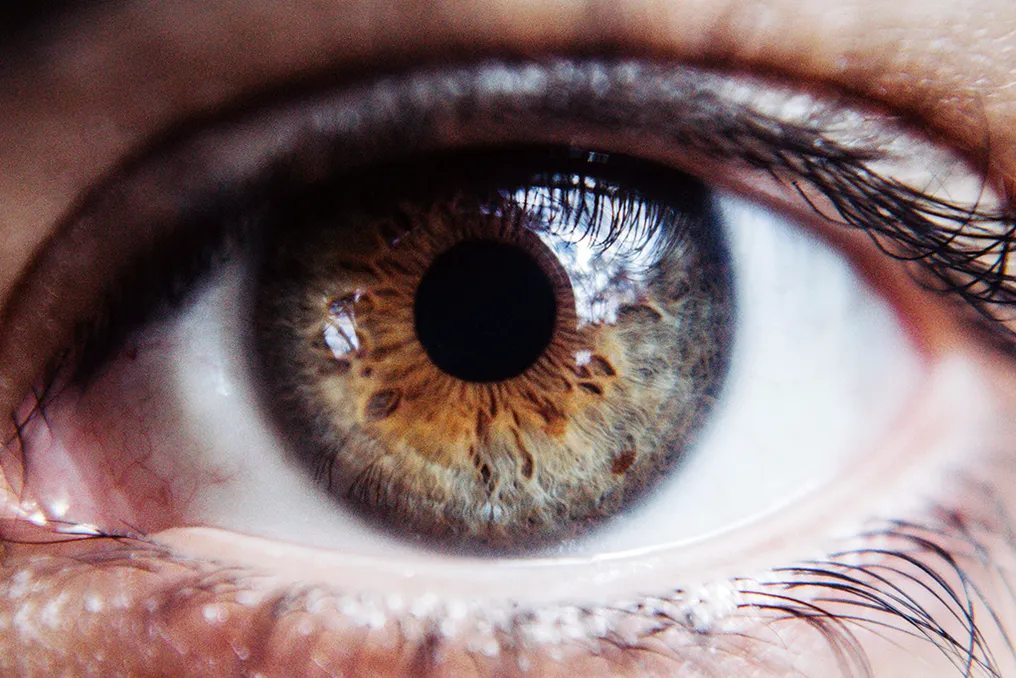
Development of bionic eyes: from science fiction to medical reality
Read more
super.abril.com.br

Development of bionic eyes: from science fiction to medical reality

The idea of enhanced vision through electronic means, present in works of science fiction such as Star Trek and Neuromancer, is gradually becoming a reality in modern medicine. Researchers have been developing bionic eyes capable of recovering some lost vision, although current functionalities are still elementary and constantly evolving.

In the future, these devices may go beyond the limits of natural human vision, enabling image manipulations impossible for the biological eye or allowing the perception of light outside the visible spectrum.

To date, implants have been aimed at combating retinal failures, the light-sensitive layer located at the back of the eye, which is essential for perceiving the world. When the retina suffers severe damage, the consequence can be total blindness.

Efforts to treat retinal blindness with implants began more than twenty years ago. One of the first devices, created by the German manufacturer Retina Implant AG, used a light-sensitive chip positioned under the damaged retina. This chip communicated with the remaining healthy retinal cells, which in turn sent the visual signal to the occipital cortex, the brain area responsible for vision.

The surgery required to install this chip lasted about eight hours, involving the creation of a cranial recess behind the ear to insert a power receiver and subsequently connect it to the chip via a wire under the skin. However, the device provided only rudimentary vision, manifested as flashes of light resembling the shape of the observed object. Furthermore, many implants failed over time, possibly due to rapid eye movement or corrosion caused by internal saline fluid. Retina Implant AG ceased operations in 2019, citing the lack of medical advancements as a determining factor.

Another innovative device, the Argus II, combined a camera attached to glasses with a chip surgically implanted over the retina. The image captured by the camera was converted into a signal and transmitted wirelessly to the chip (along with power), which stimulated the healthy cells of the damaged retina using an array of 60 electrodes. Despite initial promising results and FDA approval in 2013, the ARGUS II also did not demonstrate sufficient efficacy and was discontinued in 2019.

Despite these setbacks, research into creating artificial vision has continued. A more recent methodology involves using an external camera that transmits energy and image data wirelessly to a chip inserted into the occipital cortex. This technique is based on studies that applied electrical probes directly to the occipital cortex to stimulate visual perception. This approach can benefit patients with retinal diseases or those affecting the optic nerve, which connects the retina to the brain, although the exact resolution achievable remains uncertain due to the loss of high retinal resolution and complex signal processing.

ReVision Implant, based in Belgium, is testing this technique and plans to start its first human clinical trial in October 2026.

Another alternative is the use of glasses that transmit images and energy to a sub-retinal chip, inserted surgically via infrared signal. The Prima device, which employs this technology, was evaluated in a specific condition of the retina known as dry age-related macular degeneration (AMD), one of the main causes of blindness. In a small clinical study, the Prima managed to restore functional central vision in 81% of participants, allowing them to read letters, numbers, and words. Currently, this device already has authorization for use in thirty European countries.

Because AMD is much more prevalent than hereditary retinal diseases treated by the previous systems, the Prima attracts more investor interest. However, there are important ethical considerations. Unlike patients with hereditary diseases, most affected by AMD maintain good peripheral vision, which implies a significant risk if any complication occurs during the complex sub-retinal implant surgery.

Since these technologies transfer visual information electronically, extra functionalities can be integrated. With the Prima, patients can use optical zoom, and image enhancement algorithms have been proposed.

In the future, devices capable of seeing beyond the visible spectrum may emerge, offering thermal imaging and night vision. A device that detects near-infrared has already been tested in primates. However, even if promising, these advanced functionalities will only become relevant when artificial vision, currently basic, evolves significantly.

Meanwhile, considerable challenges related to biomaterials and electronics persist, preventing retinal implants from providing complete and lasting vision restoration. A potentially greater obstacle lies in competing biological solutions, such as stem cells, which are in early stages of human testing. Although these solutions have also faced past disappointments and present major barriers in terms of cell survival and integration, new human retinal cells could eventually surpass bionic eyes as the definitive method for restoring vision.

UAE Astronaut Studies Possibility of 3D Printing Organs in Space for Transplantation
Read more
www.khaleejtimes.com

UAE Astronaut Studies Possibility of 3D Printing Organs in Space for Transplantation

The possibility of creating organs through 3D printing in outer space is being considered as a potential solution for patients requiring transplants. Scientists are investigating how microgravity can alter the methods of producing biological materials.

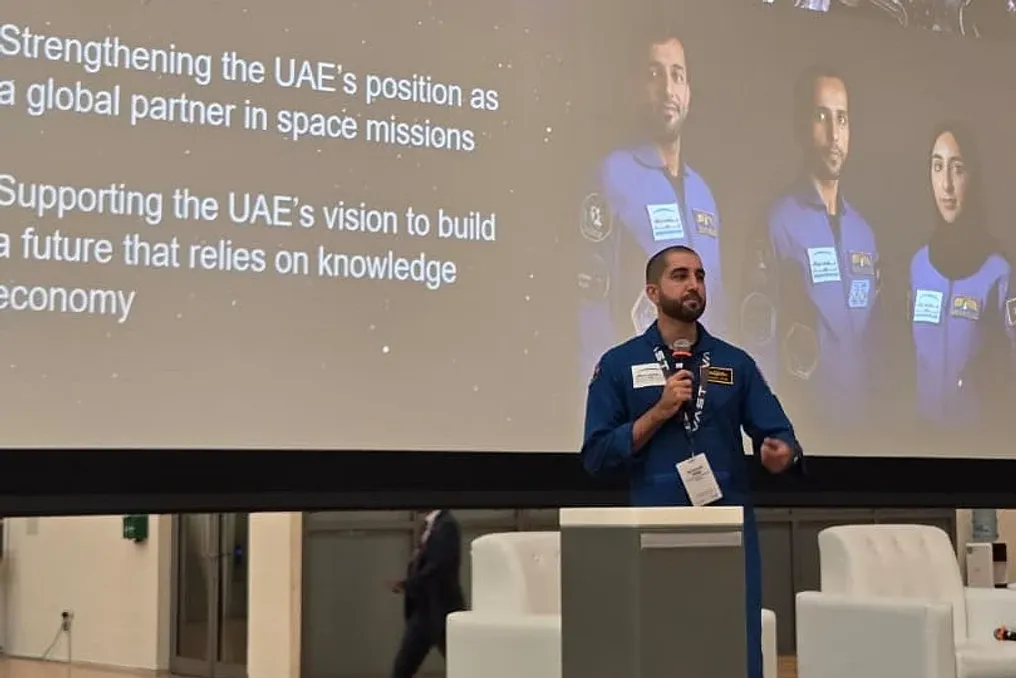
Emirati astronaut Mohammad Al Mulla raised the topic of 3D printing organs such as kidneys, hearts, and knees in space conditions. He noted that on Earth, gravity affects the process of material deposition layer by layer, whereas microgravity might allow researchers to approach the construction of structures differently.

Al Mulla emphasized the need for donor organs, including liver, lungs, heart, and kidneys, as a reason to study this technology. Nevertheless, creating transplantable organs remains a future prospect, and no timelines were established during the discussion.

Speaking at an event organized by Masdar City and the space company Vast in Abu Dhabi on Tuesday, Al Mulla expressed hope that this technology could eventually be used to produce organs or other structures needed by patients.

Research into printing biological tissues in orbit is already underway. NASA has reported experiments with bioprinted cartilage tissues aboard the International Space Station (ISS), including work on the human knee meniscus. Researchers are studying whether microgravity can facilitate the production of tissues with properties that may support new treatment methods in the future.

Former NASA astronaut Sunita Williams suggested that commercial space stations could increase the productivity of biological research, allowing scientists to move from individual experiments to more automated processes.

During her missions, Williams participated in experiments related to stem cells, DNA sequencing, and capillary flow. She noted that researchers have learned to adapt equipment and procedures to space conditions, paving the way for more automated research.

Williams stated that manual labor required in some experiments limited the scope of researchers' achievements. She gave an example: 'I performed the work manually in the glove box... it's one cup at a time, and that takes half a day.'

Automation, she said, would allow for more efficient cultivation of stem cells and organoids—small simplified models of organs created from cells—which could potentially enable the production of biological materials in orbit for subsequent return to Earth.

Williams pointed out that the ISS helped lay the groundwork for this work, but commercial space stations could provide a more productive environment for repeatable experiments and large-scale biological research.

She also described how the absence of gravity changes even the simplest routine actions. Objects do not stay where they are placed, so astronauts have to secure them or use Velcro so they don't float away. 'In space, you lose everything,' she said.

Liquids can be equally unpredictable. Without gravity, liquids can move along surfaces or through equipment unexpectedly, which could potentially disrupt an experiment or complicate a routine task. Williams illustrated this problem with a photograph of a birthday cake prepared for an astronaut, which was covered in peanut butter to keep it on the plate.

Williams, who retired from NASA in 2025 and now serves as a consultant for astronauts at Vast, believes that commercial operators will play an increasingly important role in the next phase of low Earth orbit activities, with research aimed at practical benefits on Earth.

Potential applications remain a scientific goal rather than a guarantee of the near arrival of transplant-ready organs. However, the discussion highlighted how scientists and space companies are looking beyond orbital experiments, contemplating what might be produced there in the future.

Mohammad Al Mulla has not yet flown in space but expressed eagerness for this possibility after many years of astronaut training.

Popular