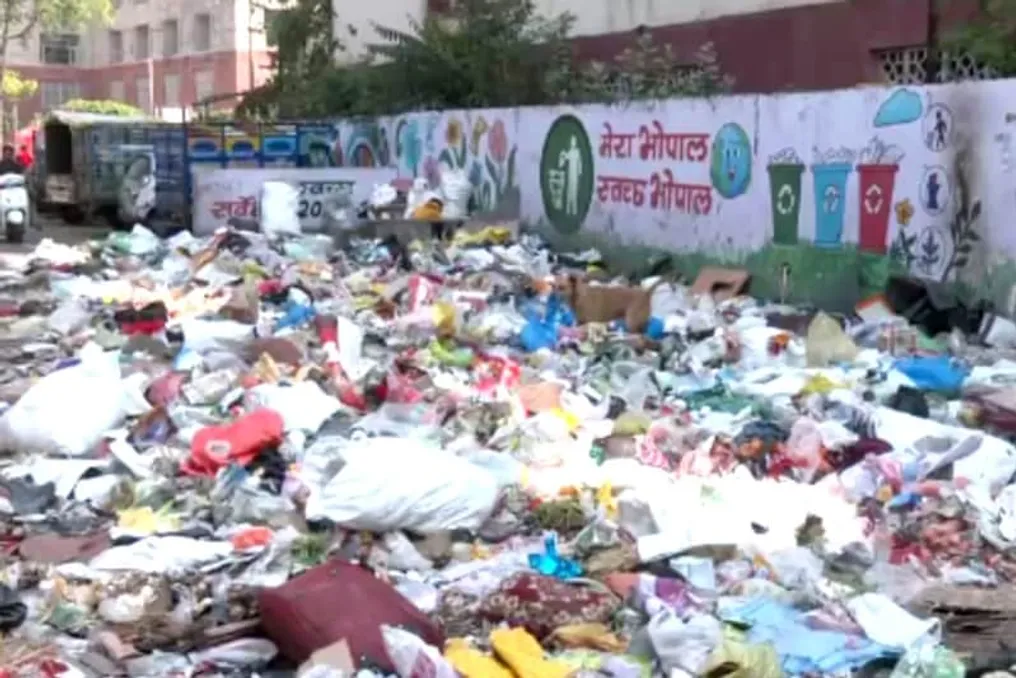
Despite expectations of festive bustle and cleanliness ahead of Diwali, a completely different picture has emerged in Bhopal, the capital of Madhya Pradesh. Huge piles of garbage have accumulated on streets, in residential areas, and in markets, including the Ministry premises. This situation is the result of a three-day indefinite strike by sanitation workers, which has completely paralyzed the city's sanitation system. The cessation of door-to-door waste collection has turned Bhopal into a city overwhelmed with refuse.
On the day of a major festival like Dhanteras, New Market in Bhopal should have been filled with an atmosphere of consumer activity and business hustle, but the widespread garbage and foul odor caused significant concern among traders and citizens. The problem is not limited to markets; a massive garbage mound has also formed in front of the Madhya Pradesh government Ministry building, where the offices of the Chief Minister and various government departments are located, raising serious questions about the region's sanitary system.
The sanitation system in Bhopal's 85 wards, covering 21 zones and over 7,000 employees, depends on the operation of more than 400 garbage trucks, which were also affected by the strike. Approximately 850 metric tons of waste are generated daily in the capital. Therefore, during the three days of stoppage, an estimated 2,550 metric tons of garbage are expected to accumulate. Since household waste collection has stopped, the amount of garbage on streets and public places is constantly increasing.
Dirt is also visible in the elite area for ministers and officials, known as 4 Imli. Despite the residence of Deputy Chief Ministers, ministers, former ministers, and high-ranking IAS-IPS officials here, the streets remain littered with garbage. Photographs of cows searching for food among the trash highlight the critical state of sanitation in the capital during festivals.
The cause of the sanitation workers' strike is demands related to wages and working conditions. Employees, who earn about 10,500 rupees per month, insist on increasing this amount to 25,000 rupees. Furthermore, they demand the abolition of the outsourcing system, guaranteed permanent employment, granting them the status of civil servants, and providing a death benefit to one of their spouses. According to Ashok Verma, Vice President of the Madhya Pradesh Sanitation Workers Union, the strike continues due to these demands.
Meanwhile, Chief Minister Mohan Yadav has assured the public and sanitation workers that he will closely monitor the issues related to worker dissatisfaction and public discomfort. While workers protest over their demands, the public, traders, and residents of the city suffer from unsanitary conditions. A natural question arises regarding what steps the government and municipal services will take to end the strike and whether Bhopal can clear the garbage before Diwali begins.