In cinema, voice plays a significant role as it is often a distinguishing feature of any character, allowing viewers to recognize the hero even without visual contact. The voice helps breathe life into the acting performance. However, a dissonance arises when a familiar voice is delivered by an actor who looks completely different from what the viewer expects.
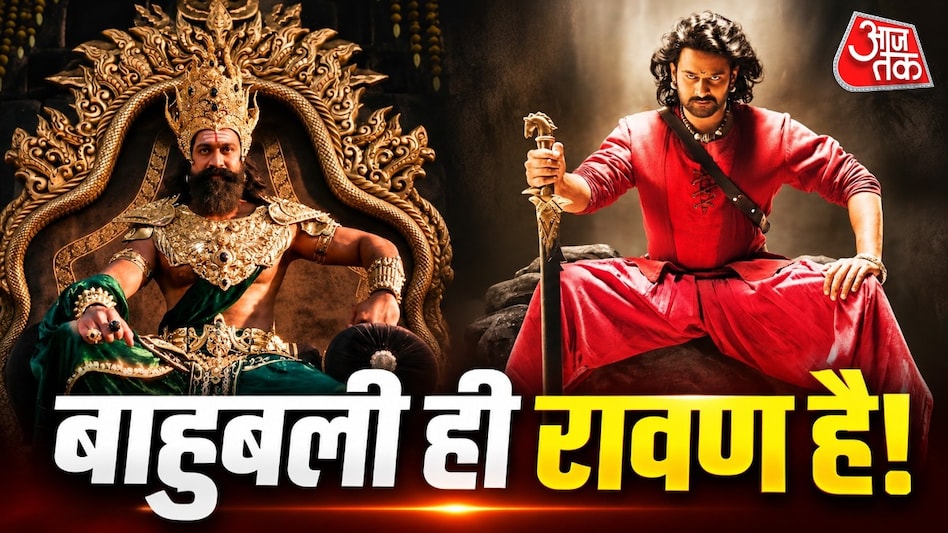
Such an experience occurred with viewers watching Nitesh Tiwari's highly anticipated epic film 'Ramayana,' which was made with a massive budget of 400 billion rupees. In this film, Yash plays Lankapati Ravana, known as 'Rocky Bhai' from Kannada. His screen presence, aggressive look, and charisma are impressive. But when he delivers dialogues in Hindi, a strange inconsistency is felt due to his Hindi dubbing.
For this important character in 'Ramayana,' the voice was provided by the renowned actor and voice artist Sharad Kelkar. Undoubtedly, Sharad's voice possesses incredible depth, power, and resonance. He has made many major characters immortal with his voice. However, the issue here is not the quality of the voice, but the 'cultural association' that has long been ingrained in the audience's consciousness.
As soon as Ravana Yash appears on screen, the mind immediately shifts to memories of the 2015 film 'Baahubali.' It was Sharad Kelkar who dubbed the characters Amarendra and Mahendra Baahubali in this historical film in Hindi. This voice still lives in the memory of viewers as the voice of a just and great warrior. When this same recognizable voice sounds from the mouth of the villain—'Ravana'—the viewer's attention is diverted from the plot and gets caught up in old memories.
The main difficulty in the dubbing process is that the voice of Baahubali possessed a sense of sanctity, duty, and dignity. Conversely, the image of Ravana was supposed to demonstrate arrogance, the pride of omniscience, and dangerous cruelty. When the same old tone is heard in the execution of a villain, the character's frightening and unique impact somewhat weakens. Frankly, if Yash himself had dubbed his films in Hindi, he might have achieved a greater congruence with this image, as his own voice possesses natural power and authority.
Although in the films K.G.F and Toxic, viewers perceived Yash in a new and different image, Sachin Ghale dubbed him then. Yash's modern and sharper screen presence does not seem entirely harmonious with Sharad Kelkar's traditional dramatic voice. Undoubtedly, Sharad Kelkar is an outstanding artist, but sometimes his iconic identity becomes too dominant over the character.
In the author's opinion, if a voice without such a large legacy as Baahubali's had been chosen for Yash in 'Ramayana,' this terrifying appearance of Ravana would have seemed even more convincing and new to Hindi audiences. Because every time the viewer closes their eyes and listens to Ravana's voice in the cinema hall, they will see not Yash, but Prabhas.