FAA plans to discontinue the use of diskettes in air traffic control systems by 2028
Read more
Olhar Digital
olhardigital.com.br

FAA plans to discontinue the use of diskettes in air traffic control systems by 2028

The U.S. Federal Aviation Administration (FAA) aims to replace diskettes used for storing critical data, such as meteorological information, in over 400 air traffic control locations by the end of 2028.

The proposed new system intends to consolidate all operational information into a single panel, which will facilitate controllers' access to air traffic updates. This technological upgrade will replace four systems dating back to the 1980s.

This transition occurs at a time when the agency is dealing with technological challenges in its infrastructure. It is worth noting that diskettes have not been manufactured on a large scale since 2011, and their widespread use ceased more than 25 years ago.

In the previous year, Congress allocated $12.5 billion (equivalent to about R$ 68.12 billion) to modernize the air traffic control system. Furthermore, Secretary of Transportation Sean Duffy is seeking an additional $30 billion (approximately R$ 163.5 billion) to cover further upgrades.

Justifying this change, FAA administrator Bryan Bedford emphasized the gains provided by the new technology. He stated that they are abandoning obsolete manual procedures and replacing the dependence on diskettes with a modern system that allows controllers to instantly share critical flight alerts, pilot reports, and restricted airspace schedules.

The modernization is not limited only to equipment that uses diskettes. In a communication sent to airports on October 23, the FAA warned about disruptions in air traffic control services resulting from fiber optic cable cuts, which has caused delays, diversions, and flight cancellations.

The infrastructure also presents other vulnerabilities, depending on old Compaq computers, spare parts purchased on eBay, and isolated analog systems. According to Bedford, these facilities lack direct communication, being described as 'each facility is a silo.'

Additionally, the country faces a shortage of several thousand air traffic controllers, even possessing the planet's most complex airspace.

Another ongoing transformation is the replacement of paper forms used by controllers to monitor aircraft. This process began in 2022 and has already been completed at 27 of the 49 major American airports, with implementation in the remaining ones scheduled to occur by at least 2028.

Similar stories

Experts discuss the prospects of eVTOL flying cars by 2026 and obstacles to their mass adoption
Read more
olhardigital.com.br

Experts discuss the prospects of eVTOL flying cars by 2026 and obstacles to their mass adoption

Despite expectations that flying cars will appear by 2026, the most advanced projects are currently only prototypes undergoing testing. However, the fact that eVTOL (Electric Vertical Take-Off and Landing — electric vertical take-off and landing vehicle) is moving out of the concept stage is not in doubt.

Fernando Martini Catalano, Professor at the Department of Aerospace Engineering and Director of the School of Engineering San Carlos (EESC-USP), confirmed that this will happen. He explained how these aircraft work and what barriers prevent them from beginning full operation.

Fernando Castro Pinto, a lecturer at the Department of Mechanical Engineering of the Polytechnic School UFRJ, also participated in the discussion. Two companies dominate the sector: Joby Aviation from the USA and Eve Air Mobility, a division of the Brazilian company Embraer.

Currently, there is a race between companies to meet the requirements of aviation authorities such as Anac (National Civil Aviation Authority) and the FAA (the equivalent of Anac in the USA). Joby is focusing on conquering the American and Middle Eastern markets using the Joby S4 model, capable of carrying one pilot and four passengers with a tilt-rotor propulsion system. Eve, meanwhile, is betting on the simplicity of its mechanical design and the experience of global certification gained from Embraer.

Joby has partnered with Toyota to ensure large-scale automotive production. Demonstrative and experimental flights of the Joby S4 with passengers are expected to begin in the USA in late 2026 – early 2027. Simultaneously, commercial transport by this American company is expected to start in Dubai, United Arab Emirates.

Eve's eVTOL, codenamed Eve 100, is also designed for one pilot and four passengers. Its technical advantage lies in the 'lift + cruise' design, which uses separate rotors for vertical takeoff and a rear propeller for horizontal flight, providing simpler mechanics and lower maintenance costs compared to the Joby project.

Like Joby, the Eve project is in the testing and certification phase. Although mass production has not yet begun, the factory in Taubaté (São Paulo state), designed by Embraer, is capable of assembling up to 480 aircraft annually. Embraer and Eve management predicts final certification and the start of commercial operation by the end of 2027 or during 2028.

Morgan Stanley estimates the global eVTOL and Urban Air Mobility (UAM) market at $1 trillion (5 trillion Brazilian reais) by 2040, including passenger transport, cargo delivery, and necessary digital and physical infrastructure (vertiports). However, the bank recently lowered its 2030 forecasts by 75%, bringing them down to $12 billion (60 billion reais), because regulatory barriers proved higher than anticipated.

Technical and safety issues are the main obstacle. Fernando Castro Pinto notes that the main technological challenge is similar to the battery problem in electric vehicles: the more energy required, the larger the battery, the heavier the aircraft, and the more energy is needed. Fernando Martini Catalano adds that the weight of batteries remains too high relative to the energy they provide.

Furthermore, Fernando Pinto pointed out other obstacles to implementation in Brazil: the need to obtain a driver's license and comply with traffic rules. He emphasized that an accident at 30 meters altitude would have much more serious consequences than on the ground.

Consolidating eVTOL fleets will require not only a high level of qualification exceeding standard driving licenses but also harmonious coexistence with civil aviation and helicopters, adhering to routes and airport restrictions. The pilot must possess commercial class pilot skills, understanding all limitations related to routes, radio communication, and attentiveness.

When will flying cars become a reality? Catalano believes it will take seven to ten years, noting that the aircraft itself is only part of the problem; the entire ecosystem, including vertiports, charging logistics, noise reduction, and urban legislation, is necessary. Fernando Pinto, on the other hand, predicts decades for mass transport, as infrastructural bottlenecks such as the capacity of the urban power grid, as well as the evolution of battery technologies and the creation of a legal framework, must be resolved.

Catalano suggests considering medical emergency transport, organ transport, and cargo transport as the initial entry of eVTOL into cities, as these can become faster and more accessible solutions compared to helicopters, especially since not all hospitals are equipped with helipads, and a vertiport can be a cheaper and more urgent alternative.

The main challenge, according to experts, is to make the use of flying cars relatively inexpensive so that they do not remain a luxury item but serve a real benefit to the population.

China may launch fourth nuclear-powered aircraft carrier in 2027
Read more
noticiasaominuto.com

China may launch fourth nuclear-powered aircraft carrier in 2027

According to an analysis of satellite imagery published by American researchers, China potentially could commission its fourth aircraft carrier, which is presumed to be the first in the country with nuclear engines, as early as 2027.

The Center for Strategic and International Studies (CSIS), based in Washington, reported that images obtained this month show a ship known as Type 004 in a construction phase similar to that of the Fujian aircraft carrier in May 2021, about a year before its launch.

The new aircraft carrier is being built at shipyards in Dalian, northeastern China, and could be launched in the year of the centenary of the founding of the People's Liberation Army (PLA), i.e., August 1, 2027.

Brian Hart, Deputy Director of the China Power project at CSIS, noted: 'If construction continues at this pace and follows a schedule similar to the Fujian, it would not be surprising if the ship were launched by the end of 2027 or early 2028.'

The images show that the ship's hull is in a dry dock, although the flight deck and command structure are still missing.

According to CSIS, the current dimensions of the hull are about 322 meters long and 46 meters wide, although the final dimensions have not yet been determined. Satellite image analysts estimate that the aircraft carrier could reach a length of about 339 meters, approaching the size of the largest US Navy ships.

Experts acknowledge, however, that the larger size of the ship and the complexity of installing a nuclear propulsion system could lead to delays in the schedule.

Bradley Martin, a researcher at the Rand Corporation and former US Navy captain, considered a 2027 launch possible but warned that it could take two to three years before the ship becomes operational.

Type 004 will also need to include an electromagnetic catapult system, a technology that allows for the operation of heavier aircraft with more armament.

The construction fits into Beijing's strategy to expand military deployment capabilities in the western Pacific and the Indian Ocean.

According to a Pentagon report published in 2025, the Chinese navy plans to build six more aircraft carriers by 2035, bringing the total number of units to nine. Nevertheless, experts disagree on the feasibility of this goal.

Jim Fennell, a former officer of the US Pacific Fleet intelligence services, found it more realistic that China could have six operational aircraft carriers by 2035, while James Holmes, a professor of naval strategy at the U.S. Naval Academy, stated that China's industrial potential could allow it to achieve a more ambitious goal.

China currently has three aircraft carriers: Liaoning, Shandong, and Fujian, with the latter commissioned in November 2025. Expanding the fleet will allow Beijing to conduct longer naval operations far from its shores, although analysts note that Chinese aircraft carriers may continue to show limitations compared to American ones in scenarios of direct conflict.

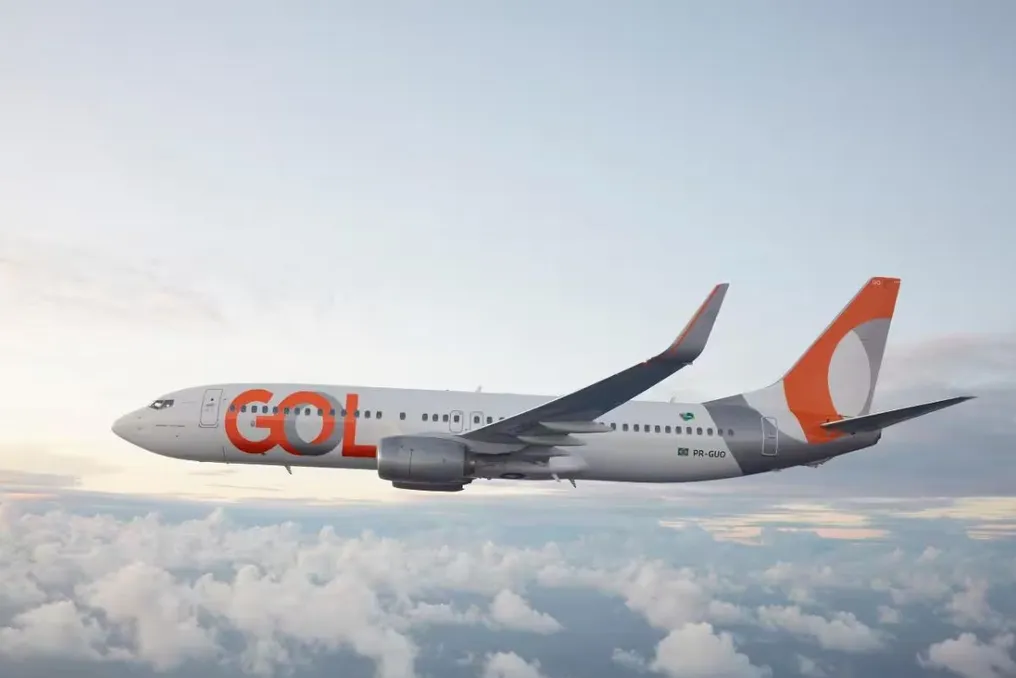
Gol cancels international routes, leaving Brasília without direct flights to the US for 17 years
Read more
g1.globo.com

Gol cancels international routes, leaving Brasília without direct flights to the US for 17 years

Gol Linhas Aéreas will suspend three international routes as part of a process to readjust its air network. This decision was confirmed on Monday, the 26th, by Inframerica, which manages the terminal.

With the closure of flights to Miami and Orlando, Brasília will lose its direct air connections to the United States. According to Inframerica, this situation has not occurred since 2009. The airline has not yet provided an estimate of when operations to these destinations will resume.

The 'international hub' loses ground

This change will cause the number of international destinations accessible by direct flights at Brasília Airport to decrease from nine to only five, as reported by Inframerica. Operations will remain active for other destinations.

Fuel price hike pressures the aviation sector

In its statement, Inframerica explained that the cancellation is occurring in a context of increasing costs for commercial aviation. In addition to fuel prices, airlines are monitoring tax changes planned for the coming years. These elements have motivated the sector to review its strategies, focusing on markets with higher demand, according to the concessionaire.

Despite this, Inframerica declared that it continues to seek opportunities with national and international airlines with the aim of expanding flight offerings abroad and strengthening the international link of the Federal District.

Gol expanded flights to Buenos Aires in 2025

In May 2025, Gol had increased the number of weekly flights between Brasília and Buenos Aires, from five to seven. At that time, this modification allowed Brasília Airport to offer daily direct flights to the Argentine capital. This route operates to the Jorge Newbery Airport, known as Aeroparque, located in the central area of Buenos Aires, and to Ezeiza International Airport. The trip takes approximately four hours.

Popular