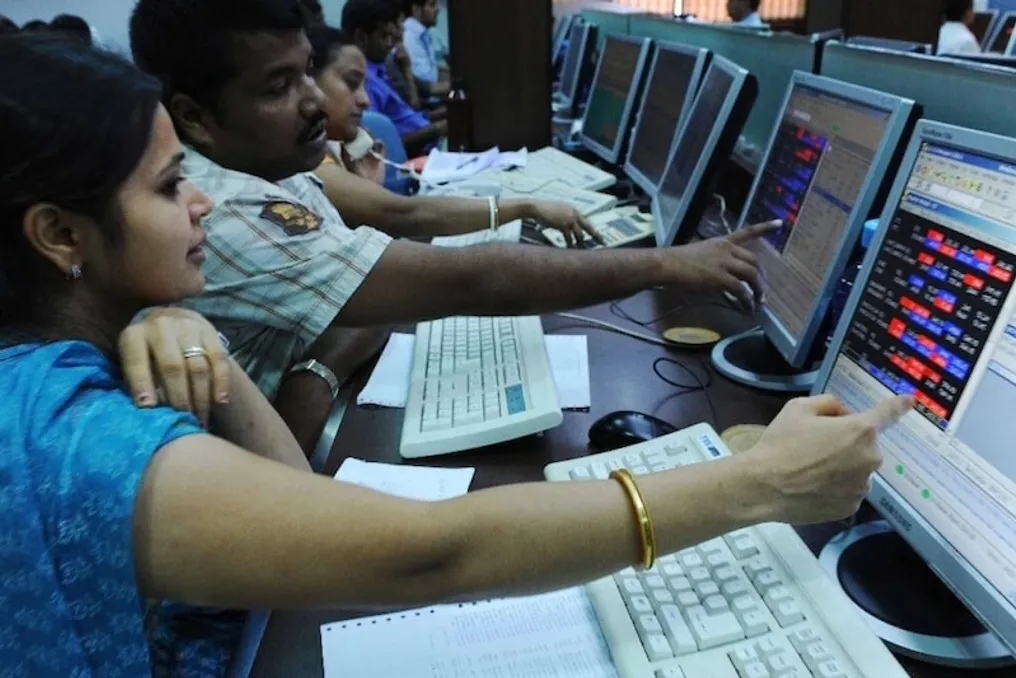
Indian Stock Market Shows Strong Growth: Sensex Exceeds 81000, Nifty Reaches 25000
Read more
Aaj Tak
www.aajtak.in

Indian Stock Market Shows Strong Growth: Sensex Exceeds 81000, Nifty Reaches 25000

Despite declines in global stock markets, the Indian stock market demonstrated impressive momentum on Friday. Active buying occurred in the Sensex and Nifty indices, with both indices closing for the seventh consecutive working day with gains.

The Sensex increased by 1718 points, reaching above 81000, while the Nifty jumped by 493 points, once again surpassing the 25000 mark. The positive market sentiment was driven by consistent purchases from foreign investors and falling crude oil prices.

Of particular note is that the growth of the Indian market continued even as American and Asian markets experienced significant declines. On Friday, the BSE Sensex, comprising 30 stocks, closed at 81028.02 with an increase of 1718.01 points, representing 2.17% for the trading day. Meanwhile, the NSE Nifty, which includes 50 stocks, rose by 493.75 points, or 2.01%, concluding trading at 25030.35. Both indices showed growth over seven consecutive working days.

Over the last seven trading sessions, the Sensex grew by a total of 7781.99 points, corresponding to an increase of 10.62%. During the same period, the Nifty showed a rise of 2331.5 points, or 10.27%. Furthermore, the Bank Nifty demonstrated a rise of 1312.35 points and closed at 59086 at the end of the trading day.

The wave of growth in the stock market has been continuing for several sessions. On Thursday, the Sensex also showed a significant jump of 2008.61 points, or 2.60%, closing at 79310.01. The Nifty also rose by 576 points, or 2.40%, reaching 24536.60. Thus, strong growth in two consecutive trading sessions pushed the market to a new level. On Friday, the Sensex managed to cross the 81 thousand mark, and the Nifty crossed the 25 thousand mark.

Among the 30 companies in the Sensex, Mahindra & Mahindra (M&M) shares showed the largest growth, increasing by 6.15%. The company announced its third-quarter results for September on Thursday. The company's net profit after tax (PAT) for the quarter from July to September grew by 25%, reaching 4.587.88 billion rupees. The results were supported by strong sales and revenue growth in the company's automotive segment. Additionally, shares of ICICI Bank, HDFC Bank, Titan, Axis Bank, and Kotak Mahindra Bank were also rising. Only Power Grid shares closed lower among the Sensex constituents.

A significant reason for the market's growth was the activity of foreign investors. According to exchange data, Foreign Institutional Investors (FIIs) made a net purchase of shares in the Indian stock market worth 14,974.68 crore rupees on Thursday. Moreover, the decline in international crude oil prices provided relief to investors. Brent Crude fell by 1.50%, settling at $96.82 per barrel. Since India imports a significant portion of its needs from abroad, the drop in commodity prices is expected to reduce pressure on the import bill and inflation in the country.

The rise in the Indian market occurred while many major global stock markets struggled with downturns. On Thursday, there was a mass sell-off in American markets. The Nasdaq Composite fell by 5.52%, the S&P 500 declined by 4.36%, and the Dow Jones lost 3.44%. Pressure was also felt in Asian markets. South Korea's Kospi fell by 6.02%, and Japan's Nikkei 225 closed with a decline of about 5.96%. The Shanghai Composite and Hong Kong's Hang Seng also fell by more than 1%.

European markets remained weak during trading.

According to Vinod Nayar, head of research at Geojit Investments, investors view the Indian stock market as a relatively safe alternative amid turmoil in foreign markets. Investor anxiety in American markets intensified due to massive sales of technology stocks and fears of strict regulation by Democrats. In contrast, growth in India was supported by foreign investor purchases and positive domestic signals.

Similar stories

Investors profit by 20.8 lakh rupees in five days due to stock market growth
Read more
www.aajtak.in

Investors profit by 20.8 lakh rupees in five days due to stock market growth

A sudden shift is observed in the dynamics of the stock market, as the last five days have been characterized by steady growth, while global markets are under pressure, especially American ones. However, the Indian market continues to grow confidently, which has brought significant relief to investors.

According to statistical data, over five trading sessions, the main index of the Bombay Stock Exchange (BSE), SENSEX, increased by more than 4055 points, leading to a substantial increase in the total capital of investors. On Wednesday, after trading, SENSEX closed at 77,301.40 points, showing a rise of 383.55 points, or 0.50 percent.

Similarly, the NIFTY index of the National Stock Exchange demonstrated an increase of 149.75 points or 0.63 percent on Wednesday, closing at 23,960.60. Over the past five days, NIFTY rose by a total of 1261.75 points.

The continuous growth over the last five days significantly increased investors' wealth. Only on Wednesday's trading day, the total capitalization of companies listed on the BSE reached 493.44 lakh rupees, providing an asset increase for investors of approximately 6.65 lakh rupees in one day. If we consider the total income over five sessions, the total increase in investors' assets amounted to a substantial 20.81 lakh rupees.

During this growth period, mid-cap and small-cap stocks showed greater strength compared to large-cap stocks. The Nifty Midcap 100 index demonstrated strong growth of 1.55 percent, and the Nifty Smallcap 100 index—a 2 percent increase. Regarding sectors, all major indices except IT closed in the green zone, with media, real estate, and metallurgy stocks being the leaders.

According to market experts, various domestic and global factors are behind this growth. News about tax benefits in the upcoming central budget boosted the market. Specifically, the statement by Finance Minister Nirmala Sitharaman regarding the consideration of reducing the Long Term Capital Gains (LTCG) tax strengthened investor confidence.

Furthermore, the decrease in crude oil prices provided some relief. Strong demand during the festive season and positive quarterly reports supported market morale. The Indian rupee strengthened against the US dollar for the fourth consecutive time, and the weakening dollar and slowing crude oil prices provided additional support to the domestic market.

Following the results of the US midterm elections, there was a positive sentiment in global markets. This generated hope for a balanced approach to trade and tariff policies, which could stimulate investment from foreign institutional investors (FII) in emerging markets.

Experts believe that thanks to strong domestic demand and visible earnings, the market trend may remain positive in the near future, although periodic profit-taking may occur due to geopolitical risks and fluctuations in crude oil prices.

Stock market shows sharp growth: after Reliance shares, Indigo, HDFC Bank, and Asian Paints rose today
Read more
www.aajtak.in

Stock market shows sharp growth: after Reliance shares, Indigo, HDFC Bank, and Asian Paints rose today

On Tuesday, the stock market looked exceptionally positive. The Sensex and Nifty indices, which closed with a sharp rise on Monday, began an impressive movement immediately after trading opened on Tuesday.

The BSE Sensex index, consisting of 30 stocks, opened with a gain of over 700 points, once again exceeding the 76,000 mark. At the same time, the NSE Nifty index also showed a rise of 188 points, surpassing the 23,600 level.

If Mukesh Ambani's Reliance shares attracted a lot of attention on Monday, then on Tuesday, the shares of Indigo, HDFC Bank, and Asian Paints became such 'rockets.'

On the previous business day, Monday, the BSE Sensex closed up by more than 1,200 points, and this rapid momentum continued on Tuesday. This 30-stock index opened higher than the previous close at 75,629 and then jumped by 729 points, reaching the level of 76,421.

As for the Nifty index, it followed the example of the Sensex. On Monday, the 50-stock Nifty closed up by more than 380 points, and on Tuesday, it opened higher than its previous close of 23,440, showing a rise of 188 points and reaching the mark of 23,628.

Indian stock market opens in the black, but then crashes: Reasons for the sluggishness of the Sensex-Nifty index
Read more
www.aajtak.in

Indian stock market opens in the black, but then crashes: Reasons for the sluggishness of the Sensex-Nifty index

The Indian stock market began the trading session with positive momentum after a three-day decline, but soon experienced a sharp drop. The market initially showed growth due to activity in IT stocks. The BSE Sensex opened at 73,665.64 points, showing an increase of 416.25 points, and the NSE Nifty 50 reached 22,742.20 points, increasing by 54.55 points. Bank Nifty also started with a rise of 40.05 points, reaching 54,965.75 points. Specifically, Nifty showed a rise of more than 300 points among IT stocks; TCS shares rose by 2.63%, Infosys by 1.53%, Wipro by 0.85%, and HCL Tech by 1.22%.

However, as trading time increased, the pace of market growth slowed down. Weakness in international stock markets and high crude oil prices negatively affected the market. The rise of Sensex and Nifty gradually weakened, and Nifty, which opened in the green zone, quickly turned red. It lost more than 100 points, and Sensex fell by more than 150 points, also entering the red zone. Bank Nifty remained in the red zone throughout the day, losing more than 500 points.

Brent Crude price holds around $114 per barrel

Brent Crude is trading around $114 per barrel. Since India imports a significant portion of its needs, rising oil prices could put pressure on inflation, companies' production costs, and the country's trade deficit. In the foreign exchange market, the Indian rupee also started moving with slight support. Compared to the closing on Thursday at 94.82 rupees per dollar, the rupee opened at 94.79 per dollar on Friday, strengthening by 3 paisa. Meanwhile, Asian markets saw a decline, and US stock markets also closed mostly negative on Thursday.

Investor concerns related to growing corporate spending on artificial intelligence (AI) and high crude oil prices pressured market sentiment. The domestic market will now watch company results for the third quarter. These reports will show how companies are coping with high energy costs, a weak global environment, and economic uncertainty.

Market support expected next week

There are also positive signals for the stock market. A significant fall in the yield of US 10-year treasury bonds and the strengthening of the rupee could contribute significantly. These factors are capable of helping reduce selling by Foreign Institutional Investors (FIIs), which in turn can support the stock market. Furthermore, the Jio Platforms IPO attracted about 3.73 lakh crore over the last two days. After the share distribution process is complete, it is expected that more than 3 lakh crore of this amount will return to the market, which could increase the availability of funds in the market next week and support stocks.

Expected rally in large-cap stocks

If there is a rise in the stock market on Monday, it may be led by large corporate stocks. There is relative stability in large-cap stocks, and opportunities may arise to invest in stocks of companies with good growth at reasonable prices. Conversely, pressure may persist in the mid-cap and especially small-cap segments. Previously, the growth of these stocks was driven not so much by strong operational performance of the companies as by an additional inflow of cash into the market. Thus, justifying the current prices of some stocks based on their operating results may be difficult.

What signals for investors?

Currently, the market faces two types of signals. On one hand, buying in IT stocks, a slight strengthening of the rupee, and a potential influx of funds next week could support the market. On the other hand, crude oil priced around $114 per barrel, weakness in global markets, and uncertainty regarding quarterly company results increase risks. In such an atmosphere, making decisions based solely on the initial market rise is not the right step. Besides looking for investment opportunities in large and reliable companies, attention must be paid to company profits, its valuation, and risks. Special caution should be exercised when investing in small-cap stocks.

Popular