The third stage of the media master class 'Future of Youth: Digital Technologies and Creative Solutions' concluded in Tashkent, organized by the 'Ziyo Forum' foundation for the development of science and education.
The event was held with the support of the Foundation for Interstate Humanitarian Cooperation of CIS Countries through the 'North-South' political science center. The master class program was dedicated to the topic 'Media 2026: Human, Artificial Intelligence, and the New Attention Economy.'
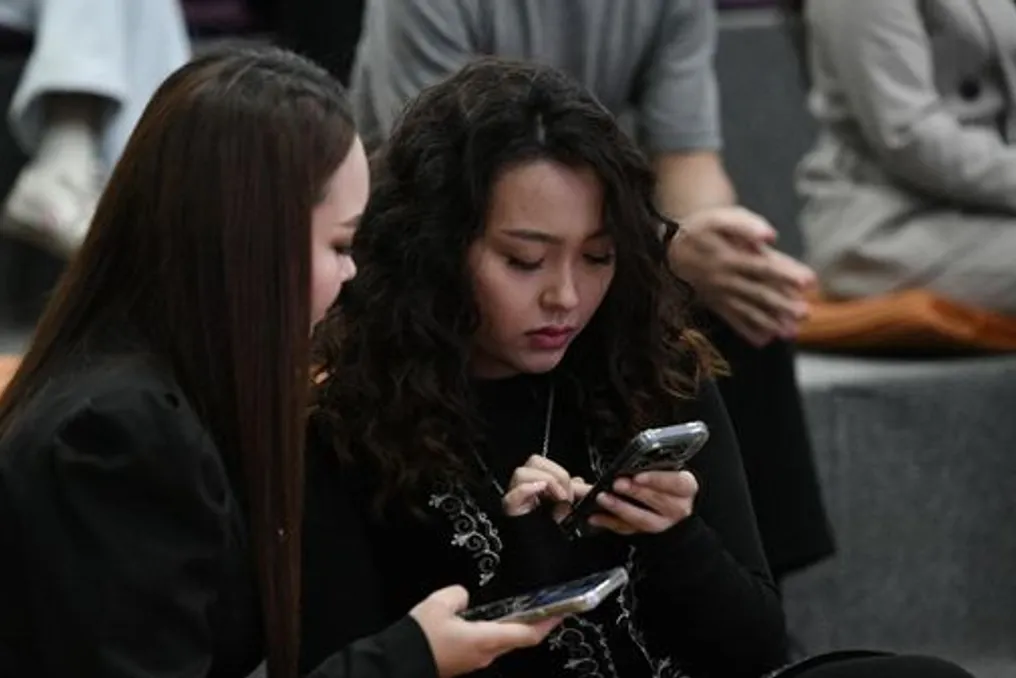
The master class gathered about 70 participants from Uzbekistan, Russia, Armenia, Kazakhstan, and Kyrgyzstan. Among them were young journalists and bloggers, as well as teachers, experts, and practical specialists.
Yunusjon Ilakhunov, a representative of the youth association of the Kyrgyz People's Assembly, expressed satisfaction with the participation of his country's delegation in the media master class in Tashkent. He emphasized that media is an integral part of life, especially for young people, and it is crucial that they learn the basics of media literacy.
The international format provided young specialists with the opportunity not only to gain new knowledge but also to exchange experiences, discuss the specifics of the media environment in their countries, and establish professional contacts.
Anzhelika Trapesnikova, Executive Director of the 'North-South' political science center, reported that the project began in 2024. She noted that maintaining mutual trust, professional contacts, and the desire to create joint projects is particularly valuable for organizing such meetings.
According to the organizers, one of the key tasks of the media master class is not to be limited to theory, but also to give participants the opportunity to apply the acquired knowledge in practice and prepare their own media projects. The organizers pay special attention to media literacy, which remains the foundation of quality journalism and blogging.
Anzhelika Trapesnikova also stressed that today there are many opportunities for an author to talk about their event, but under the conditions of a large flow of information, it is necessary to attract the audience's attention. Therefore, it is important to consider how the reader should perceive the information and whether to trust it.
The two-day program of the media master class focused on the current requirements of the modern media industry. Rustam Qairiyev, an expert on socio-political issues and public space from Kazakhstan, suggested that participants look at tourism content beyond ordinary templates. In his opinion, when talking about a country, one should focus not only on attractions, mountains, museums, and places of worship, but above all, on the people.
Natalia Kharitonova, Professor at the National Faculty of Security at the Academy of Public Administration and State Service of the Russian Federation, conducted a master class on the topic 'Transparency and Manipulation: Skills in the World of AI Deepfake, Lecturer Authority, OSINT, and Crisis Management' under the auspices of the President of Russia. Sabina Bakiyeva, founder of the advertising agency 'Faces' in Tashkent, spoke about creating stories involving money, algorithms, and bloggers, while Artemy Lebedev, media producer and head of Art. Lebedev Media, revealed the secrets of building a personal brand on social networks.
A vital part of the program was the individual and group independent execution of media projects. Participants presented their work to experts, jury members, colleagues, and guests of the event. After the presentations, the best projects were recognized and awarded, and all participants were given certificates.
The media master class became a platform for establishing professional contacts, exchanging experiences among young specialists from different CIS countries, and forming new international ties in the media sphere.