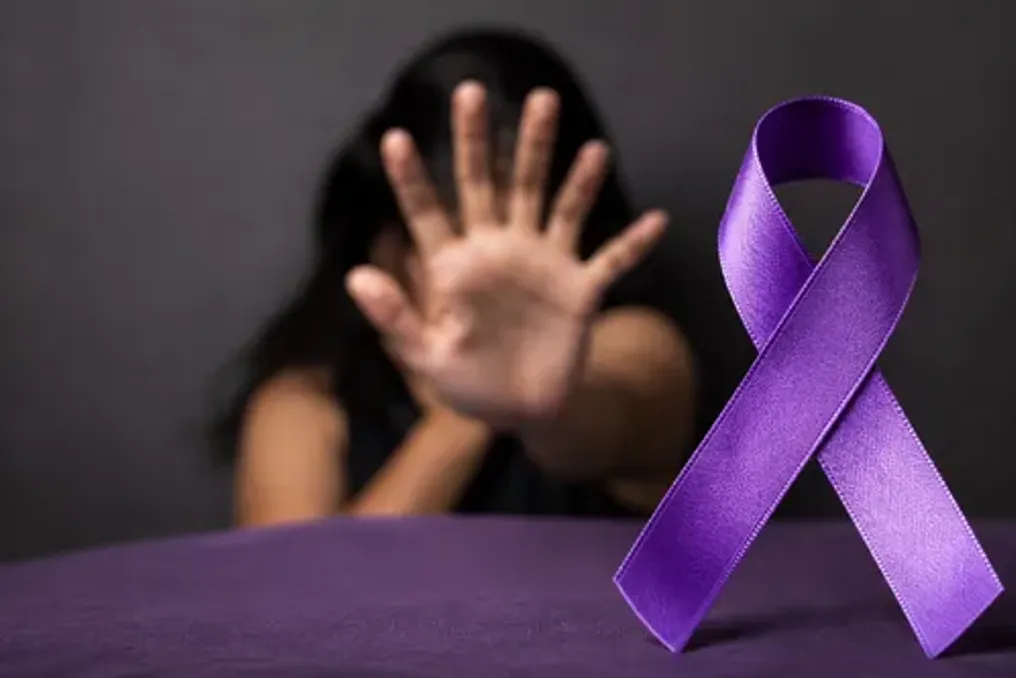
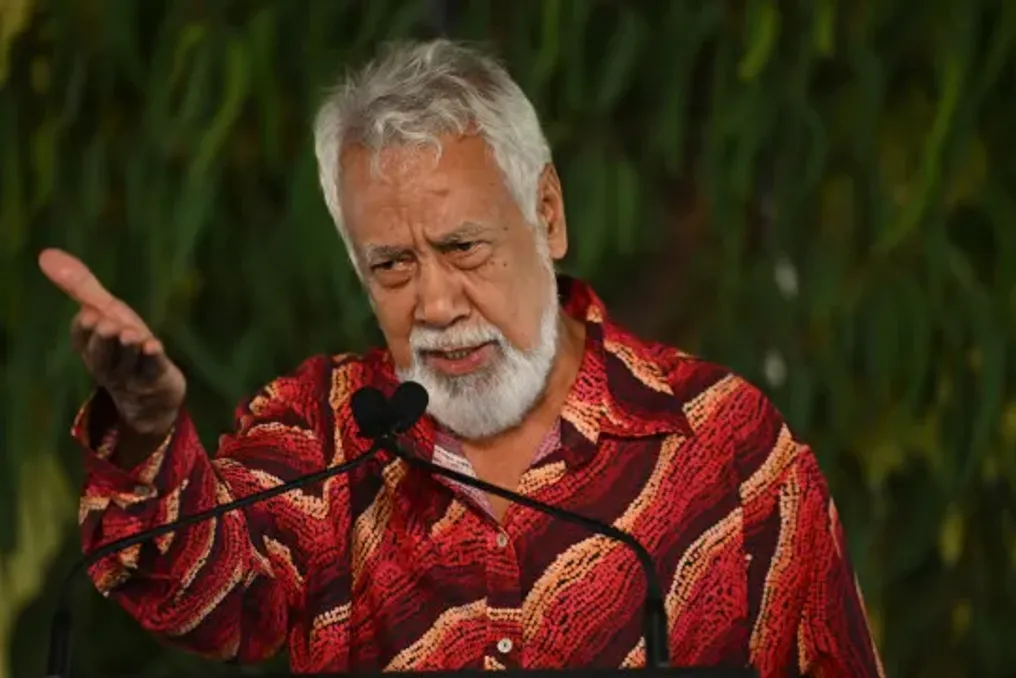
Timor-Leste Prime Minister Xanana Gusmão states that traditions and culture do not justify violence against women
Read more
Noticias ao Minuto
noticiasaominuto.com

Timor-Leste Prime Minister Xanana Gusmão states that traditions and culture do not justify violence against women

The Prime Minister of Timor-Leste, Xanana Gusmão, stated that no traditions or cultural norms can serve as justification for violence against women. He noted that women continue to face obstacles in accessing education, healthcare, land, loans, and economic opportunities.

Gusmão emphasized that domestic and gender-based violence continues to threaten the dignity and safety of women and girls. He added that if the struggle for independence was aimed at self-determination, then the fight for equality must ensure equal opportunities and dignified treatment for all citizens.

The speech took place at the Dili Conference Center during the celebration of the 50th anniversary of Timor-Leste's National Women's Day, observed on November 3rd in memory of Maria Tapo, who died in battle. Xanana Gusmão stressed that government support for gender equality and social integration is an integral part of nation-building, but such policies must show tangible results.

He particularly emphasized that no tradition, culture, or family authority can justify violence against women. At the same time, he called on men to become active partners in these changes, starting the transformation within the family, school, church, and society. It is necessary to build a society based on mutual respect, equality, and shared responsibility.

According to data from the UN Commission on the Elimination of All Forms of Discrimination Against Women, more than half of women in Timor-Leste aged 15 to 49 have experienced physical or sexual violence from a male partner.

In his speech, Xanana Gusmão also expressed a desire to see women in Timor-Leste not merely as recipients of aid, but as key actors in development. He insisted that women must have the opportunity to lead, innovate, start businesses, generate knowledge, and participate in making crucial decisions in the country.

The leader of Timor-Leste addressed the men and women of the country with a call to ensure that in 50 years, Timor-Leste becomes a nation where 'equality, justice, and inclusivity' are 'a reality experienced by all citizens.'

Similar stories

Protective measure allowed woman survivor of domestic violence in Rondônia to dedicate herself to helping other victims
Read more
g1.globo.com

Protective measure allowed woman survivor of domestic violence in Rondônia to dedicate herself to helping other victims

In Rondônia, a state identified as having the second-highest homicide rate against women in Brazil, the cycle of violence can be interrupted by legal interventions. Gracileide Damasceno, 47, overcame decades of domestic violence and, upon deciding to end the relationship, faced the worst attacks from her ex-husband. Thanks to a protective measure granted by the Justice system of Rondônia ten years ago, she gained the freedom to start a new phase, now dedicating herself to supporting women in similar situations.

Gracileide related that her greatest fear was that the aggressor would leave prison and come to kill her or her children. She stated that, through the aforementioned protective measure, she was able to leave the municipality safely and start her life anew.

Data from the Court of Justice of Rondônia (TJ-RO) indicate that in 2025 alone, more than ten thousand urgent protective measures were requested in the state. Previously, when Gracileide needed help, she had to appear in person at a unit. However, currently, it is possible to request it remotely, using a cell phone or computer.

Due to the abusive relationship, Leide—as she prefers to be called—only managed to finish high school after the separation. At 46, she achieved the goal of becoming a social worker and currently holds the position of coordinator at the Specialized Reference Center for Social Assistance (Creas) in Itapuã do Oeste (RO).

Before taking on the role of welcoming victims, she went through a period she describes as 'rock bottom.' Orphaned by her father at 15 and without family support, Gracileide saw marriage as a guarantee of stability, but the relationship proved to be the opposite. Over the years, her husband became progressively more controlling, jealous, aggressive, and abusive.

At the time, she had little perception of her situation, even believing that her own love would be enough to sustain the relationship. She explained that although he pushed her, insulted her, and pulled her hair, she did not consider it aggression because he apologized afterward, claiming not to know the reason for his actions.

Experts point out that such behaviors are recurrent in abusive relationships, and a major challenge in combating domestic violence is cultural normalization. Aline Rodrigues, a psychologist from the Coordination for Women in Domestic Violence Situations at the TJ-RO, clarifies that in a society where practices of control, excessive jealousy, devaluation, and imposition of limits on female autonomy are often seen as signs of affection, care, or concern, it becomes more difficult to recognize such acts as violence.

Without knowledge or a protection network, Leide lived for years in the cycle of violence until she started working for a social worker and later, for a prison agent. It was in this interaction that she realized what she was experiencing was, in fact, a crime. However, when she decided to end the relationship, she suffered the most severe physical assaults of her life.

She recalled that the man jumped the wall of her residence, where she lived with her children, broke down the door, and began assaulting her, hitting her repeatedly, while neighbors and her children witnessed the scene. After his arrest, he was released shortly thereafter, and the situation repeated itself. In the second incident, she registered the marks of violence at the Women's Police Station and received guidance to request a protective measure at the Guajará-Mirim Forum (RO), where she resided. There, she was assisted by Judge Juliana Paula Silva da Costa.

The Restart

This step marked the beginning of what she calls 'The Restart.' Gracileide thanked Dr. Juliana, saying she was a divine gift, as through the protective measure she could leave the 'cage' and the 'prison.' She added that today, being trained in Social Work, she has already helped many women.

The aggressor was arrested again, but upon release, he began to be monitored by an electronic ankle bracelet. Gracileide moved to another city and began rebuilding her life from scratch, needing psychological support to overcome the traumas caused by the relationship. She shared that he constantly insulted her, saying she was getting conceited, that she was no longer young, that no one would desire her, that she was fat and ugly—feelings she internalized.

To rebuild her life in another municipality, Leide worked in a palm heart factory, performing cleaning and laundry services in condominiums to support her children and fund her studies. She started as an intern at the Creas in Itapuã do Oeste (RO) and progressed to become the unit coordinator. Currently, she develops her own project, conceived in college, which offers courses for women victims of domestic violence, aiming for their financial independence in collaboration with local companies.

The Reunion

Years after the granting of the protective measure, Leide's path unexpectedly crossed with that of Judge Dr. Juliana during an external Judiciary assignment carried out at the Creas in Itapuã do Oeste, where Leide was interning and volunteering in Social Work.

This meeting was significant for both. Leide recounted everything she had lived through and how much she managed to reinvent and rebuild her life. The judge, in turn, tangibly understood how her work helped save a life and that her efforts were not in vain. She commented that hearing Leide's testimony allowed her to concretely understand that a judicial determination can transcend the limits of a process and impact a person's destiny, which she considers one of the greatest rewards of the judiciary: discovering that behind a decision lies an entire life that can be restored.

Currently, Leide and Dr. Juliana maintain mutual collaboration, both professionally and in terms of support, in confronting domestic violence. Although the magistrate works in another area, she continues to offer institutional support and assist the Creas in Itapuã do Oeste, where Leide coordinates.

The Cycle (Broken)

Psychologist Aline Rodrigues, from the TJ-RO, explains that relationships like Leide's follow a cycle of domestic violence that can repeat and intensify over time. This cycle is characterized by increased tension, episodes of violence, and a reconciliation phase, a moment when the partner promises changes and shows more affection, creating the expectation that the situation will not return.

She also clarifies that breaking away from such ties involves facing emotional, financial, social, and family barriers, compounded by the fear of new aggressions. Therefore, the woman's persistence should not be interpreted as acceptance. According to her, confronting these situations requires information, welcoming and respectful assistance free of judgment, in addition to access to a protection network capable of providing concrete security and support.

Lethal State for Women

According to data from the 20th Brazilian Public Security Yearbook, released in 2026, Rondônia ranks second among Brazilian states with the highest rates of femicide: 2.9 cases per hundred thousand women, totaling 25 fatal victims by gender in 2025 alone. In previous years, such as 2022 and 2023, the state was among the most lethal for women, considering the femicide rate.

Femicide is defined by Brazilian legislation as a crime motivated by hatred toward the female gender, usually occurring in contexts of domestic violence or when there is contempt or discrimination for being a woman. Judge Inês Moreira da Costa, from the TJ-RO, directly links this scenario of violence to the number of protective measures requested in the state, stating that 'it is not a number we are happy to know, but it represents that violence against women increases every year.'

Between 2021 and October 2026, more than fifty thousand protective measures were requested in Rondônia, according to data from the Court of Justice itself. The year with the highest volume was 2025, with more than ten thousand requests.

How to Request a Protective Measure?

The request for a protective measure can be made even without a formal police report, investigation, or ongoing process. The request can be made at police stations, with the Military Police, at the Public Prosecutor's Office, or through the Public Defender's Office or a lawyer. Additionally, it is possible to request it remotely through the TJ-RO website or the application available for Android and iOS.

The applicant must fill out a form containing their information and that of the aggressor, detailing the violence suffered, the measure's data, and attaching documents. Finally, it is necessary to send a photograph in 'selfie' format as proof. The state's response time is remarkably fast; in June of this year, the TJ-RO recorded a case where the protective measure was granted in less than an hour: the request was made at 9:18 AM and approved by the court at 10:16 AM.

After the protective measure is granted, monitoring is carried out by the Military Police. In Rondônia, there is the Maria da Penha Patrol, a specialized service of the corporation focused on preventing and combating violence against women. The coordinator of the Lilás Network for Confronting Violence Against Women emphasizes that the effectiveness of the measures depends on the integrated action of bodies such as public security, justice, social assistance, and health. She highlights the importance of instruments such as the National Risk Assessment Form (Fonar) and the Instrument for Assessing Psychological Violence (IAVP) to identify risks and define the most appropriate protection strategies.

In response to g1, the Civil Police of Rondônia informed, via the Freedom of Information Law, that there are eight Specialized Women's Assistance Police Stations (Deam) in the state, but none operate 24 hours. Furthermore, there is no dedicated police station for women's assistance in the capital, Porto Velho; victims must seek help at the Integrated Public Security Unit (Unisp), located in the East Zone.
The Psychological Impact of Gender-Based Violence in South Africa
Read more
iol.co.za

The Psychological Impact of Gender-Based Violence in South Africa

In light of the new wave of gender-based violence and femicide in South Africa, Mental Health Awareness Month should prompt society to consider the state of mind of women who have experienced violence, grieving families, and communities struggling to live in an atmosphere of fear.

South Africa is all too familiar with the language of violence against women. When another woman is killed, families await answers, and another name is added to a growing list, triggering a new national discussion. However, once the newspaper headlines fade, the consequences remain. For surviving victims, bereaved families, and communities forced to confront these crimes, it is impossible to simply return to normal life. Fear, grief, anger, and anxiety about who will be next are present.

For this reason, the crisis of gender-based violence and femicide (GBVF) in the country must also be viewed as a mental health crisis.

Recent killings in Ekurhuleni have brought this issue back into national focus. In September, the government confirmed the discovery of several female bodies in the area, and President Cyril Ramaphosa later stated that 11 female bodies had been found in Ekurhuleni since July. Although authorities cautioned against speculating on a link between the cases until investigations are complete, individual circumstances do not change the overall picture: South Africans are once again facing the devastating question of women's safety.

The issue is not just the number of women killed. We must also ask how many women live differently because they are afraid of becoming the next. How many share their locations while traveling, avoid certain roads, call family members upon reaching a safe place, or change their routines due to fear? How many parents worry when their daughters do not answer calls? These actions may seem like ordinary precautions, but living constantly under the threat of violence can have a profound psychological impact.

The consequences of GBVF extend far beyond the directly attacked person. When a woman is killed, her children, parents, siblings, friends, and colleagues may experience grief and trauma. Children may lose both their mother and their sense of security simultaneously. Families may be left with unanswered questions, financial difficulties, and the psychological burden of trying to rebuild their lives. Communities can become increasingly fearful and hypervigilant, while constant exposure to violent news can lead young people to believe that violence against women is an inevitable part of life.

The World Health Organization recognizes violence against women as a serious public health issue and links experiences of violence to severe mental health outcomes, including depression, anxiety, and post-traumatic stress disorder. This means that trauma does not necessarily end when the immediate danger has passed; it can follow survivors home, into relationships, workplaces, and communities. It can affect their ability to work, sleep, trust others, and feel safe.

This is especially important in October, Mental Health Awareness Month. South Africa cannot continue to discuss mental health as if it exists separately from the social conditions people are experiencing. Advising someone to prioritize their mental well-being while ignoring surrounding violence, insecurity, and trauma is insufficient. A survivor cannot simply 'move on' just because a criminal case is being investigated, nor can a child who witnessed violence be expected to cope with the experience without proper support.

Therefore, mental health services must become part of the country's response to GBVF, rather than being treated as an optional intervention after a tragedy. South Africa's National Strategic Plan on GBVF already acknowledges the importance of care, support, and healing alongside prevention, justice, and accountability. The challenge is to ensure that these commitments translate into accessible services for survivors, families, and communities, especially for those who cannot afford private psychological help.

At the same time, South Africa must stop placing the responsibility for preventing violence predominantly on women. Women are regularly told not to walk alone, not to travel at night, to share their location, to watch their surroundings, and to take numerous precautions. While personal safety measures have value, they cannot replace eliminating criminal behavior and social conditions that allow violence to persist. Women should not be forced to restructure their lives around the possibility that someone might harm them.

Therefore, prevention must start much earlier. Boys and young men must learn that control is not love, that violence is not an acceptable response to conflict, and that consent and respect are fundamental to healthy relationships. Men should be encouraged to challenge misogynistic and violent behavior among their peers. Schools, families, sports organizations, religious communities, and civil society organizations play a role in changing attitudes before harmful behavior escalates into violence.

Business also cannot treat GBVF as an issue existing outside the workplace. An employee experiencing domestic violence may come to work frightened, exhausted, or traumatized. A person whose partner or family member has been killed may grieve while still being obligated to maintain normal productivity. Another employee may be supporting a child who witnessed violence. These experiences do not disappear when someone walks through an office door. Therefore, employers need effective support systems, including confidential counseling and referral pathways that align with workplace policies and an environment where employees can seek help without fear or stigma.

South Africa's response must ultimately go beyond reacting to each tragedy after it occurs. Government, law enforcement, healthcare workers, businesses, communities, and civil society must work together on prevention, survivor support, mental health services, accountability, and education. The recently established National Council on Gender-Based Violence and Femicide provides an important opportunity to strengthen coordination, but structures alone are not enough to end the crisis. It is crucial whether these structures lead to measurable changes in people's lives.

Mental Health Awareness Month should give South Africa a reason to look beyond the headline and confront what happens after the cameras leave. When a woman is killed, the impact does not end at the crime scene. It continues in the child who must grow up without a mother, in the family trying to recover from unimaginable loss, in the friend who now fears for their own safety, and in the community slowly learning to live with violence as if it were inevitable.

Thus, the response to GBVF should be measured not only by arrests, court cases, or public statements after another tragedy. It should also be measured by whether survivors can receive help, whether families receive meaningful support, whether communities feel safer, and whether women can go about their daily lives without constantly calculating the risk of harm. Mental health must be part of this assessment, as safety is not just about whether a person is physically alive; it is also about whether they can live without being consumed by fear.

South Africa cannot continue to demand resilience from women in the face of conditions that repeatedly traumatize them. Resilience must never become an excuse for society to tolerate violence. The responsibility lies with all of us: the government must strengthen accountability and support services; institutions must respond when people seek help; businesses must acknowledge the impact of GBVF on employees; communities must challenge harmful behavior; and families and schools must help youth understand that respect, consent, and healthy relationships are not an option.

Ultimately, the question is not just how many women we will mourn next time. The question is what we are willing to change so that fewer families have to mourn at all.

If Mental Health Awareness Month aims to create a society where people can talk about their struggles and seek help, then we must also be prepared to confront the conditions that generate those struggles. We cannot separate mental well-being from safety, and we cannot separate safety from the fight against gender-based violence.

South Africa does not need another generation of women who are simply better at surviving in fear. It needs a generation free from it.

The goal cannot simply be to mourn women better. The goal must be to build a country where there are fewer women to mourn.

Popular