Head of South African Automobile Association warns of possible auto industry collapse within five years
Read more
TechCentral
techcentral.co.za

Head of South African Automobile Association warns of possible auto industry collapse within five years

The head of the South African Automobile Association, Bobby Ramagvede, warned that South Africa's automotive manufacturing industry could be undermined within five years if the country does not define a clear political direction.

Ramagvede stated that if the current trend allowing uncontrolled importation of vehicles, including Chinese models, continues, the sector will be destroyed. He conveyed this to William Kelly during the Watts & Wheels automotive show at TechCentral.

Ramagvede, who has held the position of CEO of AA since October 2024, spoke openly about major automakers. He noted that BMW operates in South Africa 'because they are doing us a favor,' and Toyota has 'found a comfortable home.' In his view, Volkswagen is 'sitting on the edge of its seat, probably ready to leave,' while Mercedes-Benz has 'already put one foot out the door.'

He added that he cannot blame anyone because 'we have not decided what our political direction is.' Imports are gaining momentum: according to a TechCentral analysis, in October, Chinese brands accounted for 19.3% of passenger and light commercial vehicle sales among reporting manufacturers, up from 16.1% the previous year. Furthermore, Chery took over the Nissan plant in Rosslyn near Pretoria in July.

Automakers who responded to the statement emphasized their commitment to the market. Andile Dlamini, Head of Corporate Communications for VW, said he was interested in hearing the justification for Ramagvede's assessment regarding Volkswagen. He confirmed that Volkswagen is committed to South Africa, and the Kariega plant produces Polos for export to approximately 38 countries, and plans to launch the compact crossover Tengo in February 2027 following a R4 billion investment announced in April 2024.

BMW stated that its presence is based on commercial considerations. The Rosslyn plant produced over 79,000 vehicles in 2025 and is the only BMW plant producing the plug-in hybrid X3 for international markets, citing a R4.2 billion investment announced in 2023. Toyota stated that it cannot make predictions about specific timelines, but its 'commitment to local production remains unwavering,' noting an investment of R10.4 billion in its Prospecton plant for the new Hilux model.

BMW, Toyota, and Ford called for political certainty. Mercedes-Benz South Africa did not respond at the time of writing. Great Wall Motor confirmed in March that it was negotiating a Mercedes plant in Kugombo (formerly East London), but in August, Mercedes confirmed that the plant would produce the updated C-Class.

Naamsa, which represents vehicle manufacturers and importers, also disputes this five-year timeline. Chief Policy Specialist Tshitele Litheko told TechCentral that 'we will not characterize the future of the industry through a five-year countdown.'

Political Chaos

Ramagvede noted that the industry contributes about 5% to GDP, aligning with the 5.3% mentioned by President Cyril Ramaphosa last year. He warned that allowing the industry to collapse without a clear plan to save those affected would be reckless. He compared the situation to Australia, which allowed production to shrink until the closure of its last plant in 2017, noting that the Australian approach was 'somewhat more systematic and structured.' In South Africa, however, there is a 'mix of politics that we have allowed to just develop.'

Manufacturers also face challenges such as unstable power supply, 'questionable water supply,' and poor roads, which, in Ramagvede's opinion, prevent them from remaining in the market. He specifically mentioned Ford, which produces its Ranger pickup in Silverton, Pretoria. He asked where the company would manufacture if not here, pointing to Thailand. Ramagvede predicted that if South Africa signed a free trade agreement with Thailand, Ford's local production share would be 'practically zero.'

Ramagvede also used Thailand as a warning: by the end of 2025, Chinese manufacturers captured 89% of the country's electric vehicle market, according to Rhodium Group. Following this, Subaru and Suzuki ceased production there, and Ford Thailand agreed to acquire the former Suzuki plant in Rayong. He concluded that someone in the government would say: 'Oh, we didn't expect this.'

Ford rejects this scenario. Niall Hill, President of Ford's African operations, stated that speculation about a drop in Ford's production volume in South Africa to 'practically nothing' does not reflect the company's position or its current plans. He clarified that Silverton exports the Ranger to over 100 markets, and acquisitions outside of South Africa 'do not change our current plans for production in South Africa.'

Awaiting Budget

Tshitele Litheko noted that the industry views the 2027 budget speech as a critical stage for gaining clarity on the outcomes of the automotive policy review. The priority, he said, is a 'consistent policy package with clear implementation deadlines.' Naamsa also takes a softer stance on imports, arguing that 'imports contribute to consumer choice and availability.'

Ramagvede stressed that he is not advocating for production for production's sake. He said he would not object to abandoning production if presented with a clear strategy that could capture 5% of GDP and transform it into something else, asking, 'What are you going to do, dig up more?'

Similar stories

Government defines Selective Tax rates for cars in 2027; BYD launches ultra-fast model
Read more
flatout.com.br

Government defines Selective Tax rates for cars in 2027; BYD launches ultra-fast model

The automobile is already among the most heavily taxed products in Brazil, but starting in 2027, it will be classified among goods whose consumption the government aims to discourage. This tax is known as the Selective Tax, popularly called the 'sin tax,' and was introduced by the 2023 tax reform to apply to items considered harmful to health or the environment.

In a Provisional Measure published by the federal government on Wednesday (4), number 1,399/2026, the rules and collection rates for the tax during its first year of validity were established. In the automotive segment, this new tax will replace the current taxation done by the IPI, using the calculation structure of the so-called Green IPI.

Definition of the 'sin tax' rates for automobiles in 2027

The base rate will be determined based on specific vehicle characteristics, such as power, propulsion type, energy efficiency, safety equipment, and recycling capacity. For passenger cars, the base rate is 6.3%, while for certain light commercial vehicles, it is 3.9%. The resulting value must be multiplied by a conversion factor of 1.21, which serves to compensate for disparities between the calculation bases of the two taxes.

To illustrate the operation, consider two fictional cars, one flex-fuel and one electric, both with 100 kW (136 hp), without any additional adjustments for efficiency, safety, or recyclability. In the case of the flex-fuel car, the initial rate would be 7.05% (6.3% of the base plus 0.75 percentage points for power), resulting in a final rate of 8.53% after multiplying by 1.21. For the electric car, there would be a deduction of two percentage points due to the propulsion, leading to an initial rate of 5.05% and a final rate of 6.11%.

With a hypothetical calculation base of R$ 100 thousand for each vehicle, the Selective Tax would be R$ 8,530.50 for the flex-fuel car and R$ 6,110.50 for the electric car. It is important to note that these amounts do not correspond to the tax charged on the final price of the cars, nor do they allow for calculating price variations compared to the current system.

This implies that vehicles of similar prices may pay different rates depending on their technical specifications. Electric cars will also be affected by the Selective Tax, even if they do not emit pollutants in operation, and some compact models may obtain a zero rate if they meet the criteria of the Sustainable Car program. Furthermore, exemptions are foreseen for vehicles acquired by people with disabilities and taxi drivers, respecting legal conditions. Trucks weighing over 3,500 kg are exempt, but pickup trucks do not fall under this exception.

The government claims that the rates defined for 2027 aim to generally maintain the current tax level, preventing an immediate increase in the tax burden during the transition period. The conversion factor of 1.21 does not mean an automatic 21% increase to the currently paid tax; its function is to balance the difference between the taxable bases. New rates must be established starting in 2028, when the Selective Tax will more directly exercise its function of discouraging the consumption of certain products. However, this does not guarantee that all models will have the same taxation as today.

Although the provisional measure has the force of law since its publication, it still requires analysis by the National Congress. Collection is scheduled to begin on February 2, 2027.

BYD Yangwang U9 Extreme exceeds 500 km/h and remains the world's fastest car

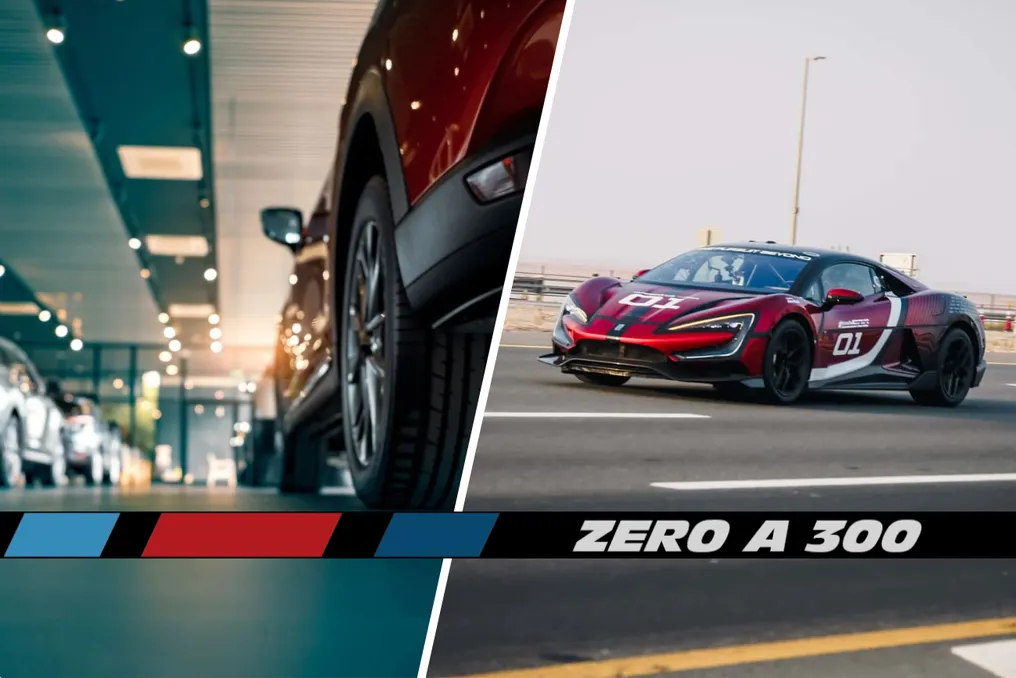
The Yangwang U9 Extreme has become the fastest mass-produced car on the planet. Developed by BYD's luxury and high-performance division, the vehicle reached an impressive 503.17 km/h on November 1st, on a closed section of the Sheikh Khalifa Bin Zayed International Road (E11), in the Al Dhafra area of Abu Dhabi.

The German driver Marc Basseng conducted the test. He was not new to the feat, as in September of the previous year, he had driven the same car to 496.22 km/h on the ATP Papenburg test track in Germany. On that occasion, the U9 Extreme surpassed the Bugatti Chiron, which held the previous record by reaching 490.48 km/h in August 2019. This record was formally recognized by the FIA, which issued a statement on its official portal.

Despite the achievement, the question arose about the practical sense of continuing to raise the physical limits of maximum speed. The Bugatti Veyron, two decades ago, surprised the world by exceeding 400 km/h with its eight-liter W16 quad-turbo engine, powerful at 1,011 hp.

Currently, the Chinese electric vehicle requires four electric motors, generating 3,019 hp, to exceed 500 km/h, which is more than double the 1,299 hp of the standard (non-Extreme) U9 version. Furthermore, the tires, the component most vulnerable to the stress of such high speeds, were developed specifically for this record, in collaboration with Giti Tire, receiving special treatment to prevent wheel detachment.

The challenges of the U9 Extreme were not only mechanical. Before reaching the 503 km/h mark, the U9 Extreme suffered a significant accident on the same straight section in Abu Dhabi. Test driver Jiang Wen lost control and collided with the side barrier of the track at 450 km/h. Despite this, Wen emerged unharmed, attesting to the quality of the car's structure and safety cell. However, the U9 Extreme, valued at over US$ 3 million, was completely destroyed. The date of the incident was not disclosed.

Audi A8 production ended after 32 years

The gradual decline of luxury sedans continues with the end of production of the A8, Audi's top-of-the-line model, after 32 years of sales. The end of the A8 occurred in phases. Initially, its continued presence was questioned after the disclosure of the lowest sales figures in history last year, a clear sign of the market's preference for luxury SUVs. At that time, Audi itself admitted to having no certainty about the immediate future of the competitor to the Mercedes-Benz S-Class and BMW 7 Series.

Subsequently, in March of this year, it was made public that Audi stopped accepting orders for the A8 in Germany. Anyone wishing for an example would have to look through dealership stock themselves or try their luck in other countries. Now, the German publication Auto motor und Sport reports that the last Audi A8 left the production line in Neckarsulm in mid-October. The manufacturer redirected the resources that were destined for the A8 to increase the production of the A5 and A6 models.

Launched in 1994, the sedan went through four generations, with the last one, launched in 2017, already showing signs of wear from time. Currently, there are no concrete plans for a replacement or a new generation of the A8. There are rumors that an eventual return could use the Porsche Panamera platform. Another possibility, more aligned with the current scenario, involves a partnership with the Chinese company Huawei, which makes sense given that the Volkswagen Group seeks to intensify collaboration with partners in China to reduce costs and speed up the development of new models. In this scenario, it would not be uncommon to imagine that a new A8 would be restricted to the Chinese market, where luxury sedans still maintain a relevant share of the market, contrary to the global trend.

Corvette C8 finally receives a manual gearbox—but not from GM

When Chevrolet launched the Corvette C8 in 2019, the change was not limited only to the engine position. For the first time, no version of the Corvette could be equipped with a manual gearbox. GM justified this by stating that 'the eight-speed dual-clutch automated transmission allowed for faster shifts and better utilized the car's performance.'

However, the demand for a manual option persisted. After seven years, an American tuner solved the problem independently. Peitz Performance, located in Texas, presented the first Corvette C8 equipped with a functional six-speed manual gearbox at SEMA 2026. The transmission used is the Tremec TR-9060, a transaxle designed for mid-engine sports cars, presented at the 2025 edition of the SEMA Show.

This assembly includes a clutch and a locking differential, supports 138 kgfm of torque, and is capable of operating with engines spinning up to 8,600 rpm. The main challenge lay in integrating it with the rest of the vehicle, as the C8 was designed exclusively for the dual-clutch transmission. Thus, Peitz had to develop the mechanical controls and adapt the electronic management.

The gear lever was built from a mechanism used by Porsche, and the clutch pedal was adapted from the Cadillac CT4-V Blackwing, with modifications to the support and hydraulic actuation. McLeod developed a specific engine flywheel, reusing components from the original Corvette flywheel. The electronic part required an equally complex solution, replacing the original management with MoTeC modules: an M182 controls the engine, while an M150 manages functions related to the transmission, such as ignition cuts during shifts and automatic accelerations during downshifts. The goal is for the final conversion to maintain the operation of instruments, ABS, electric steering, and other original systems.

The prototype displayed at SEMA is optimized for the track, but it has already been driven by John McGann, editor of Hot Rod magazine. He reported that the clutch engagement is relatively heavy, although the shifts are short and precise. McGann acknowledges that the original dual-clutch transmission probably maintains higher speed, but considers the experience of driving the manual Corvette much more immersive.

The adaptation, however, is neither simple nor economical. Peitz Performance has already announced the kit for US$ 74,528.99, a price close to that of a new Corvette Stingray in the United States. The definitive electronic system should be ready in the first quarter of 2027, and the availability of the transmission for customers is expected in July.

Mazda Miata with 13 rotors is real (but has a secret)

The Mazda MX-5 Miata is one of the most appreciated sports cars worldwide for various reasons, but its strongest appeal lies in its universal attractiveness to any enthusiast: a light vehicle, with a naturally aspirated engine, rear-wheel drive, and excellent dynamics, designed to provide driving joy, not necessarily by achieving extreme speeds, but by its cornering performance.

47mm Galaxy Watch Ultra has 63% discount on Black Friday
Read more
tecnoblog.net

47mm Galaxy Watch Ultra has 63% discount on Black Friday

The 47mm Galaxy Watch Ultra LTE is available for R$ 1,830 via Pix, using the coupon FAVORITO on Mercado Livre. This premium Samsung smartwatch received a significant reduction of 63% from its original price of R$ 4,999 during the Black November 2026 campaign.

This high-quality smartwatch features a durable 47mm titanium body, along with IP68 and MIL-STD-810H military certifications, ensuring its durability against intense dust, high temperatures, and resistance up to 10 ATM, allowing use in shallow waters.

In terms of functionality, the device is comparable to the new Ultra 2 regarding support for multiple sports modes, such as running and cycling. Additionally, it integrates health monitoring features, including electrocardiogram (ECG), sleep tracking, and blood oxygen measurement.

Thanks to 4G/LTE support, the wearable becomes useful in dangerous scenarios. In case of medical emergency, it has the ability to send alerts to previously configured contacts and make calls to numbers like 190 (police) and 192 (firefighters) without needing a mobile phone, which can be vital for user survival.

The 1.5-inch Super AMOLED screen of the Watch Ultra offers a brightness of up to 3,000 nits, providing vivid colors and excellent visibility. The display protection is ensured by Sapphire glass, which guards it against scratches and impacts.

Internally, the gadget is equipped with the Exynos W1000 chip, 2 GB of RAM, and 64 GB of internal storage, enabling the installation and execution of applications locally. The 590 mAh battery promises autonomy of up to 100 hours when used in power-saving mode, according to the manufacturer.

The 47mm Galaxy Watch Ultra (available for R$ 1,830 via Pix with the FAVORITO coupon) supports Wi-Fi 5, Bluetooth 5.3, 4G/LTE, and multiband GPS, the latter being crucial for determining the user's location in real time during physical activities and adventures.

Black November is a retail initiative that takes place during the Black Friday period. In 2026, this event will take place on November 27th, offering various early promotions and exclusive discounts on gadgets.

Popular