Three friends turned 500 kg of waste, including medicine packaging, into furniture fabric
Read more
The Better India
thebetterindia.com

Three friends turned 500 kg of waste, including medicine packaging, into furniture fabric

Ordinary waste, such as discarded tablet packaging, plastic wrapping, and textile scraps, is often sent to landfills. However, three friends found a different potential in these materials and managed to transform 500 kilograms of this garbage into complex furniture fabric.

The story began in 2015 when Sharon Sethi traveled from California to India for the wedding of her friend Jannat Gill. They were united by a shared love for design and fashion, and they started discussing the possibility of creating a joint venture.

The initial idea was to create a jewelry line using artisans from Rajasthan. But in 2017, Jannat began receiving requests for interior items after her renovated home appeared in an interior design magazine. The friends decided to seize this opportunity.

Sharon returned to India from the USA, hoping for the success of the new venture. Their projects quickly gained momentum, and in 2018, the duo founded Daera—an interior and product design studio based in Delhi.

In 2019, at a wedding in Thailand, Jannat and Sharon met Mallika Reddy, an architect. They discovered common interests in design and repurposing discarded materials, leading to a new collaboration.

Mallika founded Cancelled Plans in 2018 with the goal of creating fabrics from waste. She notes that the company is driven by a love for sustainability and a desire to utilize what is unused. Her previous experience working in a pharmaceutical company allowed her to recognize the problem of waste in that industry, as she remembered the volume of garbage generated by this industry.

The friends began sourcing non-hazardous industrial waste in Delhi and Hyderabad. These materials included tablet packaging, plastic wraps, ground parts from pill cutting machines, and empty containers. Additionally, they collected textile scraps and billboard printing remnants.

The trio collaborates with traditional embroiderers in the Charminar area of Hyderabad, as well as handloom weavers and textile workers in Pochampally. Together, they transform used materials into intricate fabrics used for furniture upholstery.

Mallika oversees the processes of fabric making, texture, and patterns, while Jannat and Sharon handle color schemes and silhouettes. Jannat emphasizes the importance of the story behind their designs. Inspired by the Bauhaus movement in Germany, the friends chose functional design, minimalist silhouettes, and subtle colors. Their collection includes lounge chairs, warp chairs, shuttle benches, chandeliers, pendant lights, and oracle mirrors.

Mallika reported that through the reuse of materials for products, it was possible to prevent 500 kg of waste from going to landfills (reported in July 2023). Today, the Daera X Cancelled Plans collection is sold across India, giving waste a place in daily life.
Similar stories

A couple turned 2.5 acres of land into a guesthouse while growing their own food
Read more
thebetterindia.com

A couple turned 2.5 acres of land into a guesthouse while growing their own food

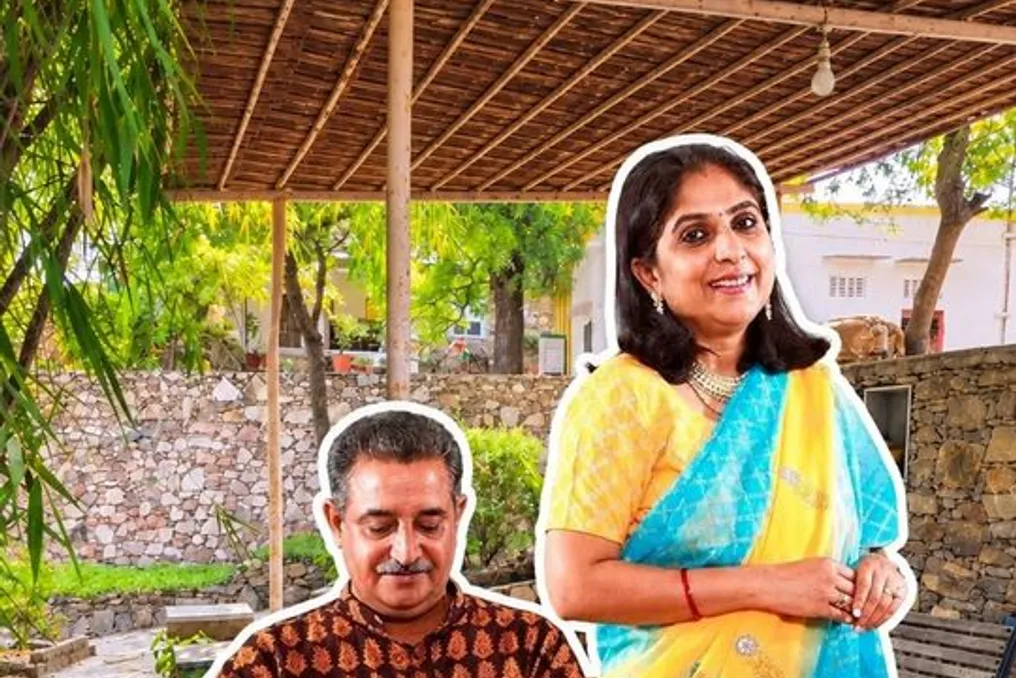
In 1994, during a trip through the hills of Aravalli near Udaipur, Major Durga Das and his wife Jyoti Jaso started dreaming of a home in the region. They acquired a plot of land measuring 2.5 acres, but the land proved unsuitable for habitation.

Jyoti recalls: 'When we first visited the land, we only saw cacti. The land did not support the growth of anything else.' At that time, Major Durga was serving in the army, and Jyoti managed the Textile Gallery in the Citadel. She notes that both felt their lives were not being used creatively.

After 13 years of military service, the Major decided to leave the armed forces to focus on developing this land. He viewed this place (Devra) as an opportunity to raise a generation deeply aware of the environment.

The initial plan was to grow flowers for the Taj Palace in Udaipur. When this business failed, the couple moved to Delhi in 1997. Nevertheless, Jyoti's dream of creating a guesthouse remained with her.

In 1999, Jyoti returned to Udaipur to give her dream a second chance. She traveled between Delhi and the plot for many years, establishing connections with local artisans before Devra began hosting guests in 2004.

Local craftsmen helped bring the vision to life. Shivji participated in the construction of the structure, and his wife Rupa Bai continues to work at Devra, observing the changes in the guesthouse and the town.

What started as a three-room space evolved into a historic ten-bedroom guesthouse built from Rajasthani stone. However, before fields could flourish around it, the couple had to find a way to revitalize the soil.

To help the land grow, they brought nutrient-rich loam soil from Pichola Lake when it dried up in the summer. Along with this, they began planting trees and gradually improving the once barren plot.

Devra grows wheat, seasonal vegetables, sorghum, mint, and various fruits. They harvest chickpea, and a significant portion of the guesthouse's produce comes from their own land. Guests can attend Jyoti's cooking classes, visit neighboring villages, and experience local life. Jyoti shares that 'The whole village is needed. But God is good, and dreams come true,' reflecting on the journey of Devra.

Center approved a 3% increase in the wage index coefficient for employees and pensioners
Read more
timesofindia.indiatimes.com

Center approved a 3% increase in the wage index coefficient for employees and pensioners

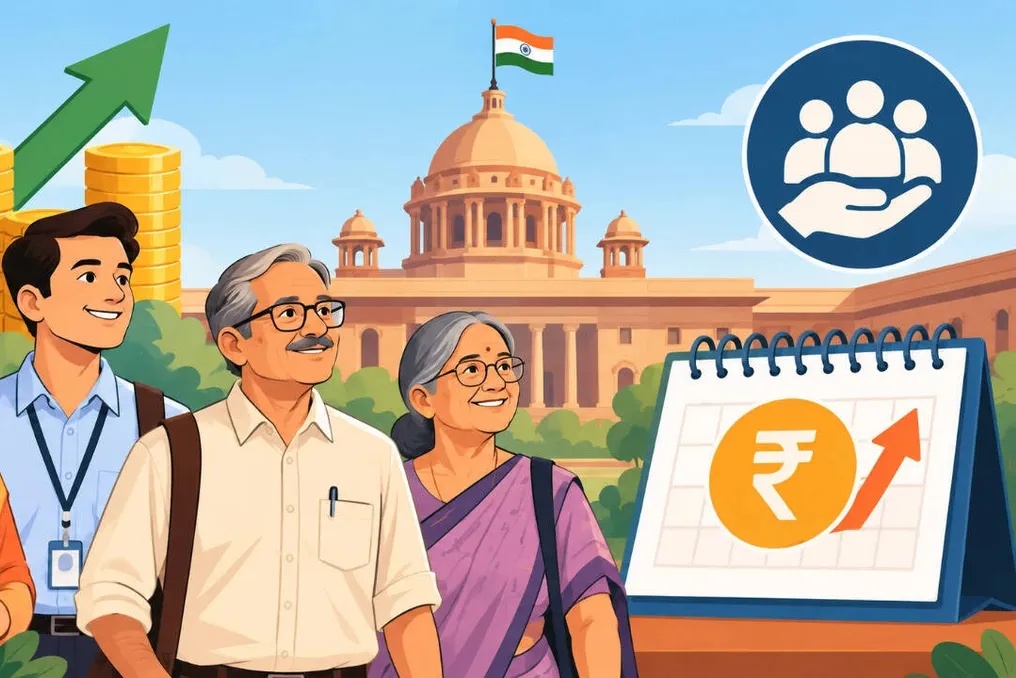
Before the celebration of Diwali, the Cabinet of Ministers approved a 3% increase in the wage index coefficient (DA) for central government employees, and also provided a cost of living compensation allowance (DR) for pensioners.

This decision will positively affect more than 10 million employees and pensioners and will be effective from July to December 2026.

As a result of this increase, the DA and DR coefficients will rise from the previous 60% to 63% of the basic salary.

The total financial impact of this increase on the state treasury will amount to 10,016 crore rupees annually. The government noted that this increase aligns with the adopted formula based on the recommendations of the seventh Central Payments Commission.

Political dynamics related to agriculture and social factors are being decided in Bijaur
Read more
www.aajtak.in

Political dynamics related to agriculture and social factors are being decided in Bijaur

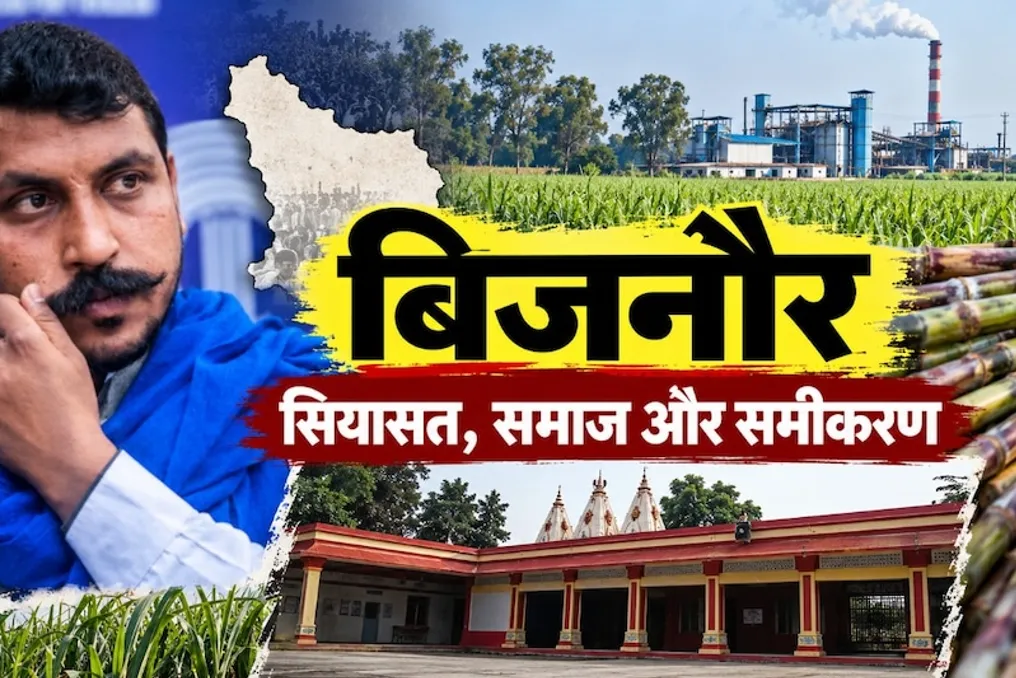
The Bijaur district, situated on the banks of the Ganges, is known for its greenery, sugarcane cultivation, sugar mills, and historical attractions. Due to beliefs associated with Mahatma Vidur, it is also called 'Vidur Bhumi'. To understand the political situation here, it is necessary to consider the agricultural sector, social relations, and the results of past elections.

Bijaur is predominantly an agricultural district where sugarcane, wheat, and rice are grown on a large scale. Sugarcane production plays a vital role in the district's economy. In addition to sugar mills, oil presses and sugar mills operate in the rural areas, which are part of the local business and provide employment. Issues such as fair crop prices for farmers, payment delays, farming costs, and irrigation are of great importance. These issues affect the income of rural families, so agrarian problems often become subjects of political discussion during elections. To understand the politics of the district, it is important to observe how different parties highlight the problems of farmers and local needs.

Bijaur's geographical location also makes it unique: its borders adjoin districts of Uttarakhand. Thanks to the abundance of greenery and agricultural land, most of the district retains a distinct rural lifestyle. Compared to the capital of Uttar Pradesh, Lucknow, Dehradun is relatively closer to this district.

The history and religious identity of Bijaur are also distinctive. There is a belief that during the Mahabharata era, Mahatma Vidur left Hastinapur and settled here. The place where his hut is believed to have been on the banks of the Ganges is known as Vidur Kuti, and it is located about 10 kilometers from the town of Bijaur. The district is also known for numerous historical and religious sites, including Kanva Ashram, Vidur Kuti, Najibuddal Fort, Parsanat Fort, and the Dargha-e-Aliya Najfe-Hindu Mosque in Jogirampur. These places demonstrate the historical and cultural diversity of Bijaur.

According to the 2011 census data, the population of Bijaur was approximately 36.08 million people. A significant number of both Hindus and Muslims reside in the district. According to available information, the Hindu share is about 55 percent, and Muslims are about 45 percent. Among Hindus, there is also a significant proportion of Dalit community members. Furthermore, the influence of communities such as Jat, Chauhan, and Tyagi is noted in different parts of the district. Muslim voters also play an important role in the electoral equations of the district.

Bijaur has eight constituencies: Bijaur, Chandpur, Nurur, Dhampur, Badhapur, Nagina, Najibabad, and Nahatur. The Nagina and Nahatur constituencies are reserved for Scheduled Castes. In the 2022 legislative assembly elections, the competition in the district was between the Bharatiya Janata Party (BJP) and the Socialist Party (SP). Both parties secured four victories each. The difference in votes also varied depending on the constituency. For example, in Chandpur, Swami Omvesh of SP defeated Kamlesh Sani of BJP by a margin of 234 votes. In Dhampur, Ashok Kumar Rana of BJP defeated Naim Ul Hasan of SP by a margin of 203 votes. In Nagina, Manoj Kumar of SP defeated Dr. Yashwant Singh of BJP by a margin of over 26 thousand votes. In Najibabad, Taslim Ahmed of SP defeated Rajaarendra Singh of BJP by a margin of 23,770 votes. In Nahatur, Omkumar of BJP defeated Munsiram of Ralod by a narrow margin of only 258 votes. In Nurur, Ram Avatar Singh of SP beat Chandra Prakash of BJP by a margin of 6,065 votes. In Badhapur, Kunwar Sushant Singh of BJP defeated Kapil Kumar of SP by a margin of 14,345 votes. In Bijaur, Suchi of BJP defeated Niraj Chaudhary of Ralod by a margin of 1,445 votes. These results show that the vote difference was quite small in constituencies like Chandpur, Dhampur, and Nahatur, whereas SP candidates achieved convincing victories in Nagina and Najibabad, reflecting the differences in the district's political landscape.

A comparison of the 2017 and 2022 results showed a change in the electoral equations. In the 2017 elections, the BJP won six out of eight constituencies in the district: Bijaur, Chandpur, Nurur, Dhampur, Badhapur, and Nahatur; representatives of the SP won in Nagina and Najibabad. Subsequently, by-elections were held in Nurur, where Naimul Hasan of SP won after the death of a BJP MLA in a road accident. Comparing the 2017 and 2022 results demonstrates a shift in the district's politics: the BJP, which won six seats in 2017, reduced to four in 2022, while the SP captured four seats. This contrast indicates that the electoral equations in Bijaur are not constant and can change depending on the elections.

Another picture was observed in the Lok Sabha elections. Bijaur has two Lok Sabha constituencies: Bijaur and Nagina. In the 2019 elections, the BSP-SP coalition succeeded in both constituencies. Maluk Nagar from BSP and Girish Chandra from Nagina were elected as MPs from BSP. However, the results changed in the 2024 elections. In the Bijaur constituency, Chandan Chauhan of the National People's Party defeated Dipak of SP. Meanwhile, from the Nagina constituency, Chandra Shankar of the Azad Samaj Party (Kanshiram) won.

Popular