Ancient horseshoe crabs documented for the first time in the Philippines
Read more
Getaway
getaway.co.za

Ancient horseshoe crabs documented for the first time in the Philippines

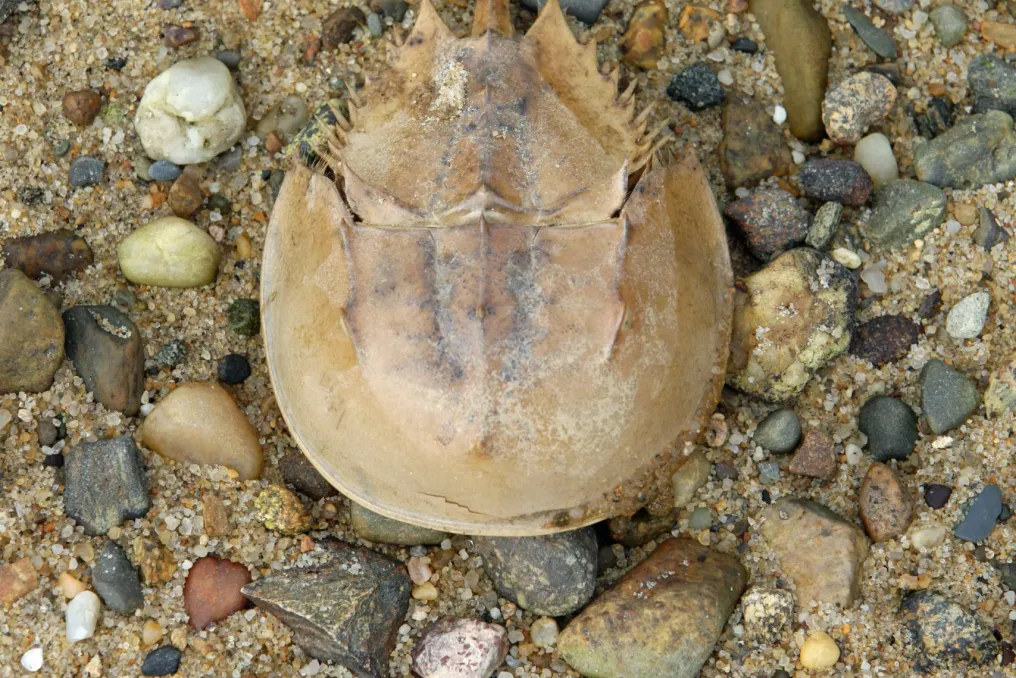
Researchers have recorded the presence of horseshoe crabs in Tawi-Tawi, a southern island province of the Philippines, for the first time. This discovery, based on conversations with local residents and fishermen, provides new information about the distribution of these ancient marine creatures and may serve as a basis for future conservation efforts.

According to Mongabay, the research findings were published after scientists from the Philippines studied local reports of encounters with horseshoe crabs. Until this point, scientific records of these animals in the country were limited only to the province of Palawan.

The study identified reports of two different types of horseshoe crabs, whose characteristics resemble the tridentate horseshoe crab (Tachypleus tridentatus) and the mangrove horseshoe crab (Carcinoscorpius rotundicauda). The tridentate species is listed on the IUCN Red List as endangered, while the mangrove species is classified as data deficient because there is insufficient information to assess its conservation status.

The work began in December 2023 when Associate Professor of Marine Sciences Ivan Pedrosa-Gerasmio visited the market in Bongao, the capital of Tawi-Tawi. There, she heard from local residents about instances of horseshoe crab sightings in the area.

She shared this information with her student Kesi Tolero Omnos, and they decided to conduct a more in-depth investigation. Their study included surveys of 142 coastal residents across four municipalities to gather data on the animals' appearance locations, frequency of encounters, and whether communities had noticed changes in their numbers.

The researchers found that residents encountered horseshoe crabs in diverse coastal habitats, including sandy beaches, mangrove forests, rocky coral zones, and seagrass beds. Some observations were registered in waters ranging from 10 to 15 meters deep.

Local residents call these animals 'bangkas,' which comes from their characteristic boat-like shape. Interviews also revealed challenges facing the horseshoe crab populations in the region. Residents reported that the animals are sometimes collected for traditional medicinal purposes, including treating asthma and other ailments, and are also used in certain cultural and spiritual rituals.

More than half of the respondents believed that the horseshoe crab population was declining. They cited possible causes such as collection, climate change, and industrial pollution. Often called 'living fossils,' horseshoe crabs have existed for about 450 million years, making them older than dinosaurs. Despite their ancient lineage, only four living species are known today, three of which are found in Asia.

Populations across the continent face several threats, including habitat destruction, accidental capture in fishing gear, coastal development, pollution, and overfishing. Researchers believe that documenting the presence of these animals in Tawi-Tawi is an important first step toward their protection. In addition to ecological significance, horseshoe crabs hold cultural value for coastal communities, and their biological properties may find applications in pharmaceutical research.

Omnos emphasized that additional scientific information is needed regarding their distribution, population size, and the threats they face. This will help local authorities develop conservation plans based on research and the experience of communities living near these remarkable marine animals.
Similar stories

Ancient fossils discovered along the KwaZulu-Natal coast at Trafalgar Beach
Read more
getaway.co.za

Ancient fossils discovered along the KwaZulu-Natal coast at Trafalgar Beach

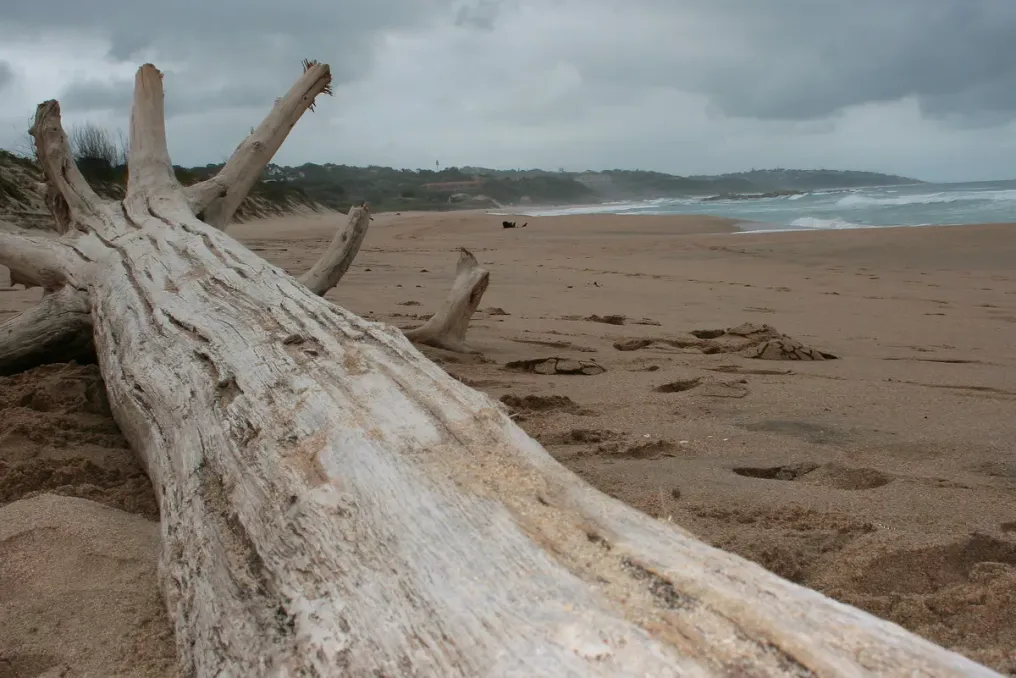
Trafalgar Beach is known for its sandy shoals, warm waters of the Indian Ocean, and rocky coastline. However, closer examination of this section of the South Coast of KwaZulu-Natal reveals evidence of a world that is millions of years old.

Fossilized trees, ancient seashells, and shark teeth are embedded in the sandstone, providing insight into the prehistoric past of the area. These findings remind us that the history of this coast is much deeper than what we see today.

The fossils found along the Trafalgar coast date back to the Cretaceous period, which lasted approximately from 145 to 66 million years ago. At that time, the landscape and coastline looked completely different.

The sandstone containing the fossils preserves traces of ancient vegetation and marine life, including woody remains that were transported by water, buried, and eventually fossilized.

A larger geological zone around the Mzimba River, near Port Edward, is also famous for rich fossil deposits. Research has allowed for the identification of ancient marine species such as ammonites, bivalves, and gastropods, as well as siliceous forests.

These discoveries help scientists understand the environmental conditions that existed on this part of the coast millions of years ago. The rocky shore within the Trafalgar Marine Reserve is the best place to begin research; the fossils are preserved in the sandstone and are easier to find during low tide.

When planning a visit, one should aim for low tide, when most of the rocky shore becomes accessible. It is necessary to carefully examine the surfaces of the rocks for fossilized remains and impressions. Some of them may be inconspicuous, especially if you expect to find complete specimens.

The coast is also inhabited by living marine organisms. Areas in the rocks support small creatures such as sea snails, while algae occupy various sections of the rocks depending on tidal action. Caution is important during exploration, as the rocks can be slippery, especially when wet.

Trafalgar is part of the Trafalgar Marine Reserve, established in 1979. This protected area covers about 8.3 square kilometers and includes sandy beaches, rocky shores, reefs, wetlands, and the Mpemba River estuary.

The importance of this area extends beyond its geological history, as it protects diverse marine habitats and the wildlife that depends on them. The fossils are part of this natural heritage and must remain in place. Removing or collecting paleontological material without proper authorization is prohibited by the South African National Natural Resources Act. Visitors should also avoid disturbing areas where water accumulates or removing marine life.

Trafalgar is located on the Lower South Coast of KwaZulu-Natal, between Marina Beach and Palm Beach. Before visiting, it is recommended to check tide tables, as low tide provides the best opportunity to study exposed rock formations. Sturdy footwear should be worn, and caution should be exercised near approaching waves, as the rocks can be uneven and slippery, so avoid exploring in unfavorable conditions. The trip can also be combined with a visit to the nearby Mpemba Reserve, known for its wetlands, dune forest, and hiking trails.

Trafalgar is worth visiting not only for its coast. Its fossiliferous rocks offer a rare opportunity to connect with a part of South Africa's history dating back millions of years. A casual walk on the beach turns into something entirely different when you realize what is under your feet, and perhaps that is the best thing about visiting Trafalgar: discovering that even a familiar stretch of coast can hold stories far older than we could imagine.

Rare Ghanaian Cuckoo-shrike Sighted in Côte d'Ivoire After 13 Years
Read more
getaway.co.za

Rare Ghanaian Cuckoo-shrike Sighted in Côte d'Ivoire After 13 Years

The photographing of a brightly colored bird, which had not been documented in scientific records for thirteen years, took place in Taï National Park in Côte d'Ivoire. This finding offers new hope to researchers regarding one of the hard-to-reach species of forest dwellers in West Africa.

The Ghanaian Cuckoo-shrike (Lobotos lobatus) was captured during a research expedition led by the International Bird Conservation Partnership (IBCP). The last confirmed sighting of this species was made in 2013 in Ateva Forest in Ghana.

The photograph was taken by field researcher Stephanie Bartlett in collaboration with colleague Paulo Dizele, who helped track the bird's movements through the forest. The image displayed the bird's characteristic orange body, complemented by black and yellow wings.

According to Mongabay, this discovery resulted from several months of fieldwork and bird counts involving researchers from various West African countries. It is believed that this species occurs in parts of the Upper Guinean rainforest—a biodiverse region stretching across several West African nations.

However, significant habitat loss caused by deforestation and agricultural expansion has led to the fragmentation of much of this forest, making observations of the bird increasingly difficult.

The Ghanaian Cuckoo-shrike is included in the 'Search for Lost Birds' initiative, which documents bird species whose scientifically confirmed sightings have been absent for more than ten years. To date, scientists have little information about the population or conservation status of this species.

Significance of Taï National Park

This rediscovery also highlights the ecological importance of Taï National Park, which is one of the most vital remaining tropical forest ecosystems in West Africa. Located in southwestern Côte d'Ivoire, the UNESCO-listed park protects an extensive area of tropical forest and serves as a habitat for numerous wildlife, including forest elephants, chimpanzees, pygmy hippos, and many bird species.

Despite its conservation value, Taï faces constant threats such as poaching, artisanal gold mining, and human pressure on surrounding forests. Researchers believe that this latest sighting reinforces the need to protect these remaining forest habitats while also indicating how much more there is to discover about the wildlife of West Africa.

For birdwatchers and nature enthusiasts, this discovery serves as a reminder that some of the continent's most remarkable wildlife encounters happen far from typical safari routes, deep within its forests.

Amphibian from 237 million years ago, Gerrothorax maritimus, may have been the first to live exclusively in the sea
Read more
g1.globo.com

Amphibian from 237 million years ago, Gerrothorax maritimus, may have been the first to live exclusively in the sea

An amphibian that existed approximately 237 million years ago may be the oldest recorded to have spent its entire existence in the marine environment, without needing to return to land or freshwater.

This species, named Gerrothorax maritimus, was identified based on two nearly complete skeletons discovered in Guizhou province, located in southern China. The results of this research were published in the scientific journal 'Nature Ecology & Evolution' last Monday, the 26th.

This finding is notable because, among the more than 8 thousand existing amphibian species today, none is fully adapted to marine life. Frogs, toads, and salamanders have highly permeable skin, which is beneficial in humid climates but represents a significant obstacle to survival in saltwater.

Ryosuke Motani, a professor at the University of California, Davis (USA) and one of the study's authors, explained to g1 that the permeable skin of modern amphibians allows them to breathe and absorb water without using their mouths, making it an excellent adaptation for humid environments. However, this same characteristic harms the animal in the sea, as it promotes water loss from the body.

Even contemporary species that can tolerate coastal areas need to return to freshwater to recover. However, G. maritimus appears to have developed a different solution to this challenge.

The animal had a flattened body and was covered by heavy bone armor, which could have acted as protection against dehydration. Furthermore, it possessed gills and a digestive system that, according to scientists, could help eliminate excess salt and absorb seawater.

Motani detailed that 'this armor would physically prevent body water from being drawn out by seawater. The intestine would allow for water absorption, as occurs in marine fish, while the gills would help eliminate salt.'

How do scientists know it lived in the sea?

One of the biggest challenges for researchers was confirming whether the animal actually inhabited the ocean or if its remains were transported to the marine environment after death. The most convincing proof came from analyzing the chemical composition of the bones, which revealed a signature identical to that of the seawater from that time, about 237 million years ago.

Other elements corroborate this conclusion. The skeletons were found in rocks formed at least 30 kilometers from the nearest islands, according to the geographical reconstruction of the region at that period. Additionally, small toe bones remained attached to the skeleton; these structures tend to detach quickly when a body floats, suggesting that the animals died and were buried near their habitat.

The fossils were also found in association with large ichthyosaurs, reptiles fully adapted to ocean life.

Deep-sea predator

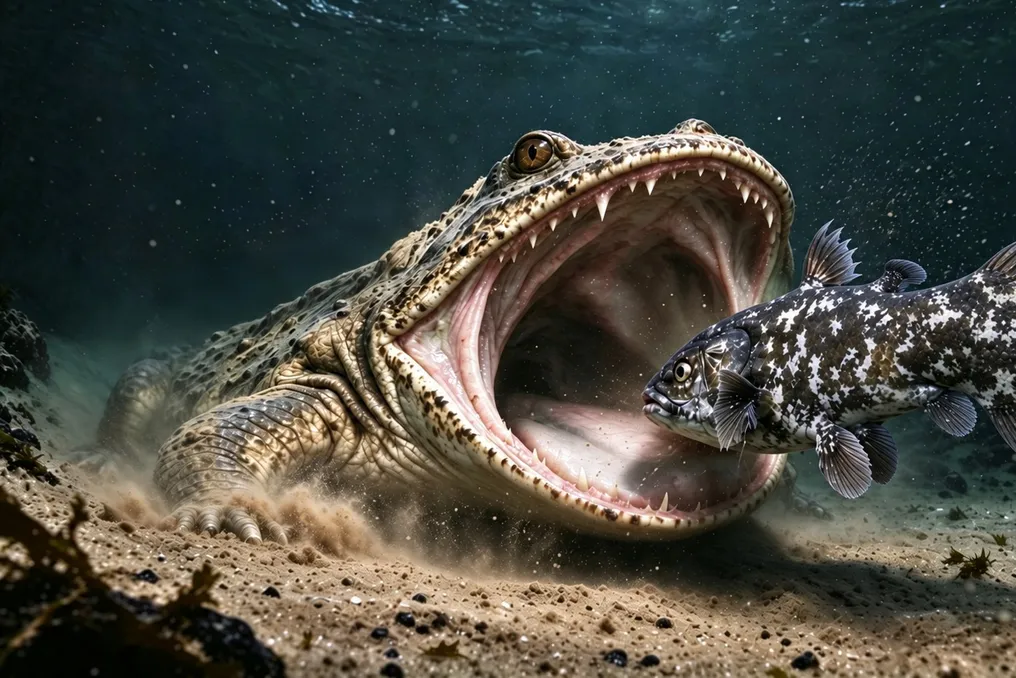
Gerrothorax maritimus had a considerably flattened body and likely spent much of its time on the ocean floor. Its mouth was wide and connected to a robust structure in the throat area. Researchers interpret this as an indication that the animal hunted by suction, opening its mouth rapidly to attract prey along with water.

Da-yong Jiang, a professor at Peking University and co-author of the study, clarified that 'it was a suction predator. Its large mouth and strong gill structure would allow it to suck in prey,' comparing the tactic to that used currently by certain benthic sharks.

Despite these advances, the study still presents unanswered questions. Due to the absence of soft tissue preservation, scientists do not precisely know the animal's physiology or reproductive method. Motani mentions the possibility that the species gives birth to young instead of laying eggs, which would facilitate a completely marine life, but there is no direct evidence to confirm this theory yet.

Popular