One of the fundamental principles of Albert Einstein's theory of relativity states that the laws of physics are the same for all observers, regardless of their motion. However, researchers from the international KM3NeT collaboration used a telescope installed in the depths of the Mediterranean Sea to test whether this rule applies under all circumstances.
The team analyzed 5,828 atmospheric neutrino candidates and found no signs of violation of the so-called Lorentz invariance. Despite the negative result, the study established new experimental limits for possible changes in the laws of physics, including unprecedented constraints on two types of these particles, according to information from the EurekAlert portal.
Lorentz invariance is central to Einstein's theory of relativity. Nevertheless, some theoretical proposals aimed at reconciling gravity with quantum physics suggest that this principle may not hold under all conditions.
One such hypothesis considers the possibility that spacetime, usually considered a continuous structure, might consist of extremely small and discrete units. If this were the case, some fundamental properties of physics could exhibit differences under certain conditions.
Neutrinos are particularly interesting particles for studying this possibility. They interact weakly with matter and can traverse vast distances, including passing through the Earth. A key characteristic is their ability to change from one type to another during transit, known as neutrino oscillation, which includes three flavors: electron, muon, and tau.
The probability of these transformations can be predicted with high accuracy by existing physical models. If observations show discrepancies with predictions, it could indicate the existence of unknown phenomena, including possible violations of Lorentz invariance.
To search for these deviations, researchers used data from KM3NeT/ORCA, a neutrino detector located in the depths of the Mediterranean Sea. The analysis covered 1.4 years of observations conducted with only six detector blocks, which was done in the early stages of equipment construction. The team compared the energy and arrival direction of registered neutrinos with theoretical predictions. A total of 5,828 atmospheric neutrino candidates, formed when cosmic rays interact with the Earth's atmosphere, were analyzed.
The results revealed no violations of Lorentz invariance. Nevertheless, the data obtained allowed for the establishment of stricter bounds on the intensity of certain effects capable of altering the behavior of these particles. One of the main achievements was the first determination of direct limits for possible differences related to muon and tau neutrinos, as well as oscillations between these two flavors.
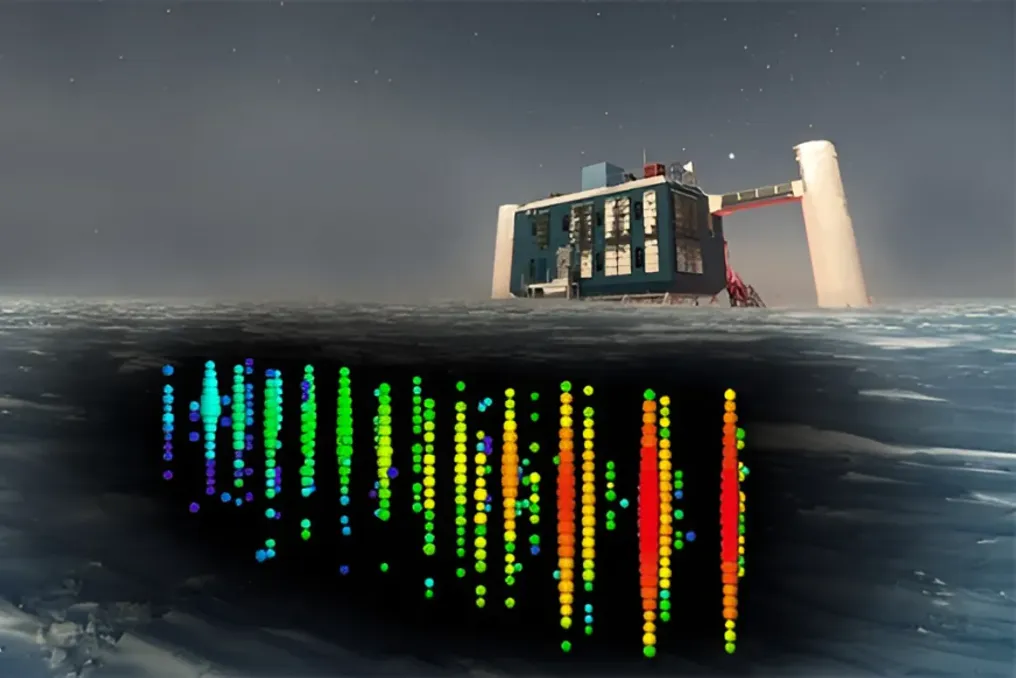
Even using only a small part of the planned structure, KM3NeT/ORCA was able to achieve results comparable to those of long-term experiments such as IceCube and Super-Kamiokande. The detector continues to expand, and researchers hope that an increase in data volume will allow them to study even weaker effects. The collaboration also plans to extend the analysis to KM3NeT/ARCA, another detector in this structure designed to study much higher-energy neutrinos coming from distant astrophysical sources.
These particles can be particularly useful because some possible effects of Lorentz invariance violation become more apparent at high energies and over large distances. Currently, there is not enough astrophysical neutrino data accumulated for such an analysis with ARCA.