The possibility of avoiding urban pollution by traveling to mountainous areas: a review of five places
Read more
The Better India
thebetterindia.com

The possibility of avoiding urban pollution by traveling to mountainous areas: a review of five places

A trip to the mountains can be a pleasant contrast to the smog, traffic jams, and polluted air of a bustling city. However, while a few days in greener places might offer a respite, travel is not a permanent solution to air pollution. Mountain towns also face changes in air quality, and their promise of clean air should not be taken for granted. Nevertheless, if you are planning a trip, it is worth considering five such mountain resorts, making sure to check their latest AQI readings before departure.

As winter approaches, the sky over many cities begins to look different. Familiar smog settles over buildings, traffic moves under a blanket of haze, and going outside becomes uncomfortable. For residents of overcrowded urban centers, even a morning walk can mean breathing polluted air.

It is no surprise that the mountains begin to seem attractive during this time of year. Thanks to forest trails, open landscapes, and fewer vehicles compared to large cities, mountain settlements offer a different environment. But does a trip to the mountains truly mean breathing cleaner air?

Not necessarily. Tourism, road construction, traffic, and seasonal weather conditions can affect air quality even in small mountain towns. Checking local AQI readings, instead of assuming that every green place has clean air, can help travelers make a more informed choice.

Below are five mountain destinations worth considering, along with the latest available air quality data.

1. Landour, Uttarakhand

For Delhi residents seeking a mountain getaway, Landour offers a suitable alternative to the crowded streets of Mussoorie. This small military town is located above the popular hill station, surrounded by oak and deodar forests, featuring walking trails and old colonial buildings. Visitors can explore the Circular Road, stop at Char Dukan for tea, or walk to Lal Tibba, one of the most famous viewpoints in the area. Its slower pace and forested setting attract travelers who prefer a tranquil retreat over a packed sightseeing itinerary.

The last recorded AccuWeather reading for Landour was 85 as of November 6, 2026, classified as Poor on the Air Quality Index scale.

2. Gangtok, Sikkim

For those willing to travel further from Kolkata, Gangtok offers an alternative in the Himalayas. Located at an altitude of approximately 1650 meters, the capital of Sikkim combines mountain views with monasteries, local markets, and natural surroundings. Visitors can visit Rumtek Monastery, walk along MG Marg, or take a trip to Tsomgo Lake. The surrounding mountain landscape also provides opportunities to experience the local culture and cuisine of Sikkim.

On November 6, 2026, Gangtok recorded an AQI of 33, classified as Good according to the Indian AQI scale. The reading was obtained from the Zero Point GICI monitoring station operated by the Sikkim Pollution Control Board.

3. Madikeri, Karnataka

Residents of Bangalore looking to change their scenery can head to Madikeri in Kodagu, a region known for its coffee plantations, forests, and waterfalls. Visitors can visit Abbey Falls, located about eight kilometers from Madikeri, or go to Raja's Seat to view the surrounding valleys. Staying on a coffee plantation also offers the opportunity to walk through the plantations and learn about coffee cultivation.

On November 6, 2026, Madikeri recorded an AQI of 22, classified as Good. The reading came from the Stuart Hill monitoring station, managed by the Karnataka State Pollution Control Board. The station recorded a daily AQI range from 3 to 28.

4. Chikmagalur, Karnataka

Known for its coffee-growing landscape, Chikmagalur offers another mountain escape for people wanting to spend time away from the busy roads of Bangalore. One of its main attractions is Mullayanagiri, the highest peak in Karnataka. Visitors can also explore Kemmangundi, surrounded by forests, mountain streams, and gardens. The surrounding coffee plantations provide another way to experience the region.

On November 6, 2026, Chikmagalur recorded an AQI of 38, placing it in the Good category. The reading was received from the Kalyana Nagar monitoring station.

5. Coonoor, Tamil Nadu

Coonoor, in the Nilgiri hills, is a tranquil alternative to Ooty for travelers who want to enjoy the mountains without spending the entire vacation in a bustling tourist center. This town is known for its tea-covered slopes and picturesque railway journey. Visitors can visit Sim Park, walk through tea plantations, or visit viewpoints such as Lambs Rock and Dolphin's Nose.

On November 6, 2026, AccuWeather reported an AQI of 11 for Coonoor, corresponding to the Excellent category on its own scale.

Can the mountains really offer cleaner air?

Traveling to the mountains may mean less time spent near congested roads and dense urban development, but a lower AQI is never guaranteed. Weather conditions, tourist traffic, construction, and local pollution sources can change readings day by day.

According to the Central Pollution Control Board, an AQI from 0 to 50 is categorized as Good, while 51–100 is considered Satisfactory. It is also important to check which AQI scale the platform uses. The CPCB India index and international indices may have different categories and thresholds, so their figures cannot always be compared directly.

Before planning a trip, you should check the latest data and identify the monitoring station or data source behind it. Choosing accommodation away from busy roads and exploring quieter parts of the area can also help. Mountains cannot promise pollution-free air. But checking the numbers before your trip can help you make a more informed decision about where to spend your next vacation.

Similar stories

Dust masses and unfavorable weather conditions worsen air quality in Tashkent and the region
Read more
gazeta.uz

Dust masses and unfavorable weather conditions worsen air quality in Tashkent and the region

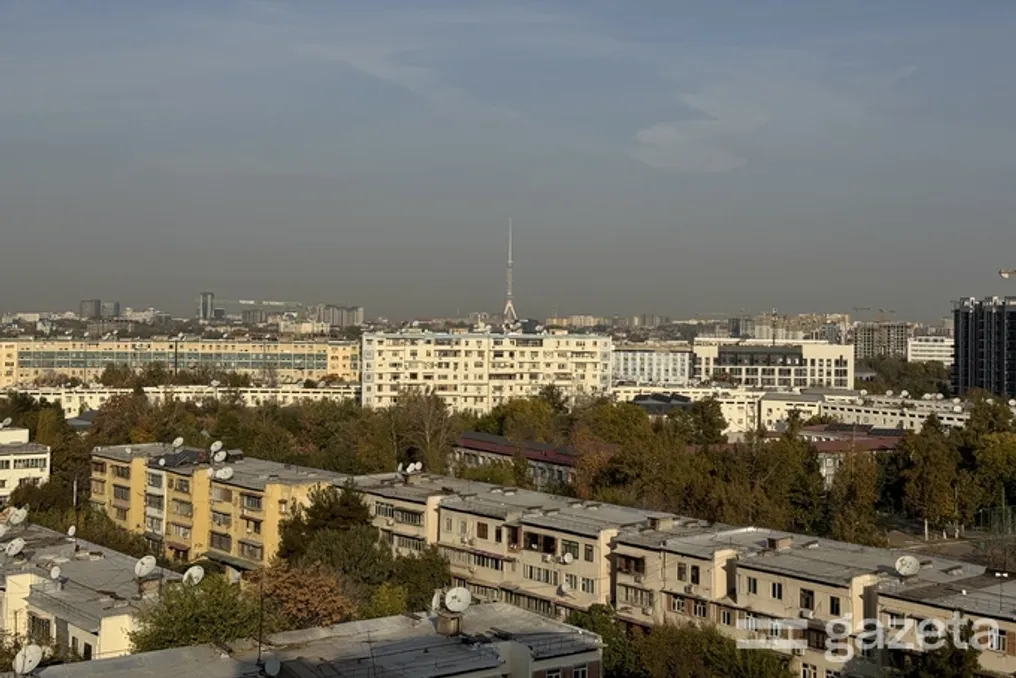
Unfavorable meteorological conditions and natural factors are one of the key causes of air pollution in Uzbekistan, especially in Tashkent. These factors include low precipitation levels, as well as processes related to wind and natural atmospheric air movement. These conclusions were stated by Dr. Farrukh Sattarov, Doctor of Philosophy in Technical Sciences and Director of the National Climate Change Center, whose comments were published by the press service of the National Committee on Ecology and Climate Change.

As of October 26, only 3.9 mm of precipitation fell in Tashkent, which is significantly below the monthly norm of 23.7 mm, meaning almost six times less. This lack of precipitation prevents the washing out of dust particles from the atmosphere, contributing to their accumulation.

The current conditions are recognized as unfavorable, especially for the most vulnerable segments of the population. Residents are strongly advised to limit physical activity outdoors and use protective face masks. Farrukh Sattarov also noted that over the past decade, changes have occurred in the natural exchange of atmospheric air: during the cold half of the year, the frequency of unfavorable weather conditions caused by the absence of strong winds and precipitation has increased by 57% compared to previous years, complicating natural air purification.

Specialists use both ground monitoring stations and satellite imagery to monitor air quality. Analysis of satellite data for the period from October 1 to 26 using the SILAM model and comparison with the international Air Quality Index (AQI) showed an increase in the index during periods when dust masses penetrated Tashkent and surrounding areas. For example, on October 4–5, when there was precipitation, the AQI remained at 66–71 (moderate); however, after this, against the backdrop of insufficient precipitation and dust accumulation, air quality worsened: on the evening of October 26, the AQI reached 155–195 (unhealthy), and the forecast for the evening of October 27 was 150–190.

Images obtained from the European platform EUMETSAT and the Meteosat satellite recorded large dust pollution in Tashkent and neighboring regions on October 25–26. This phenomenon affected Tashkent, Tashkent Region, as well as parts of Syrdarya and Jizzakh Regions. According to the center's forecasts, unfavorable conditions related to dust and pollution may persist until the beginning of next week.

Furthermore, Uzgidromet warned about the possibility of atmospheric inversion occurring during the current week due to warm weather. The combination of lack of precipitation, weak wind, and inversion can slow down the self-purification of the atmosphere, which, according to the report, may lead to an increase in the concentration of dust particles and other pollutants in Tashkent until November 1. Uzgidromet also emphasized that the actual state of the air depends on emission volumes, as well as wind speed and direction.

The National Committee on Ecology and Climate Change is taking a number of measures to improve air quality. Warnings were sent to 30 major construction companies regarding the need to apply dust suppression methods. Additionally, 131 major economic entities belonging to Category I and II environmental impact were ordered to reduce their emissions into the atmosphere by half. A number of seven thermal power plants (TPP) located in Tashkent and its vicinity were also warned.

The Committee proposed to the Council of Ministers of Karakalpakstan, the city administrations of Tashkent and other regions, to organize the cleaning of dust and sand from roads and verges, as well as ensure the operation of existing fountains. To effectively solve the problem, the committee insists on the need to accurately determine the sources of pollution. In this context, the Center for Specialized Atmospheric Laboratory was established to study pollutant sources. The head of the center, Doctor of Technical Sciences Zikrilla Alimov, reported that air samples are being taken from different districts of Tashkent using special filters for laboratory analysis to study the sources, their impact on air quality, and patterns of dispersion, and this experience is planned to be scaled up to the entire republic in the future.

Expert explains how air pollution harms lungs even without symptoms
Read more
www.aajtak.in

Expert explains how air pollution harms lungs even without symptoms

In the capital Delhi and many other regions of the country, there is an increase in air pollution levels. Although some people exhibit symptoms such as coughing and throat irritation, others may have no signs of discomfort. However, this does not mean that the absence of symptoms protects against the harm caused by pollution.

Dr. Vikas Mittal, director of the pulmonology department at S.K. Bidla Hospital, commented on this situation. He emphasized that a worsening Air Quality Index (AQI) does not rule out the impact of pollution on the lungs, even if there is no cough, shortness of breath, or throat irritation.

Fine particles present in the air, especially PM2.5, are capable of penetrating deep into the lungs through the respiratory tract and causing inflammation there. Sometimes the consequences of such exposure do not appear immediately, and a person may not feel any problems. Therefore, atmospheric pollution is considered a serious threat to health.

Long-term inhalation of polluted air can negatively affect lung function. It also increases the risk of developing respiratory diseases such as asthma and COPD. For people who already suffer from respiratory diseases, problems can worsen due to pollution. The degree of influence depends on the duration of human contact with the pollution, the intensity of this contact, and the general state of their health. Consequently, even if a person feels well, the poor AQI should not be ignored.

To prevent exposure to pollution, it is recommended to avoid intense physical activity outdoors, especially during peak concentrations of pollutants. It is also advisable to minimize time spent in rooms with smoke and limit the use of pollution sources, such as cigarette smoke or incense. If necessary, air purifiers with HEPA filters suitable for the room size can be used. If persistent coughing, wheezing, or shortness of breath occurs, a doctor should be consulted. It is important to remember that protection against pollution is necessary regardless of the presence of visible symptoms.

Four Indian cities are restoring landfill sites, turning them into public spaces
Read more
thebetterindia.com

Four Indian cities are restoring landfill sites, turning them into public spaces

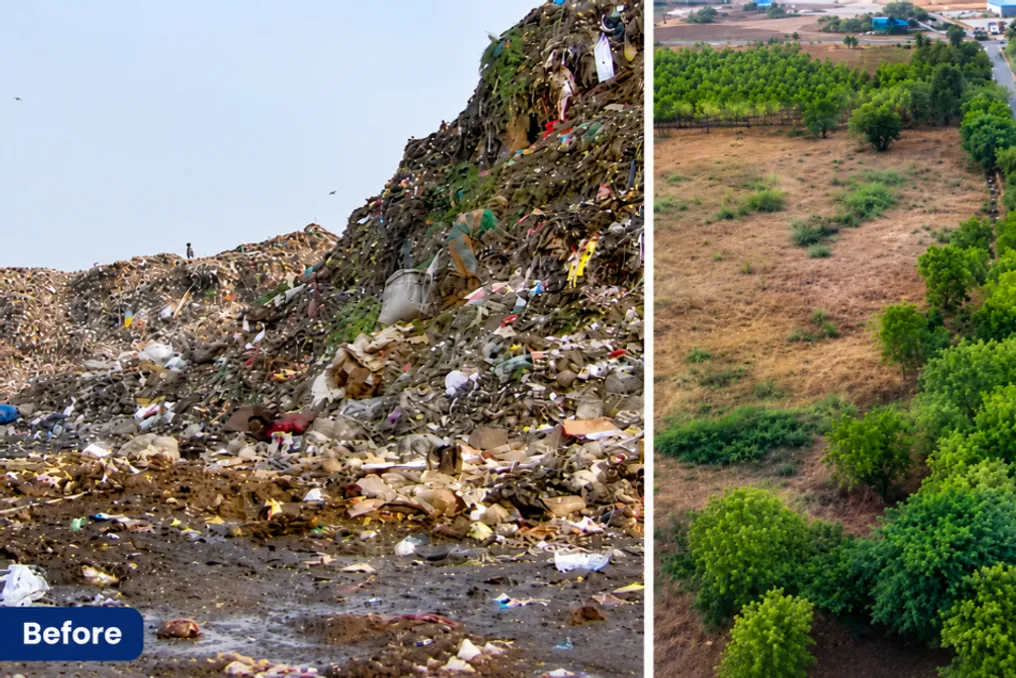
For many decades, India's growing cities have been dealing with waste by hiding it from public view. Over time, municipal dumps have turned into huge mountains of mixed garbage, often located near residential areas, informal settlements, and roads.

This raises the question: what happens when a city finally cleans up one of these mountains? Can land occupied by trash for years become a park, a forest, or another public space? And what will happen to the people whose existence depended on these places?

The Dumpsite Remediation Accelerator Programme (DRAP), launched in November 2025, aims to speed up the cleanup of 214 large old landfills across 200 Urban Local Bodies (ULBs). These sites account for 80% of the remaining old waste targeted by the program. The program's goal is to return the land for productive urban use and prevent new landfills by September 2026.

The program covers 200 ULBs and provides for the complete remediation of the 214 most complex landfills in the Union's states and territories. The scale of the task is significant, but the experience of cities already engaged in remediating such sites shows that the issue goes beyond simply removing old waste. It involves making decisions about the fate of the restored land, where the extracted material goes, and whether the people who have worked with waste for years will have a place in the new system.

Gorakhpur: Former dump transformed into an eco-park

In Gorakhpur, Uttar Pradesh, a 40-acre site that served as the city's main waste disposal area for seven years was converted into the Kachre Se Kanchan Rapti eco-park by September 2026. The remediation process involved processing about 400 tons of accumulated waste daily. Instead of viewing the site as a permanent dump, the project aimed to restore the land and give it a public function.

After cleanup, the area was developed as a public space, including green lawns, walking and running paths, a children's play area, an open gym, and a yoga zone. Solar lighting and water-saving systems were also installed. According to the Ministry of Housing and Urban Affairs, the park also has a livelihood component: a restaurant on the premises is managed by the women's self-help group Shakti Ki Rasoi. It is reported that the park attracts about 500 visitors daily.

Raichur: Returning landfills to green zones

In Raichur, Karnataka, the restoration process at the Yakalaspura landfill is following a different scenario. Instead of creating a traditional public park on the remediated land, the project focuses on restoring green cover. According to the Ministry of Housing and Urban Affairs, scientific remediation was carried out on a 35-acre site, resulting in approximately 62,252 metric tons of waste processed by 2026, and nearly 22 acres of land returned to circulation.

Part of the restored area now supports a Miyawaki forest, covering about five to seven acres. The Miyawaki method involves planting a dense mix of local species to stimulate green cover development. This intervention on a former landfill offers potential ecological use for the waste-cleared land. However, tree planting alone does not guarantee the absence of contamination or suitability for any ecological use; soil quality, survival rate of planted species, groundwater conditions, and continuous maintenance are crucial.

Delhi: Bhalswa demonstrates why landfill cleanup takes time

The Bhalswa landfill in Delhi presents a contrasting picture. While in cities like Gorakhpur, public spaces are created on remediated land, Bhalswa illustrates the scale and complexity of processing waste accumulated over decades. The landfill, which has existed since 1994, covers about 70 acres. In June 2022, it contained about 73 lakh metric tons of old waste. Biomining operations began in July of the same year, involving the excavation, processing, and mechanical separation of old waste into various material streams.

As of May 26, 2026, about 43 acres had been remediated. Nevertheless, according to the Ministry of Housing and Urban Affairs, approximately 23.17 lakh metric tons of waste remained to be processed, including both old and fresh. These figures show that remediating a large landfill is a gradual process. Biomining involves separating recoverable materials from mixed waste, with different fractions requiring different destinations. Extracted recyclable materials can enter recycling chains, combustible materials can be converted into waste-to-energy fuel, and soil-like or inert material can be used for suitable purposes, depending on its quality and applicable environmental regulations.

Even after the visible mound has been reduced, the land cannot automatically be considered ready for housing, parks, or other public needs. Essential environmental protection measures remain, including leachate management and fire prevention, as well as monitoring the quality and stability of the remediated surface. Therefore, for communities living near Bhalswa, the measure of success is not just the volume of waste removed, but also the reduction of risks associated with the landfill, proper management of fresh waste, and ensuring that the restored land ultimately serves a clearly defined local purpose.

Pune: What happens to workers involved with waste?

Pune provides an example of how waste recycling workers can be integrated into the city's daily waste management system. SWaCH, a cooperative owned by waste collectors, allows its members to collect segregated waste door-to-door and extract recyclable materials. Workers provide this service to households, earning income from user fees and the sale of recyclables. This model emerged from the organization of Kagad Kach Patra Kashtakari Panchayat, a waste collector union advocating for workers' rights since 1993.

Although Pune's cooperative model itself is not an example of transforming a former dump into a park, it offers a useful way to study the livelihood aspect within remediation. A 2025 study on waste infrastructure in Delhi highlights a related issue. The closure of traditional collection and sorting points, known as dhalas, and their replacement with compactors or other facilities has affected informal waste pickers, especially women. Some have been forced to use their homes for sorting and storing waste, blurring the line between workplace and living space.

Thus, the transition to a new waste management system must consider the people who are already working in the old system. Workers need safe workplaces, protective gear, fair and predictable wages, access to social security, and a significant role in decisions affecting their livelihoods. When establishing new recycling facilities, cities should assess whether experienced waste pickers can be employed or organized into cooperatives to manage part of the system.

The real test begins after remediation

DRAP's national goal is ambitious, but the amount of work remaining is substantial. In January 2026, the Ministry of Housing and Urban Affairs reported that 1,138 landfills had been fully remediated, and 1,020 were in the process of remediation out of a total of 2,488 identified sites containing over 1,000 tons of waste each. Approximately 15.51 crore metric tons of old waste had been processed, and land amounting to 8,484 acres had been returned to circulation.

These figures reflect the scale of the intervention, but they do not, in themselves, indicate whether local residents are experiencing improved air quality, reduced groundwater risks, or if waste recycling workers have secured safer working conditions. Examples from Gorakhpur and Raichur show how remediated land can be utilized, while Bhalswa demonstrates why remediation cannot be measured solely by the visible reduction of the garbage mound.

Therefore, the practical priority for cities is twofold: to responsibly dispose of the waste accumulated over decades and to stop creating new mountains due to inadequate segregation, collection, and recycling. A restored site is only the beginning. Its true value will depend on what replaces the landfill, how effectively the city manages its daily generated waste, how safe the land is for its intended use, and whether the people who have long dealt with this waste are recognized as indispensable workers in the process.

Popular