Today, buying land in the Lutyens' Delhi area seems like an unattainable dream, as even a small plot here is valued in millions. However, there was a time when land in this area cost only a few rupees. This is why the British acquired land from local residents at very low prices and transformed Delhi into a new capital.
When the new capital was being built on Raisina Hill and in the Lutyens' zone, British officials bought land from local residents for extremely low fees or forced them to leave their homes. Now, where important buildings such as the Presidential House, Parliament, and PMO stand, what price did the British pay for this land?
In 1911, the government of Great Britain decided to shift the capital of India from Calcutta to Delhi. On December 12, 1911, it was announced that a new residence for the Viceroy would be built in Delhi, and from that moment, Delhi would become the new administrative center.
Following this announcement, there was a need to select a location for setting up the new capital in Delhi. Which area would suit the offices of the new administration, the Viceroy's residence, and high-ranking officials, as well as other facilities and amenities, and how could land be obtained in this location? A special commission was formed to address these tasks.
The commission inspected several locations. Ultimately, Raisina Hill was chosen for the creation of the new capital of India. It was a hill where the village of Raisina was located, hence the area received the name Raisina Hill. Furthermore, the land of the residents of Malcha village was noted. Today, the entire area of Chanakyapuri is situated on the land of this Malcha village.
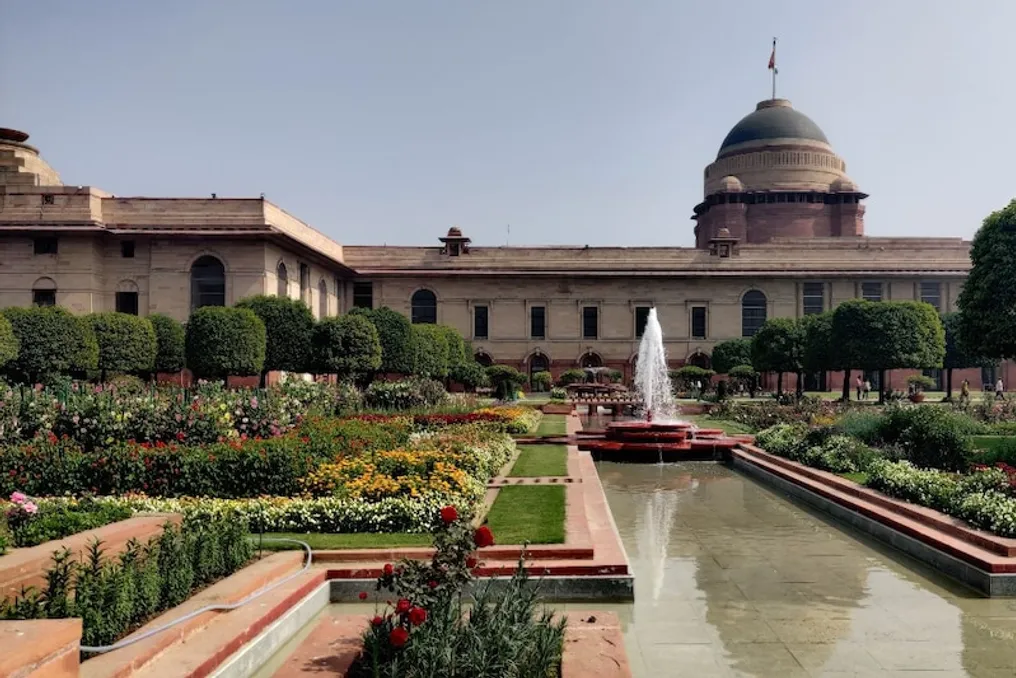
The British government acquired land from the villages of Raisina and Malcha for the construction of the new capital. During this process, local families were relocated to other places. The hill where the village of Raisina was located was named Raisina Hill. Later, the Viceroy's house was built on this hill, which is known today as the Presidential House. The North Block, South Block, and other important government buildings were also constructed around it. Thus, the name of the old village lent its identity to the most important center of power in India.
Responsibility for the development of these two cleared villages was entrusted to British urban planners, such as Edwin Lutyens and Herbert Baker. It was these English urban planners who created modern Delhi. Their plans included the Viceroy's palace, now called the Presidential House, the Circular Column Palace, known as the Parliament Secretariat building, green zones, parks, and gardens. This is why the entire area received the name Lutyens' Zone in honor of their planners.
The British authorities acquired about 3800 acres of land. According to the Indian Express, in 1911, the British government acquired 1792 acres in Malcha village and about 2000 acres around Raisina village to create the new capital in Delhi, seizing land from 150 families. Only 35 families in Malcha accepted compensation, while the rest refused it or were absent at the time of payment distribution.
The residents of these villages were relocated elsewhere. Even now, people claiming ownership of land in Raisina and Malcha are engaged in legal battles over this issue. Some families claiming land belonging to the Presidential House state that they received no compensation.
Some families residing in Hansana Malcha in Sonipat, Haryana, and Bhatta Hajipur in Ghaziabad, are engaged in similar lawsuits. These people filed petitions in civil courts for many years. They demand fair compensation for the valuable land belonging to their ancestors.
These people carefully preserve very old documents, including a document dated December 16, 1912, titled 'Lands Acquired for New Capital Delhi'. It contains information about 70 landowners who transferred their land, as well as details on the compensation they received.
These people have also preserved records of appeals they filed against these acquisitions in 1914, 1915, and 1916. The appeals stated that their ancestors demanded 2400 rupees per acre of fertile land and 1920 rupees per acre of barren land. However, the British paid compensation of only 85 rupees and 15 rupees per acre, respectively. Moreover, only 35 families accepted this compensation.
According to these people, 189 families living in Malcha village at that time were evicted without any financial assistance, even if they did not own land themselves. Today, buying land in this area is like an unattainable dream, as land in Raisina Hill and the Lutyens' Zone is inaccessible to ordinary people. Even for the wealthy, purchasing land in this area is impossible.