Falcon found incapacitated; diagnosis proved unexpected
Read more
Noticias ao Minuto
noticiasaominuto.com

Falcon found incapacitated; diagnosis proved unexpected

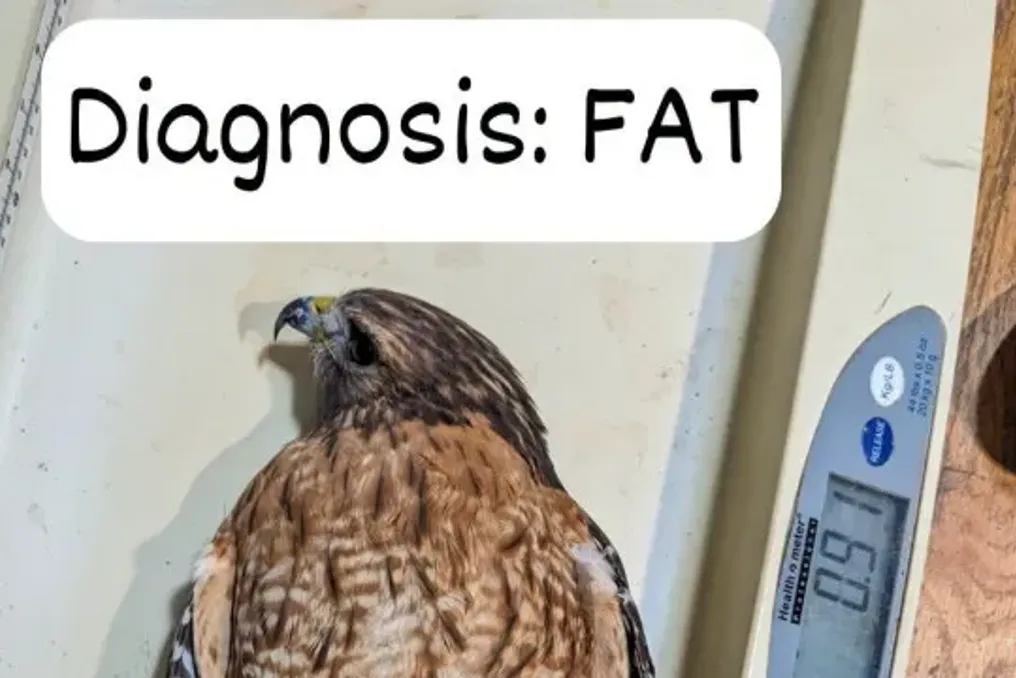
A falcon was discovered by a man near a garage in Virginia, USA, unable to move. The diagnosis given to the animal turned out to be quite surprising.

The man, noticing the bird, called the South-Western Virginia Wildlife Center to remove it, after which specialists conducted an initial examination. The center reported on Facebook that they checked for all common issues such as broken bones, lead poisoning, vision problems, traumatic brain injury, emaciation, and bruising from collisions or fights, and everything was fine based on these parameters.

However, an obvious and extremely rare situation for such animals was identified: the female falcon was too fat to fly. According to the wildlife center, wild animals rarely become obese without human intervention, which raised questions about the causes of this condition.

Specialists wondered: 'Could this be a lost hunting bird? Was someone feeding it? Or could it have been a hawk kept illegally in captivity that escaped?' The truth became clear over several weeks after the owner's neighbor confirmed that his chickens had been 'disappearing at an alarming rate in recent weeks.'

The animal care center concluded that after several weeks of eating and sleeping cycles, it was not surprising that the bird had gained so much weight that it could no longer fly. Although the wildlife center joked about the situation, calling it a 'funny story if you aren't one of the chickens being eaten,' they also reminded people of the 'alarming reality' of this diagnosis.

Specialists emphasized that the problem was caused by humans, and the outcome could have been more tragic if the falcon had been found by a larger predator instead of the person who found it. Since the bird could not fly, it was extremely vulnerable.

Similar stories

Hawk is employed to scare away pigeons at Vitória hospital and also operates at the airport
Read more
g1.globo.com

Hawk is employed to scare away pigeons at Vitória hospital and also operates at the airport

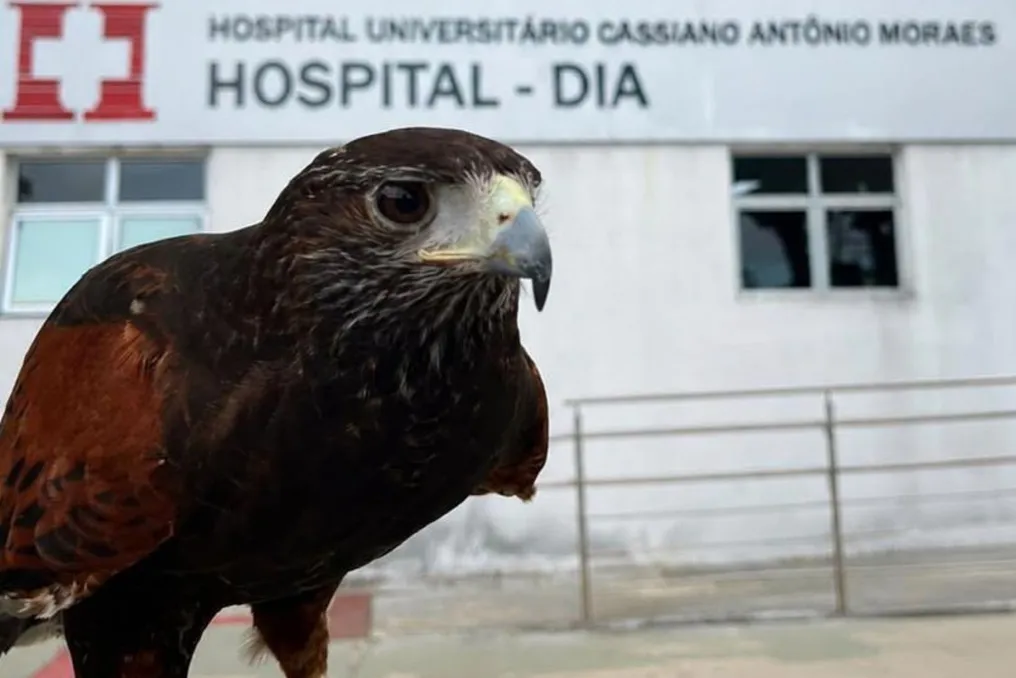
The Cassiano Antônio Moraes University Hospital (Hucam), located in Vitória, Espírito Santo, implemented an innovative method about four months ago to manage the pigeon population in its external areas. This new resource is a male tile-backed hawk, named Shiluba, who patrols the surroundings of the unit to disperse pigeons that use roofs, eaves, and other structures as shelter.

The administrative decision arose after noticing a significant increase in the number of pigeons in the Maruípe neighborhood area. A population survey indicated the presence of approximately 60 pigeons near the hospital. The presence of these birds raises concerns due to the risk of their droppings facilitating exposure to fungi, bacteria, and parasites, in addition to potentially damaging ventilation and air conditioning systems, affecting an already vulnerable population.

Although the hospital has not recorded cases of pigeon-transmitted diseases internally, the initiative aims to be preventive, reducing infestation before it becomes a bigger problem. Previously, Hucam used traditional methods, such as sealing entry points and conducting awareness campaigns, but these were not sufficient to solve the issue.

How the work functions

The management of the hawk is carried out by a company specialized in falconry, a technique that employs trained raptors to drive away other species. Shiluba, a six-year-old male, also performs this function at Vitória Airport, where he conducts rounds along with three other birds. The initial process included a detailed mapping of the area and the definition of flight routes, as well as a census to estimate the number of pigeons.

According to Gabriel Furtado, a veterinarian and coordinator of the falconry project at Hucam, the strategy is based on the natural interaction between predator and prey, given that the hawk's species is a natural predator of pigeons and the animal recognizes this as a threat.

Rounds are scheduled primarily in the early morning, a period when pigeons leave their hiding places in search of food and exhibit less activity, coinciding with lower foot traffic at the hospital. As needed, activities can be extended into the afternoon. The work, which started weekly, has become bi-weekly, and David Salles, a hospital employee, has already noticed a reduction in the pigeon population, stating that the decrease occurred faster than expected. A new census is underway to re-evaluate the population size and adjust the frequency of interventions.

Controlled weight and athlete routine

To ensure that Shiluba flies effectively and responds adequately to stimuli during his work, his preparation involves constant training, strictly controlled feeding, and daily monitoring. The ideal flying weight for this hawk is about 500 grams. Before each activity, the team weighs the animal to calculate the exact amount of food needed, based on the predicted energy expenditure for the routine.

This weight control is crucial because it directly impacts the animal's performance. If it is too light, the hawk may have difficulty maintaining flight; if it is excessively heavy, it may lose the necessary interest to react to training stimuli.

Low environmental impact

The selection of this species also considers minimizing impacts on other birds. Gabriel points out that the hawk generally does not show interest in smaller birds, and some of these species are not even startled by its presence. For this reason, falconry is seen as a low environmental impact alternative to deterring problematic birds in places like hospitals, warehouses, and industrial plants, and it is used in airports in several countries.

The company responsible for the service at Hucam also operates at Vitória Airport, using four birds and carrying out actions more frequently. This company is based in Belo Horizonte, Minas Gerais, and offers services in Espírito Santo as well as other states.

Risks and prevention

David emphasizes that pigeon droppings can lead to exposure to fungi, bacteria, and parasites, in addition to causing structural and climate control system damage. Among the illnesses linked to pigeons are cryptococcosis, which can affect the central nervous system and lungs in severe cases; salmonellosis, an intestinal infection; and histoplasmosis, a systemic fungal infection acquired by inhaling spores of the fungus Histoplasma capsulatum.

Histoplasmosis, in fact, was confirmed by the State Health Secretariat (Sesa) and Fiocruz as the cause of a contamination outbreak that occurred a year ago at Santa Rita Hospital, also in the capital. The hawk's action is part of a broader environmental control strategy. David emphasizes that the collaboration of patients, staff, and visitors is vital to prevent pigeons from finding food on site, promoting awareness actions with these groups by presenting Shiluba and explaining the work being done.

A fundamental guideline from the team is not to feed the pigeons. Proper disposal of food waste, correct use of trash cans, and preventing exposed food help make the environment less attractive to the birds. Furthermore, the team instructs that no one should try to touch Shiluba during activities and that all professional guidelines must be followed.
Rare Macuco bird rescued and returned to nature on the coast of São Paulo
Read more
g1.globo.com

Rare Macuco bird rescued and returned to nature on the coast of São Paulo

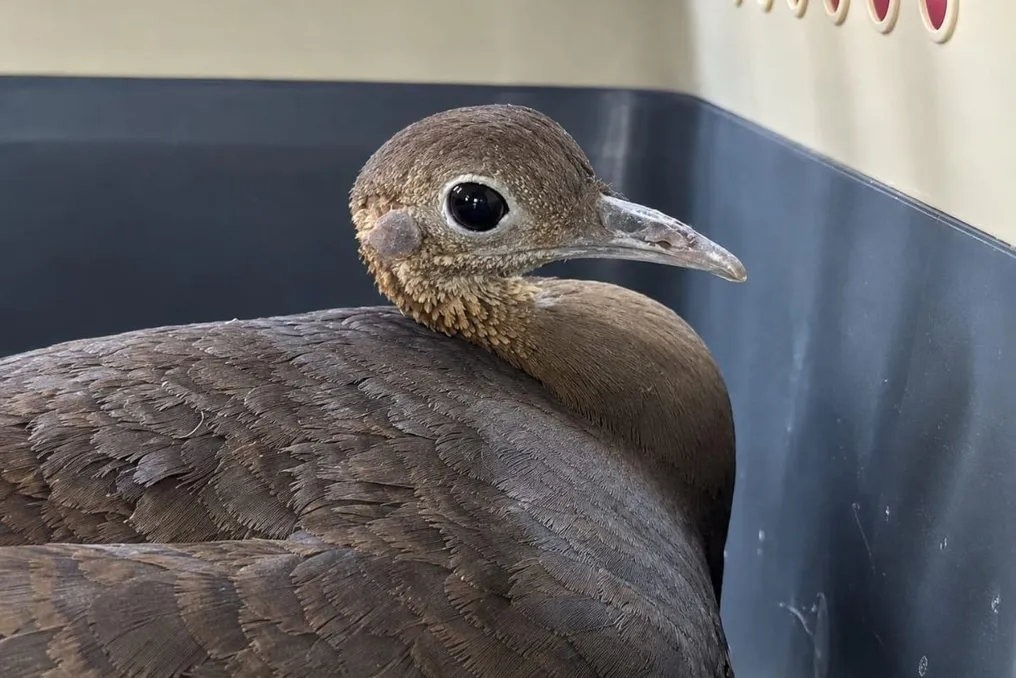
A macuco (Tinamus solitarius), an endemic species of the Atlantic Forest, was rescued and subsequently returned to its natural habitat after being found disoriented on a busy road in the city of Mongaguá, located on the coast of São Paulo.

The animal remained under observation for a period of 24 hours before being released. The encounter occurred on Tuesday, the 20th, when a local merchant spotted it in front of his establishment on Avenida São Paulo. Due to the high volume of traffic in the area and because this is not typical behavior for this species, the citizen collected the bird and transported it to the Zoonosis Surveillance Unit.

Environmental Inspection teams from the municipality took the macuco to the Mongaguá Ecological Park for a clinical evaluation. Biologist Daniel Bortone and veterinarian Marco Belmonte verified that the bird had no injuries and was in suitable condition to return to nature. After 24 hours of monitoring, the animal was released on Wednesday, the 21st.

Guidance for the Community

The Municipality of Mongaguá issued a statement advising residents not to attempt to capture wild animals that are injured, cornered, or at risk within the urban area. Instead, the recommendation is to immediately contact the municipality's specialized teams.

Characteristics of the Macuco

This bird has notable characteristics: it can reach a length of 48 centimeters and weigh up to 1.5 kilograms. Its coloration is described as grayish-brown on the back and light gray on the belly. Its natural environment consists of preserved areas of the Atlantic Forest, preferably in forests near streams. Regarding diet, it feeds on seeds, fruits, insects, and worms.

In the reproductive cycle, the female lays between three and five turquoise-green eggs. The male takes responsibility for incubation, which lasts from 19 to 21 days, in addition to caring for the chicks.

It is estimated that the mature population of this species is less than 10,000 individuals, according to ICMBio data, and it is recognized by birdwatchers as a rare sighting. The species is classified as vulnerable and faces threats such as deforestation and illegal hunting.

According to the Chico Mendes Institute for Biodiversity Conservation (ICMBio), linked to the Ministry of Environment and Climate Change (MMA), the macuco is categorized as nearly threatened with extinction, indicating that although it is not yet in this category, it is close to meeting the criteria for such classification.

Ecological Relevance

Since the macuco predominantly inhabits the interior of forests, its appearance in urban and commercial areas is unusual. Its presence serves as an indicator of the forest's conservation conditions, as it depends on preserved forest ecosystems. Furthermore, the city hall emphasizes that the species contributes significantly to forest regeneration by participating in the dispersal of native tree seeds.

Popular