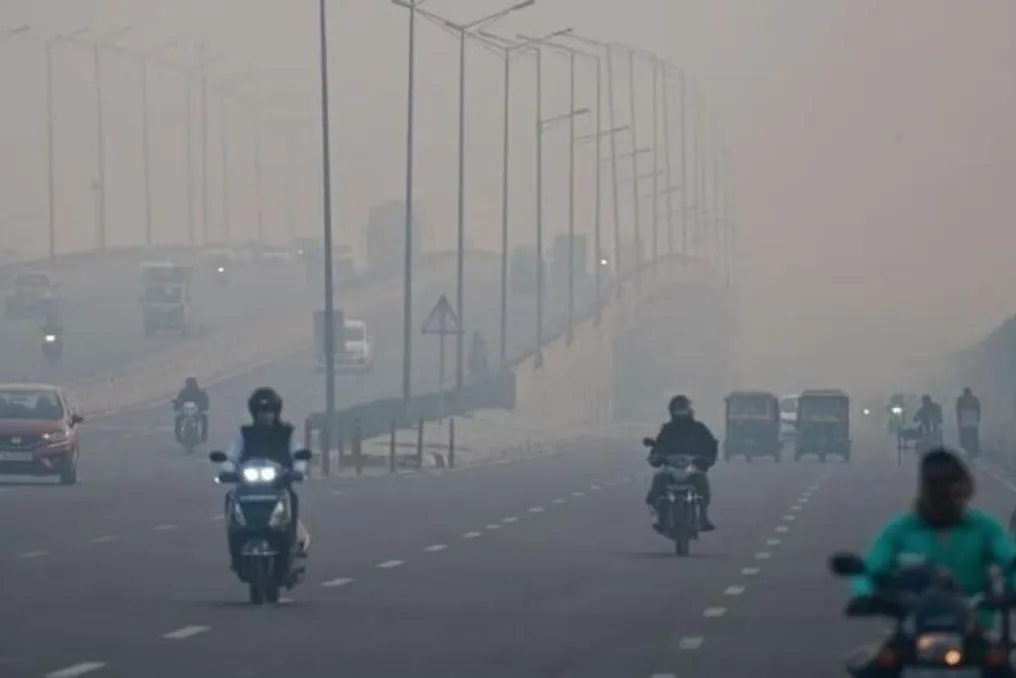
Air pollution in Delhi and other parts of North India is once again posing a serious health threat. Due to toxic particles in the air, people experience difficulty breathing, persistent coughing, throat irritation, and hoarseness.
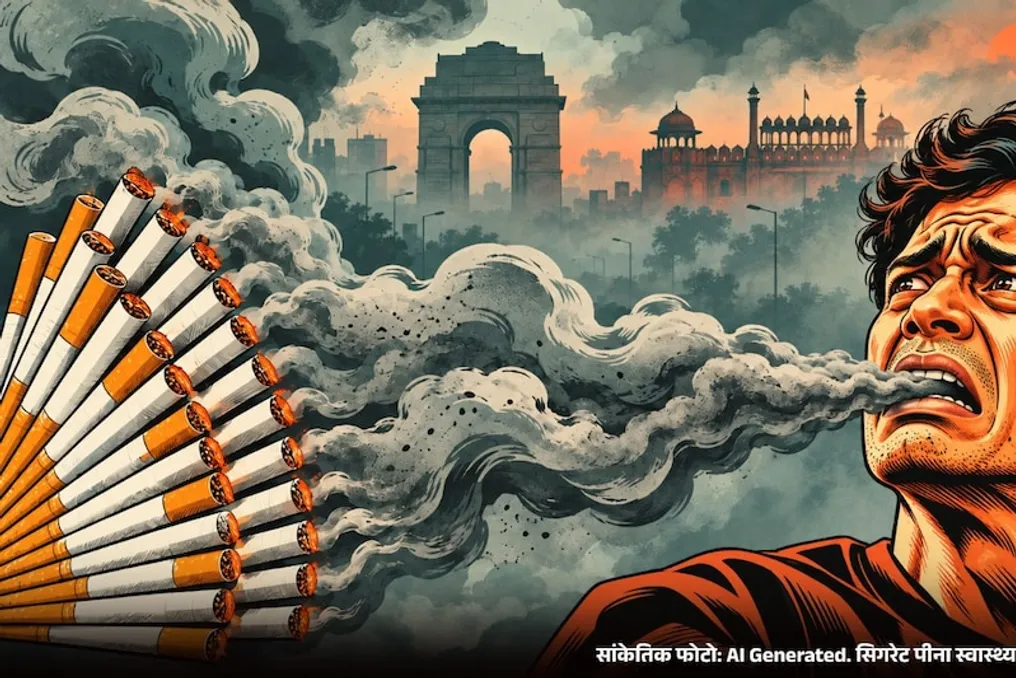
To illustrate the seriousness of the problem, a comparison is often used: inhaling toxic air is equivalent to smoking 30 cigarettes a day. Although this comparison is alarming, it has a scientific basis, even though the chemical impact of polluted air and tobacco smoke is not identical.
On November 5th, the average Air Quality Index (AQI) in Delhi for 24 hours was 369, which falls into the 'Very Poor' category. At some monitoring stations, the AQI exceeded 400, and at night, the air in 22 centers was classified as 'Severe.'
The basis for this comparison is the pollutant PM2.5. These are extremely fine particles measuring 2.5 micrometers or less. They are so small that they can bypass the natural protective barriers of the nose and throat and penetrate deep into the lungs. Some of these particles can reach the pulmonary blood vessels, causing inflammation and other biological reactions in the body.
Scientists from Berkeley Earth conducted a comparison of health risks from exposure to PM2.5 and smoking. According to their calculations, exposure to PM2.5 at a level of 22 micrograms per cubic meter over 24 hours is equivalent to about one cigarette per day. At a PM2.5 level of 660 micrograms per cubic meter, this comparison increases to approximately 30 cigarettes per day.
It is important to note that an AQI level between 401–500 in India does not necessarily mean that a person is inhaling pollution equivalent to 30 cigarettes. The 'Severe' category in India can occur at a PM2.5 level of 250 micrograms per cubic meter or higher. AQI is determined by eight pollutants, and the worst indicator determines the final AQI. Therefore, for an accurate comparison with cigarettes, the actual PM2.5 level and duration of exposure must be known.
The key point is that there is no direct or official conversion between AQI and cigarettes. The aforementioned comparison is a rough scientific estimate based solely on the amount of PM2.5 and 24-hour exposure. Since India's AQI is calculated based on multiple pollutants, one cannot conclude the number of equivalent cigarettes inhaled based only on the AQI.
PM2.5 in polluted air is not just dust; it includes smoke from transport and industry, particles formed during the burning of coal and diesel fuel, as well as pollutants from the burning of straw and waste, and chemically formed microparticles.
When a person inhales air, these particles reach the lungs through the respiratory tract. The body's immune system recognizes them as an external threat and reacts. This can lead to inflammation in the lungs and airways, causing symptoms such as coughing, chest tightness, shortness of breath, and wheezing.
According to data from the U.S. Environmental Protection Agency (EPA), these particles can reduce lung function, increase airway inflammation, and exacerbate asthma and other respiratory diseases. With prolonged exposure, the risk of irreversible lung damage increases.
The medical condition of hoarseness or voice loss is called Hoarseness or Dysphonia. It occurs due to the vibration of the two vocal cords in the larynx. When we speak, air from the lungs helps these cords vibrate. Pollutants and gases, such as nitrogen dioxide, ozone, and sulfur dioxide, can irritate the sensitive surfaces of the throat and larynx. This causes irritation, dryness, and inflammation. Laryngeal inflammation disrupts the normal vibration of the vocal cords, resulting in a low, raspy, or weak voice. Sometimes a person feels pain when speaking and the need to constantly cough.
Thus, hoarseness on polluted days is not always a sign of a common cold. One cannot state that pollution is always the cause; other possible causes may include viral infections, allergies, acid reflux, and smoking.
Both cigarettes and polluted air can contain PM2.5 microparticles. Both substances are capable of enhancing oxidative stress and inflammation in the body. Oxidative stress is a condition where the balance between harmful free radicals and antioxidants that control them is disrupted.
However, there are differences between them. Tobacco smoke contains nicotine, carbon monoxide, and numerous carcinogenic substances. Whereas polluted air includes dust, industrial emissions, transport smoke, and particles formed during combustion.