Deepinder Goyal defends wearable device Temple after criticism from doctors
Read more
YourStory [india, en]
yourstory.com

Deepinder Goyal defends wearable device Temple after criticism from doctors

Deepinder Goyal posted on the social network X on Thursday to respond to criticism from Indian doctors regarding his brain monitoring wearable device, Temple.

Defending the scientific basis of the device, he stated that if Temple were a scam or did not meet its claimed assertions, people would discover this within just a few days of using the product. He also mentioned that the company offers a no-questions-asked 14-day return policy.

Goyal emphasized that $30 million was invested in the development of the device, of which he personally contributed $20 million. He stated that his motivation is not financial, as he has sufficient funds for generations to come, and his interests are entirely aligned with ensuring scientific validity rather than seeking quick profits, for which he spent the reputation earned over 20 years.

He compared Temple to the Whoop fitness tracker, launched in 2015, asserting that most companies producing wearables start with internal research, and Whoop published its first validation several years later. Goyal added that Temple meets higher standards, noting that pre-prints are a step before peer-reviewed publications, which are forthcoming.

Expressing confidence in the product, he stated that they support their science and methods, and that every claim can be easily verified by individuals and institutions, and that numerous independent studies will appear once the device is available.

Furthermore, he clarified that this device is a fitness and health maintenance tracker, not a medical instrument. He added that if they clinically confirm any of their metrics at any point, they will announce it.

Nevertheless, some doctors remained unconvinced by Goyal's responses. Dr. Rishab Jain responded on X, pointing out that Goyal presented financial and personal sacrifices but did not provide scientific evidence. He called for an end to labeling legitimate scientific scrutiny as 'rage.'

Dr. Jain noted that answers to questions about medical accuracy revolved around investment figures, return policies, personal reputation, and promises of future research, none of which constitute scientific validation. Criticizing the return policy, he stated that 'subjective satisfaction cannot establish medical accuracy.'

Dr. Jain further stressed that doctors are not against innovation, but evidence must demonstrate it. He added that if Temple lives up to its promises, doctors will become among its staunchest supporters. He also reminded that science is not a popularity contest, and criticism is not 'rage,' demanding data that can be analyzed by independent researchers.

Temple is a wearable device that tracks blood flow and oxygen saturation inside the brain. The price of the device was not disclosed by Goyal. In May of this year, Goyal announced that the first 100 devices were ready to ship to selected founders, including athletes, scientists, doctors, founders, and creators who could provide feedback. The company reported that the device will be ready to ship by the end of this year. In February of this year, Temple raised $54 million in a seed funding round from friends and family investors at an estimated valuation of $190 million.
Similar stories

Company introduces Temple device for brain activity tracking in India; priced at 85 thousand rupees
Read more
www.aajtak.in

Company introduces Temple device for brain activity tracking in India; priced at 85 thousand rupees

Dipinder Goel, founder of the food delivery company Zomato, introduced a new gadget called Temple in India. This specialized device is designed to monitor a person's health status and brain activity.

Pre-orders for this device have now begun in India. Those considering a purchase should be aware of its features and cost. Temple differs from standard fitness trackers or smartwatches because it is specifically designed to track blood flow in the brain and related signals.

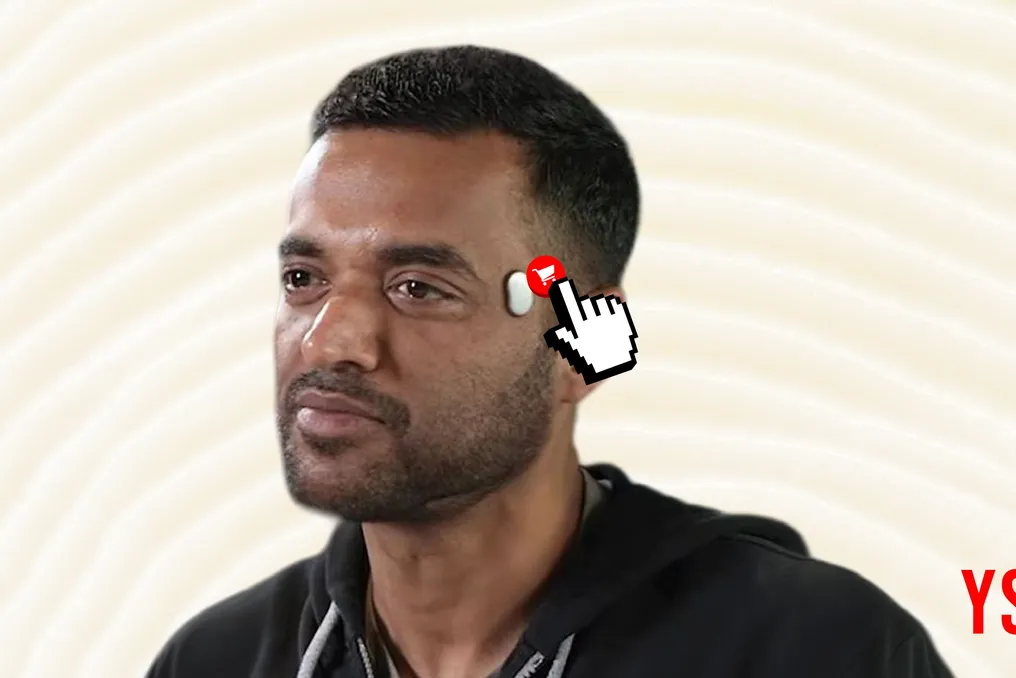
The device attaches to the side of the head, between the forehead and the ear. It is equipped with optical sensors that record changes in cerebral blood circulation. The company calls this technology BrainFlow.

Key Features of Temple

This device also incorporates a feature called Entropy Score, which displays a metric from 1 to 250. Using this score, the user can assess the level of stress experienced by the body. It takes into account factors such as sleep, physical exercise, stress, and caffeine consumption.

Temple does not require a strap to be worn on the head; it is secured using special adhesive strips called Grips. According to the company, it can be worn while running, swimming, and showering. The gadget is also designed with the needs of people who wear glasses in mind.

Cost and Ordering Process

The price of Temple in India is set at 85,000 rupees and includes a lifetime subscription. Pre-sales in India will open on November 1st at 21:30. Users can place an order through the Temple app or on the official website temple.com.

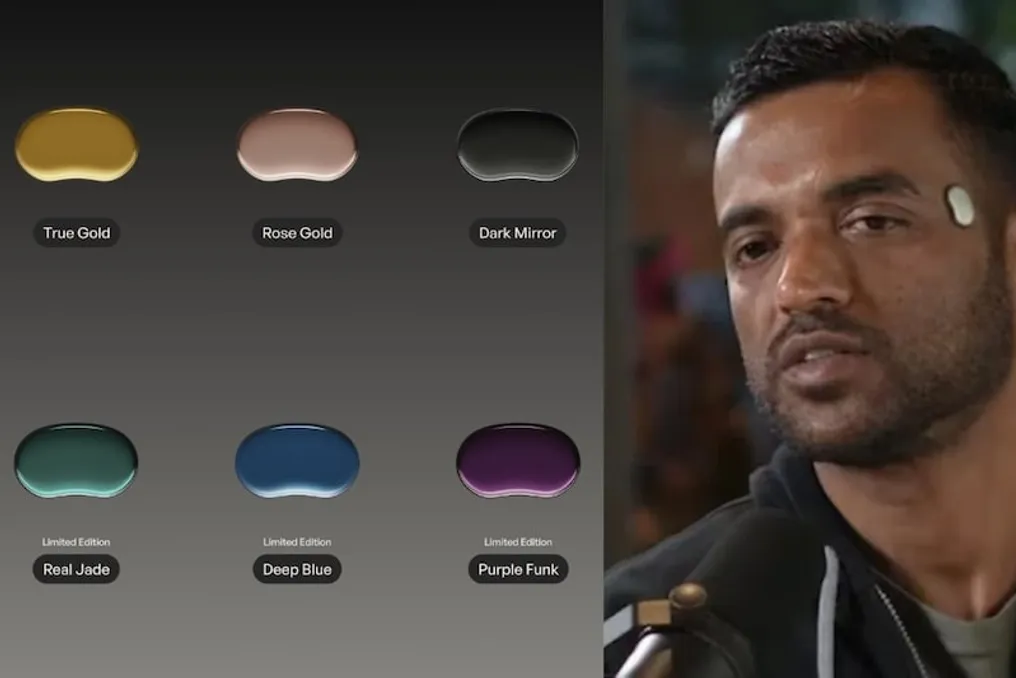
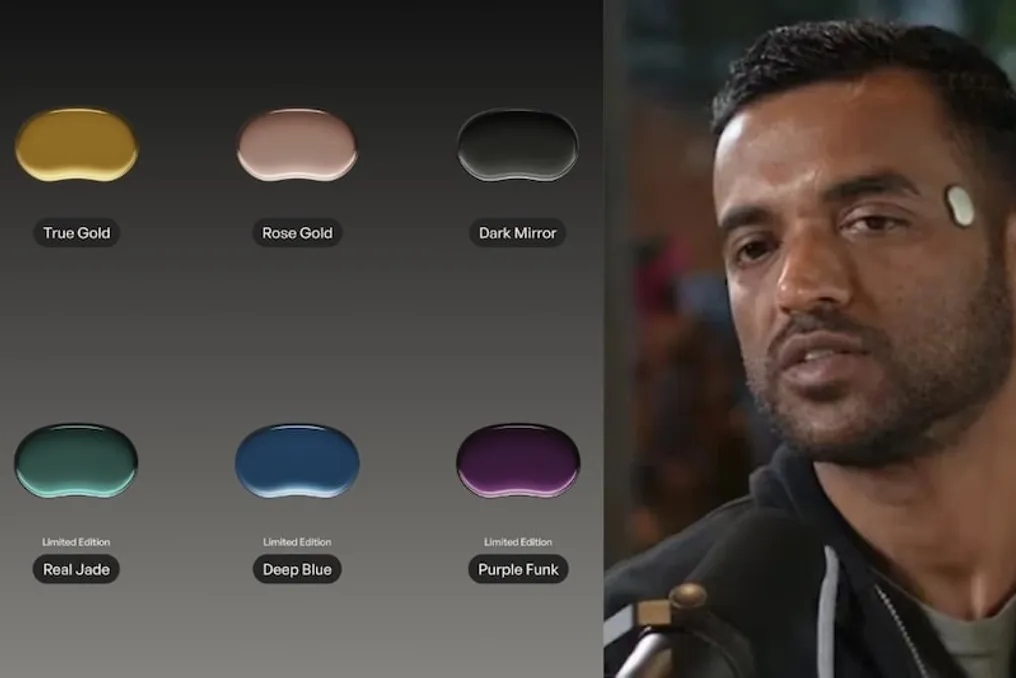
The company states that each device will be manufactured after receiving an order, so the delivery time may take about three months. However, users have the option to request a refund before the device is shipped. Temple is available in six color options: True Gold, Rose Gold, Black Mirror, Real Jade, Deep Blue, and Purple Funk.

It is important to note that Temple is not positioned as a medical device for diagnosing diseases. It is intended for wellness and research purposes, distinguishing it from smartwatches, and potential buyers must thoroughly study its capabilities and methods of use before purchasing.

Lava Company to Increase Smartphone Prices in India by Up to 3000 Rupees; New Prices Effective November 15
Read more
www.aajtak.in

Lava Company to Increase Smartphone Prices in India by Up to 3000 Rupees; New Prices Effective November 15

Smartphones in the Indian market will become more expensive again. The company Lava has decided to raise prices on its smartphones, with the cost increase potentially reaching up to 3000 rupees on many models. The new pricing will take effect starting November 15.

The company explained the necessity of the price change due to the current market situation and memory shortage issues. The maximum possible increase in the near future is around 3000 rupees. This information was presented in a report by PhoneArena.

Lava is an Indian brand known for its budget and mid-range smartphones, and it also sells feature phones in India. Among the company's products are the Virat series, as well as the Agni and Bold N series, and smartphones with curved displays.

According to a Counterpoint report, in the third quarter of 2026, the Indian brands Lava and Ai+ together captured about 7 percent of the mobile communication market in India. Lava competes in the Indian market with Chinese brands such as Xiaomi, Realme, and Vivo.

Lava concentrates its efforts on the segment priced under 30,000 rupees in India, as it is not yet operating in more expensive markets. The company's main focus is on budget and mid-range smartphones.

Price of TEMPLE brain monitoring device revealed; pre-orders start November 1
Read more
www.aajtak.in

Price of TEMPLE brain monitoring device revealed; pre-orders start November 1

The cost of the TEMPLE device, a brain monitor developed by Dipinder Goel, co-founder of Zomato, has been revealed. This device attaches to the forehead area and is designed to track blood flow in the brain, allowing users to monitor their health status.

The price of this gadget is set at 85 thousand rupees, which includes a lifetime subscription. Pre-orders for the first batch of devices (Batch 01) are scheduled to begin on November 1, 2026.

Information about the prices became known through users who received an early access invitation from the company. This invitation stated that users could place an order before the official start of pre-sales using the TEMPLE application. Furthermore, the quantity of devices in the initial batch is limited.

Some individuals shared this invitation on social media, where the price of TEMPLE was listed as 85,000 rupees. Previously, Dipinder Goel was seen using the TEMPLE device, and tennis player P. Vi Sindhu demonstrated the gadget during a match.

Dipinder Goel announced that TEMPLE will be available in six color options, including True Gold, Rose Gold, and Black Mirror.

The operating principle of TEMPLE differs significantly from the principles of smartwatches and regular fitness trackers. The main function of TEMPLE is to monitor blood flow in the brain. Goel explained that this technology is called Brain Flow and is responsible for tracking blood flow in the brain.

Popular