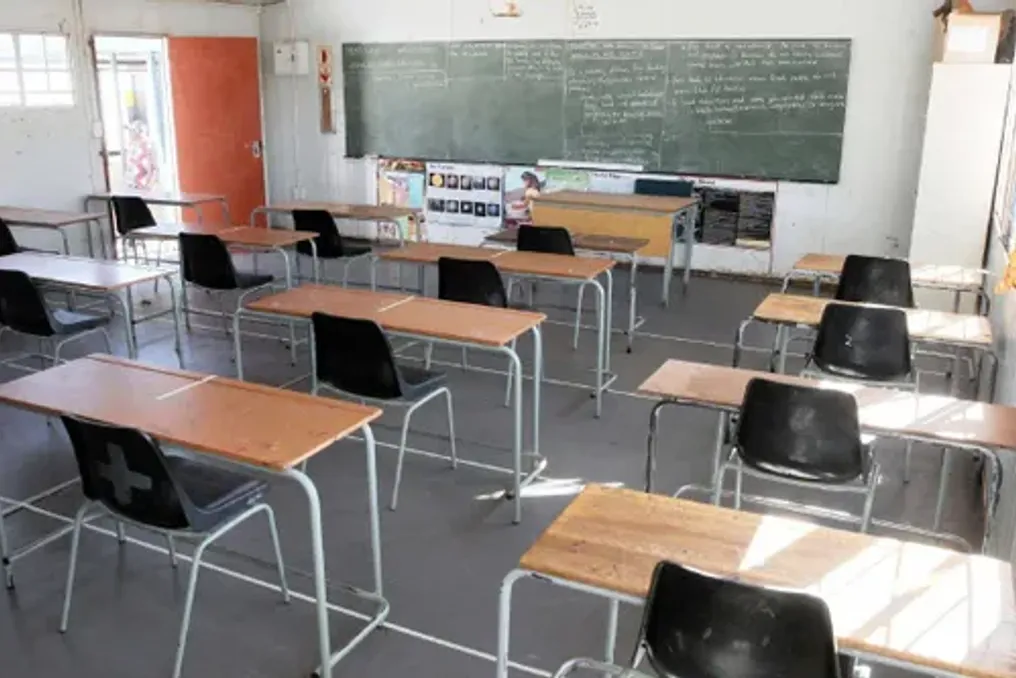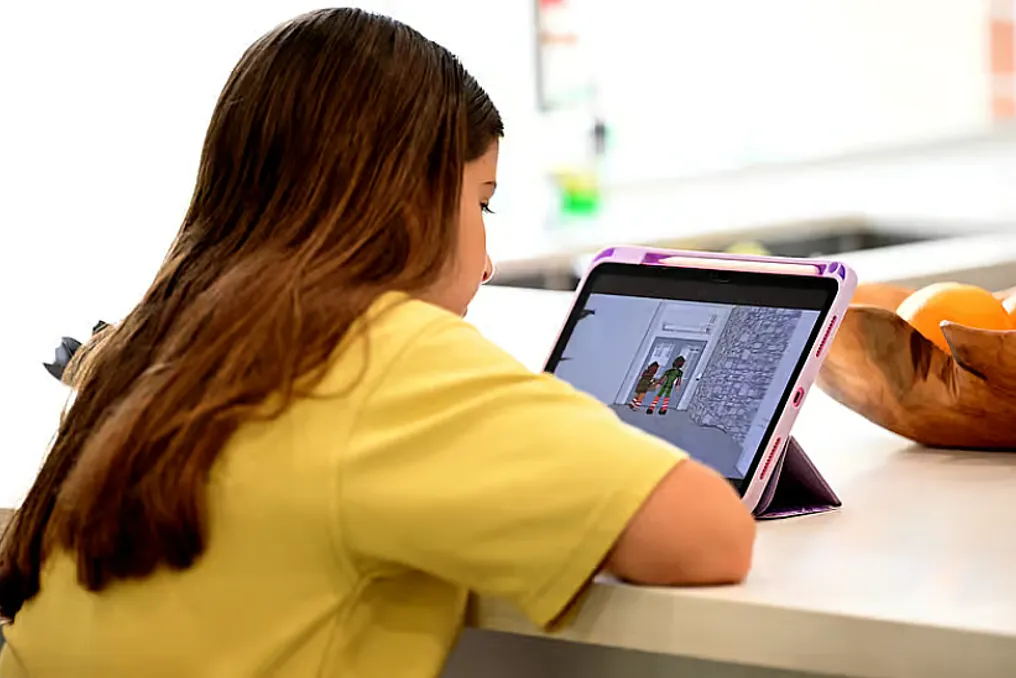
Growing concern among parents and educators in the United Arab Emirates (UAE) regarding the impact of digital devices, online learning platforms, and artificial intelligence on children's writing skills. Although children are becoming increasingly accustomed to keyboards and touchscreens, the act of handwriting itself appears to be losing its appeal.
A recent study conducted in the UK revealed an alarming decline in children's engagement with writing. According to the National Literacy Trust's Annual Survey on Literacy for 2025, which surveyed 114,970 children and youth aged 5 to 18, only 26.6 percent of children aged 8 to 18 reported enjoying writing in their free time. This is a decrease of 20.2 percentage points compared to 2010, with only 10.4 percent writing in their free time daily.
Although the study results were obtained in the UK, they raise questions relevant to parents and teachers in the UAE, where digital gadgets, online platforms, and AI are increasingly integrated into children's daily education.
UAE Educators' View on the Importance of Handwriting
Educators in the UAE emphasize that writing remains an integral part of a child's development, even as schools adopt digital learning. Nevertheless, they also point to the necessity of deliberately preserving opportunities for practicing writing, developing fluency, and building the stamina required to capture thoughts on paper.
Lia Atkins, Deputy Head of Primary at Nord Anglia International School Abu Dhabi, believes that schools bear the responsibility of preventing the loss of fundamental skills amid the growing use of technology. She stated: 'We have always clearly stated that we will remain a school where children learn to write, use pencils, and develop the skills necessary to become confident, fluent writers. We fully embrace technology, but we do not believe everything must be done on a device.'
Atkins argues that instead of assuming skill loss, schools should analyze whether they provide sufficient opportunities for development and practice. She explained that writing involves several abilities: coordination, motor control, concentration, and perseverance. These qualities are not formed instantly, and writing endurance must be gradually built throughout primary education.
In this school, foundations are laid early through activities that strengthen fine and gross motor skills, including finger exercises, tool manipulation, marking, and larger physical movements. It is important to note that writing instruction continues far beyond the stage of mastering letters. Atkins added: 'Throughout primary education, we continue to explicitly teach writing and give children the opportunity to write by hand, not only in English lessons but also as part of the broader curriculum. As they get older, we place increasing emphasis on fluency, presentation, writing stamina, and the ability to express more complex ideas.'
As children encounter AI and digital tools more frequently, educators insist that the ability to think independently, formulate ideas, and express them becomes even more significant. Ola Laniyan, Deputy Head of Primary at Nord Anglia International School Abu Dhabi, reported that the school introduces laptops for daily learning only from Grade 5, allowing children to master basic skills before digital tools take on a more prominent role. She noted: 'Even then, most lessons, especially English, remain firmly paper-based. Children plan, draft, and refine their texts by hand, memorize spelling, and expand vocabulary through reading, discussion, and explicit teaching.'
Laniyan believes these foundational knowledge is particularly important in an era when AI can assist children in creating and refining written content. Children must first learn to generate ideas, construct sentences, and express their thoughts independently before turning to digital aids.
Research also highlights the role of writing in literacy development, especially in the early stages of learning letters and words. As children become more fluent, they do not need to focus as much on forming individual letters, freeing up their potential to concentrate on vocabulary, sentence construction, creativity, and writing quality.
Experts' Opinion on the Balance Between Writing and Technology
Catherine Kelly, PYP Coordinator at Swiss International Scientific School Dubai, noted a decline in writing fluency and stamina among some students, particularly with increased digital activity. She stated: 'We observe a decrease in writing fluency and stamina in some children, especially as digital interaction increases. This reinforces the importance of developing strong fine motor foundations, explicit writing instruction, and regular opportunities for sustained writing.'
At this school, systematic phonics instruction, explicit literacy teaching, and daily opportunities for writing across all subjects are used to reinforce these skills. Kelly is convinced that writing and technology should complement each other, not compete. She concluded: 'Writing supports cognitive processes related to memory, concentration, and literacy development. I believe schools should intentionally preserve these fundamentals while embracing digital innovations.'
Not all educators believe that children are necessarily losing the ability to write. Some argue that the frequency and duration of tasks performed by hand in daily life have changed. Rebecca Krian, Director and CEO of GEMS FirstPoint School in Dubai, believes that the presence of technology in classrooms does not automatically mean children are typing more. Most of their interaction with devices is related to tapping, swiping, selecting, and searching, rather than developing proper typing skills.
Krian asserts: 'I would not say there has been a decline in writing skills. Children are still learning to form letters, write correctly, and write clearly. What has changed is how often they need to write in volume. Outside of school, there are very few situations where a young person needs to write by hand for a long time. Today, this is mainly required for exams, at least until exams move online.'
Krian emphasized that writing stamina remains critically important as students approach GCSE and A-Level exams, where they may be required to write fluently and legibly for two hours or more under timed conditions. She also noted: 'Writing remains important for younger children: forming letters by hand develops fine motor skills and supports early reading and spelling. Many schools still prioritize writing; it is something that is still valued and necessary.'
Krian believes that the choice between handwriting and technology should depend on the educational objective. 'When the task is aimed at developing core skills such as spelling, sentence structure, vocabulary, or argumentation, students should first think independently. Handwriting often works well in this case because it slows students down and prevents them from relying on spell check or predictive text.'
Parents Notice Changes
For some parents in the UAE, the change is not just about the appearance of handwriting. It is also related to the child's ability to write comfortably, legibly, and for extended periods. Alexandra Rusu, an expatriate from Moldova whose son attends an International Baccalaureate school, shared that she does not have problems with his writing, but the level of letter formation and overall writing skills do not match what she remembers from her own schooling. She shared: 'I wouldn't say he struggles with writing, but his level of writing and letter formation is far from what my husband or I had at his age. I feel our handwriting was much better. Of course, we didn't have devices back then. We regularly wrote exams and tests by hand, so we had much more practice.'
Rusu mentioned that she even bought cursive writing books for her son at an earlier age hoping to improve his handwriting. However, the concern became apparent during a parent-teacher meeting when the Spanish teacher pointed out that his handwriting negatively affects his grades. The teacher noted: 'When I ask him a question, he knows the answer, but his written work is still below the expected level,' adding that it was difficult for him to read his work.
Indian expatriate Devyani Prasad shares similar concerns. She said: 'My children can type quickly on a phone or laptop, but when it comes to handwriting, their speed, letter formation, and even their ability to express themselves on paper have noticeably decreased.'
Prasad believes that the growing dependence on digital tools and AI may also affect children's patience and willingness to practice. She concluded: 'It's not just about neat handwriting; it's about developing a skill that we have grown accustomed to taking for granted.'