KKR fans mock Venkatesh Iyer after Shubman Gill hits centuries
Read more
Aaj Tak
www.aajtak.in

KKR fans mock Venkatesh Iyer after Shubman Gill hits centuries

Indian all-rounder Venkatesh Iyer shared his past experience with Kolkata Knight Riders (KKR), recounting how he was reacted to on social media after Shubman Gill was released from the team. He noted that every time Shubman scores a century, some KKR fans start mocking him.

In the podcast of former Indian international player Akash Chopra, Venkatesh Iyer stated: 'I had to endure a lot of hatred for a long time. Even now, when Shubman scores a century, people in KKR accounts comment that we lost a diamond while searching for gold.'

Indeed, Kolkata Knight Riders released Shubman Gill before the IPL 2022 season. After this, the new team Gujarat Titans (GT) acquired him for 80 million rupees. Shubman subsequently led the team in Gujarat and constantly impressed with his play.

Meanwhile, some KKR fans began placing the responsibility for the franchise's decision on Venkatesh Iyer. Venkatesh Iyer also spoke about an experience related to the KKR team being released before the IPL 2026 auction. He mentioned meeting with franchise co-owner Shahrukh Khan and hoping for a change in the decision.

At the IPL 2026 auction, Royal Challengers Bengaluru (RCB) included Venkatesh Iyer in their squad. His experience in the new franchise turned out to be completely different. He mentioned the passion of the Bengaluru fans, noting that some fans worship the RCB jersey before the match. Venkatesh Iyer said: 'You won't believe it, but I saw people worshipping the RCB jersey before the match. It was something special. The passion of the fans is on another level.'

In the first matches of IPL 2026, Venkatesh Iyer had to sit on the bench, but later he was given a chance as an impact substitute. In one match, he helped the team reach a score of 201/8 by scoring 29 runs off 15 balls without getting out, although RCB lost. Against Punjab Kings (PBKS), he scored 73 runs off 40 balls without getting out. Throughout the season, Venkatesh scored 209 runs in seven matches with an average of 52.25 and contributed to RCB's second consecutive championship win.

Similar stories

Kamindu Mendis scores century against Pakistan in Lahore ODI Tri-series final
Read more
www.aajtak.in

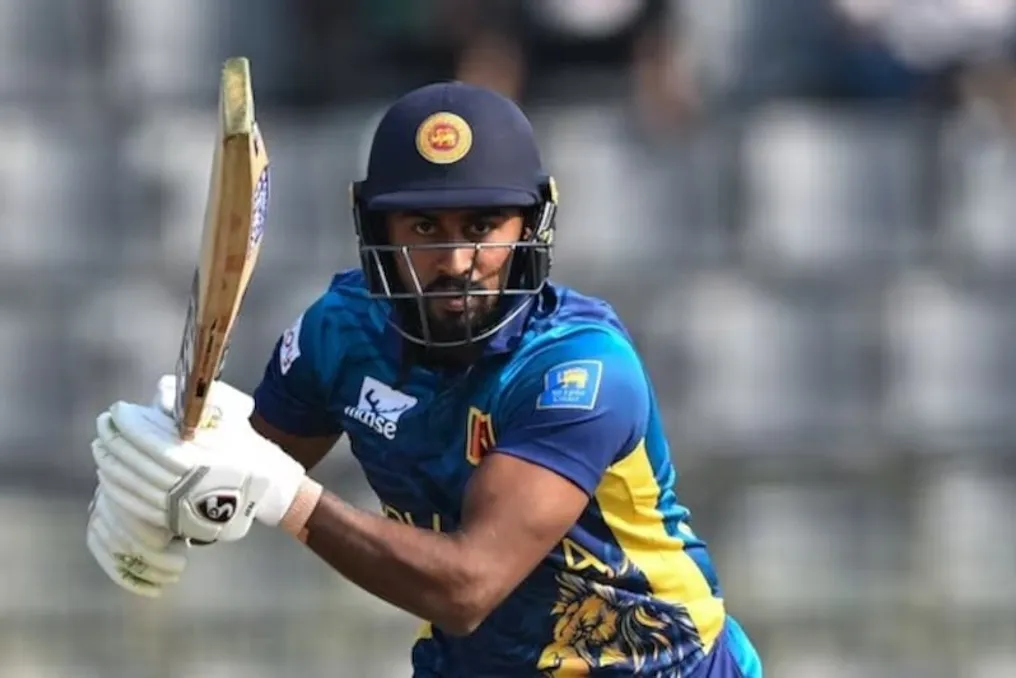
Kamindu Mendis scores century against Pakistan in Lahore ODI Tri-series final

In the intense final match of the ODI Tri-series, held at Gaddafi Stadium in Lahore, the Sri Lankan team demonstrated its potential. Sri Lanka's left-handed batsman, Kamindu Mendis, managed to break through the Pakistani players' defense.

Pakistan decided to start the game with bowling after winning the toss, but this move proved unsuccessful. Before a dangerous fast attack represented by Shaheen Shah Afridi, Haris Rauf, and Naseem Shah, Kamindu Mendis played boldly and scored his first century in his ODI career.

In the final match, Kamindu Mendis played very powerfully, scoring 131 runs off 128 balls. His impressive innings included 12 bright fours and 2 powerful sixes. Pakistan captain Shaheen Afridi tried to create pressure early in the game, but Kamindu continued to display an attacking style, hitting boundaries and rendering the Pakistani attack helpless.

Ultimately, Shaheen Afridi managed to dismiss him via LBW, but by then, Kamindu had already achieved his goal. Sri Lanka's start to the game was quite balanced. Opener Avishka Fernando helped the team with a good start, scoring 38 runs off 49 balls.

Although captain Kusal Mendis was dismissed, having scored only 8 runs off Salman Aga's ball, Kamindu Mendis received strong support from young player Pawan Ratnayake. Pawan also adopted an aggressive stance and made a significant contribution to increasing the team's score.

The players in the teams for this match were as follows:

  • Pakistan: Fahad Zaman, Maj Sadakat, Babur Azam, Saad Beg, Salman Aga, Hasan Nawaz, Arafat Minhaj, Fahim Ashraf, Shaheen Shah Afridi (captain), Haris Rauf, and Naseem Shah.
  • Sri Lanka: Avishka Fernando, Kamindu Mendis, Kusal Mendis (captain and wicketkeeper), Pawan Ratnayake, Dasun Shanaka, Janith Liange, Sakhan Arachige, Mahish Tikshna, Dunith Wellalage, Asitha Fernando, and Dilshan Madushanka.
Team management's decision to exclude Vaibha called into question Gautam Gambhir's aggressive strategy
Read more
www.aajtak.in

Team management's decision to exclude Vaibha called into question Gautam Gambhir's aggressive strategy

The Indian team under the leadership of Gautam Gambhir is supposed to play aggressively, dominate opponents, and leave no chance for the rival. However, the team management's decision in the fourth T20 match in Auckland called this philosophy into question. Former player Vaibha Suryawanshi, who created history with Abhishek Sharma by scoring 118 runs in the powerplay in the previous match, was excluded from the starting lineup.

Captain Shreyas Iyer stated the need to remain 'ruthless,' but facing a mountain of 260 runs, the Indian team's game turned chaotic: two wickets fell in the very first over, undermining hopes of victory. The question arises: what kind of aggressive strategy excludes the most explosive player?

When the fielding team New Zealand set a target of 260 runs, the Indian batsmen found themselves in a difficult position. The hosts secured a convincing victory by 87 runs, and India could not get close to the target score. The team, which hoped for a 4-0 win, was forced to accept a bitter defeat.

Gautam Gambhir prefers aggressive cricket, and his team is not afraid to pursue big goals. Batsmen are given the freedom to play openly, and players are expected to take wickets from bowlers. Nevertheless, there is a fine line between aggression and blind experimentation, which the team management may have forgotten to observe in Auckland.

India already had an undisputed advantage of 3-0 in the series. The fourth match provided an opportunity to solidify the success and take the lead at 4-0. However, Gambhir and his colleagues made a decision that caused the most surprise.

In the previous match, Abhishek Sharma and Vaibha Suryawanshi demonstrated excellent performance against the New Zealand bowlers, scoring 118 runs in 6 overs during the powerplay. This was the highest score in the powerplay for any team in T20 international matches. This figure was not just a record; it testified to the strength of the batsman combination that took the opponent out of the game in the first overs. Vaibha and Abhishek understood each other's game and attacked the bowlers.

However, in the next match, this pair was separated: Vaibha was excluded, and Ishan Kishan came in his place. The question is not about Ishan's ability, as he is also capable of winning a match. The question is why Vaibha had to be excluded? Does the record of the previous match hold so little value for the team management? Should a player have to prove their worth in every match, yet historical performance is insufficient to maintain a spot in the team?

Gambhir should ask himself: what was the basis for breaking up the batting pair that set the record?

During the toss, captain Shreyas Iyer stated: 'We don't want to leave any chances. We have already won the series, but I think our half of the job is done. It is important to remain ruthless.' The captain's words sounded impressive, but ruthless play is not achieved through statements alone; it requires clarity in decisions. If the team's goal is not to give the opponent any chances, then why was the opening pair that destroyed the opponent in the previous match broken up?

Iyer is the captain, and the responsibility for team selection decisions lies jointly with the coach and the captain. Therefore, the captain cannot avoid questions about this change. Did he support the decision to exclude Vaibha? Did he not feel that the pair that scored 118 runs should have been retained?

The captain's task is not only to choose between bowling or batting after the toss. He is also responsible for the team's on-field strategy and for trusting the players. When you talk about ruthless play, you must show the same clarity regarding your successful players.

New Zealand, batting first, scored 259 runs in 20 overs, losing 7 wickets. Glenn Phillips scored 107 runs off 49 balls, and Michael Bresshaw complicated matters for the Indian bowlers, scoring 65 runs off 25 balls.

India faced a target of 260 runs. It was a serious challenge, but not insurmountable. Based on how the Indian batsmen behaved when chasing big targets in previous matches, it was expected that the team would start aggressively again. However, Sanju Samson was dismissed after scoring 4 runs in the second ball. Ishan Kishan also returned to the dressing room without scoring a single run on the fifth ball. Abhishek Sharma (27) was dismissed in the fifth over.

The team that habitually scored 118 runs in the powerplay lost three major wickets already in the fifth over. Here arises the biggest question regarding Gambhir's strategy: if the team relied on aggressive play, why was the batsman who best executed this strategy excluded?

India's defeat was not only caused by the decision to exclude Vaibha. The Indian bowlers also failed to cope...

_

Morne Morkel advised Bhuvneshwar Kumar to focus on his game after an unsuccessful start in international matches
Read more
www.aajtak.in

Morne Morkel advised Bhuvneshwar Kumar to focus on his game after an unsuccessful start in international matches

Bhuvneshwar Kumar, who returned to international T20 cricket four years later, faced a difficult start in the first two matches against New Zealand. In these games, he conceded 99 runs and managed to take only one wicket. Against this backdrop of failure, despite brilliant performances in the IPL over two seasons, Indian bowling coach Morne Morkel defended him. He advised Kumar to ignore external expectations and concentrate on his natural style of play.

Before the third T20 match between India and New Zealand, Morkel called Kumar's return a challenging task. He noted that it is natural for the player to be expected to perform highly after a four-year break from international T20. However, in his opinion, it is crucial to get out from under the pressure of these expectations.

Morkel expressed sympathy regarding Kumar's return, emphasizing that he had demonstrated exceptional play and excellent bowling in the IPL. He also mentioned that Kumar trained for a month before the selection, but international cricket presents a completely different challenge where even minor errors can lead to serious consequences. Due to a tight schedule, he had little time to prepare.

In the first two matches against New Zealand, Kumar conceded 49 and 50 runs respectively. His average efficiency stood at 12.37, making him the most expensive among Indian bowlers. During this period, he took only one wicket. The team expected better performance from Kumar, who is known for his ability to achieve swing and movement in the air. Nevertheless, regaining his previous form after a four-year hiatus and limited preparation proved to be a problem for him.

Morkel acknowledged that Kumar possesses both the necessary skills and experience, and therefore, he should be given time to regain his rhythm. He stated: 'His skill and experience, everything is there. But ultimately, we must respect the game of cricket and give him a chance to find his rhythm over a few matches.'

The contrast between the current difficulties and recent successes in the IPL is striking. Kumar played a key role in Royal Challengers Bengaluru's (RCB) two consecutive wins in the IPL. In the 2025 season, he took 17 wickets, and in 2026, 28, totaling 45 wickets. Following such influence in the IPL, he was expected to replicate this success for the Indian national team. However, in the first two matches against New Zealand, he struggled both in terms of restricting runs and taking wickets.

This is why Morkel advised against drawing hasty conclusions about his performance, urging him to play freely. The coach believes that despite having experience and skills, regaining rhythm after returning to international cricket can take some time. Morkel gave Kumar a clear message: do not rush to prove anything. According to him, the bowler should distance himself from external discussions and focus on his game. He added: 'Since he joined the team, my message has been not to chase anything. Just focus on your game.' This former fast bowler from South Africa continued: 'Yes, there will be expectations, but you will get better with every match and find your rhythm. So don't think about external things. Just focus on your game and be connected to it.'

Popular