Tiger born in Yavatmal spotted in Bida forests after about 100 years; its activity raises warnings among villagers
Read more
Aaj Tak
www.aajtak.in

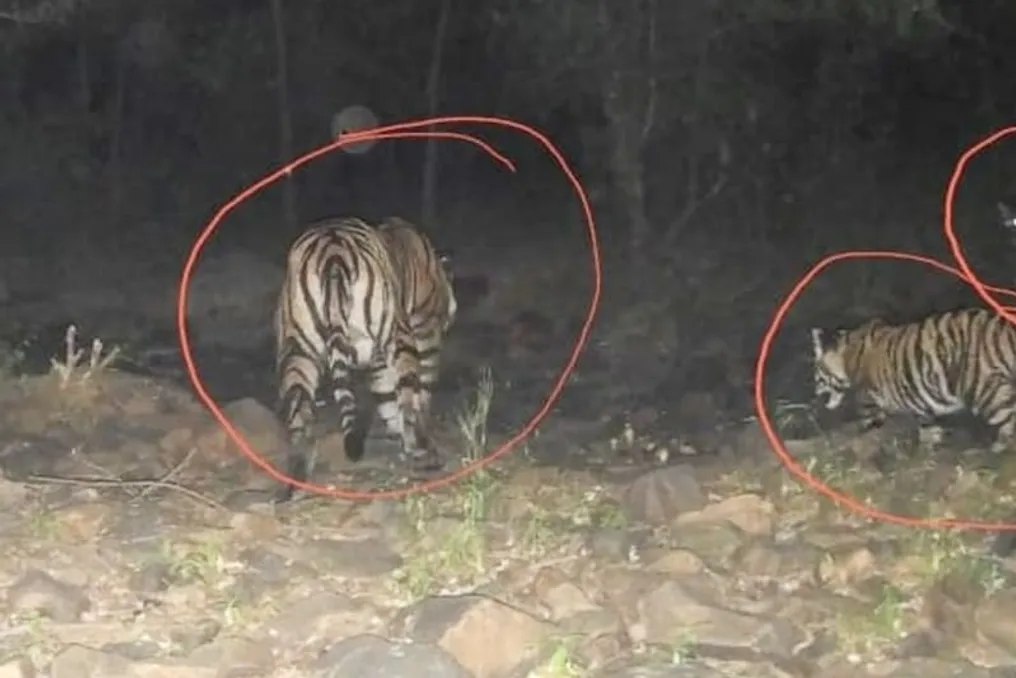
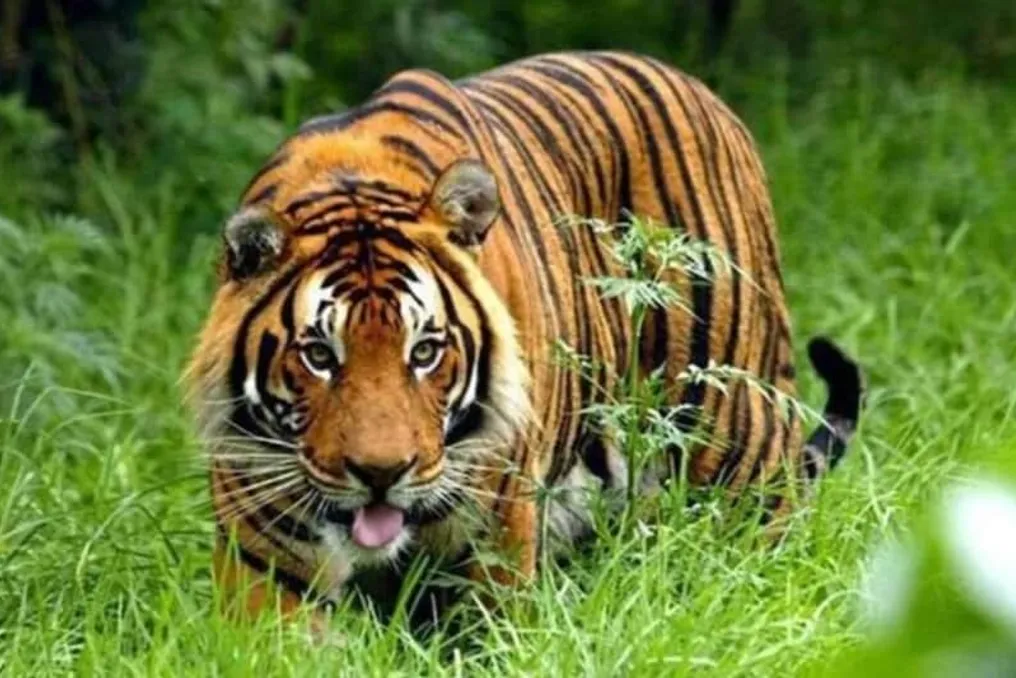
Tiger born in Yavatmal spotted in Bida forests after about 100 years; its activity raises warnings among villagers

There is currently heightened interest in the tiger's movements in the forests of the Bid district of Maharashtra state. Previously, the animal was sighted near the Patoda tehsil, but it has now moved into the Asthi forest area.

A photograph of this tiger was captured by a camera trap installed near the village of Bhurewadi on November 2. Following the detection of the tiger's presence, the forest department advised farmers and residents of nearby villages to exercise caution.

This tiger was born in the Tipeswar sanctuary in Yavatmal. After leaving its birthplace, it traveled through many districts of Maharashtra, including Chandrapur, Dharashiv, Latur, Ahilyanagar, and Solapur, before reaching Bida. It has now been sighted again in the forests of the same district.

District Forest Inspector Amol Munde reported that on November 2, a camera trap in the Bhurewadi area, near Grampadi Choutada, captured an image of the tiger. Previously, it was seen in the Patoda tehsil, and now its presence is registered in the Asthi forest area. After the photo appeared, the forest department warned local farmers and residents to remain vigilant, especially avoiding areas at the edge of the forest and adjacent territories. The department is continuously monitoring its activity.

Forest officials clarified that the tiger was born in 2022 in the Tipeswar sanctuary, Yavatmal district. Its mother is tigress T-22. As it grew older, it left its former territory in search of a new habitat. Tigers have a tendency to seek their own territory after reaching maturity. During this process, they may move from one forest to another in search of safe places to feed and live. This tiger also passed through many districts in search of such places.

According to forest department data, after leaving Yavatmal, it passed through the districts of Chandrapur, Dharashiv, Latur, and Ahilyanagar to reach Bida. During its journey, its presence was also recorded in the Kari area, Barshi tehsil, Solapur district. From there, it returned to the Patoda district in Bida.

In mid-October, the tiger was sighted again near the Patoda tehsil. According to officials, on October 17, it hunted two cattle in Saglevadi and Jarewadi. After that, its photograph was taken near a water source in the Naigaon Mayur (Peacock Sanctuary), where it was drinking water. Now, in early November, its picture was obtained near Bhurewadi in the Asthi forest area. Thus, the forest department has recorded the presence of this tiger for the second time in less than two months.

Forest officer Amol Munde noted that tigers usually pass through this area only three or four times a year, but this tiger was sighted twice within a relatively short period of the last two months. Given its presence, farmers and rural residents were advised not to approach the outer parts of the forest. Officials had previously reported that the tiger had not been seen in Bida for about a century. Last month, Munde mentioned that this tiger, having left Yavatmal, reached Bida by crossing the boundaries of the Chandrapur, Dharashiv, Latur, and Ahilyanagar districts. Considering the tiger's presence, the forest department urged farmers and residents to avoid areas near the forests.

If necessary to go to the edge of the forest for business or work, one should avoid solitary trips and carefully monitor what is happening around. If a tiger is spotted, one must not attempt to approach it, surround it, drive it away, or gather a crowd for photographs. It must be immediately reported to the forest department. Attempting to provoke or get in the way of the tiger can create a threat. Currently, the forest department is tracking the tiger's movements using camera traps. It is unknown in which direction it will move next or if it will stay in the Bida forests, creating a new habitat there. However, it is clear that its journey, which started in Yavatmal, passed through many districts, and the villagers living near Bida need to remain vigilant.
Similar stories

Return of Bison and Creation of New Habitat for Deer in Bandhavgarh Forests
Read more
www.aajtak.in

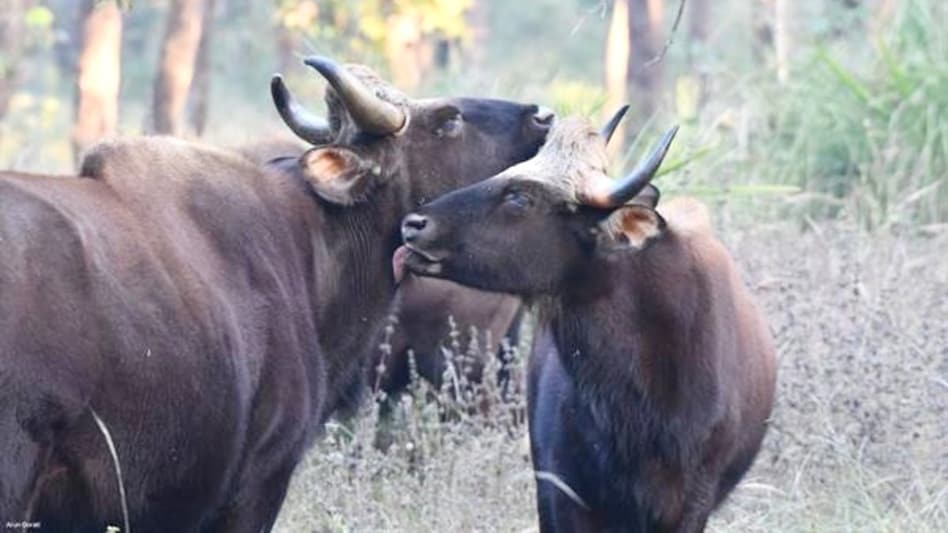
Return of Bison and Creation of New Habitat for Deer in Bandhavgarh Forests

A positive picture has emerged in the field of wildlife conservation within the forests of the Bandhavgarh reserve, which became evident during the Diwali festival. The presence of bison, elephants, and vultures enriches the biodiversity of the forests. Furthermore, efforts are being made to restore the deer population.

The primary focus of environmental authorities is on providing wild animals with safe habitats and adapting them to the natural environment. The return of wild animals that had once disappeared locally in Bandhavgarh is considered a significant achievement of conservation efforts. These efforts contribute not only to increasing the number of wild animals in the forests but also to strengthening the ecological balance.

The return of bison to the forests of Bandhavgarh is an important success in wildlife protection. After conservation and restoration efforts, bison are again freely moving in their natural environment. Their growing presence strengthens the forest ecosystem and biodiversity.

Elephants, which arrived in Bandhavgarh in 2018, have gradually made these forests their new home. Over time, the elephants have adapted to the local environment and are now an integral part of the fauna of Bandhavgarh.

Vultures are known as nature's sanitation workers. They play a critically important role in maintaining environmental cleanliness and ecosystem balance by preying on dead animals. In the safe rocks and forests of Bandhavgarh, they are provided with suitable shelter. Conservation and habitat creation efforts help sustain their existence.

Initiatives are also underway to bring deer back to Bandhavgarh. As part of this program, deer were brought from the Kanha reserve and placed in a secure enclosure. Attempts are currently being made to adapt them to the new environment. This step is an important direction for the future creation of safe natural habitats for them.

The initiatives involving bison, elephants, vultures, and deer show that consistent conservation efforts and the provision of safe habitats can open up new opportunities for wildlife to thrive. This could lead to an increase in the natural wealth of Bandhavgarh and provide a new impetus for eco-tourism development. The message conveyed by the forests of Bandhavgarh during Diwali is that if wild animals are provided with safe shelter and a favorable environment, both life and biodiversity can flourish in the forests.

Tiger cub found in Maharashtra; search underway for passage between two forests
Read more
www.aajtak.in

Tiger cub found in Maharashtra; search underway for passage between two forests

A tiger cub born in one forest left it and ended up in another. This cub independently traversed the forests and reached Pench Tiger Reserve in Maharashtra without any assistance or guidance. On October 29, the cub was spotted near the Chorbahuli gates. It was identified as the offspring of tigress F2, who was born in the Gotkhangao area of the Umred-Karhandla reserve.

This news gave hope to forest department officials, who believe that a natural corridor may exist for tigers to move between the two forests. However, there is uncertainty: it is not yet known whether the cub has made Pench its new home or is simply passing through.

In a tiger's life, there are periods when it needs to find its own territory. It does not always stay with its mother. As it grows, a young tiger requires a new place for living, hunting, and roaming. In such cases, young tigers may leave their native territory and venture into other forests. This phenomenon is called tiger dispersal.

This cub, spotted in Maharashtra, likely also set out in search of its territory. According to Akshay Gadge, Deputy Director of Pench Tiger Reserve, the tiger might be looking for a suitable territory. Officials continue to monitor its activity, and Gadge noted that it would be premature to assert whether the tiger will stay in Pench or just pass through.

The question arises as to how this cub managed to cover the distance from one forest to another. The Forest Department hypothesized a possible route: the tiger might have passed through Kukhi, Bhandara, Ramtek, Pawni, Pawni Buffer, and then to Chorbahuli via NH-44. Currently, this is only a hypothetical path requiring confirmation through monitoring the tiger's activity and scientific research.

Imagine two large forests where tigers live, but fields, roads, villages, and other obstacles are located between them. If a young tiger needs to cross from one forest to another, what path will it take? A natural passage among forests that allows tigers and other wild animals to move from one place to another is called an ecological corridor. These paths are critically important for tigers because each needs its own territory. When a young tiger matures, it may look for a new place. If there is no safe passage between forests, its journey can become difficult and dangerous. Roads, settlements, and deforestation can disrupt these paths, leading to tiger isolation.

Akshay Gadge, Deputy Director of Pench Tiger Reserve, called this event a positive sign for Pench. He stated that the department's priority is forest conservation and ensuring conditions for tigers to live. The Forest Department reports that patrols are constantly conducted in the Chorbahuli forest area. In addition to protecting the forest, efforts are being made to conserve water, build small dams in forest zones, and involve local residents in conservation activities. The goal of these efforts is to create a better environment for wildlife so that tigers have enough food, water, and space to live.

Will this tiger stay in Pench? There is currently no answer. Forest department officials are monitoring the tiger's presence. It may establish its territory in Pench or continue searching elsewhere. However, its appearance indicates an important trend. Conserving tigers means not only counting their numbers within the forest but also ensuring their safe movement between different forests. The tiger cub, born in Umred-Karhandla, raised hope by appearing in Pench. The Forest Department's monitoring will show whether this was just the journey of one tiger or a story of a natural passage between two large forests of Maharashtra.

Tiger population in Madhav Tiger Reserve increases to 11 after two cubs are born to female MT3
Read more
www.aajtak.in

Tiger population in Madhav Tiger Reserve increases to 11 after two cubs are born to female MT3

In Madhav Tiger Reserve, located near Kuno, the tiger population has grown to 11 individuals. Female MT3 was spotted there with two cubs, which are about three months old. This is the second litter for this female.

Since the start of the tiger restoration program in Madhav Tiger Reserve on March 10, 2023, this marks the third instance of cubs being born. The birth of two new cubs by female MT3 is considered a significant achievement for this program.

Female MT3 previously gave birth to two cubs—one male and one female. These animals are now approximately 28 months old. With the arrival of the new cubs, the total number of tigers born in this reserve has reached six. Additionally, there are two breeding females in the reserve.

The growth of the tiger population in Madhav Tiger Reserve is due to the continuous efforts of forestry staff, the veterinary team, the reserve administration, and senior officials. The third litter of female MT3 is another success for the tiger restoration and conservation program in Madhya Pradesh. This demonstrates progress in creating a favorable habitat for tigers in the reserve and in the sustainable development of their population.

Popular