Time-out declared for the first time in Cricket World Cup, causing controversy among fans
Read more
Aaj Tak
www.aajtak.in

Time-out declared for the first time in Cricket World Cup, causing controversy among fans

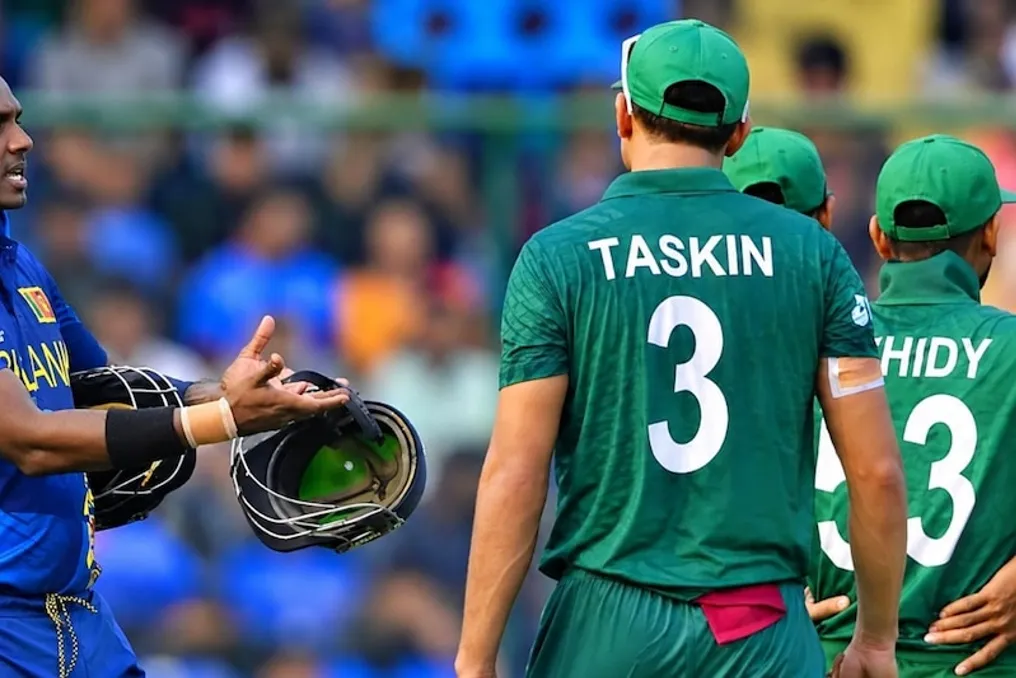
During a Cricket World Cup match held on November 6, 2023, in Delhi, a unique and controversial incident occurred: experienced Sri Lankan batsman Angelo Mathews was declared out under the 'time-out' rule.

This case marked the first in international cricket history where a player was dismissed based on this regulation. The situation escalated after Mathews' helmet strap broke, forcing him to request a replacement piece of equipment. At that moment, Bangladesh captain Shakib al-Hasn appealed against him. The umpires' decision sparked a serious dispute on the field, the repercussions of which were felt even after the game concluded.

The match between Sri Lanka and Bangladesh took place at Arun Jaitley Stadium in Delhi. During the 25th over, the Sri Lankan team attacked, and Shakib al-Hasn dismissed Sidira Samarwickrama. After the last player left the field, Angelo Mathews came out as the sixth batsman.

When Mathews approached his crease and began preparing to face Shakib, his helmet strap broke. He immediately pointed towards the dressing room to request a new helmet. Chamrika Kunaratne brought a new helmet onto the field. However, at this point, Bangladesh captain Shakib al-Hasn spoke with umpire Marius Erasmus and lodged a time-out appeal. The umpires informed Mathews that he was not ready to face the next ball within the stipulated time, and therefore, he was declared out.

Initially, Mathews thought the umpires were joking with him. But when he realized the seriousness of the decision, he started arguing with the umpires. He showed umpires Marius Erasmus and Richard Lingwardt the broken helmet strap, trying to explain his problem.

After this, the umpires spoke with Shakib. Mathews also communicated with the Bangladesh captain, but Shakib refused to withdraw his appeal. Consequently, Mathews was forced to leave the field without facing a single delivery. Leaving the field, Mathews was extremely upset; he angrily threw his broken helmet, and then his bat. There was also dissatisfaction with this decision in the Sri Lankan team's dressing room. Captain Kusal Mendis and the coaching staff expressed their disagreement to the umpires.

According to cricket rules, a batsman can be given out under the time-out rule if he is not ready to play the next delivery within the specified time after the previous batsman or his replacement leaves. According to Rule 40.1.1 in the ICC guides for the 2023 Cricket World Cup, the new batsman should have been ready to receive the ball within two minutes of the wicket falling. Failure to meet this deadline could result in him being given out.

It is important to note the distinction: MCC rules have a three-minute limit for this situation, but for the 2023 World Cup, the ICC reduced this period to two minutes. These specific ICC conditions were in effect during the tournament. Furthermore, in the event of a time-out, the bowler does not receive credit for the wicket, even if they bowled at that moment.

Following Mathews' dismissal, the main question arose: couldn't the delay caused by the helmet strap failure be taken into account? Fourth umpire Adrian Holdstock provided clarification on this matter during the break in play. He stated that the television umpire recorded a twenty-minute interval from the moment the wicket fell and relayed this information to the field umpires. According to Holdstock, Mathews was not ready to face the ball within the stipulated two minutes even before the helmet strap broke.

He also emphasized that simply appearing on the field or preparing to defend is insufficient; he must be ready to receive the ball within the allotted time. Moreover, the rules did not provide for a separate exclusion for equipment malfunction cases.

Mathews also presented his perspective. Although he disputed the umpires' interpretation, in a post-match press conference, he stated that he was ready to play on the field within two minutes, and the helmet strap broke later. Mathews expressed his displeasure with Shakib's and Bangladesh's decision, calling it a violation of sportsmanship. He noted that the issue concerned helmet safety, and playing without one was unacceptable to him. The next day, Mathews shared a video recording of the incident on social media, claiming the video proved that the two minutes had not expired before the helmet strap broke. Thus, a disagreement remains between him and the fourth umpire regarding the time frame. On the other hand, Shakib defended his decision.
Similar stories

Devon Conway ruled out of New Zealand squad ahead of first ODI against India due to injury
Read more
www.aajtak.in

Devon Conway ruled out of New Zealand squad ahead of first ODI against India due to injury

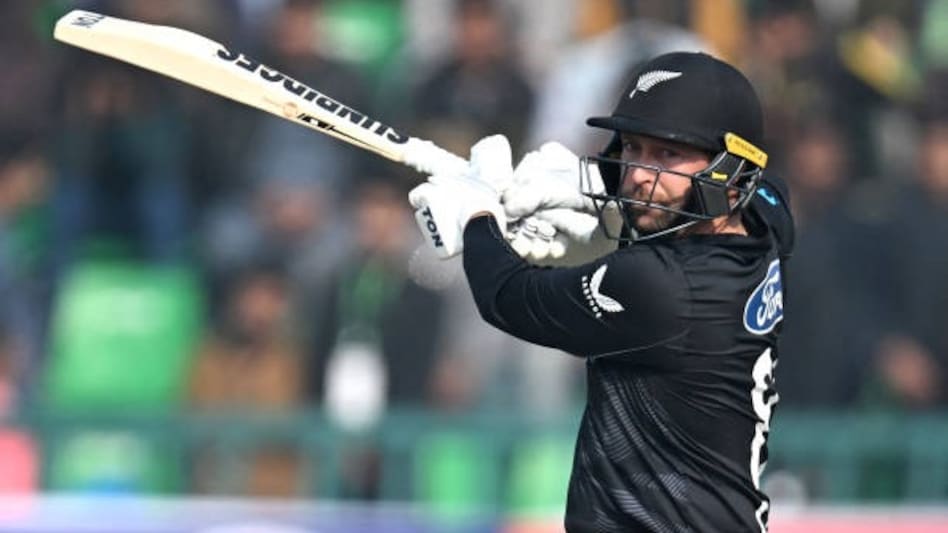
New Zealand has suffered a significant blow ahead of the ODI series against India. Wicketkeeper-batsman Devon Conway will be unable to participate in the first match due to an injury. Tim Seifert will replace him.

Devon Conway was excluded from the first ODI, scheduled for November 4th in Auckland, after colliding with teammate Matt Henry during a training session on Tuesday at Edgbaston. Following the collision, Conway was taken to the hospital where a concussion was confirmed.

New Zealand Cricket (NZC) issued an official statement confirming Conway's absence from the first ODI. Team captain Michelle Santner stated that Henry was also involved in the incident but is fine.

The accident occurred while Conway and Matt Henry were attempting to catch a ball in the air during practice. As a result of the catching attempt, both players collided with each other. Medical staff on the field immediately checked both athletes, after which head examinations were conducted.

At a press conference, Santner stated that Matt Henry passed the concussion test and appears normal, while Devon was taken to the hospital for further examination. He noted that the collision looked unfavorable.

Following Conway's exclusion, Tim Seifert will take his place in the New Zealand team. Santner hinted that Seifert might be included in the starting lineup directly. He explained that Seifert is the team's reserve batsman, so a direct replacement will occur if Devon is unavailable. Santner added that this is an unfortunate situation, emphasizing that Seifert is a good ODI player and had previously been waiting for his chance in the T20 series.

NZC reported that the medical team will closely monitor both players, and information regarding their availability in the remaining matches of the series will be provided later. It should be noted that India previously won the five-match T20 series against New Zealand by a score of 3-2, although New Zealand managed to bounce back by winning the last two matches. Now both teams will meet in the ODI series, the first match of which is scheduled for November 4th in Auckland.

Team management's decision to exclude Vaibha called into question Gautam Gambhir's aggressive strategy
Read more
www.aajtak.in

Team management's decision to exclude Vaibha called into question Gautam Gambhir's aggressive strategy

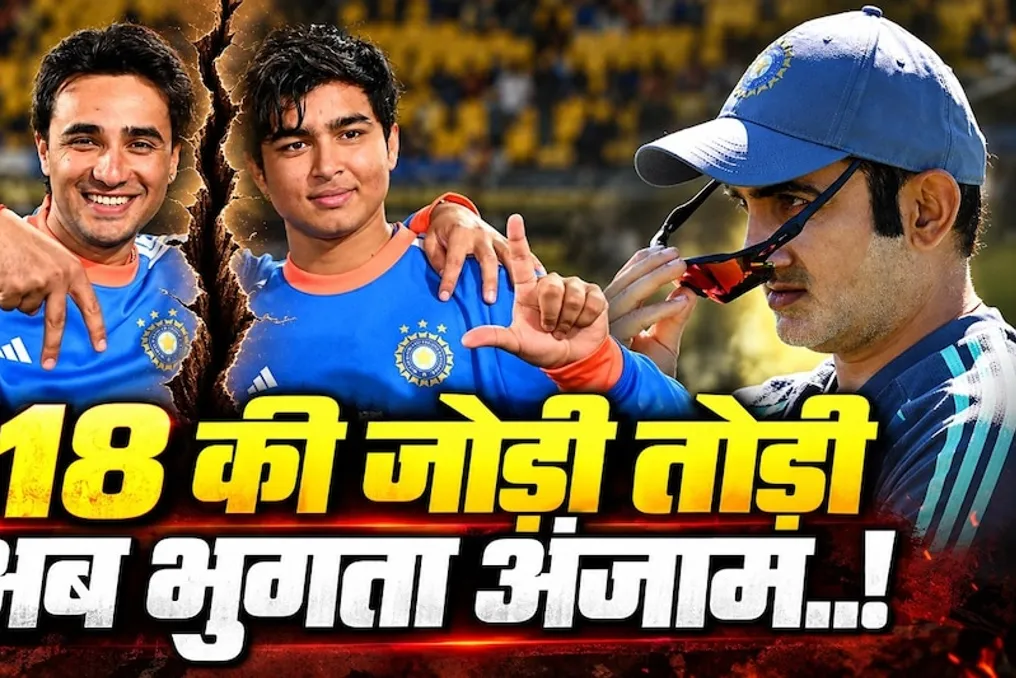
The Indian team under the leadership of Gautam Gambhir is supposed to play aggressively, dominate opponents, and leave no chance for the rival. However, the team management's decision in the fourth T20 match in Auckland called this philosophy into question. Former player Vaibha Suryawanshi, who created history with Abhishek Sharma by scoring 118 runs in the powerplay in the previous match, was excluded from the starting lineup.

Captain Shreyas Iyer stated the need to remain 'ruthless,' but facing a mountain of 260 runs, the Indian team's game turned chaotic: two wickets fell in the very first over, undermining hopes of victory. The question arises: what kind of aggressive strategy excludes the most explosive player?

When the fielding team New Zealand set a target of 260 runs, the Indian batsmen found themselves in a difficult position. The hosts secured a convincing victory by 87 runs, and India could not get close to the target score. The team, which hoped for a 4-0 win, was forced to accept a bitter defeat.

Gautam Gambhir prefers aggressive cricket, and his team is not afraid to pursue big goals. Batsmen are given the freedom to play openly, and players are expected to take wickets from bowlers. Nevertheless, there is a fine line between aggression and blind experimentation, which the team management may have forgotten to observe in Auckland.

India already had an undisputed advantage of 3-0 in the series. The fourth match provided an opportunity to solidify the success and take the lead at 4-0. However, Gambhir and his colleagues made a decision that caused the most surprise.

In the previous match, Abhishek Sharma and Vaibha Suryawanshi demonstrated excellent performance against the New Zealand bowlers, scoring 118 runs in 6 overs during the powerplay. This was the highest score in the powerplay for any team in T20 international matches. This figure was not just a record; it testified to the strength of the batsman combination that took the opponent out of the game in the first overs. Vaibha and Abhishek understood each other's game and attacked the bowlers.

However, in the next match, this pair was separated: Vaibha was excluded, and Ishan Kishan came in his place. The question is not about Ishan's ability, as he is also capable of winning a match. The question is why Vaibha had to be excluded? Does the record of the previous match hold so little value for the team management? Should a player have to prove their worth in every match, yet historical performance is insufficient to maintain a spot in the team?

Gambhir should ask himself: what was the basis for breaking up the batting pair that set the record?

During the toss, captain Shreyas Iyer stated: 'We don't want to leave any chances. We have already won the series, but I think our half of the job is done. It is important to remain ruthless.' The captain's words sounded impressive, but ruthless play is not achieved through statements alone; it requires clarity in decisions. If the team's goal is not to give the opponent any chances, then why was the opening pair that destroyed the opponent in the previous match broken up?

Iyer is the captain, and the responsibility for team selection decisions lies jointly with the coach and the captain. Therefore, the captain cannot avoid questions about this change. Did he support the decision to exclude Vaibha? Did he not feel that the pair that scored 118 runs should have been retained?

The captain's task is not only to choose between bowling or batting after the toss. He is also responsible for the team's on-field strategy and for trusting the players. When you talk about ruthless play, you must show the same clarity regarding your successful players.

New Zealand, batting first, scored 259 runs in 20 overs, losing 7 wickets. Glenn Phillips scored 107 runs off 49 balls, and Michael Bresshaw complicated matters for the Indian bowlers, scoring 65 runs off 25 balls.

India faced a target of 260 runs. It was a serious challenge, but not insurmountable. Based on how the Indian batsmen behaved when chasing big targets in previous matches, it was expected that the team would start aggressively again. However, Sanju Samson was dismissed after scoring 4 runs in the second ball. Ishan Kishan also returned to the dressing room without scoring a single run on the fifth ball. Abhishek Sharma (27) was dismissed in the fifth over.

The team that habitually scored 118 runs in the powerplay lost three major wickets already in the fifth over. Here arises the biggest question regarding Gambhir's strategy: if the team relied on aggressive play, why was the batsman who best executed this strategy excluded?

India's defeat was not only caused by the decision to exclude Vaibha. The Indian bowlers also failed to cope...

_
Virat Kohli against Pakistan: Kohli hit decisive sixes, helping India win the T20 World Cup
Read more
www.aajtak.in

Virat Kohli against Pakistan: Kohli hit decisive sixes, helping India win the T20 World Cup

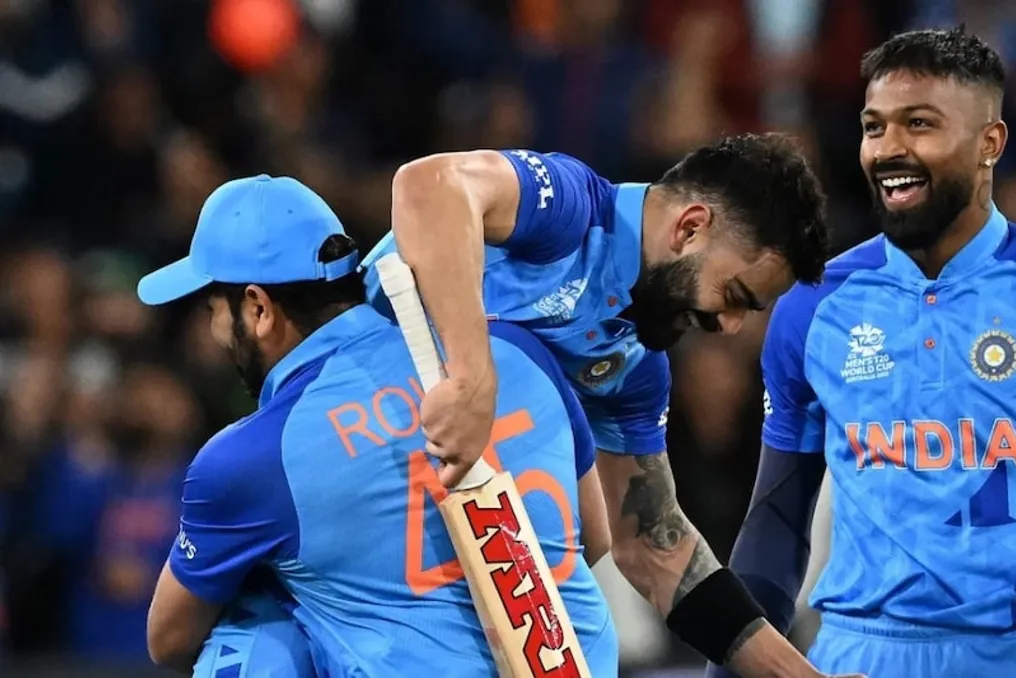
At the historic Melbourne Cricket Ground in Melbourne on October 23, 2022, the Indian team faced the Pakistani team in a T20 World Cup match. Despite India losing four batsmen with a score of 31 runs, Virat Kohli refused to give up.

Kohli, along with Hardik Pandya, formed a fifth-wicket partnership, scoring 113 runs. During this impressive partnership, the match was in a critical situation as 28 runs were needed in the last eight balls. At that time, Virat Kohli hit two sixes, which completely changed the course of the game.

The second-to-last over was bowled by fast bowler Haris Rauf. In this over, Virat Kohli hit a six by stepping back, which surprised the spectators. On the next ball, he hit another six over the fine leg. 12 runs were scored in two balls, and India's hopes were revived.

In the final over, India needed 16 runs to win. On the first ball of the over, Hardik Pandya was dismissed by Mohammad Nawaz. Then, three runs were scored in the next two balls. The following ball was a no-ball due to height, which Virat Kohli sent for a six. Kohli was dismissed by a bowl on the free hit, but the ball hit the stump and went towards the third position, and the Indian batsmen ran three runs.

After this, Dinesh Karthik was dismissed stumped while trying to hit a big shot on the fifth ball of the 20th over. India now needed only two runs to win, and Ravichandran Ashwin came onto the field. Mohammad Nawaz's next ball landed outside the legal stump, and the umpire called it a wide. This leveled the score for India.

Only one run remained to win. Ravichandran Ashwin remained calm under pressure and won the match for India by 4 runs, hitting the ball over the fielders on the last ball.

Virat Kohli scored 82 runs off 53 balls without getting out, including six fours and four sixes. For this outstanding performance, he was awarded the 'Player of the Match' award.

Popular