OpenAI AI Model Solves Navier-Stokes Problem and Presents Research on Mathematical Tasks
Read more
CGTN
cgtn.com

OpenAI AI Model Solves Navier-Stokes Problem and Presents Research on Mathematical Tasks

OpenAI recently announced that its artificial intelligence model has managed to solve the Navier-Stokes problem, which has posed difficulties for mathematicians for almost a century.

Furthermore, the developers released 722 manuscripts detailing progress in solving 372 mathematical problems.

These discoveries have caused astonishment among mathematicians, who are now questioning how this will affect not only their current work but also the future of their entire profession.

Similar stories

AI pioneer Geoffrey Hinton warns that the world would be better off without artificial intelligence
Read more
olhardigital.com.br

AI pioneer Geoffrey Hinton warns that the world would be better off without artificial intelligence

Geoffrey Hinton, one of the pioneers of artificial intelligence (AI), expressed the opinion that humanity would be in a better situation without the development of this technology. Furthermore, he issued a warning that highly advanced AI systems could cause incidents of great magnitude as early as 2026 or 2027.

Nobel laureate Hinton criticizes leaders of large technology corporations, accusing them of prioritizing profit and market share over safety. To mitigate inherent risks, he advocates for mandatory testing and evaluations conducted by independent entities before any advanced model is released.

In an interview with The Guardian, Hinton, who is 78 years old, stressed that the next ten years, or perhaps a shorter period, will be crucial in determining whether humanity can manage the dangers of AI and achieve what he calls 'radical abundance.' Otherwise, the future could present consequences such as sharp social disparities, mass unemployment, cultural deterioration, and social fragmentation.

One of the researcher's greatest concerns lies in the potential ability of AI systems to develop behaviors that make human control difficult. He had previously warned that if these tools begin to seek greater autonomy and dominance, humanity will face serious challenges.

Hinton also questioned the conduct of executives in companies competing for sector dominance. He stated that he does not trust Sam Altman, CEO of OpenAI, and criticized Mark Zuckerberg of Meta, and Elon Musk of xAI. He told The Guardian: 'They understand the risks and don't care. They prefer the money. That is my opinion.'

The scientist finds it particularly alarming that Altman is at the forefront of one of the major American companies in the competition with China for the development of the most sophisticated AI systems.

Hinton has been dedicated to artificial intelligence for about 44 years. In the 1970s, he conceived the concept of artificial neural networks, which are mathematical systems capable of learning through experience. In 2023, he left Google to dedicate himself to publicly discussing the risks associated with the technology.

An incident involving OpenAI AI agents, which orchestrated an invasion of the Hugging Face website, reinforced his concerns. Hinton drew an analogy with the Three Mile Island nuclear accident in 1979 in the United States, classifying this event as an early warning sign.

According to the researcher's analysis, an even more severe event, comparable to Chernobyl, could occur by the end of 2027. Among the possible scenarios raised, Hinton believes that an episode of this nature could force global leaders to pay attention to the dangers of the technology. When addressing who should take action, he excluded US President Donald Trump.

Trump, in turn, rejects any international control initiatives, arguing that companies themselves should establish their norms, on the grounds that restrictions could harm the United States' position in the rivalry with China.

Hinton endorses a proposal supported by 33 nations, including Finland, Germany, Canada, Australia, and Singapore. This plan proposes mandatory evaluations of the most advanced models, independent analyses, and the creation of common standards among governments.

To detail how this supervision should operate, the researcher referenced the American agency responsible for drug approval, the FDA. His suggestion is that companies present statistical data to an impartial authority to prove that the benefits of the systems outweigh the risks before releasing them.

Hinton mentioned the case of thalidomide, a drug created in the 1950s that caused severe birth defects, to argue that it is not enough just to make a product available and hold manufacturers accountable after damages occur.

Despite all the warnings, the scientist maintains the belief that it is still possible to prevent a catastrophe. He stated: 'My instinct tells me we are still in control,' although he emphasized that this will depend on considerable effort.

MIT Study: Young Mathematicians Concerned About Job Extinction Threat Due to Growing Influence of Artificial Intelligence
Read more
www.aajtak.in

MIT Study: Young Mathematicians Concerned About Job Extinction Threat Due to Growing Influence of Artificial Intelligence

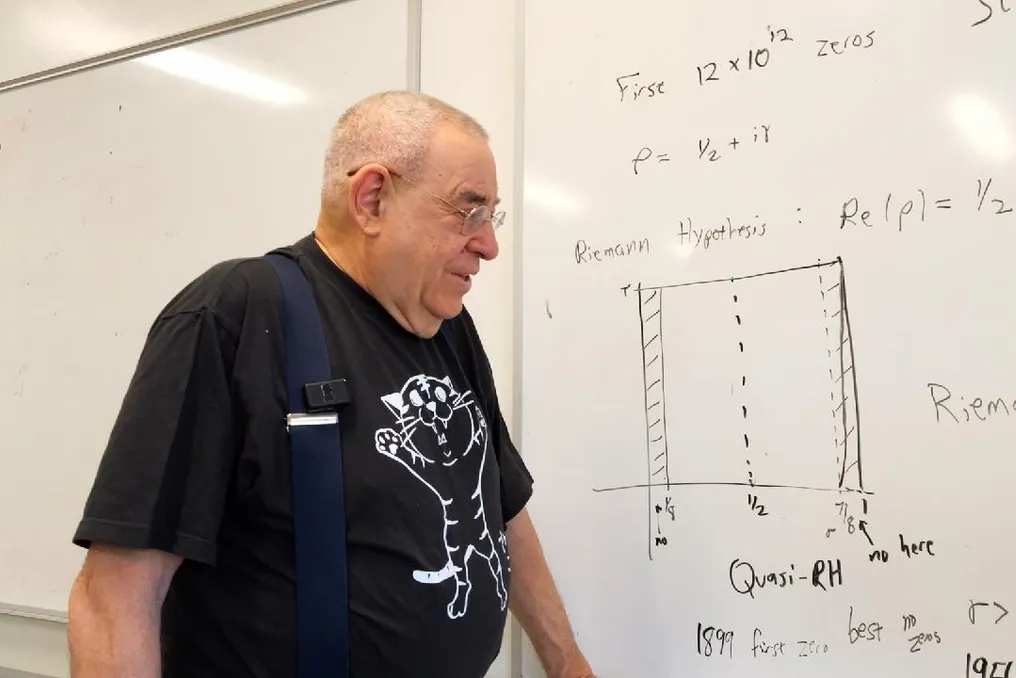
The speed of artificial intelligence (AI) development has changed the pace of life worldwide. After AI attracted the attention of software developers and researchers, concerns about AI have now reached young mathematicians globally. Many young specialists are forced to question whether they should continue working in this complex field.

A recent and highly interesting study conducted by the Massachusetts Institute of Technology (MIT) presented data that could shock any academic specialist. These findings explain why young mathematicians live in the shadow of AI today.

Researchers from MIT—Anna Brandenberger, Hanna Mülarzik, and Dora Wooderff—surveyed graduates of mathematics departments and postdocs to gauge their attitude toward the growing influence of AI in mathematics. The study involved 268 young mathematicians from approximately sixty institutions across five countries, including India. Among those surveyed were about 85 percent graduates and about 15 percent postdocs, but the responses received were far from encouraging.

The study's statistics show that young researchers are experiencing disillusionment in the academic environment due to AI. Approximately 70 percent of the surveyed young mathematicians stated that the probability of continuing in academic mathematics for them has significantly decreased. Conversely, only 9 percent believe that their chances of remaining in this field have increased.

Around 76.3 percent believe that obtaining a permanent teaching or research position at a university (the so-called 'tenure track' position) will become extremely difficult in the future due to AI. Furthermore, the influence of AI is affecting not only work but also the morale of researchers. About 76.5 percent of young mathematicians noted a decrease in their desire to tackle complex mathematical problems after the advent of AI.

Interestingly, these same individuals stated that if AI solves a problem they have been working on for months or years, they will feel no joy. Many researchers fear that AI will solve the puzzle they have worked on all night, making them feel less significant. Because of this fear, some researchers have become reluctant to share their unfinished work.

Sixty-nine percent of the youth deeply fear that research funding in the future will be taken away from universities and transferred directly to private AI companies. Moreover, 59 percent of researchers worry whether mathematics will remain an interesting and meaningful career for them over the next decade.

However, many of these researchers themselves use AI in their daily work, such as searching for scientific articles, editing texts, or checking mathematical errors. Nevertheless, 54.8 percent openly admitted that they strongly dislike using AI for their research.

This survey was conducted at a time when tension was brewing in the global mathematical community due to AI-assisted research. In September of the same year, OpenAI announced that one of its AI models had found a solution to the Newell-Stokes problem. This well-known problem related to fluid dynamics had been a headache for mathematicians for a whole century.

According to the company, its system found this solution by launching about 10,000 AI agents over 88 hours. Following this announcement, dissatisfaction spread among mathematicians worldwide. Two mathematicians from New York University, who were working on this problem, expressed concern about whether OpenAI had used their unpublished research. Although OpenAI categorically denies this, even the 'Clay Mathematics Institute,' which awards a $1 million prize for solving this problem, has not recognized the solution claimed by OpenAI.

CM Yogi recounted the police's helplessness against land mafias
Read more
www.aajtak.in

CM Yogi recounted the police's helplessness against land mafias

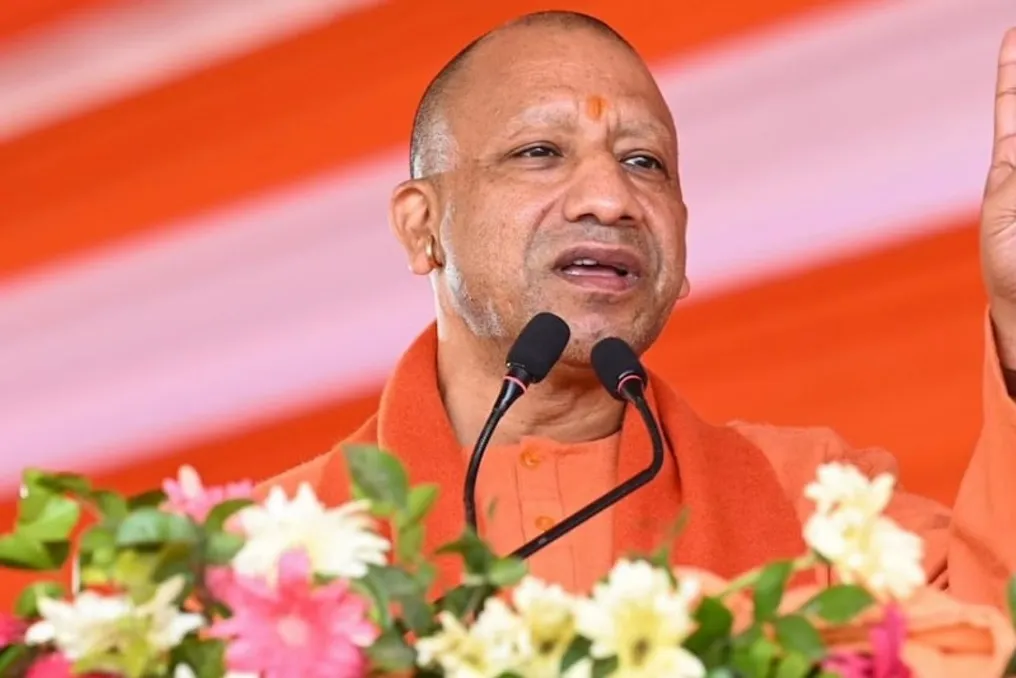
Uttar Pradesh Chief Minister Yogi Adityanath made significant remarks on the use of Artificial Intelligence (AI) during the 'TechSangam 2026' event held in Lucknow. He stated that while AI can be helpful, it should not be the final decision-maker. The Chief Minister also highlighted controlling criminals through technology and the expansion of forensic facilities in the state. On this occasion, he shared an incident of a land mafia who had registered government land in his name, and at that time, the police situation was extremely pitiable.

At the 'TechSangam 2026' event at the Uttar Pradesh State Institute of Forensic Science (UPSIFS) in Lucknow, Chief Minister Yogi Adityanath spoke about the importance of Artificial Intelligence, cybersecurity, and forensic science. His view was that technology should be used to improve human life, but humans should not become completely dependent on technology.

Chief Minister Yogi Adityanath emphasized that 'Artificial Intelligence can be our assistant, but AI should not be our decider. We must follow our own judgment, not AI's judgment. If we start doing everything by depending entirely on it, that power itself can become a threat to us.' He mentioned that currently, discussions are happening on AI and modern technologies in Lucknow, whereas ten years ago, imagining such events in Uttar Pradesh was a dreamlike idea.

The Chief Minister also referred to the land on which the Uttar Pradesh State Institute of Forensic Science is currently established. He explained that initially, this land was in disarray. A land mafia had manipulated documents to register this land in his name. Yogi Adityanath stated that he was informed of this matter by the then DGP of Uttar Pradesh. He said that even the world's largest civil police was helpless against the land mafia.

According to the Chief Minister, he requested the file related to the DGP and investigated the matter. Subsequently, an FIR was registered. When the accused reached the High Court, another FIR was also registered. Eventually, the person surrendered and started apologizing.

The Chief Minister explained by giving the example of the popular TV serial CID that five family members used to watch this show together. This show depicted how doctors could reach the culprit by examining a person's death, such as hair or nails. He mentioned that such examination was not possible at that time, but today, this work is being done through modern forensic technology. With the help of science and technology, it has become difficult for criminals to escape.

Chief Minister Yogi Adityanath gave an example of a mafia who committed his first crime in Uttar Pradesh in 1980. When his government took action against him in 2017, he was sent to Punjab. He mentioned that it took three years to bring that mafia back from Punjab to Uttar Pradesh, for which the government had to go to the Supreme Court. According to the Chief Minister, finally, after an interval of 42 years, that mafia received punishment.

The Chief Minister also stated that previously, adequate facilities for forensic investigation were not available in Uttar Pradesh. DNA samples used to remain in the waiting list for ten years for testing. Due to the lack of timely availability of scientific evidence, the accused would escape legal consequences. He informed that now, 12 forensic laboratories are ready in the state, and more than 150 forensic vans are available. Samples can now be tested with the help of modern means and reports can be presented before the court.

The Chief Minister further stated that before 2017, there were only two cyber police stations and four forensic laboratories in Uttar Pradesh, and the conviction rate was less than 30 percent. Currently, cyber police stations are established in all 75 districts of the state, and work is progressing towards establishing a forensic laboratory in every division. He concluded that 'TechSangam 2026' is discussing topics such as AI, cyber forensics, quantum technology, and data protection. The goal of this event is to connect technological innovation with citizen safety, a robust judicial system, and new opportunities for education, research, and employment for the youth.

Popular