Namibia launches $2.5 billion fuel storage and regional pipeline project
Read more
CGTN
cgtn.com

Namibia launches $2.5 billion fuel storage and regional pipeline project

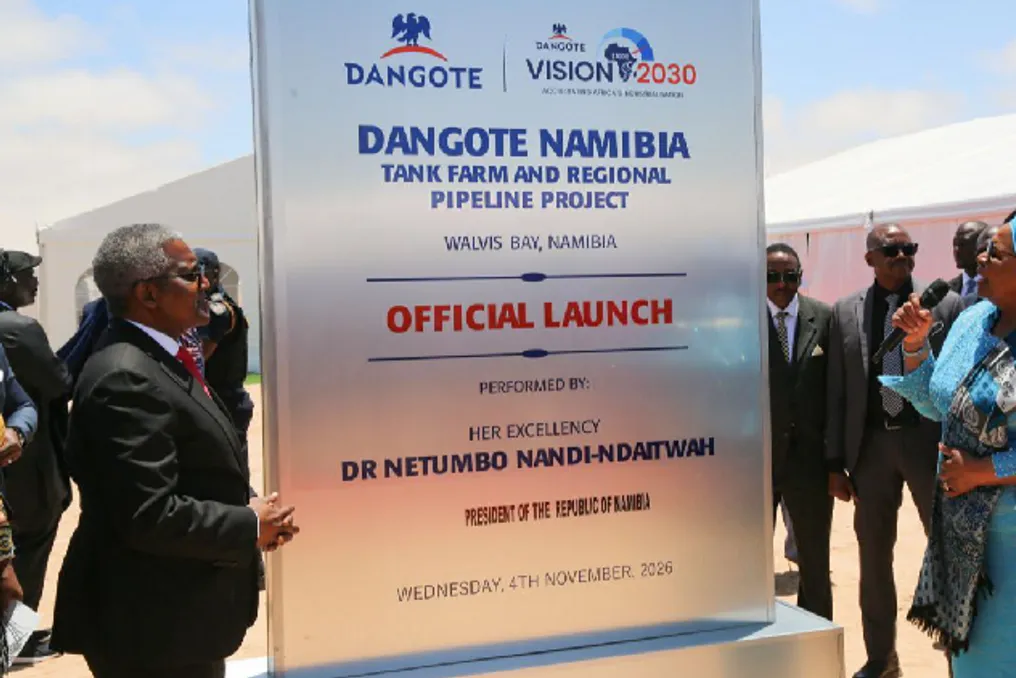
Namibia began implementing a project for storing petroleum products and creating a regional pipeline in Walvis Bay, located on the country's west coast, on Wednesday. The total estimated investment in this project is $2.5 billion, and its goal is to strengthen energy security and improve fuel supplies to neighboring countries.

During the opening ceremony, Namibian President Ndetumbo Nandi-Ndayitva stated that this investment will increase the country's oil storage capacity and provide fuel for both Namibia itself and isolated countries in the region. This is particularly relevant against the backdrop of disruptions in global oil markets caused by geopolitical tensions and the vulnerability of maritime delivery routes.

Ndetumbo Nandi-Ndayitva emphasized that Namibia's strategic location, including the port of Walvis Bay and existing transport corridors, offers significant advantages for regional distribution and trade of petroleum products.

Aliko Dangote, President and CEO of the Nigerian conglomerate Dangote Group, presented details of the Dangote Namibia Tank Farm and Regional Pipeline Project. He reported that the complex will include a warehouse with a planned capacity of 600 million liters, of which 360 million liters are designated for diesel fuel and 240 million liters for gasoline.

In addition to the storage facility, the investment includes the creation of a regional pipeline network spanning approximately 1,700 kilometers. This network will connect Walvis Bay to the internal markets of South Africa.

Ndetumbo Nandi-Ndayitva also addressed the citizens of Namibia, calling for priority employment from the project's implementation to be given to Namibians first, and then to other Africans.

According to Dangote, the proposed pipeline will run from Walvis Bay towards Otjiverongo, with further connections north to Rundu and east to Ghanzi and Fransistown in Botswana. The broader distribution system is intended to serve Botswana, Zambia, Zimbabwe, Malawi, and the southern part of the Democratic Republic of Congo.

Namibia aims to expand cooperation in trade and investment with Nigeria, building on long-standing ties that partly stem from support for Nigeria's struggle for Namibian liberation.
Similar stories

Mozambique installs eight gas supply points for transport in response to fuel crisis
Read more
noticiasaominuto.com

Mozambique installs eight gas supply points for transport in response to fuel crisis

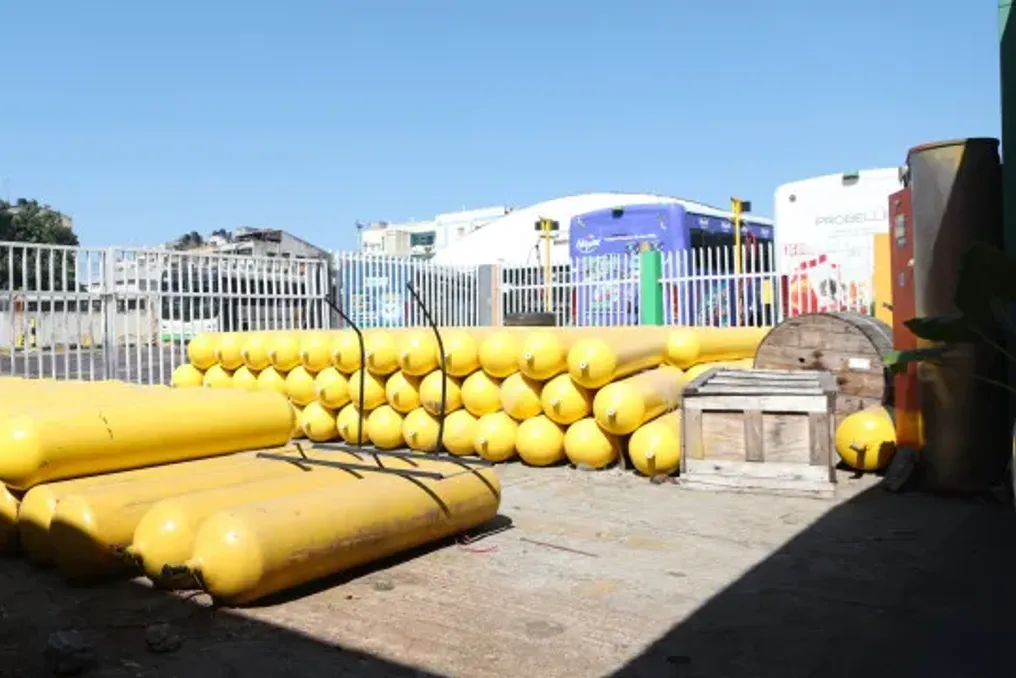
The Government of Mozambique has announced plans to install eight natural gas supply points for vehicles across three southern provinces of the country as a response to the current fuel crisis. These points are scheduled to become operational by 2027.

The Minister of Natural Resources and Energy, Estevão Pale, stated that the government is advancing expanded access to natural gas for transport through a structured program that includes funding for the expansion of gas supply infrastructure. Currently, three new points are being installed in Maputo city and provinces, two in Gaza province, and three in Inhambane province.

Responding to parliamentary questions regarding the fuel crisis, the head of government emphasized that the executive branch is already working on establishing these points in three southern provinces of Mozambique, which are set to operate in 2027. The Minister also noted that the government is focusing on increasing the use of natural gas buses in public transport to diversify energy sources in the transport sector, but clarified that these alternatives do not immediately resolve existing supply issues.

The government acknowledged that the fuel shortage negatively affects households, including the transport and agricultural sectors. Consequently, measures have been taken, such as a temporary ban on re-exporting fuel intended for domestic consumption, while maintaining regular transit to other countries.

Furthermore, the operational capacity of the company Petromoc has been strengthened, enabling it to supply additional volumes of fuel and service retail operators regardless of prior contracts with other distributors. The Energy Minister added that refueling operations are also being intensified at all terminals in the country—Maputo, Beira, Nacala, and Pemba—with the possibility of extending operating hours and conducting Saturday operations if necessary to accelerate product distribution.

Between April and May, the scarcity of gasoline and diesel fuel caused queues of dozens of vehicles, necessitating an increased presence of the Operational Police Group (UIR) at fuel stations that had fuel to ensure safety and control over the flow of drivers, motorcyclists, and consumers with containers.

At that time, the government attributed some difficulties to the impact of the Middle East conflict on international energy markets and supply chains, explaining that about 80% of the fuel imported by Mozambique originated from this region and passed through the Strait of Hormuz. Concurrently, the Bank of Mozambique recognized difficulties in accessing currency to finance fuel imports due to alleged shortcomings in some sector companies.

Data from the central bank shows that in the first quarter of 2026, Mozambique spent $236.4 million (203.5 million euros) on fuel imports, which was 1.4% less than $239.6 million (206.3 million euros) during the same period the previous year. In response to the consequences of the supply crisis and rising global prices, the government decided in May to increase administrative fuel prices, leading to a 45.5% increase in diesel fuel prices and a 12.1% increase in gasoline prices.

Zimbabwe signs oil and gas exploration agreement for the first time in the country's history
Read more
noticiasaominuto.com

Zimbabwe signs oil and gas exploration agreement for the first time in the country's history

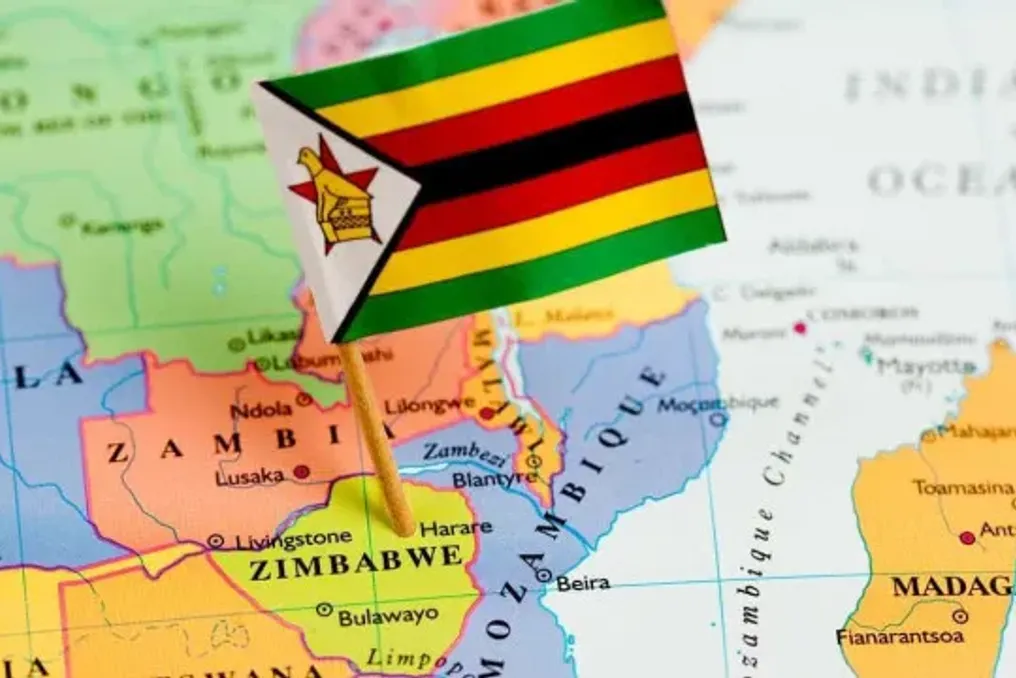
The Government of Zimbabwe, Australian company Invictus Energy, and its subsidiary Geo Associates have signed an agreement that lays the foundation for oil and gas extraction in this African country for the first time in its history.

According to the Official Gazette of Zimbabwe, the Petroleum Production Sharing Agreement (PPSA) establishes the rules governing the exploration, development, and production of oil and gas in the Kabora Bassa project, located in Muzarabani district (north).

Invictus Director Scott McMillan stated in a statement quoted by the Spanish news agency Efe that the official publication of the PPSA is a historic moment for both Invictus and the Kabora Bassa project, as it completes the final formal stage following the historic signing of the agreement earlier this year.

He explained that this agreement provides the long-term financial, legal, and commercial stability necessary to support the 'significant investments' required to advance the project.

This signing took place after the Government and Geo Associates had previously agreed on the petroleum sharing in May, according to which Zimbabwe can receive its share in cash, or in the form of oil or gas.

Exploration studies indicate that the Kabora Bassa basin contains approximately 20 billion cubic feet of gas and 845 million barrels of condensate—a mixture of very light liquid hydrocarbons found in underground gas reservoirs.

Zimbabwe has faced energy shortages for many years as the country relies heavily on thermal and hydroelectric power plants, which cannot meet domestic needs, so these developments could benefit the country.

Mozambique could export over 35 million tons of natural gas per year
Read more
noticiasaominuto.com

Mozambique could export over 35 million tons of natural gas per year

The President of Mozambique stated that the country potentially could achieve liquefied natural gas (LNG) export capacity exceeding 35 million tons annually in the coming years, thereby strengthening its position in the international market.

Speaking at the 8th summit of heads of state and government of the Gas Exporting Countries Forum (GECF) in Moscow, Russia, Daniel Chapo noted that projects under development in the Rovuma Basin off the coast of Cabo Delgado province in the north of the country should establish Mozambique as one of the rising players in the global energy sector.

He emphasized: 'When these facilities are fully operational in the coming years, Mozambique will be able to reach an export capacity of over 35 million tons of LNG per year, becoming one of the significant producers in the international market.'

The President recalled that when Mozambique joined GECF as an observer in 2022, the country was preparing to start exporting LNG from the Rovuma Basin. He added: 'Today, Mozambican gas is already reaching international markets, contributing to the diversification of supply sources and global energy security.'

In his speech, Chapo advocated the idea that the use of natural resources should serve not only exports but also internal economic transformation. He stated: 'We want the gas coming from the depths of our land and sea to be turned into energy that lights up Mozambique, bringing light to our schools and medical institutions, producing fertilizers that strengthen agriculture, and creating jobs for our youth and women.'

The head of state reported that the country is promoting a 'paradigm shift,' moving from a resource extraction-based economy to a model focused on value addition, industrialization, and economic sovereignty.

He also believed that the gas industry should bring direct benefits to the population through job creation, technology transfer, and business development. Daniel Chapo drew attention to the expansion of electricity access, noting that national coverage has grown from 30% in 2018 to 70% currently, while maintaining the goal of achieving universal access by 2030.

The President also advocated for a 'just, balanced, and inclusive energy transition,' arguing that international financing mechanisms must take into account the different levels of development of countries and allow for the responsible use of natural gas in addition to renewable energy sources.

To the members of GECF, Chapo proposed four priorities for the future sector: 'a more stable and predictable international gas market,' technology transfer and human resource training, investments supporting local resource processing, and an energy transition that combines environmental protection and economic development.

Mozambique has three approved natural gas exploration projects in the Rovuma Basin, which are classified as some of the largest discoveries in the world in recent decades.

Popular