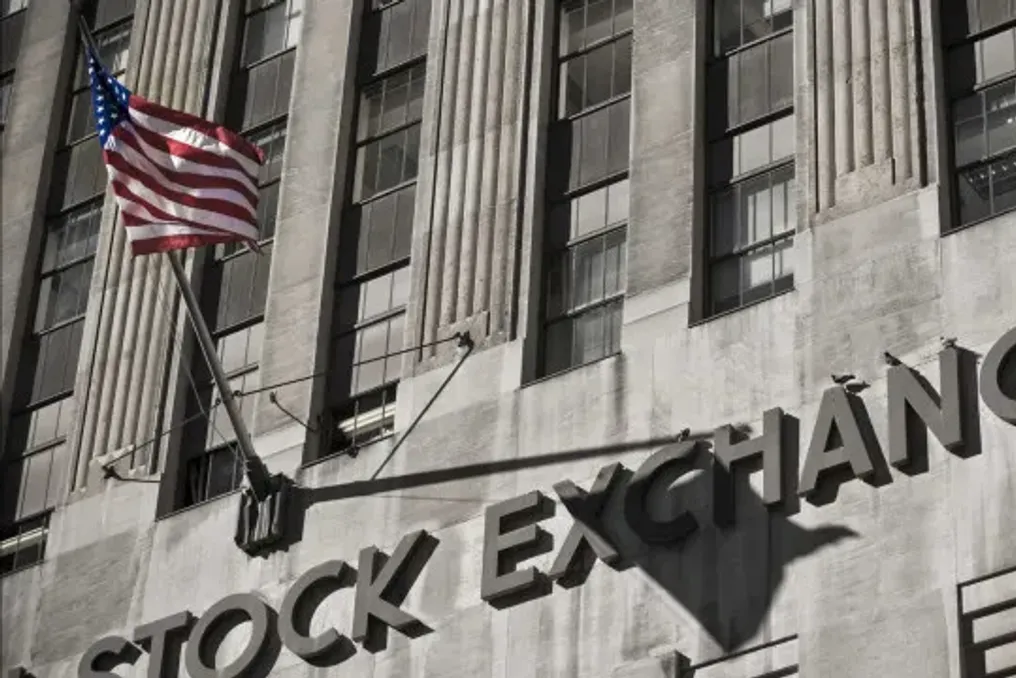
The New York Stock Exchange registered a sharp decline today, driven by the devaluation of technology company stocks. Investors appear to be anticipating a slowdown in data center growth, reflecting the Democratic victory in the US legislative elections.
The technology index Nasdaq closed with a 5.52% drop, marking the largest retraction in a year and a half (since April 2025). This performance places the index in a correction phase, defined as a loss greater than 10% from its previous peak, reached in October.
Other important financial market indicators also showed significant declines, nullifying the profits made the previous day. The S&P 500 index fell 4.35%, while the more selective Dow Jones Industrial Average dropped 3.44%.
Jose Torres of Interactive Brokers commented that the market had been perceived as recovered after the elections, but a real 'bloodbath' suddenly occurred on Wall Street.
Investors are interpreting the results of the legislative elections as a brake on the advancement of artificial intelligence (AI). This is because several elected Democrats expressed opposition during the campaign against the installation of data centers in their jurisdictions, citing negative impacts on the population and territories.
Additionally, residents of dozens of American cities approved restrictions or even prohibitions for data centers on Tuesday, whose proliferation requires massive energy consumption.
Semiconductor-focused technology companies, which had already suffered considerable drops on Wednesday, intensified their losses today. Examples include Broadcom (-10.15%), Micron (-17.77%), AMD (-17.39%), and Intel (-10.39%).
Nvidia, which holds the second-largest global market capitalization, recorded a drop of 8.91%, equivalent to a devaluation of 400 billion dollars.
The so-called Magnificent Seven—a group consisting of Nvidia, Meta, Alphabet, Microsoft, Amazon, Apple, and Tesla—saw its combined market capitalization decrease by 800 billion dollars. This amount exceeds the Gross Domestic Product of Sweden.
Art Hogan of B. Riley Wealth Management observed that 'since doubt arose about the investment amounts in data centers, investors have reacted particularly violently.'
Historically, the rapid rise of Wall Street in recent years has been fueled by enthusiasm for AI. However, today's loss was comprehensive, affecting traditional assets as well.
Patrick O'Hare of Briefing.com predicted that investors are very attentive to this fragility in quotes and await a reduction in volatility so that penalized values can recover.
Furthermore, the market was impacted by the recovery of oil prices the day after a sharp fall, according to analysts.
After the election euphoria, investors returned to a more cautious stance due to the lack of concrete developments in the Middle East. This risk aversion benefits federal debt, as its bonds are seen as a safe haven.
In 10-year federal bonds, the yield—which moves inversely to prices—decreased from 4.898% the previous day to 4.84%.
Challenges related to AI may overshadow the official employment report expected on Friday in October. However, Patrick O'Hare anticipated that if the data confirms the robustness of economic activity, it could trigger a significant recovery movement in the markets. The expected unemployment rate is 4.2%, indicating stabilization.