Brazil establishes ranking of critical and strategic minerals to guide national industry
Read more
Olhar Digital
olhardigital.com.br

Brazil establishes ranking of critical and strategic minerals to guide national industry

The Brazilian federal government has implemented a three-level priority system for minerals considered critical and strategic in the country. This initiative aims to direct state actions in the sector and strengthen national industrial capacity, placing special focus on raw materials essential for energy transition, technological advancement, and national security.

The determination was formalized through Decree No. 13,146, signed by President Luiz Inácio Lula da Silva (PT) and the Minister of Mines and Energy, Alexandre Silveira. The regulation was published in an extra edition of the Official Gazette of the Union (DOU) on Wednesday (4), defining the parameters for categorizing mineral resources.

On Thursday (5), the National Council for the Industrialization of Critical and Strategic Minerals (CIMCE) validated a list containing 27 minerals, which were distributed across the three established priority classes.

The classification adopted by the council is based on five crucial elements: the geopolitical risk associated with the minerals, the global supply distribution, the feasibility of substitution with other materials, Brazil's position within the production chain, and the level of dependence on international suppliers.

The list approved by the council organizes the minerals into three groups: Class 1, with high priority; Class 2, with medium priority; and Class 3, with low priority. However, the inclusion of minerals such as niobium and iron ore in the third category does not imply a loss of economic relevance, given that the classification also considers Brazil's participation in world production and the degree of external dependence.

The decree establishes clear distinctions between the categories. For a mineral to be classified as critical, it must be vital for important economic sectors, present supply vulnerabilities, and pose a significant risk to the country in case of shortage. This analysis covers import dependence, the concentration of global production in a few nations, geopolitical conflicts, sanctions, trade barriers, and technological challenges. Furthermore, the government must weigh the possibility of finding substitutes for the material.

Additionally, the environmental impact of mineral extraction is part of the evaluation. Factors such as water availability, effects on communities and territories, susceptibility to climatic events, as well as recycling and waste utilization options, are considered.

Conversely, a mineral is considered strategic if it has considerable reserves in Brazil and is relevant to at least one of the following purposes: generating a trade surplus, boosting technological development, fostering regional growth, or assisting in reducing greenhouse gas emissions. It is possible for the same substance to receive dual classification, being both critical and strategic, provided it meets the requirements of both categories.

This division aims to guide the implementation of the National Policy for Critical and Strategic Minerals (PNMCE). The strategy seeks to increase Brazil's participation in global production chains, encouraging not only extraction but also the domestic beneficiation, refining, and industrial transformation of these raw materials.

The foreseen mechanisms include funding offers and guarantees for sector projects, along with initiatives focused on mineral processing and technological innovation. However, the classification itself does not automatically guarantee tax benefits, financing, or permits for enterprises; companies remain subject to legal requirements pertinent to each instrument.

The Ministry of Mines and Energy will be responsible for developing the technical studies supporting this classification. The list is scheduled to be reviewed ordinarily every four years, although the council has the prerogative to conduct extraordinary reviews.


Similar stories

Portugal highlights opportunities in Venezuela's energy and infrastructure for Portuguese companies
Read more
rtp.pt

Portugal highlights opportunities in Venezuela's energy and infrastructure for Portuguese companies

The Minister of Economy and Territorial Cohesion, Manuel Castro Almeida, emphasized in Caracas that the restoration of the energy sector and the reconstruction of infrastructure are priority areas for Portuguese enterprises to participate in the Venezuelan market.

He stated that there are significant opportunities and Portuguese potential capable of meeting the needs of this market. In particular, the restoration of the energy sector, especially hydrocarbons, creates new demands for specialized equipment, technologies, infrastructure, and services.

Manuel Castro Almeida addressed an official residence of the Portuguese ambassador in Caracas during a welcoming ceremony for about 30 Portuguese companies. These companies are part of a business delegation that arrived in Venezuela to participate in the Portugal-Venezuela Business Forum on November 3, organized by the Portuguese Agency for Investment and Foreign Trade (AICEP).

The Minister added that the modernization and recovery of the country open up space for Portuguese firms to participate in fields such as construction, metalworking, industry, agribusiness, healthcare, transport, and related services.

He explained that Portugal possesses competitive, internationalized companies recognized for their technical capability, flexibility, and reliability. The goal of this business mission is to demonstrate these competencies and facilitate the matching between Portuguese offerings and the real needs of the Venezuelan economy.

The government official expressed a desire to establish Portugal as an economically present, reliable, and ready partner that can contribute through knowledge, technology, investment, and execution capacity.

He noted that the mission's task is not merely to establish one-off contacts but to create a foundation for sustainable business relationships, identify viable projects, and develop partnerships capable of generating value, jobs, and opportunities in both countries.

In this context, Manuel Castro Almeida specifically highlighted that the resumption of the AICEP representation in Caracas is a 'particularly important step,' reflecting the commitment of the Portuguese Government to strengthening its economic presence in the country, providing closer support to companies, and turning opportunities into concrete projects.

Nevertheless, the minister acknowledged that Venezuela is going through a difficult period, and 'significant obstacles to trade and investment' remain, particularly at the level of international banking operations, customs conditions, and administrative procedures.

He stressed that 'business trust requires legal security, predictability, and favorable conditions for economic activity,' noting that these issues must be clearly addressed in dialogue with Venezuelan authorities.

According to the official, the ministry's mission includes the participation of about 30 companies and unites two interconnected areas that the Executive Power considers: the strength of the Portuguese community in Venezuela and the desire to deepen bilateral economic cooperation.

The trip is also accompanied by the Secretary of State for Portuguese Communities, Emídio Sousa, AICEP President Ana Casaca, and Head of Staff of the Presidency of the Regional Government of Madeira, Rui Abreu.

Brazil holds the second-largest global reserve of rare earths amid competition between China and the US
Read more
g1.globo.com

Brazil holds the second-largest global reserve of rare earths amid competition between China and the US

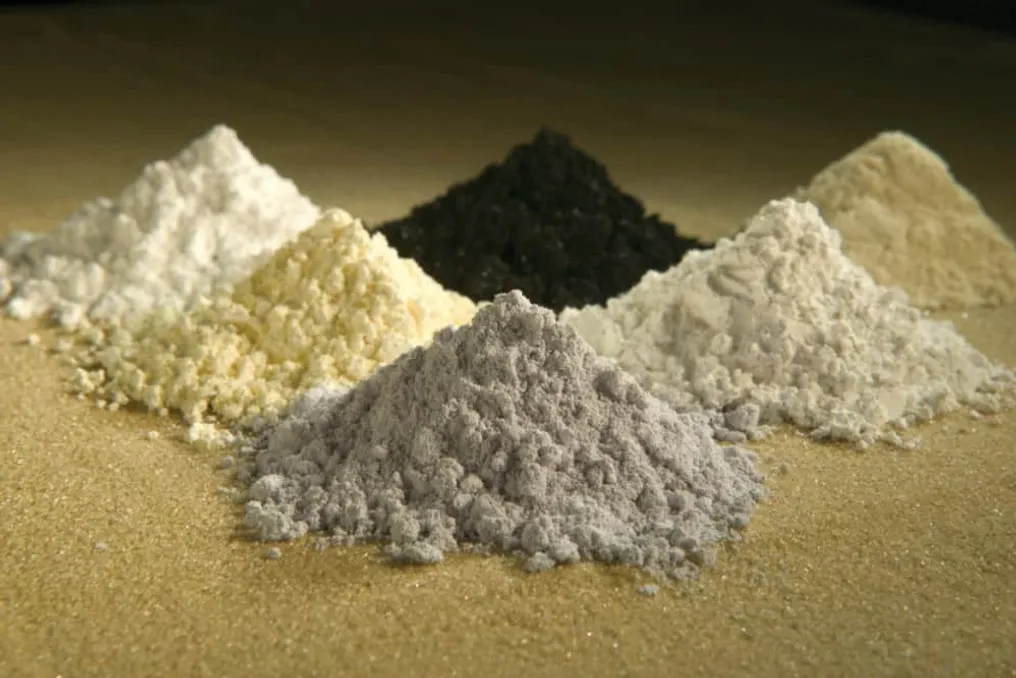
Brazil holds the second-largest global reserve of rare earths, a set of 17 chemical elements essential for the production of electric vehicles, wind turbines, and military equipment.

In 2025, China dominated approximately 85% of the world's refining of these materials, while the United States was actively seeking alternative sources to reduce its dependence on Chinese production.

Financing Agreement

In this context, an American government agency established a financing pact worth US$ 565 million with Serra Verde, a rare earth producing company located in Goiás.

The cost of these materials fluctuates depending on the specific element and the level of processing. For example, in 2025, one kilogram of processed neodymium oxide, used in the manufacturing of high-power magnets, had an average price of US$ 73.

Brazilian Economic Potential

International competition for rare earths presents potential to bring investments, technological advancements, and specialized job opportunities to Brazil. However, the major challenge lies in ensuring that the country is not restricted merely to the simple extraction and export of raw materials, but can use these resources to foster the development of its own industry.

E-commerce platform promotes Amazon art and crafts to the national market
Read more
g1.globo.com

E-commerce platform promotes Amazon art and crafts to the national market

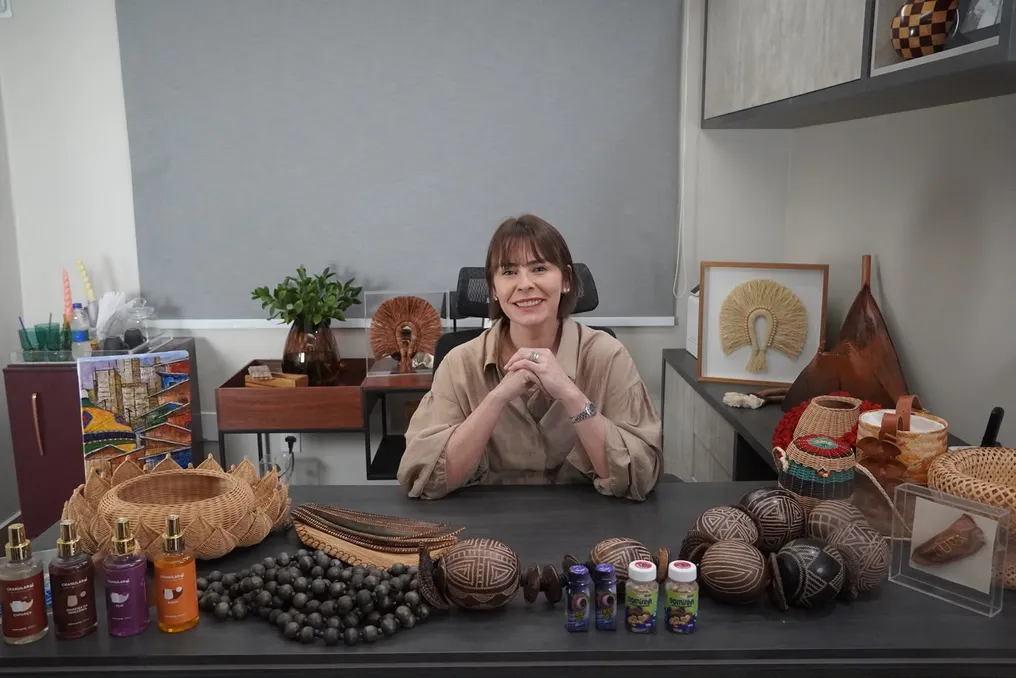
Made in Amazon was created with the purpose of being more than just an online store; it functions as a link between producers and residents of the forest and an audience that would otherwise have difficulty accessing these works outside the region. Thus, the platform aims to give visibility to artists and communities from the Amazon in Brazil and on the world stage.

For an item originating from the Amazon bioeconomy to become a commercial asset, it is necessary to go beyond good presentation. According to Pamela Mota Oliveira, the platform's founder, the process begins with rigorous selection. She explains that they seek a keen eye, a curation that combines contemporary elements with traditional craftsmanship, recognizing that the consumer, whether tourist or not, has high expectations for quality, and that pieces with Amazonian identity add differentiated value.

The manager emphasizes that the challenge is to demonstrate that modern style and craftsmanship are not mutually exclusive. The goal is to reinforce that the products, even if handmade, can be applied in multiple ways—whether to decorate a space, create jewelry, put together an outfit, or even a recipe—presenting them as modern and timeless.

Rita Prossi, a partner biojewelry designer, exemplifies this proposal by transforming Amazonian fibers and seeds into original pieces that now reach markets outside the state. Rita shares that her childhood took place in Itacoatiara, in the Eva Paraná, experiencing a riverside life with strong contact with nature. She states she has been a poet since early on, and poetry guided her to become a jewelry and fashion designer. Her start was in crafts in São Paulo, but upon returning to Manaus, she established a jewelry store in Academia Cagim, where she conceived the first symbols of her riverside childhood, such as the canoe, paddle, sieve, fan, bow and arrow, sapé, and turtle.

While researching a durable fiber capable of replacing chains, Rita discovered arumã, a fiber used by indigenous peoples, and began working intensively with it. She highlights that what unites her first creations are the Amazonian fibers and seeds, keeping the connection to her childhood alive.

Another artist integrated into the Made in Amazon group is Katula Garcia, a textile art specialist, who uses manual techniques to produce original pieces inspired by Amazonian culture. For Katula, witnessing her work transcend the borders of Amazonas encapsulates the meaning of this collaboration. She describes the experience as extremely rewarding, feeling fulfillment and recognition when seeing her works reach people from various places through Made in Amazon. Katula emphasizes that each piece carries a fragment of her history, creativity, and artisanal dedication, and that the support of people from other states motivates her to further expand textile art.

Popular