Hyundai assures that hydrogen car technology has not been discarded, yet it acknowledges that the main obstacle lies in the difficulty of finding consumers willing to purchase them.
This assessment was made by Scott Nargar, Senior Manager of Future Mobility and Government Relations for Hyundai in Australia, during an interview given to the Australian portal CarExpert. He mentioned that the automaker's next hydrogen vehicle intended for the Australian market is still under review.
In addition to low public acceptance, factors such as high cost and scarcity of refueling stations also represent significant barriers.
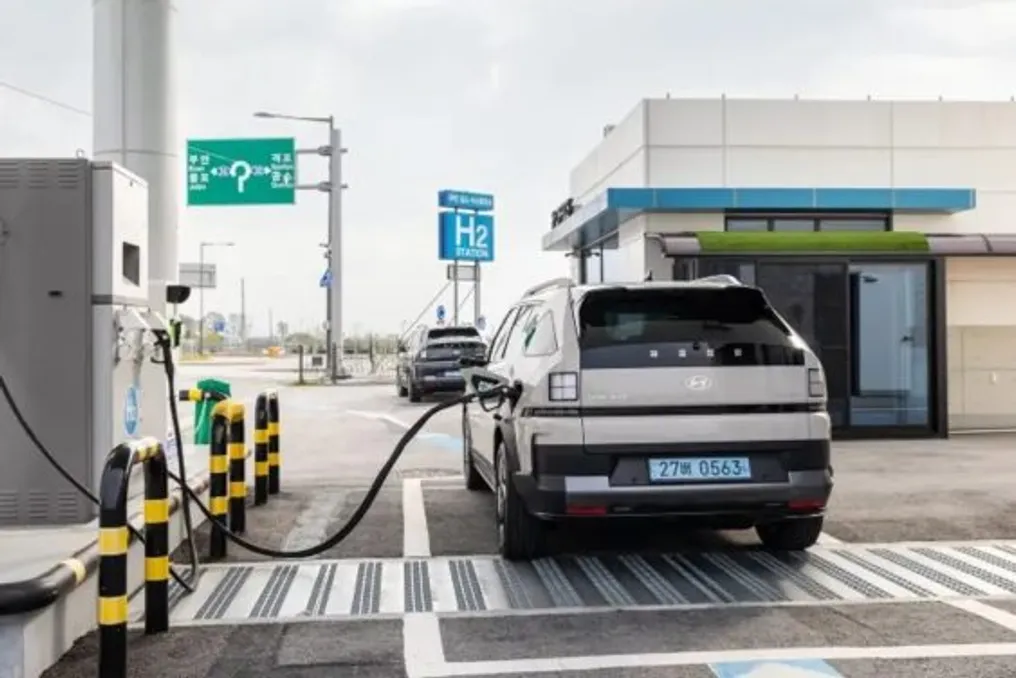
Technically, a hydrogen-powered automobile operates similarly to an electric one, but with a crucial distinction: instead of storing energy in a bulky battery, it generates it during travel. A fuel cell system uses the hydrogen in the tank combined with atmospheric oxygen to produce electricity, resulting only in water as a byproduct.
The refueling process is fast, comparable to that of a combustion engine vehicle. However, while battery electric models have become more affordable in the last decade, hydrogen cars maintain high prices both in purchase and maintenance.
Hyundai is not alone in this scenario, although it has few direct competitors. Toyota continues to invest in this technology with its Mirai model, and BMW has announced plans to launch a series hydrogen model in 2028. In contrast, Mercedes-Benz opted to end the development of passenger hydrogen cars after years of research.
Hyundai has had experience with hydrogen since 1998. The company introduced the ix35 Fuel Cell in 2013 and the Nexo SUV in 2018, which accumulated approximately 38 thousand global sales. The second version of the Nexo, developed from the 2024 Initium concept, was launched in 2025.
In Brazil, a Nexo unit has been tested at USP, located in São Paulo, since 2025. This vehicle is fueled with hydrogen generated from ethanol at the world's first station of this type. The strategy aims to capitalize on the existing ethanol distribution infrastructure in the country to produce hydrogen near points of use.