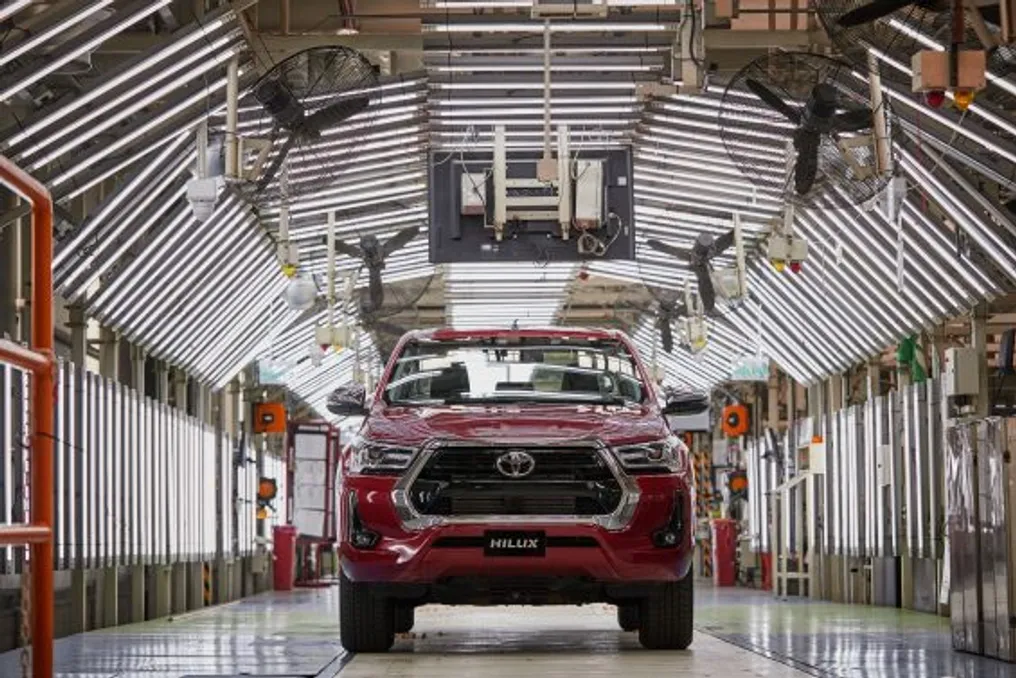
Toyota Hilux regains leadership among mid-size pickup trucks in Brazil in October
Read more
AutoPapo
autopapo.com.br

Toyota Hilux regains leadership among mid-size pickup trucks in Brazil in October

The month of October registered a reduction in new vehicle sales in Brazil, a trend that also affected the pickup truck segment. The Fiat Strada, for example, saw its sales volume drop by almost 1,500 units compared to September.

Despite this drop, the Fiat Strada maintained its position as the best-selling vehicle in the country, with a considerable advantage, and is manufactured in Betim, Minas Gerais. In second place is its larger version, the Toro.

Performance in the mid-size pickup segment

In the mid-size pickup segment, the Toyota Hilux returned to first place. This Japanese model had previously ceded the position to the Ford Ranger but has now reclaimed its usual spot.

The competition for second place was fierce, as the Chevrolet S10 was only seven registrations behind the Ford Ranger. Below this competition, the Ram Rampage and the Chevrolet Montana maintained stable sales.

The second group of mid-size pickups was marked by a tie between the Mitsubishi Triton and the GWM Poer P30. The Chinese model showed growth in sales during October, using a good set of equipment for its price range as its main attraction.

The Volkswagen Amarok also showed growth in October. Although a new generation is confirmed, the performance of its V6 engine continues to be an important factor in its sales.

The two mid-size pickups from Stellantis, Ram Dakota and Fiat Titano, recorded a drop in sales and have not yet reached the volume expected by the group. They were ahead only of models with very low volume, such as the BYD Shark, Foton Tunland, and Kia Tasman.

A highlight in the ranking of the best-selling pickups in Brazil is the Renault Niagara. Despite not yet being launched, this model has already accounted for eight units registered in Brazilian territory.

Similar stories

Experts predict 55% growth in Vedanta Aluminium shares after a 30% drop over six months
Read more
www.aajtak.in

Experts predict 55% growth in Vedanta Aluminium shares after a 30% drop over six months

Shares of Vedanta Aluminium showed a significant decline on Thursday following the release of financial results. Despite this correction, brokerage firms maintain a very positive outlook on the stock and recommend buying it.

Analysts suggest that the asset is capable of showing impressive growth, potentially increasing by 55%. They noted that strong sales volume supported profits in the second quarter, despite low aluminum prices. Furthermore, an improvement in price competitiveness is expected due to backward integration in the supply chain and an increase in the share of value-added products (VAP).

According to experts, cost reduction and expansion of production capacity may contribute to improved profit figures. On Thursday, Vedanta's stock traded at 348.75 rupees per share, falling by 2.91%. Over the last month, it lost 20%, and over six months, it has fallen by 30%.

In the current quarter, Vedanta Aluminium reported an 118% year-on-year increase in adjusted net profit, reaching 5167 crore rupees. Revenue also increased by 41% year-on-year, totaling 22,066 crore rupees. Even with lower LME prices, EBITDA in the second quarter of September reached 10,000 crore rupees, which is 83% higher compared to the previous year, and the EBITDA margin was 46%.

Following the release of the reports, Investec and MK Global set the highest target price for Vedanta Aluminium at 550 rupees, implying a possible increase of 55%. The lowest target price from Ambit Capital was 365 rupees, which still indicates a potential growth of 5%.

MOFSL emphasized that VAML presented good quarterly financial results supported by strong trading volume. VAML's long-term growth story remains relevant as it includes ongoing backward supply chain integration, growing VAP contribution, and gradual expansion, aligning with strong domestic demand forecasts. Motilal Oswal set a target of 480 rupees per share for Vedanta Aluminium and reaffirmed its BUY rating.

Uzbekistan's economy grew by 8.3% in September 2026: imports increased, exports decreased
Read more
sputniknews.uz

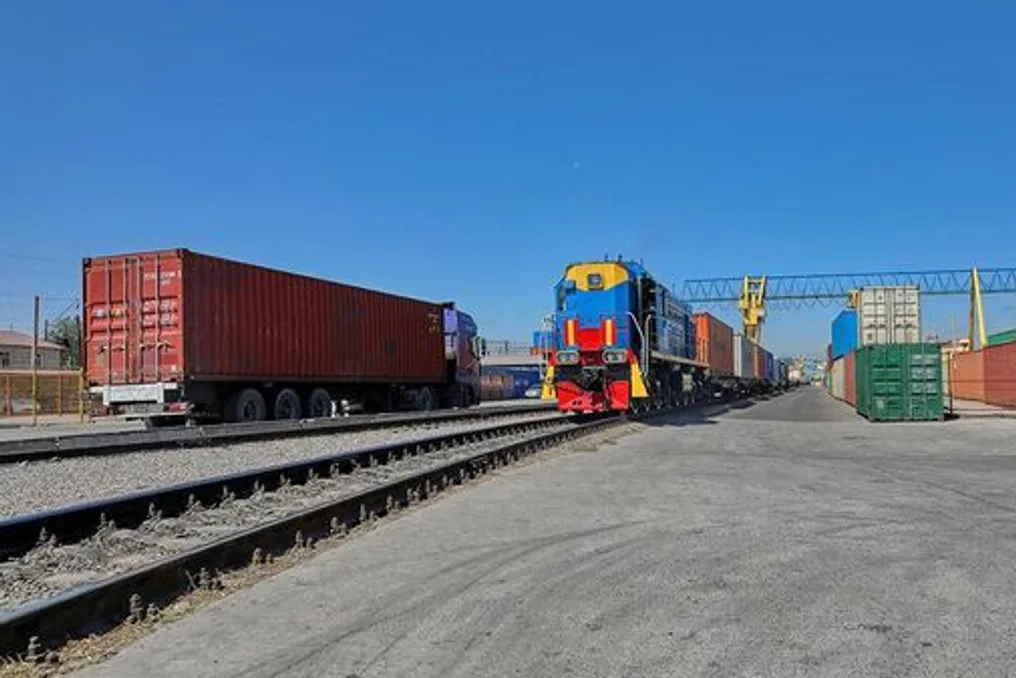
Uzbekistan's economy grew by 8.3% in September 2026: imports increased, exports decreased

In September 2026, Uzbekistan's gross domestic product (GDP) showed growth of 8.3%. Concurrently, imports increased by 15.7% and exports decreased by 5.5%.

According to the National Statistical Committee report, Uzbekistan's GDP for January-September 2026 reached 1,755.5 trillion soums. Real economic growth compared to the same period last year was 8.3%.

In foreign trade, an increase in imports and a decrease in exports were noted. The total volume of the country's foreign trade reached 65.4 billion US dollars, of which exports accounted for 25.8 billion dollars, and imports accounted for 39.6 billion dollars. This resulted in a negative balance in foreign trade amounting to 13.7 billion dollars.

Despite the overall decline in export volume, commodity exports grew when gold was excluded. Specifically, from January to August, this indicator increased by 28.7%.

The report indicates that the service sectors contributed the most to GDP growth. In January-September, 1,085.7 trillion soums of industrial products were produced, which is 8.1% more than in the corresponding period last year. In industry, the production of machinery and equipment grew by 48.9%, and the production of transport equipment increased by 33.9%.

Regarding prices, in the ninth month of 2026, consumer prices rose by 4.2% compared to December of the previous year. The average increase in food prices was 2.9%, non-food goods was 4.6%, and services was 5.6%. Changes in food prices, as well as housing, water, electricity, gas, and other types of fuel, which together accounted for 54% of inflation growth, had the greatest impact on overall inflation.

The volume of retail trade reached 432.2 trillion soums, showing a growth of 19.7%. The volume of market services amounted to 1,003.2 trillion soums, increasing by 16.7%. Among services, financial services grew by 22%, communication and informatization services by 21.4%, and trade services by 17.4%.

Furthermore, as of October 1, there were 621.1 thousand enterprises and organizations operating in Uzbekistan. During the first nine months of the year, 68.5 thousand new enterprises and organizations were created.

Mirziyoyev announced new measures in healthcare and free medicines
Read more
sputniknews.uz

Mirziyoyev announced new measures in healthcare and free medicines

President Shavkat Mirziyoyev announced the expansion of the package of guaranteed medical services for the population of Uzbekistan, which will come into force in 2027. According to the new plans, the number of free medicines will increase to 73 items, and medical examinations—to 36.

During a meeting with employees of the medical and pharmaceutical sectors, the president reported on several important changes. Currently, 69 types of medicines are provided free of charge to outpatient patients under the guaranteed package.

The President stated that early detection programs for stomach cancer, colon cancer, prostate cancer, and lung cancer will begin in the Samarkand region and will be implemented in all regions starting in 2028. 700 billion soms will be allocated for the implementation of this task. Programs for the early diagnosis of diabetes, kidney diseases, cardiovascular diseases, tumors in women, and oncological-hematological diseases in children will also continue to be active.

Furthermore, the program for the early detection and treatment of heart attacks and strokes will cover all districts and cities next year, requiring 280 billion soms.

The primary health care system will be expanded. The family doctor model, which has been tested in 28 districts, will be introduced in another 100 districts starting in 2027. The new system will establish joint interaction between the population and family doctors, as well as clearly define the duties of the doctor and the patient.

Additionally, 'New Standards of Medicine of Uzbekistan' will be introduced in polyclinics and hospitals, concerning freedom of movement, sanitation and hygiene, patient safety, and the culture of service provision.

Popular