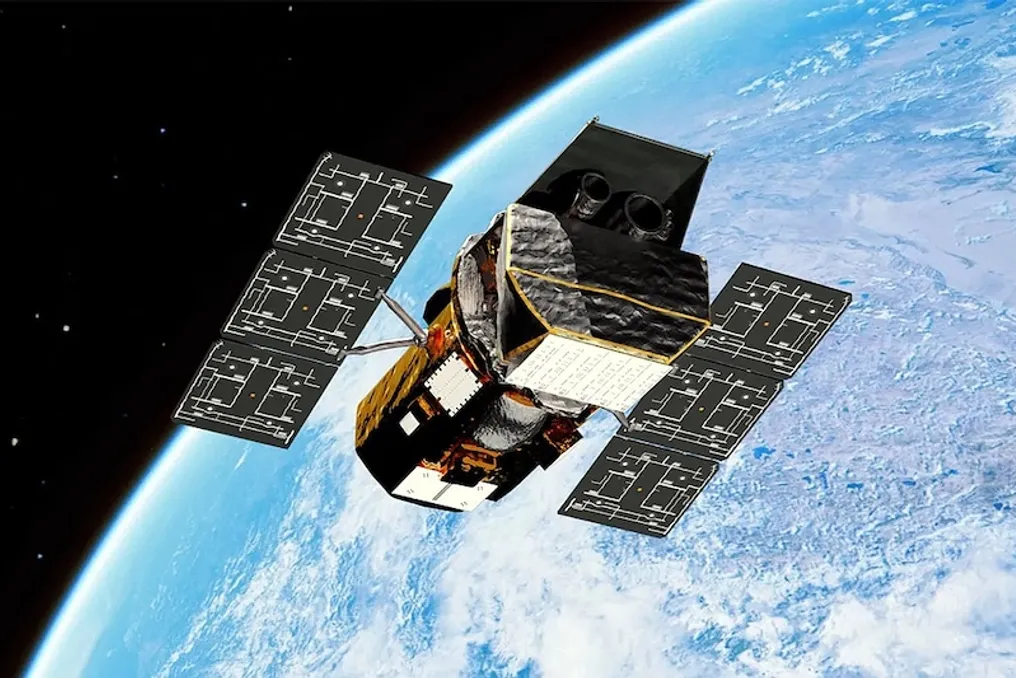
The Swift Space Observatory from the U.S. National Aeronautics and Space Administration (NASA) has completed its mission after 22 years of productive activity.
This was reported by the Turkish news agency Anadolu.
The Swift Space Observatory from the U.S. National Aeronautics and Space Administration (NASA) has completed its mission after 22 years of productive activity.
This was reported by the Turkish news agency Anadolu.
The renowned NASA Swift space telescope has returned to Earth. On November 4, 2026, at 7:39 AM Eastern Time, it entered the atmosphere over North Sumatra. This object, the size of a minivan and weighing about 1450 kilograms, studied the most powerful explosions in the universe for 22 years.
After rescue attempts proved unsuccessful, its uncontrolled descent was inevitable. According to NASA, most of the telescope burned up, and the probability of causing harm to anyone was estimated at 1 in 2100.
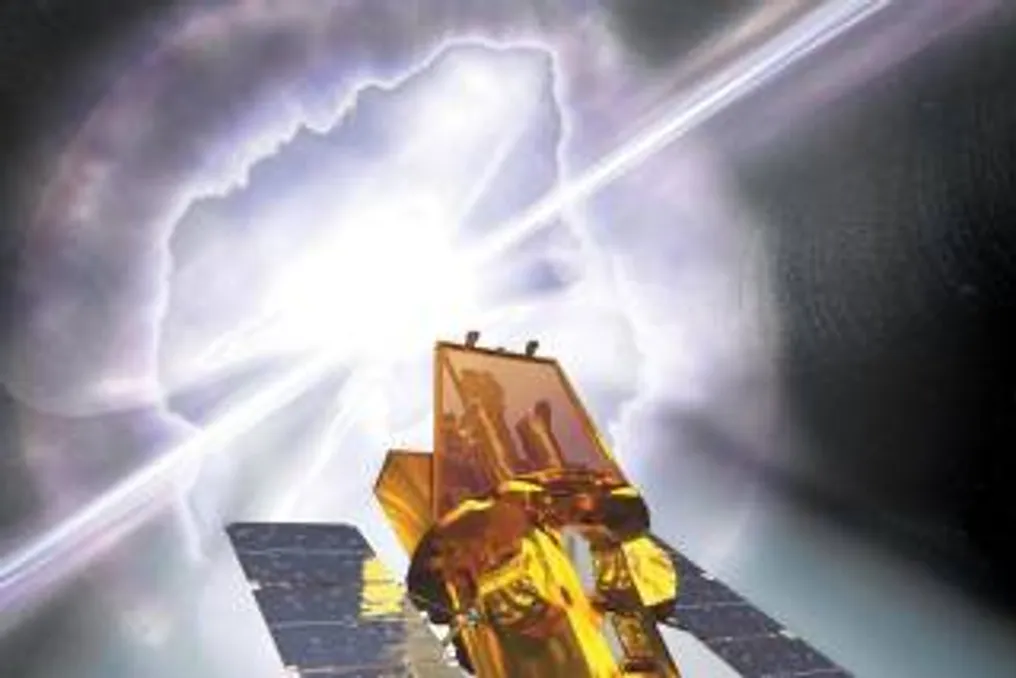
Swift was launched in November 2004. Initially, its mission was planned for only two years, with the goal of studying gamma-ray bursts—the most powerful explosions in the universe. The telescope was characterized by high responsiveness: as soon as a burst was detected, it could point its telescopes in the correct direction within one minute, which gave it the name Swift, meaning 'fast bird' in English.
In 2018, it was renamed the 'Neil Gehrels Swift Observatory' in honor of its first principal scientist, Neil Gehrels.
Despite the initial two-year service life, Swift operated for more than two decades. It observed over 2000 gamma-ray bursts and more than 1400 supernovae. Furthermore, it provided crucial data on objects such as distant black holes, asteroids, and comets. Scientists note that the telescope demonstrated the significance of rapid response observations and revolutionized astrophysics.
Since Swift did not have its own engine, it gradually fell to Earth due to atmospheric drag. The decrease in altitude accelerated this process. In September 2025, NASA awarded a contract worth $30 million to Catalyst Space from Arizona.
The robotic spacecraft Link, developed by this company, was launched in July and was intended to capture Swift and place it into a higher orbit in August. However, a malfunction occurred in the engine and rotor systems. Link itself crashed to Earth on September 25.
NASA described this attempt as high-risk but important. It contributed to the development of satellite servicing technologies and allowed lessons to be learned for protecting other satellites in the future. Swift's last scientific observation was completed on October 20.
The fall of Swift is not an isolated incident. On average, three large pieces of space debris fall to Earth daily. This problem will worsen with the increasing number of satellites in the future. Swift demonstrated that well-designed missions can operate significantly longer than planned. Its contribution will help scientists make new discoveries over a long period. This incident underscores the need for space debris management and the development of technologies to extend satellite lifespan.
Google succeeded in running an artificial intelligence (AI) model on a satellite, receiving a response generated from outside Earth. This test marks an experimental advancement of Project Suncatcher, a corporate initiative focused on exploring the feasibility of transporting AI data centers into Earth orbit.
In a statement released on the company's blog, Google detailed that it began using Tensor Processing Units (TPUs) installed on the space equipment. During the tests, the Gemma 4 model was run directly on the satellite and received an instruction to compose a haiku about the experience of being in space.
The AI generated poems addressing Earth viewed from space, data flow, and the brilliance of the stars. Furthermore, other experiments were conducted, such as creating limericks with space themes and responding to telemetry-related commands.
Additionally, Google is working to improve communication between devices operating in orbit. After the initial testing phases, the company plans to achieve a new goal in 2027: deploying two interconnected satellites.
The purpose of this goal is to validate whether the systems are capable of performing tasks consistently and exchanging data in the space environment. Such a demonstration would be crucial in determining the practicality of establishing an orbital computing infrastructure.
Currently, the test conducted with Gemma 4 only confirms that an AI model can process commands aboard a satellite and produce responses. The realization of space data centers still requires the completion of several technical stages and the execution of more experiments.
NASA has formally ended the mission of the Swift space telescope after a rescue attempt was unsuccessful. This observatory, which dedicated more than two decades to studying the Universe, is in the process of losing altitude and is expected to re-enter Earth's atmosphere in the coming weeks.
The rescue operation was conducted by Katalyst Space Technologies, a company based in Arizona, United States. This company developed the spacecraft named LINK with the purpose of reaching the telescope and elevating it to a higher orbit, enabling the continuation of its scientific investigations.
However, the initiative was not successful. Approximately three weeks after its launch, on July 3rd, the LINK spacecraft encountered problems with its propulsion system and the reaction wheels responsible for maintaining its orientation. These failures caused the spacecraft to spin at an unexpected speed, which made capturing and elevating Swift impossible.
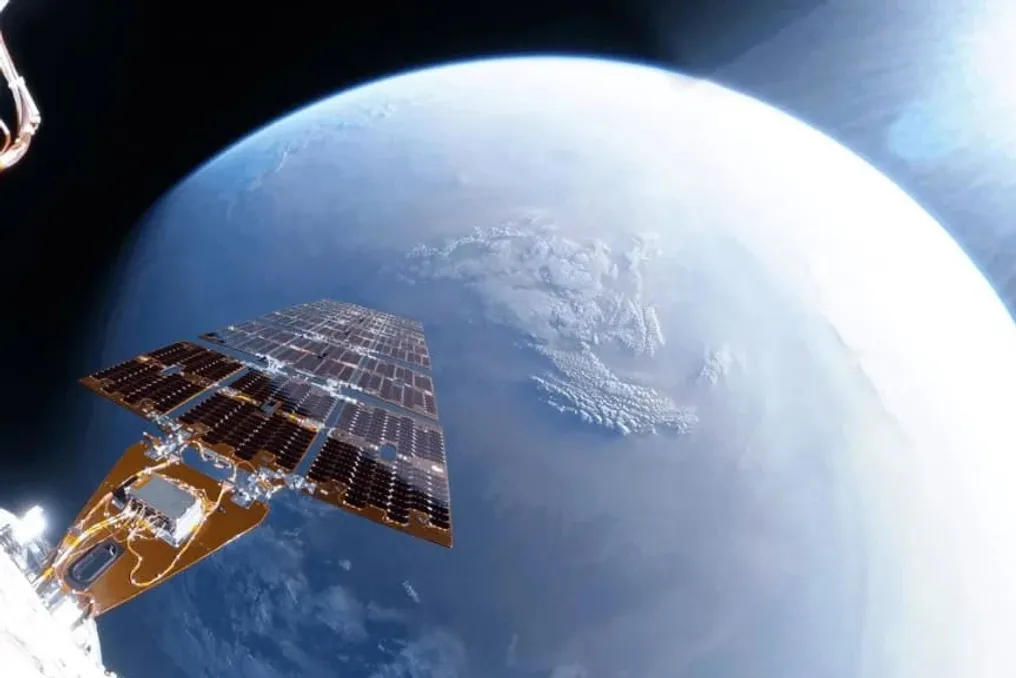
Despite the setbacks, LINK managed to approach the observatory and take photographs of it. The separation between the two spacecraft varied between 12 and 15 kilometers, which proved insufficient to complete the planned operation.
Swift was losing altitude due to atmospheric drag and does not have adequate thrusters to neutralize this effect. In September 2025, NASA awarded Katalyst a contract worth US$ 30 million (equivalent to about R$ 162 million) to attempt to save the observatory.
The adopted strategy involved a spacecraft comparable in size to a refrigerator, equipped with three robotic arms. The concept was for LINK to reach Swift, capture it, and guide it to a higher orbit. This mission was pioneering, as no private spacecraft had managed to capture and elevate a satellite that was not designed to receive such maintenance. Speed was also crucial, given that Swift continued to lose altitude while the operation preparation proceeded.
Although the attempt failed to extend the telescope's lifespan, NASA considered the project valuable for fostering the development of robotic maintenance technologies in space and for testing the capacity to execute operations of this magnitude in short periods.
Swift was officially named the Neil Gehrels Swift Observatory in 2018, in memory of its first principal investigator, who passed away the previous year. With the end of the mission, the observatory will return to Earth's atmosphere in the coming weeks, but the collected data will remain accessible for future scientific research.