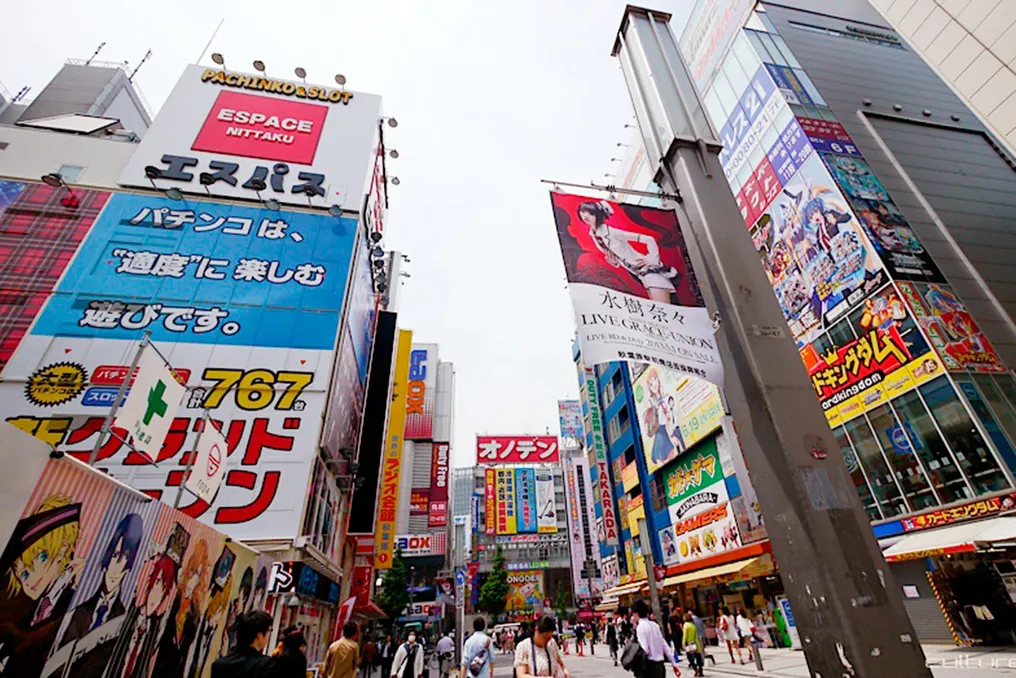
Japan changes tax exemption rules for tourists, requiring refund upon departure from the country
Read more
Viagem e Turismo
viagemeturismo.abril.com.br

Japan changes tax exemption rules for tourists, requiring refund upon departure from the country

Japan has implemented changes to the tax-free regulations intended for foreign tourists, effective November 1, 2026. Previously, the discount was granted at the time of purchase, directly at the participating store's checkout. With the new regulation, buyers must pay the full value of the items, including consumption tax, and request the refund only when leaving the national territory.

This modification does not abolish the benefit for international visitors but rather makes the process more bureaucratic. The new system, called the 'refund method,' requires that purchases be presented to customs at the departure airport or port. After confirmation that the goods will be exported from Japan, the corresponding tax amount is reimbursed by the store, using the payment method registered in the transaction.

The reform was introduced by the Japanese government with the aim of curbing irregularities in the previous scheme, notably cases where tourists acquired merchandise without paying the tax and subsequently resold it domestically. Under the new directive, the granting of the exemption is linked to proof that the items will actually leave Japan. The applicable discount percentage was 10% for general products and 8% for food and beverages, and these rates remain in the new format.

The initial procedure still requires purchasing in accredited establishments to offer the benefit. At the time of payment, the tourist must show their passport and indicate how they wish to receive the refund, choosing from the options provided by the store. The total cost of the purchase will be debited including the tax.

When leaving Japan, the traveler must go to a tax-free procedure terminal located at the airport or port. This equipment is in the public area of the international terminal, before security control and baggage claim. It is necessary to present the passport within 90 days of the purchase date for the system to validate the recorded operations.

After reading the document, the terminal will indicate whether a physical inspection is required. A green light indicates that the customs check has been completed. If the result is red, the passenger must take the products to the inspection area, where officials will confirm their exit from the country. Once the verification is complete, the responsible store will issue the tax reimbursement through the payment method indicated in the purchase, meaning the money will not be returned immediately in cash at the airport.

The minimum amount to activate the benefit remains at 5,000 yen (approximately R$ 174) per store, per day, excluding tax. This rule applies to eligible purchases made at participating locations. One notable change is the end of the differentiation between general use items and consumables, such as cosmetics and food. Furthermore, it is no longer mandatory to pack these latter items in special sealed packaging, as was previously the case.

However, this does not authorize the purchase of products for consumption during the trip and subsequent tax claim. Tax-exempt items must be available for inspection upon departure. If food, beverages, or cosmetics are consumed or used in Japan, they cannot be presented to customs for a refund. The primary guidance is not to postpone the inspection until after baggage claim. All products related to each purchase must be with the traveler during the inspection, because if the baggage has already been handed over to the airline, it cannot be retrieved for customs presentation.

It is also crucial to allow extra time at the airport, as the inspection, when requested, must be completed before boarding. If the passenger cannot finalize the procedure in time, they may lose the right to a refund. This recommendation is particularly valid for those who made purchases in several stores during the trip. Finally, each purchase receipt is analyzed individually; the absence of any product from a specific transaction invalidates the right to a refund for all items on that receipt. The new protocol is valid for purchases made from November 1st onwards.

Similar stories

Home swapping among seniors is gaining popularity in China as a new way to relax after retirement
Read more
www.aajtak.in

Home swapping among seniors is gaining popularity in China as a new way to relax after retirement

In China, a unique method of vacationing is rapidly spreading among retirees. Instead of booking a hotel room, people spend time in each other's homes. The essence of this method is that they temporarily provide their home to another person so that they can live in someone else's accommodation. This approach is called 'Home Swapping'. It allows them to avoid high accommodation costs and also provides an opportunity to meet local residents and make new friends in a new city.

What is home swapping?

Home swapping involves two families or individuals temporarily living in each other's homes. For example, if an elderly person from Beijing wants to take a vacation in Xi'an, and a resident of Xi'an wishes to visit Beijing, they can agree to swap their homes. During this time, the Beijing resident will live in the Xi'an house, and the Xi'an resident will live in the Beijing one. Neither party has to pay for a hotel room. After the vacation ends, everyone returns to their own homes. This option is especially beneficial for those who prefer to travel with minimal expenses and enjoy long vacations.

How did seniors find a way to save on hotels in China?

The number of people traveling across China after retirement is growing, but expensive hotels and accommodation costs often strain the travel budget. Because of this, people have found a new way: they temporarily give their home to a person living in another city and, in return, live in their home. This trend includes not only elderly retirees but also people who left work at a young age. They have free time and their own real estate. These people view home swapping as a good option for a vacation. Groups and agencies dedicated to home swapping are also emerging in China. People connect with each other through social media to find a home in a city that interests them.

The history of this practice dates back to the 1950s

The idea of vacationing by swapping homes is not new. It originated among some teachers in Europe in the 1950s. Later, after the release of the Hollywood film 'The Holiday' in 2006, this method became popular in many parts of the world. In China, this practice began to gain momentum among young people around 2023, as people sought alternatives due to rising hotel prices. Now, retirees are also embracing it. In October, it was noted that average travel expenses during China's National Holidays amounted to about 894 yuan per person, equivalent to approximately 135 dollars, marking the lowest figure in history. In this climate, this low-cost travel method is gaining popularity.

Wu Xiaoping, a teacher living in Wenzhou, Zhejiang province, who is approaching retirement, swapped her home with an elderly person living in Nanjing. This elderly person's daughter studies in Japan. Thus, both gained the opportunity to temporarily live in another city. Wu is now connected with several home-swapping groups. According to her, people's preferences in this system vary: some women prefer to swap homes with other women, while others choose hosts based on their profession and social status.

Zhao Ping, a 40-year-old resident of Guangdong, also left work at a young age. He provided his empty duplex in exchange for a villa in Guizhou. This villa had a large courtyard, a pond, and a sitting pavilion. Zhao Ping spent about 20 days there. During this time, he cooked for himself and spent time with the homeowner's friends. For him, it was not just a way to save on accommodation but also an opportunity to meet new people and experience a new place from the inside.

Similarly, retired engineer Li Feng from Xi'an provides her empty apartment to other people twice a year. On one occasion, she visited a hot spring villa in Guangdong. Some guests leave new electronic goods for the homeowners as a token of gratitude upon departure.

Conditions set before a home swap

However, handing over your home to a stranger is not easy; trust and safety are important here. Therefore, participants in the swap predetermine a set of rules. Usually, both parties exchange copies of identification and necessary documents. They also exchange information about valuables in the home. Furthermore, it is decided in advance who will pay the bills for electricity, water, and other utilities.

Guests staying in the home are expected to keep the bed and necessary items clean, and to leave the house tidy after leaving. Some people send the owner a video before leaving to ensure the condition of the house.

Safety concerns

With the growth of this trend, some problems are also arising. The biggest

Uzbekistan citizen deported from Japan for illegal stay
Read more
podrobno.uz

Uzbekistan citizen deported from Japan for illegal stay

Japanese authorities deported an Uzbekistan citizen who remained in the country after his short-term visa expired. The financial costs associated with his return were covered by the Japanese government.

According to information provided to the press service of the Japanese Embassy in Uzbekistan, the man entered Japan on a short-term visa but did not leave after the permitted period ended. As a result, he was detained and placed in custody.

Japanese authorities warn foreign citizens about the serious consequences of illegal stay and working without a permit, which include detention, arrest, placement in an immigration center, and deportation. Furthermore, information about violators is passed to Uzbek authorities, which may lead to appropriate measures being taken against them upon return to their home country.

Additionally, the agency issued a warning regarding offers of supposedly legal employment in Japan without obtaining the necessary permits. It was also noted that the process of applying for refugee status does not guarantee the right to stay or unlimited employment in the country. In case of refusal of asylum, the applicant faces placement in an immigration center or deportation, and using fraudulent schemes and false data entails serious legal consequences.

The diplomatic mission strongly urges Uzbek citizens to carefully check all conditions related to entry and employment, avoid unreliable promises, and strictly adhere to migration rules.

Previously, a 45-year-old Uzbekistan citizen was detained in Japan who worked as a food delivery courier. He is suspected of harassing a schoolgirl while delivering an order.

Tax benefits and payment deferrals introduced for tourist facilities near water bodies in Uzbekistan
Read more
podrobno.uz

Tax benefits and payment deferrals introduced for tourist facilities near water bodies in Uzbekistan

Entrepreneurs involved in developing tourism on reservoirs and adjacent territories in Uzbekistan will receive tax reductions and the possibility of deferring customs payments. These benefits will be valid until October 1, 2029.

This decision was officially enshrined in a presidential decree adopted on October 27, 2026. For companies that are legal entities, land tax and property tax rates will be reduced by up to 50% of the established norms.

Additionally, there is a provision for deferral or phased payment of customs duties for 120 days when importing GPS equipment for water transport, as well as rescue and protective equipment and modern sanitary-hygienic modules.

Safety and environmental requirements

Alongside the provision of benefits, strict standards in the field of ecology and safety are being established. Tourist facilities are obliged to provide visitors with necessary protective means. In case of emergencies, they must have their own rescue service or contract with qualified rescuers.

Entrepreneurs must also follow the rules for operating small vessels and their mooring areas. It is required to equip facilities with internal sewage systems and local treatment plants. Discharging untreated wastewater into water bodies is prohibited, and household waste must be disposed of according to established procedures.

Previously, a new reservoir appeared in the Peshkun district of Bukhara region, which generated significant public interest. Scientists from the Hydrometeorological Scientific Research Institute studied this reservoir and determined its origin.

Popular