Fragmented Latin American Climate Alliances Head to COP31 Summit in Antalya
Read more
China Dialogue
chinadialogue.net

Fragmented Latin American Climate Alliances Head to COP31 Summit in Antalya

Latin America arrives at this year's UN climate summit with less political support for the agenda promoted a year ago in Brazil.

Although many Latin American countries showed greater cohesion at COP30 in November 2025, held in the Amazonian city of Belém, than in previous years, these alliances advocated for increased ambition in areas such as energy transition, combating deforestation, and climate finance.

However, since then, some leaders who played a key role in promoting this agenda have left their posts, undermining the prospects of a unified regional voice.

In Colombia, a president was elected who promised to increase oil production and develop hydraulic fracturing, which is a sharp departure from the previous administration's initiative to phase out fossil fuels. The new government of Chile revoked over 40 environmental decrees in its first months and cut funding for its Ministry of Environment and International Agreements, including the Escazú agreement. The Bolivian government, under President Rodrigo Paz, dissolved the country's Ministry of Environment in August.

Brazil is a notable exception. The fourth term of President Luiz Inácio Lula da Silva, who took office instead of the Bolsonaro administration, restored the government that oversaw COP30, albeit with fewer regional allies than a year ago. Nevertheless, even Lula faced criticism for supporting fossil fuel exploration in the Amazon basin.

Andrés Gómez, Director for Latin America at the Fossil Fuel Treaty Initiative, told Dialogue Earth: 'We have a completely different political situation compared to a year ago. Ultra-right governments are interested in the idea of exploiting everything on their territories.'

COP31 opens in Antalya this Monday, November 9, under the chairmanship of Turkey, with Australia leading the negotiations. The summit will resume the unfinished work of Belém: two action plans—one on phasing out fossil fuels, the other on halting deforestation—as well as a call for increased climate finance.

Ana Toni, former COP30 Executive Director, expressed optimism, telling Dialogue Earth: 'I am quite confident that the momentum created at COP30 will continue at COP31.'

Turkey presented the summit as a 'COP of implementation,' focusing on supporting countries in meeting their climate plans. The vast majority of Latin American countries submitted updated Nationally Determined Contributions (NDCs) under the Paris Agreement in the last two years. However, Argentina, Guatemala, and Haiti have not done so.

According to the 2015 Paris Agreement, countries are obliged to develop a plan for their efforts to reduce national emissions and adapt to the effects of climate change. These obligations are called NDCs. NDCs are submitted every five years, and subsequent versions must be more ambitious than previous ones (the so-called 'ratchet mechanism'). Collectively, these national targets must constitute a coordinated global effort to mitigate the severity and impact of climate change.

As the host of COP, Turkey can choose the central theme of the agenda it wishes to promote, and it has chosen electrification. COP31 Chair, Murat Kurum, proposed a voluntary global goal—to increase the share of final energy demand met by electricity from slightly over 20% (as of June 2026) to 35% by 2035.

On energy issues, Latin America is close to the world average for electrification: electricity accounts for about 20% of its final energy consumption. However, its grid is much cleaner than most countries', as 65% of electricity came from clean sources in 2025.

Extraction has become politicized in several countries. Debates over hydraulic fracturing became an important topic in Colombian elections, where the successful candidate Abelardo de la Espiñe captured fossil fuels as a path to prosperity.

Alejandra López, Director of Climate Diplomacy at the regional analytical center Transforma, believes that electrification can help take climate action out of the political arena in the region. She noted: 'Electrification, mobility, energy security, job creation, public transport—these are agendas that are neither political left nor right, and they don't sound ecological.'

Brazil, as the chair of COP30, sought to include specific commitments on deforestation and phasing out fossil fuels in the summit's final document last year. However, disagreements between governments led to these points not passing negotiations. The country announced that it would prepare two voluntary action plans and present them in Turkey. One concerned phasing out fossil fuels, the other deforestation and sustainable forestry. These documents are not binding but can serve as a basis for national governments to follow.

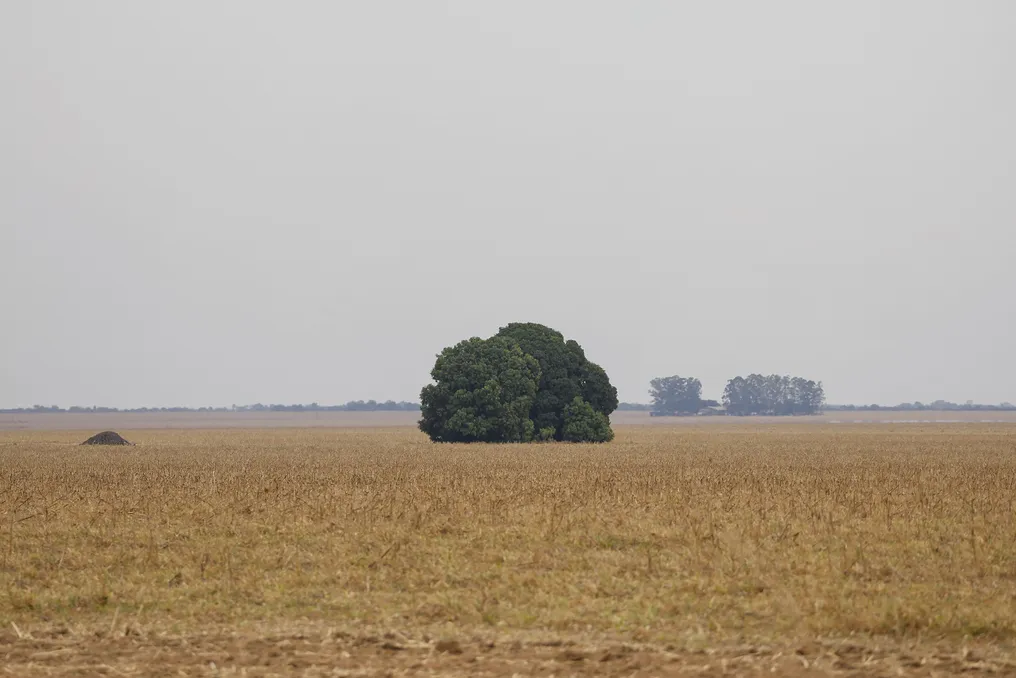
South America lost more forests than any other region in the world between 2015 and 2025, averaging 4.1 million hectares per year. This was caused by activities such as agriculture, livestock farming, and infrastructure development. Nevertheless, there have been successes, including deforestation in Brazil currently being at its lowest level since 1998.

Nevertheless, the region is also increasing fossil fuel extraction: last year, oil production grew by 20%, mainly due to Guyana and Brazil. Countries across the region, including Argentina and Brazil, are also actively seeking opportunities to expand oil and gas production.

Referring to the current instability in the Strait of Hormuz, Toni argued that phasing out fossil fuels is not just a climate issue: 'It is an economic problem, it is a political problem, it is a sovereignty problem.'

The final package of COP30 provided for the mobilization of about $1.3 trillion in climate finance for developing countries annually by 2035. Countries agreed to triple adaptation financing by this year compared to the 2025 level. Based on the Glasgow target of about $40 billion annually, this amounts to approximately $120 billion.

However, critics note that the COP30 promise lacks a clear baseline and does not specify who is responsible for increasing funding. Tarie Gbadegesin, CEO of Climate Investment Funds, told Dialogue Earth: 'The world urgently needs adaptation finance to prevent and prepare vulnerable communities for disasters and slow-onset climate change impacts.' She added: 'Developing countries currently receive adaptation finance that is 12–14 times less than what they need.'

Last year, Brazil also launched the Amazon Fund. This fund is intended to pay countries for forest conservation, and its collection target is $10 billion by 2026. Almost $8 billion has been received so far. This is still far from the $125 billion capital expected by the fund's sponsors, but additional commitments may be announced this year.

For the region, the question of who pays and under what conditions is also important. Latin America and the Caribbean received 17% of international climate finance between 2016 and 2020. Most of these funds came as loans, not grants, which increased the already heavy debt burden. In some countries, debt servicing now exceeds spending on sectors such as health and education.

At climate COPs, Latin American countries negotiate individually and in various blocs, unlike other regions such as Africa, which votes and lobbies together. Most nations belong to several such groupings based on common interests and positions. All countries in the region have long been part of the G77 and China—a coalition of developing countries acting within the UN system. Meanwhile, the bloc including Chile, Colombia, and Panama forms the Independent Association of Latin America and the Caribbean (AILAC). There is also Grupo Sur, a bloc mainly comprising Southern Triangle countries, as well as the Bolivarian Alternative to the American System, which gained prominence in the late 2000s.

María Fernanda Souza, Uruguay's Director of Climate Change, emphasized: 'The possibility of Latin America and the Caribbean negotiating together has a strength that surpasses any possibility we could have by negotiating separately.'

The result of these various groupings is that Latin America is divided in negotiation matters. Experts argue that regional cohesion, like that demonstrated by Africa, allowed its countries to achieve more effective results.

María Fernanda Souza, Uruguay's Director of Climate Change and Vice Chair of the G77, told Dialogue Earth that the inability to negotiate as a bloc 'has had and continues to have costs' for Latin America. She continued: 'I cannot point out why we cannot be more united.' She added: 'The possibility of Latin America and the Caribbean negotiating together has a strength that surpasses any possibility we could have by negotiating separately.'

Fernanda Souza notes that the interests of southern states, heavily dependent on livestock and agriculture, differ from the interests of Caribbean island states, which suffer from climate change and desperately need money for adaptation.

However, López believes there are separate issues where Latin American countries should set aside political differences and unite. She named climate finance as such an issue for COP31: 'Since there are no major disputes, they can agree more easily.'

Toni believes the division existed long before recent political shifts in the region: 'Even when different types of governments were in power, we never truly spoke with one voice.' She rejected the idea that the region is too diverse to coordinate, pointing to Africa, which votes together and also includes many small island states. 'I think it is always possible, and I think it is desirable,' she said.

López fears that Latin America's low-profile participation at COP31 will carry this weakness over to COP32, which will be held in Ethiopia: 'At the moment you single out Africa as a special region—a particularly vulnerable region—[there are those who are excluded from the universe of 'we matter, we are vulnerable']. That is Latin America.'
Similar stories

COP-31 Conference in Turkey: The Need for Decisions Amid Global Warming
Read more
www.aajtak.in

COP-31 Conference in Turkey: The Need for Decisions Amid Global Warming

Climate change has ceased to be solely an environmental issue; it has transformed into a serious problem related to food security, energy self-sufficiency, healthcare, the economy, and the future of human civilization. Earth's temperature is constantly rising, glaciers are melting, sea levels are rising, and weather conditions are changing rapidly. Droughts are observed in some areas, while natural disasters such as floods and cyclones bring destruction to others. The frequency of forest fires and extreme heat is also increasing. These threats are not just future concerns but a current reality.

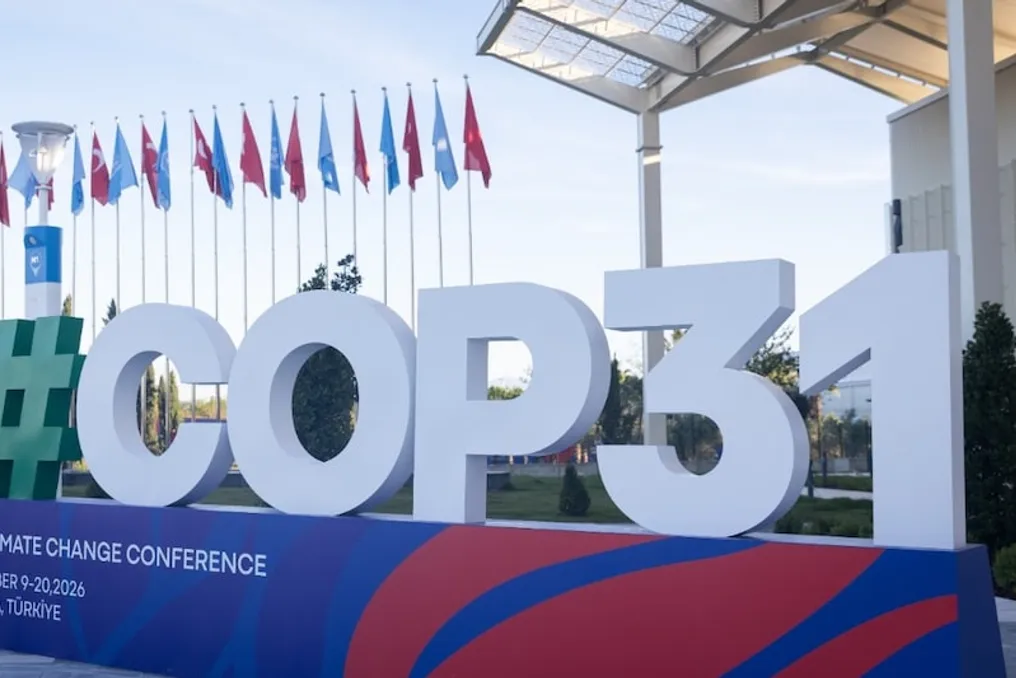
In such conditions, the international climate change conference COP-31, which began on November 9 in Antalya, Turkey, is of immense importance to the entire world. Until November 20, representatives from about 197 countries, as well as scientists, politicians, and public organization representatives, participate in the conference. The main goal of the summit is to put climate promises into practice. The success of the event will depend on how effective the countries' steps are in reducing emissions, implementing clean energy, and providing aid to countries affected by the climate crisis.

Many international climate summits have taken place over the last three decades. In 2015, the goal of controlling global temperature rise was established under the Paris Agreement. Despite this, greenhouse gas emissions continue to rise. This clearly shows that signing agreements and declarations alone are not enough. What is needed now are decisions that are subject to timely review and demonstrate visible results. This is why COP-31 emphasizes making it an implementation conference.

Countries must report on progress in achieving their climate goals and develop actionable plans to reduce emissions. The main cause of the climate crisis is the excessive use of fossil fuels, such as coal, oil, and natural gas. Greenhouse gas emissions resulting from their burning raise the planet's temperature. At COP-28 in Dubai in 2023, the necessity of phasing out fossil fuels in energy systems was recognized for the first time. However, clear deadlines and an action plan for this transition remain a serious challenge. To solve this problem, expanding solar and wind energy, developing energy storage systems, modernizing power grids, and promoting electric vehicles are crucial. It is also important to implement technologies in industry that reduce energy consumption. But the energy transition should not be limited only to replacing electricity generation methods. It is also necessary to ensure the employment and livelihoods of workers in traditional energy sectors, such as the coal industry. The transition to clean energy must be one that does not create an additional financial burden for poor populations and workers. This is called a just energy transition.

The biggest paradox of the climate crisis is that developed countries, which historically had higher emissions, possess greater resources to combat it. On the other hand, developing and small island states suffer the most from the consequences of climate change. These countries need funding not only for clean energy projects but also for combating floods, managing droughts, conserving water resources, protecting coasts, and climate-resilient agriculture. Furthermore, a system for compensating losses and damages for people affected by climate disasters is important.

Developed countries must provide developing countries with sufficient financial support and modern technologies. This aid should not only be provided in the form of loans, as additional burdens of high interest rates can become an unbearable burden for countries already facing economic pressure. The demand for climate justice is that the greatest burden of the crisis should not fall on those who contributed least to its emergence.

At COP-31 on November 11, the concept of Zero Waste became a key issue. Proper waste management is also an important means of combating climate change. Organic waste accumulating in landfills emits methane—a greenhouse gas much more potent than carbon dioxide. Therefore, it is necessary to separate waste, recycle, compost, reuse items, and reduce food waste.

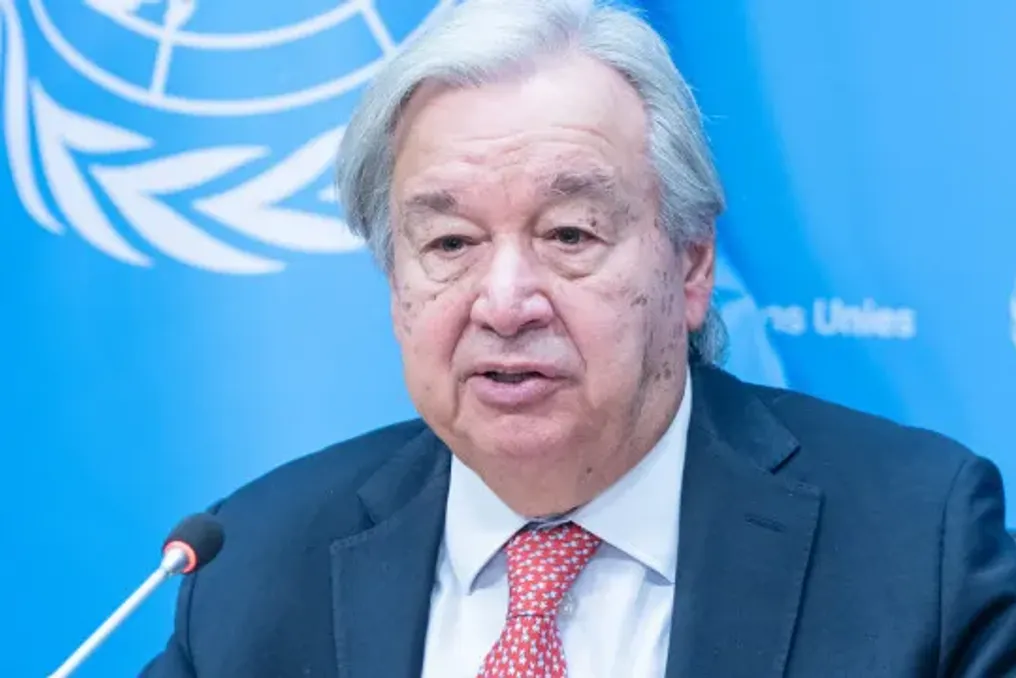
On the same day in Antalya, a two-day meeting of world leaders began. UN Secretary-General António Guterres stated in his address the need to remove fossil fuels from history, similar to dinosaurs. He expressed concern about the slow pace of climate action and urged countries to act faster. High-level discussions on the development of clean energy, electrification, and green industries also took place at the conference.

India presented its position at COP-31 on November 10, insisting on the priority of climate justice, equality, and financial assistance. India stated that developed countries must fulfill their obligations to provide financial resources to developing countries in accordance with Article 9.1 of the Paris Agreement. India also emphasized the importance of adhering to the principle of common but differentiated responsibilities and respective capabilities (CBDR-RC). This means that all countries are responsible for combating climate change, but their obligations must differ depending on their historical role, economic status, and potential. India believes that the transition to clean energy must provide energy to developing countries...

Climate Issues Discussion at COP31 in Antalya and Their Significance for Uzbekistan's Water and Energy Security
Read more
uzdaily.uz

Climate Issues Discussion at COP31 in Antalya and Their Significance for Uzbekistan's Water and Energy Security

At the 31st Conference of the Parties to the UNFCCC (COP31), taking place in Turkey, world leaders are discussing ways to accelerate the transition to renewable energy sources, expand climate financing, and protect countries from the consequences of global warming. For Uzbekistan, these negotiations are particularly important against the backdrop of growing electricity demand, limited water resources, and the need to adapt the economy to climate change.

One of the key events on November 11 was the opening of the COP31 Leaders' Summit, where UN Secretary-General António Guterres called on states to move from stated climate commitments to their practical implementation.

According to Guterres, global greenhouse gas emissions reached record levels in 2025, and current national climate plans are insufficient to limit global warming to the 1.5°C target set by the Paris Agreement. Guterres warned that exceeding this temperature threshold is now inevitable, although the duration and scale of the exceedance will depend on government actions.

For Central Asia, where climate change intensifies pressure on water resources, agriculture, and energy infrastructure, the task is not only to reduce emissions but also to strengthen economies' ability to adapt to changing climatic conditions.

Financing climate action in developing countries remains one of the central issues at COP31. Speaking at the Leaders' Summit, António Guterres emphasized the need to turn the global goal of mobilizing $1.3 trillion by 2035 into actual financial flows. He also called on developed countries to fulfill their commitment to provide at least $300 billion annually by 2035 and to develop concrete plans to triple adaptation financing.

The UN Secretary-General drew attention to the uneven distribution of clean energy investments. According to figures provided by him, developing countries outside of China, which is home to nearly two-thirds of the world's population, receive less than one-fifth of global investments in this sector. Meanwhile, borrowing costs for many of these countries are two to three times higher.

Access to long-term financing is critically important for Uzbekistan. Modernizing power grids, expanding renewable energy, improving irrigation efficiency, and developing climate-resilient infrastructure require significant investment. However, announced international financial goals do not guarantee automatic allocation of funds to individual countries; the practical significance of the negotiations will depend on agreed financing mechanisms, the availability of loans and grants, and the ability of developing economies to effectively utilize these tools.

Another priority at COP31 is increasing the use of electricity in transport, industry, and buildings. At a joint press conference on November 10, COP31 leaders introduced the Global Electrification Pact, known as '35 by 35,' which aims to increase the share of electricity in total final energy consumption from the current 23% to 35% by 2035.

COP31 negotiation chair Chris Bowen noted that achieving this goal will require more than a fourfold acceleration of electrification rates. According to Bowen, conference participants are also discussing how relevant provisions can be reflected in the final COP31 decision.

UN Executive Secretary for Climate Change Simon Stiel highlighted the economic benefits of transitioning to clean energy. Citing data from the International Renewable Energy Agency (IRENA), he stated that 90% of large-scale renewable energy projects are now cheaper than fossil fuel alternatives.

For Uzbekistan, the global electrification agenda is especially relevant as the country increases solar and wind energy production, develops energy storage systems, and modernizes its electrical grids. Nevertheless, increasing installed capacity is only one aspect of the energy transition; equally important are the grid's ability to integrate energy from various sources, load balancing, energy efficiency improvement, and supply reliability.

The global '35 by 35' goal does not currently establish a separate national obligation for Uzbekistan, but it reflects the direction of international energy policy that may influence investment priorities and technological development in the coming decade.

Parallel to the energy transition, COP31 leaders are paying significant attention to adapting to the consequences of global warming. COP31 Chair Murat Kurum stated that adaptation, as well as loss and damage, must remain at the center of the conference's climate agenda. António Guterres, in turn, called for protecting populations from droughts, floods, and other climate-related threats, expanding early warning systems, and supporting the development of new generations of national adaptation plans.

The importance of these efforts is also underscored by new data presented by the World Meteorological Organization (WMO) in Antalya on November 9. According to preliminary estimates by the organization, the average global temperature from January to September 2026 was approximately 1.47°C above pre-industrial levels. WMO also reported that the last 12 years were the warmest on record.

For Uzbekistan, rising temperatures are directly linked to risks of worsening water shortages, increased irrigation needs, and additional strain on infrastructure. The transboundary nature of Central Asian water resources is paramount. Ensuring water supply depends not only on national water conservation measures but also on regional cooperation, the quality of hydrometeorological forecasts, and the ability of countries to jointly respond to prolonged droughts.

Under these circumstances, international climate finance could potentially support the modernization of irrigation systems, the implementation of water-saving technologies, the improvement of water resource monitoring, and the development of early warning mechanisms. However, the realization of such projects requires not only financial commitments from international partners but also the existence of specific national programs with measurable results.

The practical significance of the negotiations in Antalya for Uzbekistan can be understood through several interconnected priorities. The first is access to climate finance under terms that allow for the implementation of long-term infrastructure projects without excessively increasing the country's debt burden. The second is the creation of an energy system capable of meeting growing electricity demand while simultaneously reducing emissions and increasing resilience to external risks. The third is enhanced international support for climate change adaptation, especially in the areas of water resource management, agriculture, and protecting the population from extreme weather events.

Furthermore, climate negotiations have a regional dimension for Central Asia. Changes in temperature regimes, water availability, and energy development are closely interconnected and therefore require coordinated solutions that go beyond individual national strategies. COP31 is still ongoing, and the final outcomes of the negotiations have not yet been determined. The initiatives and statements of the conference leaders indicate the direction of the discussions, but they do not replace formally agreed decisions by participating countries. For Uzbekistan, the ultimate measure of COP31's success will not be the number of new international declarations, but the ability to transform them into accessible financing, technological cooperation, and concrete projects that strengthen the country's water and energy security.

COP31 begins in Turkey with divergences over climate finance and action targets
Read more
noticiasaominuto.com

COP31 begins in Turkey with divergences over climate finance and action targets

The 31st United Nations Climate Change Conference (COP31) has begun in Turkey. The event takes place after a year marked by extreme weather events, such as floods and heatwaves, generating tensions regarding the financial resources needed for adaptation and mitigation of the climate emergency.

António Guterres, UN Secretary-General, called on leaders to 'be up to the task,' while Murat Kurum, Turkish Minister of Environment and conference president, emphasized during the opening session that 'any delay weighs particularly heavily on climate action.'

In 2026, the planet was again affected by climate change, evidenced by fatal floods in Nepal, heatwaves in Europe, and fires in Indonesia. Simultaneously, the energy crisis, driven by the Middle East conflict, has pressured costs and created significant budgetary challenges for governments, which ultimately diminishes climate ambition.

Held at the large exhibition center of the Turkish coastal city of Antalya, COP31 aims primarily to transform commitments made in previous UN meetings into practical measures. Maria da Graça Carvalho, Portugal's Minister of Environment and Energy, had previously argued that COP31 should be a conference focused on actions.

COP31, which brings together nearly 200 nations under the UN umbrella and has 68,544 accredited participants, is expected to be the forum for the 'implementation' of promises, according to Murat Kurum. Delegations spent the early hours of the start day negotiating the agenda. The main point of disagreement lies in the funding promised by developed countries—historically the largest greenhouse gas emitters—to developing countries.

A representative from the European Union had already signaled on Friday a lack of political will to increase spending. Jasper Inventor, leader of the Greenpeace delegation, described the start of COP31 as 'difficult,' warning that rich countries are refusing, especially, to include certain funding items on the agenda.

The 'Climate Finance Working Programme,' a mechanism defined at COP30 in Brazil in 2025 to discuss financial agreements, will be officially discussed. However, the tripling of funding for climate change adaptation, crucial for protecting nations most susceptible to droughts, floods, or sea-level rise, is not guaranteed.

The UN reported last week that developing countries will need $305 billion annually by 2035, an amount almost ten times higher than what they currently receive from wealthy nations. Simon Stiell, the UN's Climate Change Officer, acknowledged that 'frustration is palpable' in this context.

Another controversial issue is Turkey's intention to make electrification a central focus of COP31, suggesting that countries commit to raising the share of electricity in global energy consumption to 35% by 2035, compared to the current 20%. The European Union supports electrification with renewable sources, a position also defended by Maria da Graça Carvalho. However, several hydrocarbon-producing countries show resistance to accepting this proposal.

COP30, held in Belém, in the Brazilian Amazon, concluded without explicitly mentioning fossil fuels. In contrast, Brazil presented last week a 'roadmap' for countries to voluntarily replace oil, coal, and gas with renewable energies.

During a summit co-chaired by Turkey and Australia, Chris Bowen, Australian Minister for Climate Change, encouraged delegations to overcome divergences and prove that international cooperation can still yield results. He argued that 'we will show the world that multilateralism works,' despite the boycott by the US government, motivated by President Donald Trump's denial of climate change.

Popular