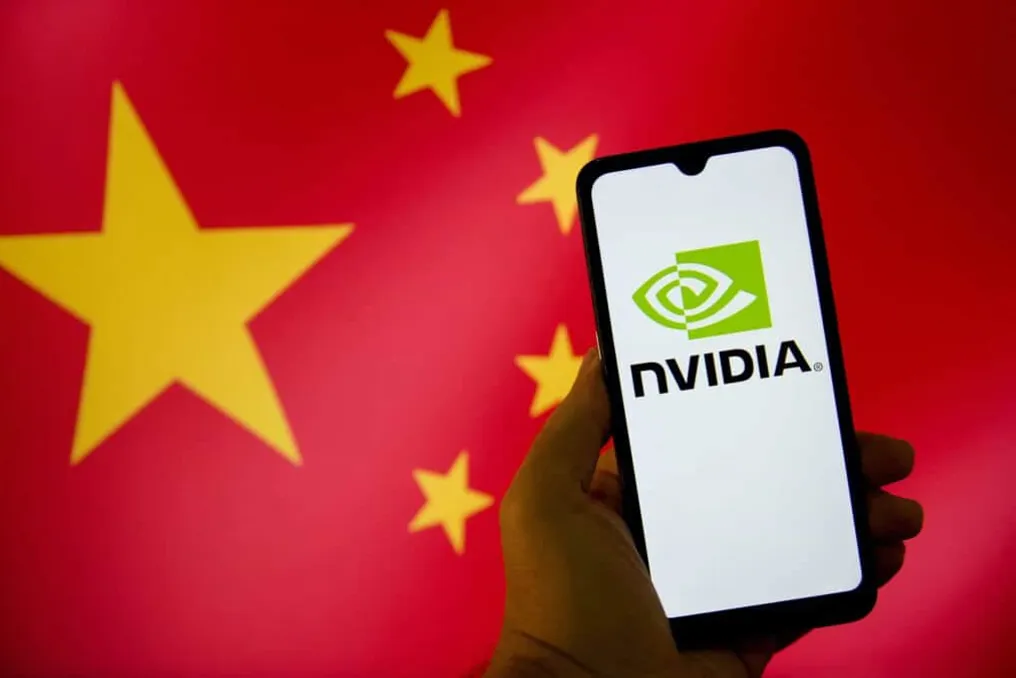
Moonshot AI, a Chinese startup responsible for developing the Kimi artificial intelligence models, has initiated negotiations to rent computational capacity in data centers located in Europe. These data centers are equipped with advanced Nvidia chips, including the Blackwell systems, whose direct export to China is prohibited by the United States.
According to information obtained by CNBC, the Chinese company plans to gain access to these components remotely, using cloud computing services. This mode of access still has gaps in American legislation.
Four individuals with knowledge of the matter informed CNBC that Moonshot has been in discussions throughout this year with companies known as neoclouds. These companies offer the rental of processing power on cloud infrastructure containing Nvidia GPUs, allowing clients to use the chips without needing to install them in their own data centers.
During the conversations, the Chinese company expressed great interest in leasing cluster capacity that has eight or more Blackwell GPUs installed in Europe. The purpose of this move is to increase access to the computational power necessary to operate its AI models. Two sources cited by CNBC specified that the equipment usage would be for inference, the phase in which models process data and respond to user requests. One of these sources also mentioned interest in capacity for model training.
One informant described the search for these resources as 'very aggressive.' This move comes after the White House declared in July that Moonshot had managed to access Blackwell chips remotely through an installation in Thailand. People familiar with the topic indicated that discussions about renting capacity in European data centers only began after this official declaration.
The interest shown by Moonshot also points to a fragility in U.S. export control policy. Although American regulations restrict the direct shipment of the most sophisticated Nvidia chips to China, current legislation does not grant regulatory bodies sufficient authority to monitor remote access to these components when they are hosted in cloud computing services located in other countries.
Founded in 2023 and headquartered in Beijing, Moonshot AI is among the leading Chinese developers of artificial intelligence models. In July, the company launched Kimi K3, a model that, according to the company itself, reduced the gap compared to systems from Anthropic and OpenAI. This tool has established itself as a lower-cost option compared to American solutions.
The growing demand has put pressure on the company's infrastructure, leading it to temporarily suspend new registrations to prioritize existing users. In a post made on LinkedIn, the company announced that it would be 'adding capacity as quickly as possible and will reopen slots for new subscriptions in batches.'
The demand for processing is also reflected in the commercial terms discussed. In this market, clients usually make an advance payment of a portion of the total contract value to secure access to the infrastructure. A CNBC source reported that it was suggested that Moonshot make an initial payment between 30% and 50% higher than that of a non-Chinese client. Agreements concluded with Chinese companies may result in higher initial values, as cloud operators and investors seek to protect themselves against a potential future ban on remote access.
The possibility of Chinese corporations using American chips through foreign structures is at the heart of regulatory discussions in Washington. Lawmakers have introduced the Remote Access Security Act (RASA), a bill aimed at expanding export controls to cover remote access to strategic equipment and software via cloud services. Although this proposal was approved by the House of Representatives in January, it is still awaiting approval in the Senate.