
Kalepa raises $75 million to expand AI-based insurance software
Read more
Ventureburn
ventureburn.com

Kalepa raises $75 million to expand AI-based insurance software

Kalepa has raised $75 million to develop its artificial intelligence platform designed for insurance companies. The New York-based startup secured the investment at a valuation of $470 million. The Series B round was led by Updata Partners, with participation from existing investors IA Ventures and Inspired Capital.

The new funding increases the total amount Kalepa has raised since its founding in 2018. The company develops software for insurers and other participants in the insurance market. The Kalepa platform assists with portfolio management, pricing, and underwriting.

Kalepa plans to use the funds to expand its AI-powered products. Currently, the company serves insurers who manage general agents, reinsurers, and program administrators. Its operations span more than ten countries. Co-founder and CEO Paul Monasterio noted that the platform combines AI capabilities with professional expertise in the insurance sector.

Furthermore, the company intends to enter new markets and double its workforce by 2027. According to the company's report, it has maintained positive cash flow for over two years. Revenue and customer numbers have tripled over the last year.

Kalepa's software coordinates all stages of the underwriting process. AI agents support tasks ranging from application analysis to pricing and portfolio decision-making. When a broker submits an application, the platform gathers necessary documentation and data, identifies discrepancies and missing information. It then directs underwriters to analyze risks and make decisions according to established rules. The system is also capable of generating supporting information required for risk assessment and pricing.

Kalepa regulates the degree of autonomy of its AI depending on the specific task. Nevertheless, human oversight remains for expert judgment and approval when necessary, which distinguishes the company from platforms aiming for fully autonomous underwriting. The company insists that insurance decisions must be made with a traceable process and responsible supervision.

The company claims to possess Professional AI. Its platform integrates AI agents with control software and insurer-specific guidelines. According to Kalepa, insurers using the platform report an increase in premium by over 58% per underwriter. Additionally, they provide calculations 30% to 60% faster and demonstrate an improvement in the combined ratio by 960 basis points, corresponding to a 9.6 percentage point reduction in the share of premiums spent on losses and expenses.

Kalepa's latest funding comes amid growing interest in AI-based insurance technologies. Insurers are seeking ways to improve the efficiency of underwriting and managing complex workflows. Competitors have also secured significant funding. For instance, Federato raised $100 million in a Series D round in November 2025, developing AI-native underwriting software. Six received $30 million in a Series B round in January 2026, utilizing autonomous agents to support underwriting.

These companies demonstrate different approaches to insurance automation. Kalepa emphasizes task-specific autonomy with human control at critical decision points. The broader potential extends beyond simply accelerating document processing.

Kalepa is using the Series B funding to strengthen its technological and commercial operations. The company expects to double its staff by 2027, with hiring focused on engineering, AI, and commercial teams. Expansion will also help Kalepa serve additional markets and insurance functions.

Existing investors continue to support the company's development. Updata Partners brings experience in supporting growth-stage software businesses. Kalepa's funding history is also characterized by long intervals between rounds; previously, the company raised $14 million in a Series A round in 2021.
Similar stories

Kutlerri.ai raises $4 million to help US restaurants increase revenue and reduce costs with AI agents
Read more
yourstory.com

Kutlerri.ai raises $4 million to help US restaurants increase revenue and reduce costs with AI agents

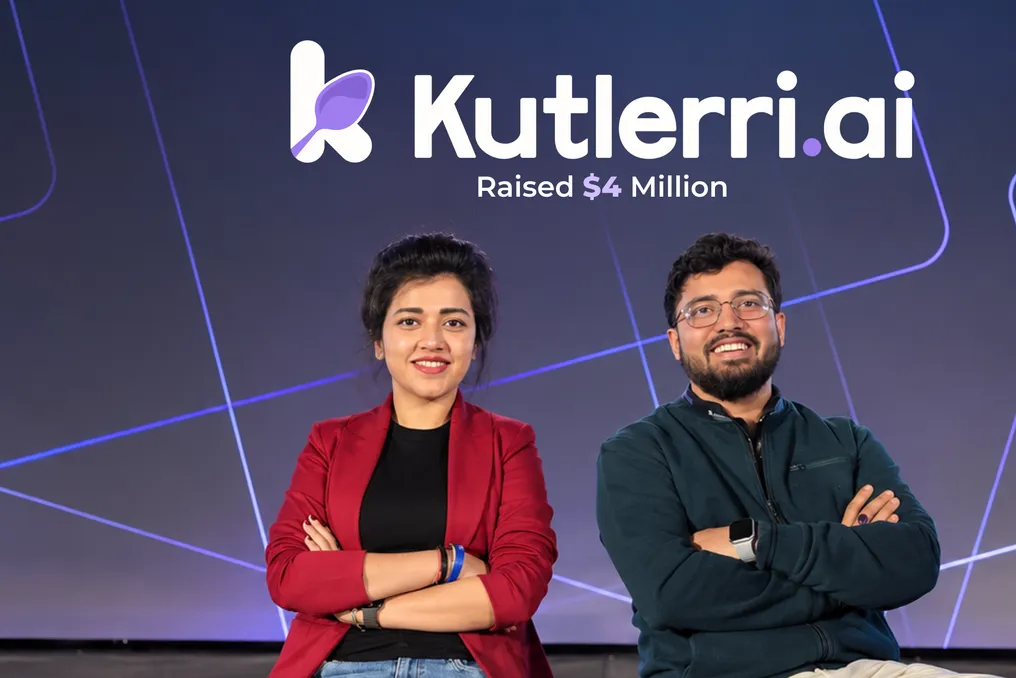
Kutlerri.ai, based in Houston and Bhubaneswar, has raised $4 million from Narahari Investments of Houston. These funds are intended to scale its AI agents, which help restaurants increase revenue and decrease operational costs.

The startup was founded in December 2025 by former HighRadius executives Kiran Rana and Payal Tripathi. The company develops AI agents capable of performing specific tasks related to restaurant income and expenses. Unlike traditional software subscriptions, Kutlerri.ai charges operators based on the revenue generated or the savings achieved through the work of its agents.

Currently, the company serves restaurants in the US and has over 10 signed clients. Its product development and engineering team is located in Bhubaneswar, Odisha, while the office is also in Houston, Texas. The core founding team includes Ankita Narain and Rishabh Srivastava.

The funding will be directed towards expanding its first commercial product—an AI catering sales agent, launching three agents currently in beta testing, and developing a self-service mobile application.

According to the National Restaurant Association's 2026 State of the Restaurant Industry report, US foodservice and restaurant sales are expected to reach $1.55 trillion in 2026. However, 42% of surveyed operators reported not making a profit in 2025.

The association also noted in July 2026 that rising costs continue to put pressure on restaurant profitability. Even before increased post-pandemic expenses, a typical restaurant retained only about five cents on every dollar of revenue.

With such narrow margins, even small improvements can make a big difference. Kutlerri.ai focuses on increasing revenue and reducing costs through AI agents that take on tasks for which restaurants may not have dedicated staff.

Although restaurants already use software for point-of-sale operations, kitchen displays, inventory, online ordering, payroll, and accounting, these systems primarily record information rather than acting upon it. For example, catering requests might go unanswered, or delivery advertisements might continue to run without yielding results. Solving these issues usually requires dedicated personnel, which many independent restaurants cannot afford.

Kutlerri.ai's agents are designed to perform these tasks. Their revenue agents work on catering, third-party delivery, and online orders, while cost-saving agents focus on delivery advertising, food and labor costs, daily prep, and waste.

Restaurants can use the agents through a fully managed service or, after launch, via a self-service mobile application. In both models, Kutlerri.ai charges a percentage of the additional revenue generated or the costs saved. If an agent does not deliver measurable results, the restaurant does not pay.

Kutlerri.ai's first commercial product targets catering sales. According to the MONKEY Catering State of the Industry 2026 report, 60% of catering orders came from only 5% of clients. This data was gathered from transactional data across more than 8,000 restaurants and two million catering orders.

These figures highlight the importance of acquiring new catering clients and re-engaging previous ones, especially for restaurants without dedicated sales departments.

The AI catering sales agent identifies potential catering clients within a 30-mile radius of the restaurant. It contacts businesses via email, text messages, and phone calls, re-establishes contact with inactive clients, answers incoming calls, chats, and emails, and closes deals. Restaurant operators approve decisions and maintain client relationships.

Kutlerri.ai developed this agent in collaboration with RASA, a group of five fast-food establishments in Washington, D.C. Both companies collaborated to develop the product based on RASA's needs for catering sales, with the restaurant group paying for the service throughout the development period.

According to Kutlerri.ai, the agent brought RASA $450,000 in new catering revenue over 10 months, more than ten times the amount the restaurant group paid for the service, and this was achieved without hiring additional staff.

The company announced that the catering agent is now available to operators in most major US cities.

Rana, CEO, and Tripathi, COO, previously worked at HighRadius, where business functions had clear ownership of financial metrics. Their interest in the restaurant sector arose after observing the operation of a restaurant managed by someone close to them. Although the restaurant used several systems to track metrics, there was no dedicated person acting on this information.

The founders subsequently spoke with other operators, including fast-food chains and multi-concept groups with annual revenues of around $3 million. They found similar problems: fragmented data, slow problem identification, decision-making based on intuition rather than data, and stagnant margins over many years.

These observations prompted them to create Kutlerri.ai around AI agents that could be responsible for specific income and expense functions. Kutlerri.ai's product and engineering, marketing, business development, and customer support teams operate from India, with each function accountable for restaurant profitability outcomes.

The company currently has one commercially available agent, three agents in beta testing in restaurants, and two under development. Plans include expanding strategy, marketing, customer support, and engineering teams as these products are developed and launched. While Kutlerri.ai is currently focused on US restaurants, the company is open to entering the Indian and other international markets in the future.

Mercor raises $750 million in Series D round to train AI on all types of tasks
Read more
ventureburn.com

Mercor raises $750 million in Series D round to train AI on all types of tasks

A week ago, OpenAI raised $11 billion at a valuation of $1.25 trillion, demonstrating the continued influx of capital into the artificial intelligence sector. However, this week market attention shifted to Mercor, which successfully closed a Series D funding round, raising $750 million.

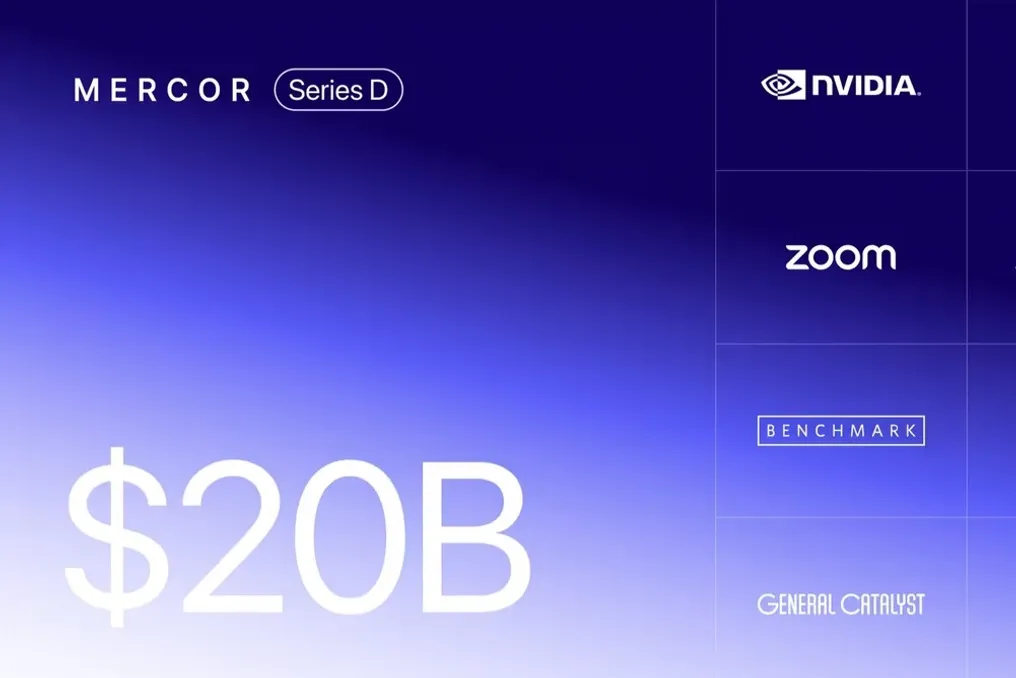
Under the terms of the deal, the San Francisco-based startup is now valued at $20 billion, representing a doubling of its worth compared to just over a year ago. The capital raised will be used to train AI systems to perform any task while compensating real people for instructions on executing practical operations.

The round was announced on November 10th. Although the lead investor was not disclosed, the list of major participants included Benchmark, Felicis, General Catalyst, Sapphire Ventures, NVIDIA, Salesforce, and Zoom. Other investors included the Apollo fund, G Squared, StepStone Group, and XTX Ventures, as well as some funds derived from employee stock option offerings.

Mercor previously raised $350 million in October 2025 when its valuation was $10 billion. In a short period of 13 months, the company increased its market value to $20 billion.

Mercor was founded in 2023 by three friends: Brendan Fudi, Adarsh Hiremath, and Surya Midha. Initially, the company was conceived as an AI-powered recruitment solution, but the founders discovered a larger problem within the AI industry.

Human experts are critically important for creating and testing AI models, including specialists such as lawyers, doctors, bankers, and engineers. Mercor connects these experts with laboratories that require their expertise.

Today, the company claims to have a network of over 5 million experts across more than 800 professions in the United States. As of July 2026, it reports annual revenue exceeding $2 billion. It should be noted, however, that this is the total billed amount, and contractors receive a significant margin.

As Fudi notes, 'AI can only be as useful as the human brain behind it.' Until recently, Mercor's main clients were cutting-edge AI labs. The new funds are intended to expand the company's services to the business community.

The plan is simple: Mercor develops custom tests based on a specific company's workflows. These tests demonstrate the model's performance using the company's own data. The results are then used by Mercor for further model training. Hiremath explains that this is important because 'a model might score highly on a public benchmark but fail.'

Every business has its unique characteristics and rules. This is why Mercor acquired Deeptune earlier this year. The Deeptune team spent two years restoring hundreds of corporate applications. Now users can practice with these copies using AI agents without affecting real systems.

AI agents are approaching the point of taking over business processes. The main question is whether they can function. Nevertheless, investors have doubled down. The market for training AI on all tasks is rapidly developing, and Mercor aims to take a leading position.

Larridin raised $30 million to expand corporate AI measurement platform
Read more
ventureburn.com

Larridin raised $30 million to expand corporate AI measurement platform

Larridin, a company based in South San Francisco, has raised $30 million to develop its corporate artificial intelligence measurement platform. The company helps businesses understand the financial impact of implementing artificial intelligence. With this funding round, Larridin's total funds raised have reached $47 million.

Pelion Ventures led the Series A investment round. Other existing investors participating in the deal include Andreessen Horowitz and Gradient Ventures. New investors in the round include GFT, W23, Thayer, DG Daiwa Ventures, Alumni Ventures, and Cougar Capital. The company has tracked over two billion AI-related sessions.

The funds will be used to develop the product and expand the team. The startup's platform connects data on AI implementation, performance, and financial information from various organizations. This allows business leaders to identify opportunities and make more informed investment decisions.

Larridin is targeting a growing problem among enterprises that are adopting artificial intelligence. Most companies track AI activity but do not understand what results this activity generates. The company's platform correlates employee and agent activity with operational outcomes.

It enables businesses to assess where tools provide a return on investment and where costs should be cut. Larridin reported that the average increase in measurable team output was 47%. Furthermore, the company notes a median AI cost optimization of $2.4 million within the first year of client operation.

Larridin's client base includes SurveyMonkey, Vertiv, Klaviyo, Gainsight, and Globality. Other clients are TigerConnect, EcoVadis, and Sundt. The platform also identifies differences in AI spending across various teams. In one client project, one engineer accounted for approximately 65% of the team's total AI costs in one week.

Another analysis showed a sixty-sixfold difference in the cost of a single submitted engineering change. Two AI tools performed similar work but generated significantly different costs. This data demonstrates why mere adoption metrics are insufficient for a complete picture.

Along with the funding announcement, Larridin presented its quarterly report on the impact of AI on engineering. The Q3 2026 report covers the level of AI adoption among over a thousand software engineers. The report identifies workflow violations in software development.

The proportion of code merge requests executed by AI increased from 35% in April to 62% in September. However, the higher workload also created additional pressure on the review process. The median waiting time for initial human code review increased by 50% over the same period.

These results point to increasing pressure points for engineering teams. An increase in AI-generated work does not guarantee faster software delivery. Organizations must consider both review throughput and code quality.

Larridin will scale its staff in parallel with product development. Jeff Kierl, General Partner at Pelion Ventures, stated that 'Larridin provides transparency on how dollars spent on corporate AI translate into quantifiable business results.'

Larridin enters a market where corporate AI spending continues to draw close scrutiny. Businesses are moving from initial adoption to stricter financial control. The company was founded in 2024 and has expanded its client base. Larridin's goal is to provide measurement for both employees and software agents.

The platform supports organizations across various industries and business functions. Alex Rampell, General Partner at Andreessen Horowitz, also highlighted the company's potential, calling its technology an important standard for measuring corporate AI. The investment will support additional capabilities as enterprises demand greater transparency. The broader trend goes beyond measuring software subscriptions; companies are increasingly seeking to understand the link between AI spending and completed work. This latest funding will support efforts to improve accountability for AI investments.

Popular