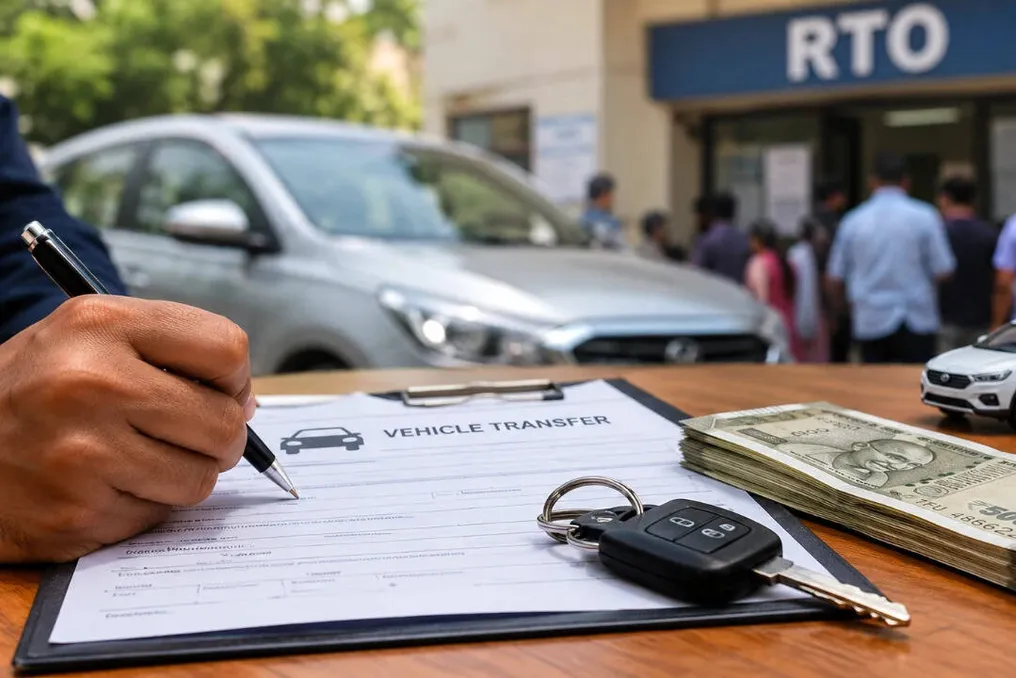
According to the Vehicle Ownership Ease Index for 2026, published by a consumer rights organization and the industry startup community, the process of transferring vehicle ownership can cost more than ten times the legally established fees.
Total expenses, including agent services, vary: in some areas of Bihar they reach 13,000–14,000 rupees, in Tamil Nadu—7,000–8,000 rupees, and in Uttar Pradesh—5,000–8,000 rupees.
This report, prepared by Consumer Voice and IndiaTech based on the Central Motor Vehicles Rules, transport policies of 15 states, and interviews with car dealers, RTO agents, and vehicle owners, demonstrated a significant gap between the reforms initiated by the Centre and the actual implementation of these reforms on the ground.
The study showed that the lowest total cost for vehicle re-registration, including agent fees, is observed in Kerala (500–2,400 rupees), followed by Karnataka (2,000–2,500 rupees), Andhra Pradesh (3,000–3,500 rupees), and Delhi (3,000–3,600 rupees).
The time required to complete the transfer also varies greatly: in Andhra Pradesh and Telangana, it takes only a week, whereas in Uttar Pradesh, the process can drag on for more than a month.
The research analyzed ownership transfer procedures in 15 states covering over 85% of India's organized used car market. It was found that Andhra Pradesh, Kerala, Tamil Nadu, and Delhi are leaders in vehicle ownership ease, while Uttar Pradesh, Bihar, and West Bengal ranked last.
The report highlighted that unofficial costs, procedural inefficiencies, and reliance on intermediaries continue to increase the cost of vehicle ownership transfer. Nearly 100% of respondents stated that they had to rely on agents to complete the process. The document notes that 'reducing these hidden transaction costs will be crucial for improving accessibility, accelerating market formalization, and enhancing overall vehicle ownership ease.'
No state fell into the 'high ease' or 'excellent' categories; Andhra Pradesh, which ranked first, scored only 5.9 out of 10. Kerala received 5.7 points, while Tamil Nadu and Delhi scored 4.6 points. Rajasthan (4 points) and Haryana (3.9 points) were also in the lower half of the ranking, while West Bengal (2.6), Bihar (2.5), and Uttar Pradesh (2.5) finished at the bottom.
These data come against the backdrop of the rapid growth of India's used car market, which is projected to grow from $36.4 billion in 2025 to over $73.5 billion by 2030. This market has already surpassed new car sales in volume. However, fragmentation of rules at the state level, incomplete digitalization, and complex procedures continue to hinder the smooth transfer of vehicle ownership.
Furthermore, it was found that 39% of respondents reported delays in receiving registration certificates after completing the transfer, while 61.5% were unaware of the need to apply to the RTO before reaching the office. Up to 63% could not accurately estimate the total cost of completing the transfer, indicating widespread opacity in transaction fees.