Global South countries face difficulties in ocean protection due to lack of funding
Read more
China Dialogue
chinadialogue.net

Global South countries face difficulties in ocean protection due to lack of funding

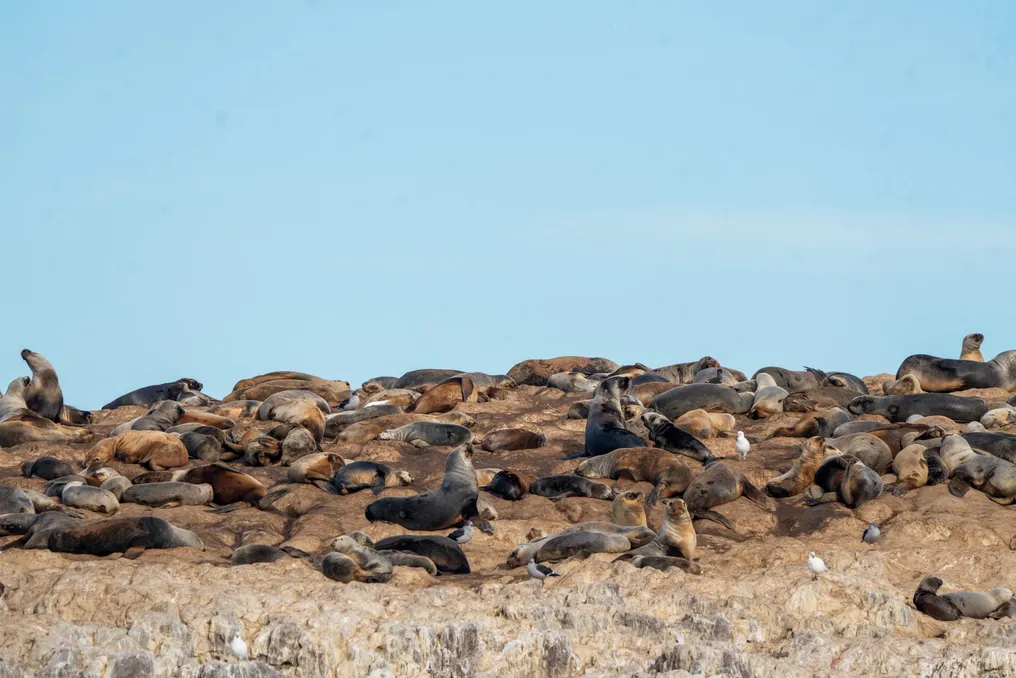
On the southern coast of Argentina, in waters of a 3000 sq km reserve, large albatrosses are observed, and humpback whales, South American sea lions, and Magellanic penguins feed and breed.

The Azul Provincial Park in Patagonia is comparable in size to Yosemite in the USA. Mariana Cassini, Director of Marine Conservation at Rewilding Argentina, aims to increase this protected area by another 30%. This expanded section, which prohibits extractive activities such as fishing, should provide better protection for migrating humpback whales, local sharks, and seabird nesting sites.

The argument for this expansion should be obvious to the authorities: four years ago, when nature loss reached historic levels, governments, including Argentina, promised to conserve 30% of the world's land and ocean by 2030.

However, halfway to the 2030 deadline, this goal remains unattainable. Cassini notes that her government is cutting environmental budgets, and local conservation activists are overworked. When she approaches local authorities, who are resource-scarce, to discuss marine protection, the response often amounts to phrases like 'I don't have time' or 'Let's talk next week.'

This gap between promises and actions, between ambitions and money, between global goals and local implementation, has become a central theme of discussions in the halls and corridors of the recent UN Biodiversity Conference, COP17.

Over two weeks last month, 140 ministers and more than 9000 delegates, including representatives from academia, business, civil society, and indigenous peoples, gathered at COP17 in Yerevan, Armenia. Their goal was to discuss commitments made four years ago under the Kunming-Montreal Global Biodiversity Framework.

Marine conservationists told Dialogue Earth that global aspirations have not been realized in many developing countries. They pointed to frequent shortages of funding, local capacity, as well as the scientific and technological knowledge needed to scale up protection measures or even to begin effective protection of their oceans.

Several environment ministers from Global South countries told Dialogue Earth about the lack of funds to adequately support conservation efforts. They blamed wealthier nations for failing to meet promised financial obligations.

According to a recent report prepared in partnership with NGOs such as WWF and Marine Conservation Institute, and funded by Bloomberg, only 10% of the world's oceans are under protection. Furthermore, some experts believe that not all this protection is real, noting that only 3.5% is considered effectively protected.

In negotiations where the 30% target was agreed upon, developed countries committed to contributing at least $20 billion annually to public financing by 2025 for global biodiversity protection. This amount was supposed to rise to $30 billion by 2030. According to the OECD (Organisation for Economic Co-operation and Development), $18.9 billion was allocated in 2024 (the latest available data).

Nevertheless, ocean protection funding looks worse than general biodiversity figures suggest. According to the OECD, in 2018, only 4% of bilateral and 9% of multilateral biodiversity development funding was directed towards marine protection.

Discussions on financing at meetings like those in Yerevan rarely specify what proportion should be allocated to marine ecosystems. Participants of COP17, whom Dialogue Earth spoke with, noted that those working on the front lines and along the coasts lack what is necessary to protect the oceans.

Similar stories

Climate Issues Discussion at COP31 in Antalya and Their Significance for Uzbekistan's Water and Energy Security
Read more
uzdaily.uz

Climate Issues Discussion at COP31 in Antalya and Their Significance for Uzbekistan's Water and Energy Security

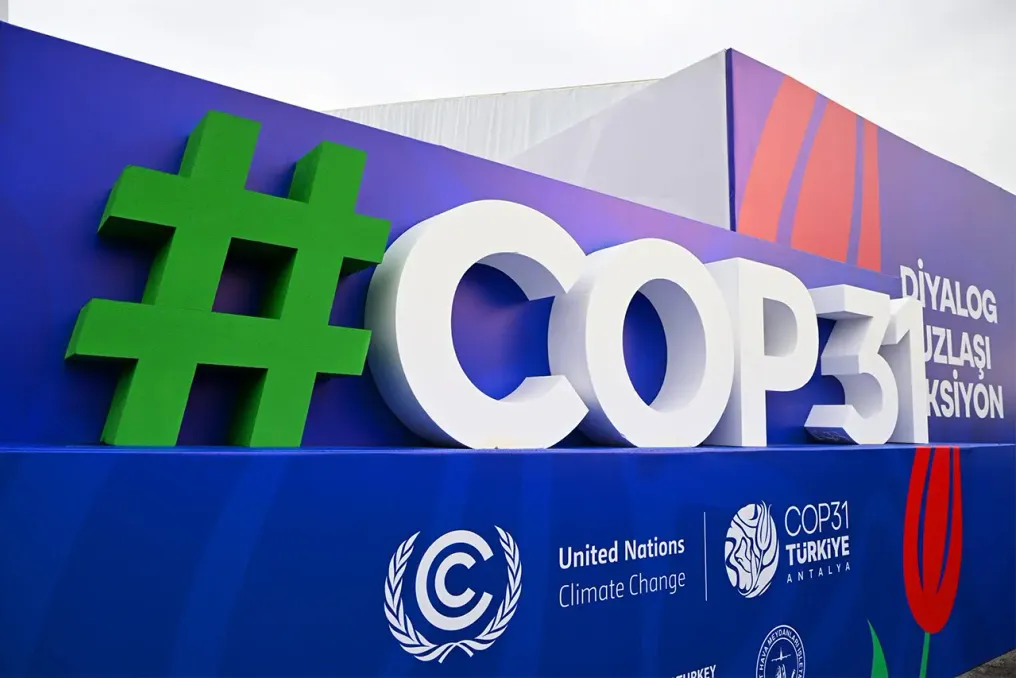
At the 31st Conference of the Parties to the UNFCCC (COP31), taking place in Turkey, world leaders are discussing ways to accelerate the transition to renewable energy sources, expand climate financing, and protect countries from the consequences of global warming. For Uzbekistan, these negotiations are particularly important against the backdrop of growing electricity demand, limited water resources, and the need to adapt the economy to climate change.

One of the key events on November 11 was the opening of the COP31 Leaders' Summit, where UN Secretary-General António Guterres called on states to move from stated climate commitments to their practical implementation.

According to Guterres, global greenhouse gas emissions reached record levels in 2025, and current national climate plans are insufficient to limit global warming to the 1.5°C target set by the Paris Agreement. Guterres warned that exceeding this temperature threshold is now inevitable, although the duration and scale of the exceedance will depend on government actions.

For Central Asia, where climate change intensifies pressure on water resources, agriculture, and energy infrastructure, the task is not only to reduce emissions but also to strengthen economies' ability to adapt to changing climatic conditions.

Financing climate action in developing countries remains one of the central issues at COP31. Speaking at the Leaders' Summit, António Guterres emphasized the need to turn the global goal of mobilizing $1.3 trillion by 2035 into actual financial flows. He also called on developed countries to fulfill their commitment to provide at least $300 billion annually by 2035 and to develop concrete plans to triple adaptation financing.

The UN Secretary-General drew attention to the uneven distribution of clean energy investments. According to figures provided by him, developing countries outside of China, which is home to nearly two-thirds of the world's population, receive less than one-fifth of global investments in this sector. Meanwhile, borrowing costs for many of these countries are two to three times higher.

Access to long-term financing is critically important for Uzbekistan. Modernizing power grids, expanding renewable energy, improving irrigation efficiency, and developing climate-resilient infrastructure require significant investment. However, announced international financial goals do not guarantee automatic allocation of funds to individual countries; the practical significance of the negotiations will depend on agreed financing mechanisms, the availability of loans and grants, and the ability of developing economies to effectively utilize these tools.

Another priority at COP31 is increasing the use of electricity in transport, industry, and buildings. At a joint press conference on November 10, COP31 leaders introduced the Global Electrification Pact, known as '35 by 35,' which aims to increase the share of electricity in total final energy consumption from the current 23% to 35% by 2035.

COP31 negotiation chair Chris Bowen noted that achieving this goal will require more than a fourfold acceleration of electrification rates. According to Bowen, conference participants are also discussing how relevant provisions can be reflected in the final COP31 decision.

UN Executive Secretary for Climate Change Simon Stiel highlighted the economic benefits of transitioning to clean energy. Citing data from the International Renewable Energy Agency (IRENA), he stated that 90% of large-scale renewable energy projects are now cheaper than fossil fuel alternatives.

For Uzbekistan, the global electrification agenda is especially relevant as the country increases solar and wind energy production, develops energy storage systems, and modernizes its electrical grids. Nevertheless, increasing installed capacity is only one aspect of the energy transition; equally important are the grid's ability to integrate energy from various sources, load balancing, energy efficiency improvement, and supply reliability.

The global '35 by 35' goal does not currently establish a separate national obligation for Uzbekistan, but it reflects the direction of international energy policy that may influence investment priorities and technological development in the coming decade.

Parallel to the energy transition, COP31 leaders are paying significant attention to adapting to the consequences of global warming. COP31 Chair Murat Kurum stated that adaptation, as well as loss and damage, must remain at the center of the conference's climate agenda. António Guterres, in turn, called for protecting populations from droughts, floods, and other climate-related threats, expanding early warning systems, and supporting the development of new generations of national adaptation plans.

The importance of these efforts is also underscored by new data presented by the World Meteorological Organization (WMO) in Antalya on November 9. According to preliminary estimates by the organization, the average global temperature from January to September 2026 was approximately 1.47°C above pre-industrial levels. WMO also reported that the last 12 years were the warmest on record.

For Uzbekistan, rising temperatures are directly linked to risks of worsening water shortages, increased irrigation needs, and additional strain on infrastructure. The transboundary nature of Central Asian water resources is paramount. Ensuring water supply depends not only on national water conservation measures but also on regional cooperation, the quality of hydrometeorological forecasts, and the ability of countries to jointly respond to prolonged droughts.

Under these circumstances, international climate finance could potentially support the modernization of irrigation systems, the implementation of water-saving technologies, the improvement of water resource monitoring, and the development of early warning mechanisms. However, the realization of such projects requires not only financial commitments from international partners but also the existence of specific national programs with measurable results.

The practical significance of the negotiations in Antalya for Uzbekistan can be understood through several interconnected priorities. The first is access to climate finance under terms that allow for the implementation of long-term infrastructure projects without excessively increasing the country's debt burden. The second is the creation of an energy system capable of meeting growing electricity demand while simultaneously reducing emissions and increasing resilience to external risks. The third is enhanced international support for climate change adaptation, especially in the areas of water resource management, agriculture, and protecting the population from extreme weather events.

Furthermore, climate negotiations have a regional dimension for Central Asia. Changes in temperature regimes, water availability, and energy development are closely interconnected and therefore require coordinated solutions that go beyond individual national strategies. COP31 is still ongoing, and the final outcomes of the negotiations have not yet been determined. The initiatives and statements of the conference leaders indicate the direction of the discussions, but they do not replace formally agreed decisions by participating countries. For Uzbekistan, the ultimate measure of COP31's success will not be the number of new international declarations, but the ability to transform them into accessible financing, technological cooperation, and concrete projects that strengthen the country's water and energy security.

Yerevan's Approach to Nature at COP17 Criticized for Lack of Financial Details
Read more
chinadialogue.net

Yerevan's Approach to Nature at COP17 Criticized for Lack of Financial Details

The UN Convention on Biodiversity COP17 concluded in Yerevan, Armenia, causing disappointment among many delegates as the urgency of the issue was not adequately reflected in the adopted decisions. Although the meeting was intended to be a moment to correct the course in combating the causes of species extinction, genetic diversity, and ecosystem loss, observers noted that the multilateral system still lacks the ability to solve problems, only to voice opinions about them.

Four years ago, governments agreed on ambitious goals for 2030 under the Global Biodiversity Framework. However, according to the Global Assessment presented earlier this year, none of these goals are moving in a fully positive direction. At COP17, governments adopted the 'Yerevan Pathway' to address this gap, but experts agreed that it largely relies on previously agreed text and does not provide clear practical guidelines.

Alfred DeGhemmes, Director of International Policy at Wildlife Conservation Society, stated that 'obstructionist policies of climate discussions' have emerged in biodiversity negotiations. Observers also reported that Russia repeatedly tried to weaken wording concerning indigenous peoples' rights, the open sea, and harmful subsidies, while Saudi Arabia and India resisted mentions of subsidy reform.

Negotiators excluded earlier formulations calling for the transformation of economic and financial systems and the reform of harmful practices. Instead, the text merely calls for 'enhanced action to address the root causes of biodiversity loss.' Developed countries and those 'able to do so' are 'strongly encouraged' to increase support for developing countries, but the document specifies no concrete amounts.

It is estimated that there is a deficit of $700 billion between what is needed to solve the biodiversity crisis and what has actually been raised. COP17 President Hambardzum Matevosyan noted at a press conference that while what was achieved is not sufficient, it exceeds expectations.

Yerevan was smaller and quieter than the previous COP16 summit in Cali, Colombia. About 9,300 people registered compared to over 23,000 in Cali, and protests were limited and held indoors. Nevertheless, the negotiations themselves were tense. In Cali, the meeting could not officially conclude after going into overtime; delegates started leaving, and a quorum was lost, requiring the meeting to resume in Rome several months later. In Yerevan, the process proceeded more smoothly, concluding early Saturday morning instead of the planned Friday evening, following a final plenary session that lasted almost 12 hours.

Countries spent two exhausting weeks of negotiations, facing sharp differences of opinion on how to close the gaps in biodiversity conservation efforts. Panama's Environment Minister Juan Carlos Navarro stated at a press conference that those who support forests cannot bear the burden, while high-emitting and consuming countries evade responsibility. Ireland's Minister for Nature, Christopher O'Sullivan, emphasized that some countries, still classified as developing, 'obviously must play their part' in nature protection financing.

Under the Global Biodiversity Framework, developed countries committed to allocating at least $20 billion annually from public funds by 2025, rising to $30 billion by 2030. The Global Assessment showed that this goal was likely not met. OECD data indicates that in 2024, funding reached approximately $19 billion, but averaged around $16 billion per year between 2023 and 2025.

The JUSCANZ coalition of developed countries proposed 'expanding the contribution base' to include developing economies such as China and India in the list of countries funding nature protection. Ultimately, states wishing to join the donor list were invited to express interest, while others could make voluntary contributions without being included in this list.

Debates over insufficient funding hide another problem: where existing funds are going. Governments spend about $1.8 trillion annually on subsidies that harm nature, such as those promoting deforestation. Goal 18 of the Global Biodiversity Framework calls for reducing harmful incentives by at least $500 billion annually by 2030. Progress in this area has been particularly limited. Earlier Global Assessment reports called for more decisive action, but the final text of the Yerevan Pathway only 'encourages' countries to 'accelerate' the implementation of this goal based on their 'national circumstances.'

The coalition, co-chaired by Colombia and Finland, known as Friends of Target 18, was also created to help countries find solutions. Greenpeace expert on biodiversity policy Anne Lambrechts noted that 'the prevalence of the topic [harmful subsidies] in negotiations is a positive sign,' adding that industries profiting from nature destruction should also participate.

A similar logic underlies the Cali Fund, established at COP16, which aims to make companies pay for genetic data, but after two years, it remains almost empty. According to the fund's terms, companies are asked to voluntarily contribute 1% of their profits or 0.1% of their revenue to raise $1 billion annually for nature conservation. Half of these funds are designated for indigenous peoples and local communities. However, by the end of COP in Yerevan, only about $10,500 was promised.

Countries were supposed to finalize details such as which specific companies—small, medium, or large—should contribute to the fund and how the funds would be distributed. However, decisions were postponed until the following year due to the inability of countries to reach an agreement. June Rubis, a scientist and member of the International Indigenous Peoples Forum on Biodiversity, stated that 'indigenous peoples and local communities cannot wait while companies use nature's genetic information for free.'

Nevertheless, they achieved some progress in their specific area. Countries agreed on the functioning of a permanent body for indigenous peoples and local communities, established at COP16. This body can make recommendations at COP, but final decisions remain with governments. Inara Vati Sateré-Mave, deputy coordinator of COIAB, an indigenous organization in Brazil, stated at COP: 'Yes, we are present here, but a colonial state sits at the negotiating table. We do not have the conditions for this.'

Countries also adopted a document on biodiversity and climate change, which calls on governments to consider new voluntary guidelines for expanding nature-oriented solutions. However, following objections, references to last year's advisory opinion of the International Court of Justice on climate change and the assessment of IPBES, the UN's scientific advisory body on biodiversity, were removed from the text. A representative of the European Union at the closing of the plenary session expressed 'deep concern' over attempts at 'undermining science' and the reduction of IPBES's contribution, calling it one of the 'best compasses.'

Negotiations on marine biodiversity were also contentious. Russia opposed mentions of the agreement on marine biodiversity beyond national jurisdiction, known as the High Seas Treaty, which entered into force in January and has been ratified by over 100 countries. The final Yerevan text on marine biodiversity merely noted the treaty's entry into force rather than welcoming it, although countries agreed to create an informal consultative group on the convention's work in the open sea. Brianna Fruan, a climate and ocean activist from Samoa, stated that this development is extremely disappointing: 'The world is losing time while political leaders argue over words and punctuation.'

The next opportunity to address these gaps will be at COP18 in Quito, Ecuador, in 2028, two years before the 2030 deadline. An official representative of the Ecuadorian Ministry of Environment told the plenary session that the country would work 'transparently and constructively.' For Astrid Schomaker, head of the UN Convention on Biological Diversity, the current test is what governments will change upon returning home. She stated that 'we cannot protect nature while continuing to finance its destruction. Resources must flow to the countries and communities that need them. And biodiversity must become part of everyday economic decisions.'
Popular