Italian Chef Fired in Australia for Refusing to Put Pineapple on Pizza
Read more
Noticias ao Minuto
noticiasaominuto.com

Italian Chef Fired in Australia for Refusing to Put Pineapple on Pizza

An Italian chef was fired from a well-known Australian restaurant after refusing to add a specific ingredient to his pizzas. The specialist himself, Davide Tamburella, claimed that using this fruit was an insult to his culture.

The decision was made by the Fair Work Commission on Tuesday and reported by the Guardian newspaper. It was established that Davide Tamburella was dismissed from the restaurant 'La Costa' in Queensland on May 20, two weeks after his boss, Elliot Ingram, called him in to discuss work-related issues.

Among these issues was the Italian chef's refusal to put pineapple on pizzas, as he considered it an 'insult to his culture,' according to The Guardian. It turned out that the restaurant was hired by an entrepreneur who wanted to hold an event and insisted on serving pizza with ham and pineapple. It is worth noting that this fruit is very popular in the region.

This was the third attempt by the chef to reject the request, demanding that his employer understand that for Italians, this was a matter of 'extreme importance.' In response, the restaurant owner stated that after 17 years in the hospitality business, he had learned that sometimes one has to make decisions contrary to personal preferences. He admitted: 'Can I order a pizza with ham and pineapple? Probably not my favorite,' but stressed that he could not ignore the customer's request.

For the chef, this decision had even more serious consequences, as he was planning to obtain a permanent residency visa in the country after three decades living in Australia. Without a job, this application would have to be returned to the initial stage. The British newspaper notes that meanwhile, the restaurant has closed, and its owner attributed this to high rent.

Nevertheless, the chef found a job at another restaurant.

Similar stories

Fabio Cannavaro admitted mistake after Uzbekistan national team's defeat to Russia
Read more
podrobno.uz

Fabio Cannavaro admitted mistake after Uzbekistan national team's defeat to Russia

The head coach of the Uzbekistan national team, Fabio Cannavaro, took responsibility for the unsuccessful substitutions made during the friendly match against Russia.

In an interview with a journalist after the match against the Russian national team, the Italian specialist admitted that the team was too hastily expecting a victory and lost focus. According to him, the players stopped controlling the course of the match, made frequent passing errors, and allowed the opponent to take control of the game.

Cannavaro specifically commented on the substitutions made around the sixtieth minute of the match. He emphasized that he does not intend to blame the players who entered the field. 'If you are leading 2-0, make substitutions, and end up losing 2-3—that is my mistake, the coach's mistake,' he stated.

The coach also noted that the main problem lies not so much in the chosen tactical scheme as in the lack of experience and the team's ability to maintain a gained advantage. Cannavaro rejected the assumption that the defeat was related to the absence of defender Abdukodir Husanov, stressing his belief in the young footballers and considering such matches valuable experience for the squad.

Earlier, the Uzbekistan national team lost to Russia at the Pakhtakor stadium in Tashkent. The hosts initially took the lead due to an own goal by Viktor Melekhin, and then Bekhruz Karimov increased the advantage. Nevertheless, goals from Nikolai Komlichenko and Alexey Miranchuk brought the victory to the guests.

Delegation from Namangan Region of Uzbekistan Studied Cheese Production in Italy
Read more
uzdaily.uz

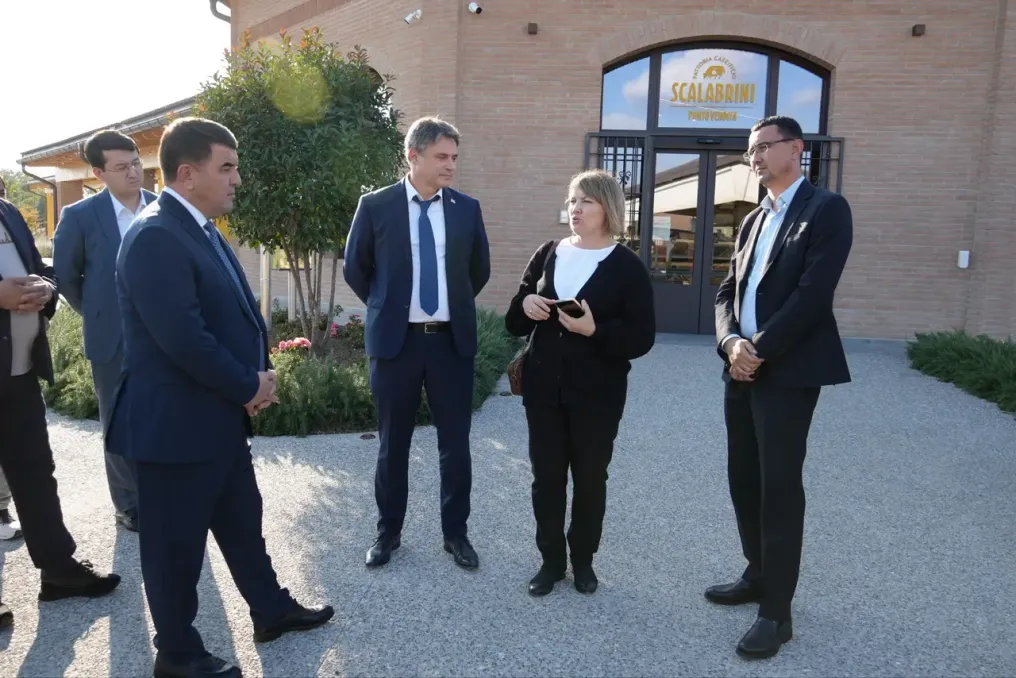
Delegation from Namangan Region of Uzbekistan Studied Cheese Production in Italy

A delegation from the Namangan region of Uzbekistan, led by the region's governor Shavkatjon Abdurazzakov, visited the Italian company Antica Fattoria Caseificio Scalabrini. This company specializes in the production of Parmigiano Reggiano DOP cheese.

According to a statement from the press service of the Namangan region administration, the delegation familiarized itself with the company's production technologies, product quality requirements, and storage conditions.

During the visit, delegation members inspected the traditional methods of cheese making used at the enterprise and also visited specialized storage facilities where the cheese undergoes a long aging process. Participants were given detailed information about the stages of cheese maturation and the organization of the production cycle.

Special attention was paid to the Italian experience in dairy production and adherence to quality standards. This visit allowed the delegation from Namangan to gain knowledge about the practical approaches used by Italian producers in the field of cheesemaking and product storage.

Popular