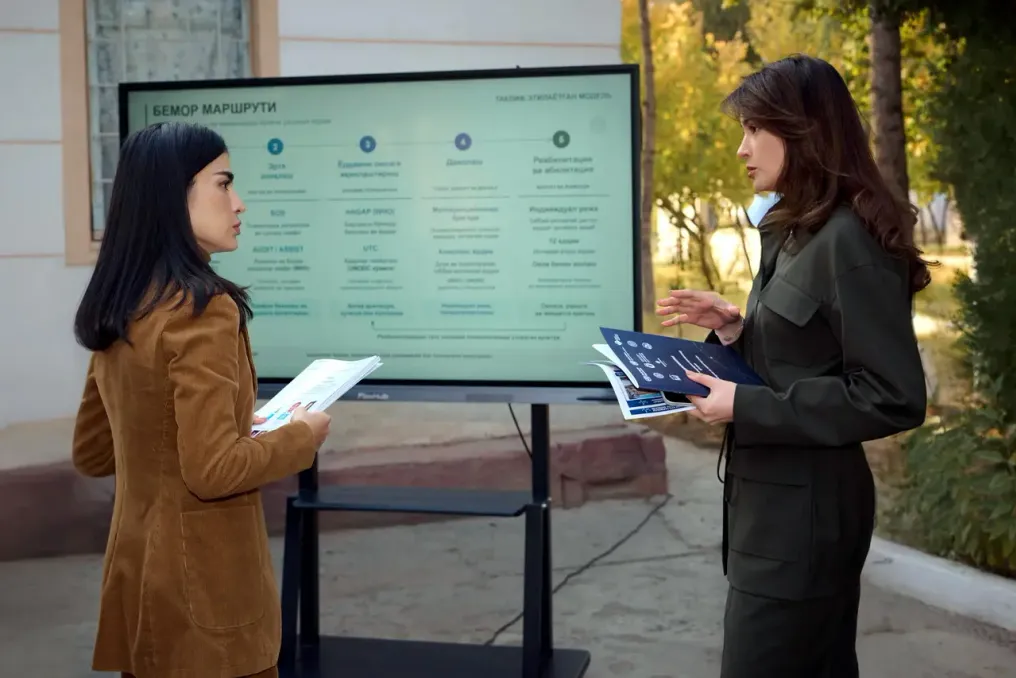
Uzbekistan intends to implement annual psychological screenings for teachers and students, establish new consultative and research bodies in the field of education, and organize a call center to receive citizens' appeals.
These measures are enshrined in presidential decrees adopted on October 19, 2026. According to these decisions, psychological checks will be conducted at least once per academic year for teachers, preschool educators, schoolchildren, children in educational institutions, and university students.
In accordance with Decree No. PP-379 'On measures for scientifically based development of psychological services in the continuous education system,' the new system will be introduced in stages. Starting from the 2026/2027 academic year, screenings will begin in preschool and general secondary educational institutions. From the 2027/2028 academic year, they will be expanded to cover specialized secondary, vocational, and higher educational institutions.
An Institute of Psychology will be established at the Educational and Scientific Center of Psychology of the National Pedagogical University of Uzbekistan. This institute will report to the Ministry of Education and Science. Starting January 1, 2027, the institute will launch laboratories specializing in digital psychology and artificial intelligence, educational and psychological assistance, as well as issues of psychological health and prevention.
Screenings will be carried out through a special electronic platform, and measures must be taken to ensure the confidentiality of personal data during information processing. Analysis results will be processed using artificial intelligence, after which participants will be categorized into one of three groups: psychologically resilient individuals, those needing psychological support, and those requiring active psychological assistance.
Psychologists from educational institutions will be assigned to participants in the second group, while regional mentor-psychologists will work with those requiring active support. The decree also provides incentives for specialists: psychologists engaged as instructors for advanced training courses under the cascading model will receive a salary supplement of 20% at their main workplace during the course period.
Furthermore, 150 mentor-psychologists who have achieved significant success in promoting psychological resilience during the academic year will receive a one-time award equivalent to twenty minimum wages. Professional development will become mandatory for employees of psychological services in educational institutions at least once every five years.
Another set of reforms concerns the structure of the Ministry of Education and Science and its interaction with the public. The Ministry will create an outsourced call center to receive requests, complaints, suggestions, and objections from citizens, ensuring their prompt review and referral to relevant organizations. A feedback system will also be introduced to maintain constant dialogue with the public and employees of the education and science sectors, as well as to collect and analyze data on the quality and accessibility of educational services and identify existing problems.
Under the Minister's leadership, a Public Council for Education will be established. Its composition will include students, university students, parents, teachers, and employer representatives. The ministry's council will consist of 15 people, including the Minister, deputy ministers, heads of subordinate agencies, and rectors of leading universities, scientists, and teachers.
By February 1, 2027, the Minister will be granted exclusive permission to recruit personnel for the ministry's central office through direct interviews. Additionally, a special working group will be formed under the Presidential Administration to develop the Strategy for Human Capital Development and Continuous Education.
The Ministry of Education and Science will also establish the Human Capital Development Fund and the Center for Strategic Research and Evaluation in Education and Science. Furthermore, the ministry will organize the work of the Agency for Knowledge and Qualification Assessment. Concurrently, the Center for Education Development under the Ministry of Preschool and School Education will cease its activities.