Eurasian Development Bank increases non-state financing volume in Eurasia by 50%
Read more
UzDaily
uzdaily.uz

Eurasian Development Bank increases non-state financing volume in Eurasia by 50%

The volume of non-state financing provided by international financial institutions (IFIs) in the Eurasian region reached 6.8 billion US dollars for the period from January to September 2026, representing a 50% increase compared to the same period last year.

According to an analytical report by the Eurasian Development Bank (EDB) for the third quarter of 2026, total financing in the third quarter amounted to 1.1 billion US dollars, marking a 36% year-on-year decrease. However, this quarterly decline did not affect the overall positive trend of financing growth since the beginning of the year.

Kazakhstan has become one of the key platforms for developing new cooperation mechanisms and attracting international financial institutions. In the third quarter, the financing volume in this country increased by more than 200 million US dollars compared to last year. The first non-state operation of the OPEC Fund was approved in Kazakhstan, and operations and financing of Turkish investment fund projects also began.

Key sources of non-state financing in the region include the EDB, the European Bank for Reconstruction and Development (EBRD), and the World Bank Group. The EDB focused its activities primarily on infrastructure projects, while financing from the EBRD was mainly directed towards the financial sector. The World Bank actively utilized guarantee instruments through the Multilateral Investment Guarantee Agency (MIGA).

The role of guarantees in attracting capital has significantly increased: in the first nine months of 2026, guarantees accounted for 22% of IFI non-state financing in Eurasia, compared to 4% in the same period of 2025. The main entities providing such guarantees are MIGA, the EDB, and the EBRD.

Another area of activity is the financing of modern warehousing and logistics facilities. Specifically, the EDB provided loans for the construction of the Griffin Logopark Almaty logistics complex. The International Finance Corporation, part of the World Bank Group, is also active in this segment.

International development banks are also increasing their participation in investment platforms. In Mongolia, the GIRAF fund was launched to support the agricultural sector by pooling resources from international development banks, state, and commercial banks. In Kazakhstan, the World Bank financed the ALEM program, which includes a venture fund mechanism to support technology startups.

The EDB functions as a multilateral development bank operating across the entire Eurasian region. According to the bank, as of the end of June 2026, its cumulative investment portfolio comprised 348 projects with a total value of 22.1 billion US dollars. The bank's main areas of activity include transport infrastructure, digital systems, green energy, agriculture, industry, and mechanical engineering.
Similar stories

Eurasian Development Bank promotes the development of Islamic finance in Central Asia
Read more
uzdaily.uz

Eurasian Development Bank promotes the development of Islamic finance in Central Asia

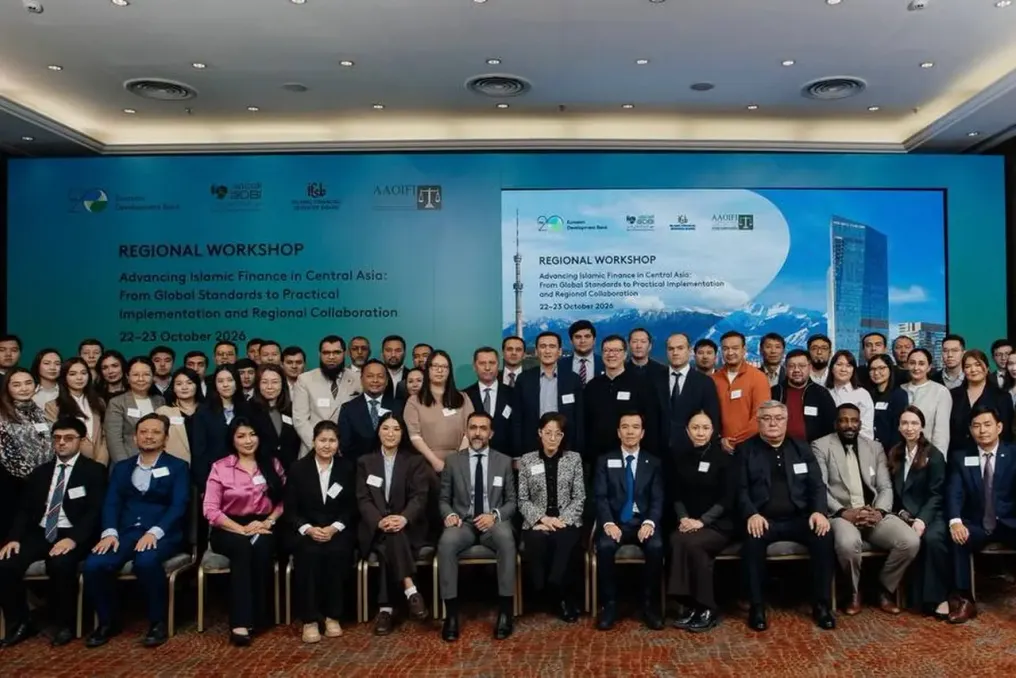
The Eurasian Development Bank (EDB) gathered international experts and representatives of the financial sectors of Kazakhstan, Kyrgyzstan, Tajikistan, and Uzbekistan to discuss the prospects of Islamic finance in Central Asia.

The two-day practical seminar took place in Almaty on October 24. Representatives from ministries of finance and economy, central and commercial banks, financial regulators, as well as international organizations participated in the event.

Partners of the event were the Islamic Development Bank Institute (IsDB Institute), Accounting and Auditing Organization for Islamic Financial Institutions (AAOIFI), and the Islamic Financial Services Board (IFSB).

Participants thoroughly reviewed international standards of Islamic finance, principles of Sharia governance, as well as approaches to regulating and supervising Islamic financial institutions. Special attention was paid to selecting and structuring financial products that meet the needs of regional markets.

Practical sessions included two investment scenarios: structuring a sukuk issuance and organizing financing for the acquisition of equipment for a solar power plant. Participants analyzed how to account for regulatory requirements, Sharia principles, and economic parameters of transactions when developing financial solutions.

The seminar also addressed the prospects of Islamic finance in Central Asia, EDB's regional initiatives, methods for assessing national markets, and preparing development roadmaps.

Ruslan Dalenov, Deputy Chairman of the EDB Board, noted that Islamic finance can become an additional source of long-term capital for infrastructure and investment projects in Central Asia. He emphasized that realizing this potential requires utilizing international experience, considering the specifics of national financial systems, and enhancing the professional skills of market participants.

Dalenov added that cooperation with IsDB Institute, AAOIFI, and IFSB will help unite international expertise, expand knowledge exchange, and adapt best practices to the needs of the region's countries. EDB intends to support professional development and expand the use of Islamic financial instruments for financing investment projects.

The event was organized by the EDB Academy with the aim of strengthening the competencies of market participants, improving regulatory approaches, and increasing the capacity to attract capital into the economies of Central Asia. The EDB Academy offers educational programs for civil servants, businesses, and financial institutions in the bank's member countries. Training is conducted in person through seminars, practical classes, and case studies, as well as online via the EDB Digital Academy platform. Key program areas include project finance, interaction with multilateral development banks, and the development of the energy, industrial, and transport sectors.

The Eurasian Development Bank is a multilateral development bank operating across Eurasia. According to the bank, as of the end of June 2026, its total investment portfolio included 348 projects totaling 22.1 billion US dollars. The bank's main areas of investment cover transport infrastructure, digital systems, green energy, agriculture, industry, and mechanical engineering.

Eurasian Development Bank creates direct investment fund for Central Asia and the Caucasus
Read more
uzdaily.uz

Eurasian Development Bank creates direct investment fund for Central Asia and the Caucasus

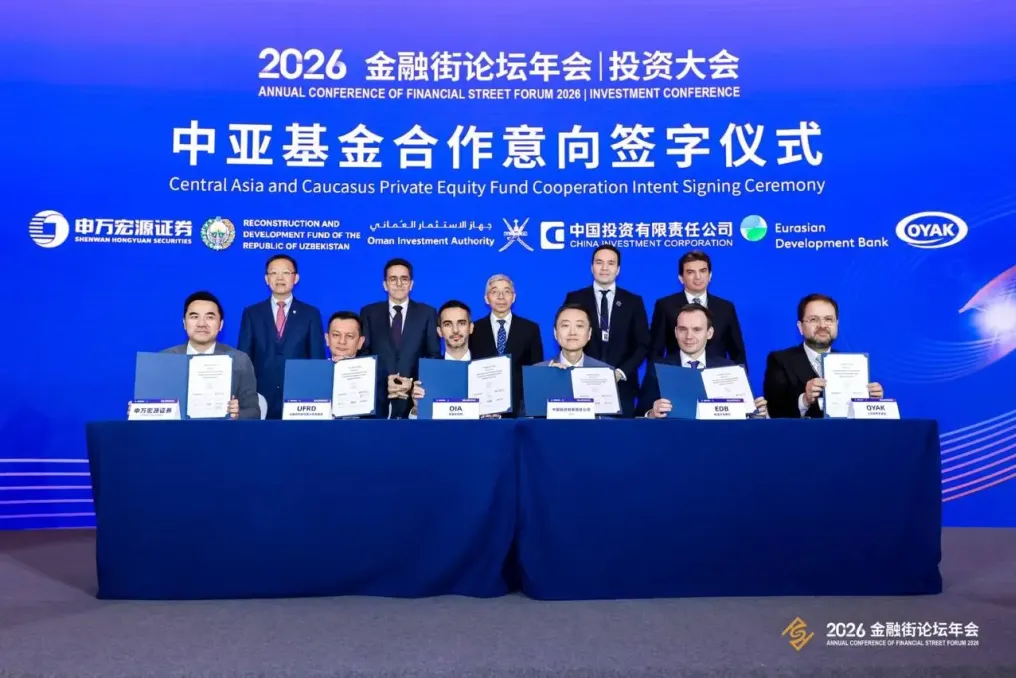
The Eurasian Development Bank (EDB), in collaboration with international financial institutions and investors, is preparing to establish the Central Asia and Caucasus Private Equity Fund (CACPEF). This initiative aims to attract long-term capital for promising companies in the region and support industrial development.

Participants include organizations such as China Investment Corporation (CIC), Oman Investment Authority (OIA), the Uzbek Fund for Reconstruction and Development (UFRD), the Turkish fund OYAK, EDB itself, and Shenwan Hongyuan Securities Co., Ltd. Sovereign wealth funds from Central Asian countries, regional development banks, pension funds, and other financial institutions are also invited.

CACPEF plans to invest in promising companies in Central Asia and the Caucasus. The fund participants intend to combine long-term capital with the industry expertise and business connections of investors in China, the Middle East, and the region itself.

According to the initiative's participants, deepening trade and economic cooperation between China and Central Asian countries opens up new investment opportunities. The fund is expected to help regional companies gain access to international capital, technologies, industry expertise, and new markets.

EDB stated that its participation aligns with the bank's Strategy for the period 2027–2031, which includes attracting international capital into member states, including through specialized investment funds. Daniyar Imanaliyev, Deputy Chairman of the EDB Board, noted that companies in Central Asia and the Caucasus require long-term capital to expand their businesses and enter new markets. He added that cooperation with partners from China, Oman, Uzbekistan, and Turkey will allow for the combination of international investment opportunities with regional knowledge, and EDB's involvement in preparing the fund is a way to attract additional resources to the economies of member states and support the growth of regional companies.

The initiative to create the fund is part of the bank's efforts to expand cooperation with partners in China and the Middle East. On October 6, 2026, EDB and the Ministry of Finance of Oman signed an agreement defining the terms of the bank's presence in the Sultanate, marking the first step in Oman's accession process to EDB.

The bank also has a presence in the Abu Dhabi Global Market (ADGM), which is an international financial center. In October 2026, EDB issued its debut dim sum bonds in Hong Kong. According to the bank, its total investment portfolio as of the end of June 2026 included 348 projects totaling $22.1 billion. Most of these investments are directed towards projects benefiting regional integration, such as transport infrastructure, digital systems, green energy, agriculture, industry, and mechanical engineering.

EDB operates as a multilateral development bank across Eurasia. As part of its Strategy for 2022–2026, the bank is implementing three megaprojects: the Central Asia Water and Energy Infrastructure Complex, the Eurasian Transport Network, and the Eurasian Commodity Distribution Network.

Popular