Wild animal protection in South Africa remains after hunters' rejection in court
Read more
Getaway
getaway.co.za

Wild animal protection in South Africa remains after hunters' rejection in court

The protection of animal welfare in South Africa will remain in force after the Constitutional Court dismissed a lawsuit filed by the South African Hunters and Game Conservation Association.

The case concerned amendments to the National Environmental Management: Biodiversity Act, which require that animal welfare be considered when making decisions related to the conservation, management, and sustainable use of wildlife.

These provisions recognize that wildlife protection includes not only maintaining animal populations alive. It also requires taking into account their physical and mental condition, quality of life, and ability to adapt to the environment.

Representatives of SA Hunters argued that changes to the definition of animal welfare during the legislative process should have been open to broader public discussion. The association also expressed concerns about how these regulations might affect activities such as hunting and game farming.

Nevertheless, the Constitutional Court rejected this claim on October 9, 2026, ruling that SA Hunters delayed filing the suit by more than 25 months without providing an adequate explanation for the delay. The Court also deemed the chances of success for the lawsuit unlikely.

The association was ordered to reimburse legal costs to the National Society for the Prevention of Cruelty to Animals (NSPCA) and EMS Foundation, who were opposing the lawsuit.

This decision does not prohibit hunting or other forms of wildlife management. It merely means that animal welfare must remain part of the criteria when assessing these activities.

NSPCA and EMS Foundation welcomed this ruling; the latter called for the resumption of the Wildlife Wellbeing Forum so that the provisions can be translated into practical policies, rules, and decisions.

Despite the rejection of the legal challenge, the next step remains the implementation of these protective measures in practice. For South African wildlife, this decision preserves an important principle: conservation must be assessed not only by the number of surviving animals but also by the quality of their lives.

Similar stories

Six South African reserves offer an alternative wildlife viewing experience
Read more
getaway.co.za

Six South African reserves offer an alternative wildlife viewing experience

The best wildlife interaction experience is not always achieved from inside a vehicle window. Within South Africa, nature reserves provide opportunities to explore the environment through organized hikes, following interpretive trails, studying local ecosystems, and gaining a more detailed understanding of wild areas.

The local forests of Garden Route are rich in exceptional flora and fauna diversity, much of which can be easily missed when traveling between destinations by car. Garden Route National Park offers several ways to experience these ecosystems on foot. In Garden of Eden, near Knysna, there is a short, wheelchair-accessible boardwalk featuring information boards detailing local fauna, Afromontane forests, forestry management, plants, and people. Visitors can explore the surroundings while birdwatching and observing other forest inhabitants. Further along the route, the Tsitsikamma section features interpretive displays and natural trails, including the popular Bloukrans Trail, which leads to a suspension bridge over the Storms River.

This UNESCO World Heritage site protects a landscape composed of sandstone formations, riverine forests, and savannas, while also preserving remnants of an important early African kingdom. The Mapungubwe Interpretation Centre provides information on the archaeology, cultural history, and biodiversity of the site. Visitors can also tour designated viewpoints and the park's canopy walkway, offering a different perspective on the surrounding landscape. The park's informational exhibits help connect the natural environment with the people who lived here centuries ago. This makes Mapungubwe particularly valuable for travelers interested in the intersection of nature conservation, archaeology, and human history. While wildlife viewing is possible, the main attractions are the educational facilities and the landscape itself.

Langebaan Lagoon is one of the main attractions in West Coast National Park, drawing birdwatchers and nature lovers year-round. Instead of relying solely on observations from a vehicle, visitors can spend time at bird hides and viewpoints, watching waterfowl without disturbing them. The park's interpretive signage adds another layer to the visit. Exhibits in the Geelberg and Syberg areas cover topics such as local birds, marine mammals, native plants, geology, archaeology, and coastal history. Postberg is particularly popular in spring due to its wildflowers, although access is seasonal. Walking through designated areas and stopping to read information boards helps visitors understand why the region's habitats are important for resident and migratory species.

Rietvlei Nature Reserve, located near Pretoria, offers opportunities to study nature through guided activities and birdwatching. The reserve has a dedicated walking trail designed for environmental understanding rather than just covering distance. This four-hour daytime hike requires advance booking and is conducted in groups led by a guide. It is intended for participants aged 12 and older. For those who prefer to observe wildlife from a stationary spot, the reserve is also equipped with six bird hides accessible along self-drive roads. These hides allow for birdwatching in their natural habitat and enable observations at a more relaxed pace. Before planning a trip, visitors should check current conditions and hiking requirements.

Approximately 10 km south of Gaborone, Mokoro Lodge offers diverse organized activities that bring visitors closer to Botswana's wildlife and landscapes. Depending on availability and the reserve's current program, activities include guided walks, rhino and giraffe tracking, horseback safaris, and game drives. The reserve also features an education center, museum, and library, making it a useful stop for travelers wishing to learn about nature conservation alongside wildlife viewing experiences. The Mokoro Lodge ecological education program welcomes school groups, helping young guests develop an understanding of biodiversity and the importance of protecting natural habitats. For travelers, the combination of organized activities and educational facilities provides several ways to engage with the reserve beyond traditional safaris. It is necessary to check which activities are running and if advance bookings are required before visiting.

Van Staden's Reserve offers a different approach to traditional wildlife excursions. Its seven walking trails allow visitors to experience the intersection of fynbos vegetation and forest, with plant diversity being a significant part of the interest. Visitors can arrange guided walks led by local guides who share information about the reserve's flora and fauna. Birdwatching and plant identification are also popular activities, and a wooden bird hide along Nymph Trail provides a spot for bird observation. The reserve is especially appealing to travelers who want to appreciate the fine details of the ecosystem, from local plants to the birds that depend on them. Organized walks last approximately one to two hours, and visitors should contact the reserve administration to confirm arrangements and payment.

Before visiting, check whether the walking routes are self-guided or require a registered guide. Some reserves only allow visitors to walk in designated areas, while others offer activities that must be booked in advance. Bring appropriate footwear, water, sun protection, and binoculars if you plan to birdwatch. Most importantly, remember that walking wildlife viewing requires respect for animals and their habitats. Follow the guide's instructions, stay on marked trails, and avoid approaching or feeding wild animals.

Gauteng High Court rejects lawsuit to free elephants from Johannesburg Zoo
Read more
iol.co.za

Gauteng High Court rejects lawsuit to free elephants from Johannesburg Zoo

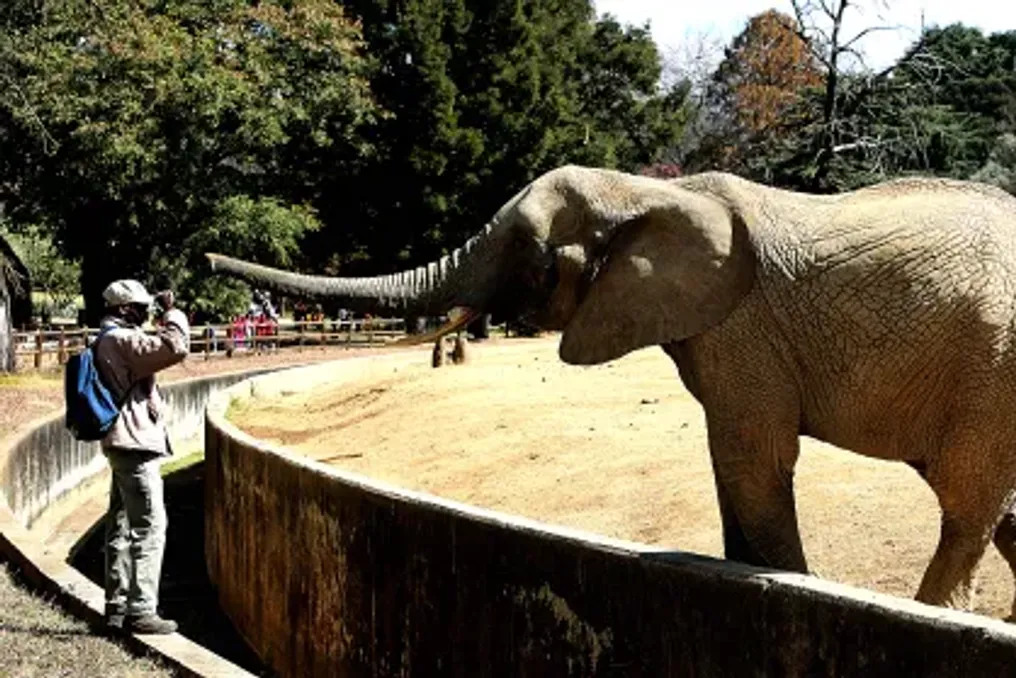
Three elephants from the Johannesburg Zoo will remain in captivity after the Gauteng High Court dismissed a four-year legal battle aimed at securing their release. However, this decision has had little impact on ongoing debates about animal welfare or whether the city should consider relocating them.

Questions regarding the future of these elephants have concerned people for many years. Lemmi was born at the zoo in 1979, and the death of her companion, Kinkela, in September 2018 raised questions about her living conditions. Ramadiba and Mopane arrived in June 2019 after being sourced from Inkwenkwezi Reserve in the Eastern Cape.

In 2022, the EMS foundation, the organization Animal Law Reform South Africa, and chief Stephen Fritz approached the court requesting the release and transfer of Lemmi, Ramadiba, and Mopane to a reserve. The application was dismissed on Friday, October 16, without a claim for costs against the City of Johannesburg.

This ruling was a legal victory for the city and the Johannesburg City Parks and Zoo (JCPZ), which defended its continued care of the elephants based on an existing permit. However, the applicants cautioned against interpreting this outcome as a judicial finding that the animals thrive in captivity.

In a statement, the EMS foundation expressed 'deep disappointment' with the verdict, arguing that the court's findings related to the legal basis of the suit and the availability of administrative review. The foundation noted that 'the court did not resolve the disputed expert testimony regarding their welfare nor establish that they thrive in captivity.'

The case placed the welfare of the three elephants at the center of a broader discussion on animal sentience, the duties of public institutions, and whether a legal permit is sufficient grounds for keeping highly intelligent animals in captivity.

The applicants insisted that when determining the justification for continued captivity, their physical and psychological needs, as well as their quality of life, must be taken into account. They proposed relocation to a reserve in Limpopo, where assessments and rehabilitation could determine if the animals could adapt to a different environment.

The foundation emphasized that the existence of a permit does not resolve the broader question of whether the elephants should remain in the zoo. It stated: 'A permit allowing captivity, in our view, cannot resolve the ethical question of whether this captivity should continue.'

The court's decision did not halt political calls for the city to reconsider the relocation issue. Leanne De Jager, the DA Gauteng environmental representative and MPL member, stated that the dismissal does not mean the elephants must remain in the zoo indefinitely. The DA supports the relocation of Lemmi, Ramadiba, and Mopane to a rehabilitation reserve in Limpopo, arguing that their welfare needs must remain central to decisions about their future.

In its statement, the party declared: 'The need of elephants for space, choice, and social bonds is not a luxury.' The party called on the city and the zoo to conduct a transparent, independent assessment of a properly provided relocation option. It was pointed out that any transition must consider the health, safety, social bonds, and lifelong care of each elephant, with the process and results made publicly available.

JCPZ consistently defends its responsibility for the animals, stating that their welfare is monitored by experienced keepers and veterinary specialists. JCPZ Director Tanduksolo Mendreu welcomed the decision, noting that it reinforced the institution's commitment to providing accountable care. Mendreu stated: 'Our responsibility to Lemmi, Ramadiba, and Mopane is a daily commitment. It lies with the people who care for them, the professionals who assess their welfare, and the city that must be responsible for the animals entrusted to it.'

He added that animal welfare remains a central element of the zoo's duties alongside nature conservation education and public engagement. Mayor of the Executive, Dada Morero, praised the Johannesburg Zoo's elephant care team, veterinarians, and support staff, highlighting the institution's role in animal welfare, nature conservation, and public education. Morero noted: 'The Johannesburg Zoo plays an important role in connecting residents, especially children and youth, with wildlife and a broader responsibility for protecting the natural environment.'
Bulls defeat Ulster after second-half slump
Read more
iol.co.za

Bulls defeat Ulster after second-half slump

The Bulls team managed to maintain their victory over Ulster, despite the home side appearing rather mediocre in the match played at Loftus Versfeld stadium on Saturday. The final score was 34-16 in favor of the hosts.

Coach Johan Akkerman is likely disappointed with his team's drop in performance after confident wins with scores of 50 points against Stade Français and Lions, but he views this match as a signal for awakening. He noted that even a loss while playing poorly is a kind of bonus.

The Bulls started the game quite well, but their play became very weak in the second half. The match took place in intense heat, and it was expected that Ulster would weaken in the second half, but instead, they started playing stronger.

At moments during the game, the Bulls demonstrated excellent clinical finishing, but they also allowed episodes of clumsy play. An example of good play was the first touchdown scored two minutes after the start of the match. After the referee awarded a penalty near the center of the field, it was clear that a seven-point equivalent would follow. Hendre Pollard executed the kick into the corner, the touchline was cleared cleanly, and Marcell Coetzee threw the ball after a precise maul.

Luan Guillaume was in his second match at fullback and showed that his play involved more than just elusive running. His passing game was exceptional. One of his kicks from the 22-meter line into the Ulster 22 area led to the Bulls advancing toward the line, but the ball was stopped.

Ulster fought actively and got close to a try, but could not overcome the resolute defense at the try line. Then the Bulls moved the ball to the opposite end of the field, where Guillaume almost scored near the corner flag. The Bulls maintained possession, and when they had a free kick close to the line, a touchdown seemed inevitable, and Elrig Louw scored.

Despite effectiveness in certain areas, the Bulls missed several opportunities to score touchdowns, including a forward pass from Pollard to the unnoticed Chesville Joste. Flyhalf managed to compensate for this error with a brilliant kick from 50-22 meters, which created an attacking lineout in the Ulster 22 area. From this situation, it became clear which Bulls forward would score. It was captain Coetzee, who scored his second touchdown.

By the 40th minute, the Bulls were leading 21-0, but Ulster gained a decisive advantage through skillful backline play, which allowed winger Chay Mullins to break through to the line and score a timely try after a shot on goal.

The wind contributed to Ulster's success, and they scored the first points in the second half when flanker David McCann broke through after five minutes of pressure. The growing pressure on the Bulls was reflected in the decision to try and earn points from penalties. Pollard successfully increased the lead to 24-14.

The Bulls suddenly started conceding penalties, and the audacious Irish players scored again, using gifted possession and territory when winger Mullins slipped into the corner. Johan Akkerman looked stone-faced in the coaching zone. His team went from a 21-0 lead to needing to hold on to a 24-19 score.

The Bulls players probably felt Akkerman's anger, as they responded with clean phase play that led to a try by Johan Grobbelaar. However, Ulster immediately counterattacked when centre Stuart McCloskey broke through the uprights, leaving the Bulls in nervous last ten minutes. Kurwin Bosch, who replaced Pollard, took a penalty that added points.

Bulls - Touchdowns: Marcell Coetzee (2), Elrig Louw, Johan Grobbelaar. Conversions: Hendre Pollard (4). Penalties: Pollard, Kurwin Bosch.

Ulster - Touchdowns: Chay Mullins (2), David McCann, Stuart McCloskey. Conversions: Jack Murphy (3).

Popular