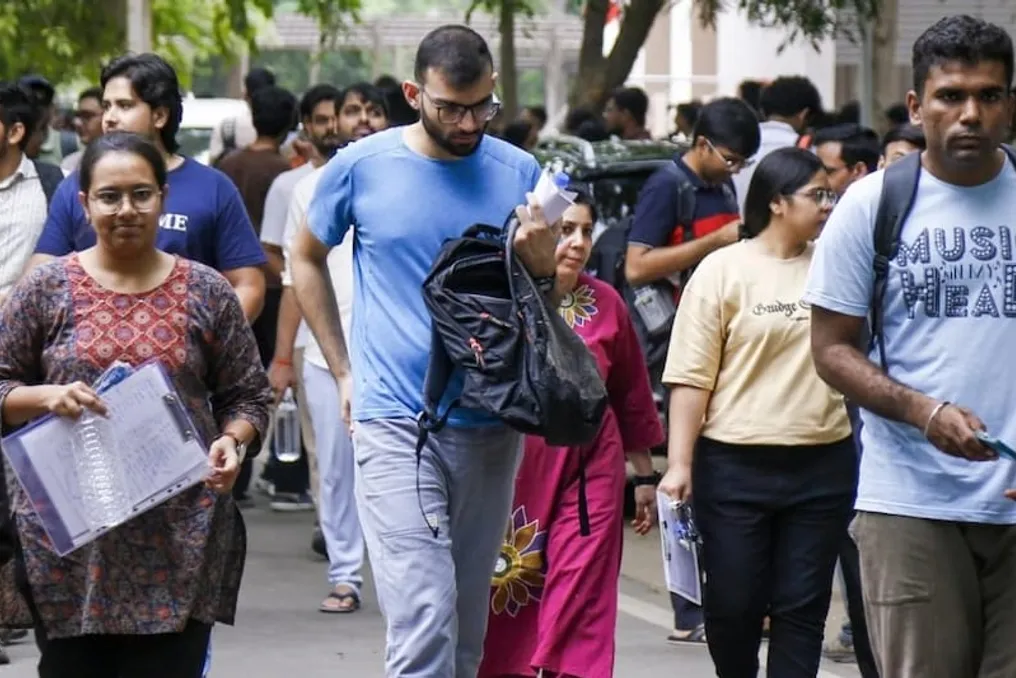
Student union representatives from seven states participated in ABVP rally at Delhi University
Read more
The times of India
timesofindia.indiatimes.com

Student union representatives from seven states participated in ABVP rally at Delhi University

On Wednesday, elected representatives of student unions from Delhi, Punjab, Ladakh, Uttarakhand, Odisha, Assam, and Northeast joined a rally organized by the Akhil Bharatiya Vidyarthi Parishad (ABVP) at Delhi University. The organization stated in its release that participants called for the protection of constitutional institutions and the support of democratic values.

More than 15,000 students and elected representatives attended the event. The rally was held under the slogan 'Stop anarchy, embrace democracy' and was organized in response to alleged attempts by 'subversive and anarchist forces' to weaken constitutional institutions and undermine social harmony in the country, according to ABVP.

The National General Secretary of ABVP, Virendra Singh Solanki, emphasized that governments in India are formed and changed by the voice of the people, not by street pressure or anarchy. He noted that criticism of the government and political disagreement are integral parts of democracy, but he warned against attempts to sow distrust in electoral processes and constitutional institutions for political gain.

Solanki questioned the statements made by Congress leader Rahul Gandhi and the opposition, demanding that such claims be substantiated before the relevant constitutional bodies. He also mentioned political events in Bangladesh and Nepal, noting that they cannot serve as a model for India's democratic future. Furthermore, he raised the issue of women's representation in the Congress, insisting that women's empowerment must lead to significant roles in decision-making.

Sartak Sharma, the ABVP State Secretary for Delhi, reported that this gathering reflects the youth's faith in democracy, and students bear the responsibility of strengthening healthy political dialogue and democratic traditions on university campuses. DUSU President Yash Dabas also stated that elected student representatives must strengthen democratic dialogue, and that disagreements and dissent should not lead to attempts to weaken constitutional institutions.

This rally was part of ABVP's nationwide campaign against what the organization termed political anarchy and attempts to undermine democratic institutions. The organization reported that similar 'Chhatra Garjana' rallies were held in several states.

Present at the rally were DUSU President Yash Dabas, Secretary Riya Chavadi, and Deputy Secretary Lakshya Raj Singh. Also present were Ankit Bhidan, President of the Punjab University Student Union; Manas Pratim Kalita, President of the Gauhati University Student Union; Abhiram, President of the Utkal University Student Union; Navdeep Rana, President of the DAV PG College Student Union in Dehradun; Vaibhav Mina, former Deputy Secretary of the Jawaharlal Nehru University Student Union; and Gauravir Sohal, former President of the Punjab University Student Union.

Similar stories

Expert Alex Matsson warns: A poor university system can undermine a nation, not just an individual
Read more
uzdaily.uz

Expert Alex Matsson warns: A poor university system can undermine a nation, not just an individual

In an exclusive interview, Alex Matsson, a strategist in international affairs and professor from Sweden, issued a serious warning: 'A bad hospital can kill a person, but a bad university can destroy a nation.'

He emphasized that the greatest failure of a university might be adhering to all rules while failing to fulfill its duties to the country. Matsson called for a fundamental rethinking of higher education and national development, viewing universities as strategic national assets whose responsibilities extend far beyond simply awarding diplomas.

These institutions shape human capital, professional competence, future leaders, institutional potential, and national resilience. Their contribution directly impacts productivity, economic growth, innovation, and national competitiveness. Consequently, persistent inefficiency in universities threatens national prosperity by weakening the capabilities upon which future generations and effective state structures depend.

Knowledge, Innovation, and Social Transformation

Matsson insists that universities are obligated to create, preserve, challenge, promote, and disseminate knowledge. Their intellectual contribution depends on scientific excellence, research integrity, academic freedom, and critical thinking. He advocates for closer integration of teaching, research, and innovation so that universities not only develop existing knowledge but also expand intellectual frontiers.

Research must transform into technological progress, informed public policy, economic value, and practical solutions to social problems. Furthermore, he calls on universities to strengthen their local, regional, and international responsibility through societal engagement, collaboration with industry, regional knowledge exchange, and global research partnerships. International interaction should reinforce national priorities, enhance institutional capacity, and position universities within global knowledge networks.

Governance and Leadership: The Architecture of Institutional Effectiveness

For Matsson, effective university governance determines whether institutional resources and opportunities translate into meaningful outcomes. He demands a clear vision for the institution, credible missions, strategic direction, and an ethical organizational culture supported by competent leadership. University leadership must be based on transparent, merit-based appointments, while governing bodies, senior management, faculty, and administrative staff must be accountable for their respective duties.

He warns that bureaucratic expansion, the pursuit of institutional self-preservation, and leadership preoccupied with maintaining organizational structures can displace the academic mission. Thus, academic governance must rely on evidence-based decisions, integrity, transparency, and responsible resource allocation, with institutional strategies being evaluated by actual achievements rather than administrative activity.

Autonomy, Public Accountability, and National Interests

Matsson strongly defends the complementary foundations of institutional excellence—university autonomy and accountability. Academic freedom and research independence must remain protected from political interference. However, autonomy must not turn into immunity from scrutiny or an excuse for institutional underperformance. Universities, regardless of their ownership form, funding model, or status, have obligations to society and national interests.

He advises governments and relevant ministries to implement transparent oversight of governing bodies, leadership appointments, management performance, institutional strategies, and organizational outcomes. Merit-based evaluation must apply to both academic and administrative duties, ensuring that the institution's activities contribute significantly to national development without compromising intellectual independence.

The Compliance Paradox: When Functioning Replaces Performance

Matsson identifies a fundamental weakness in higher education policy: the conflation of compliance with requirements, functioning with performance, and administrative stability as indicators of institutional success. A university can meet all ministerial requirements, submit all reports, and maintain all formal structures while suffering academic, intellectual, and social failure. Compliance is a minimum requirement; institutional execution demands demonstration of results.

He cautions that resources, expertise, infrastructure, and autonomy hold limited national value if institutional potential remains disconnected from real contribution. This gap is difficult to detect because procedural order can mask weak research, inadequate teaching, unrealized potential, and diminished social relevance. He stresses that institutional survival cannot substitute for its responsibility.

Consequently, Matsson urges governments to move away from procedural oversight toward results-oriented strategic management. Ministries must identify capability gaps, challenge complacency, assess institutional potential, and foster continuous improvement in research quality, innovation, and measurable social impact. Their task is to prompt universities to realize their full potential while safeguarding academic independence.

Strategic Imperative: Universities Must Account for the Future

Matsson warns that sustained institutional failure leads to cumulative national consequences: inadequately prepared graduates, weak research, limited technological innovation, loss of intellectual capital, brain drain, weakened state institutions, and uninformed national decision-making. This leads to reduced competitiveness while unresolved social and economic problems are reproduced from generation to generation. Such damage often develops gradually, remains hidden, and becomes increasingly costly to correct.

In conclusion, Alex Matsson, Swedish professor and international affairs strategist, emphasizes that responsible universities must demonstrate a clear purpose, competent leadership, academic excellence, intellectual independence, research integrity, efficient resource utilization, and measurable contribution to society. Their local significance, regional cooperation, and international competitiveness must strengthen continuous institutional development. His central warning remains crucial: a university can comply with all rules, meet all ministerial demands, and maintain all administrative structures while failing the nation it is meant to serve. Governments and university leaders must recognize this failure before its consequences define the future.

UPSC announces results of the main civil services examination for 2026; interviews to be scheduled soon for qualified candidates
Read more
www.aajtak.in

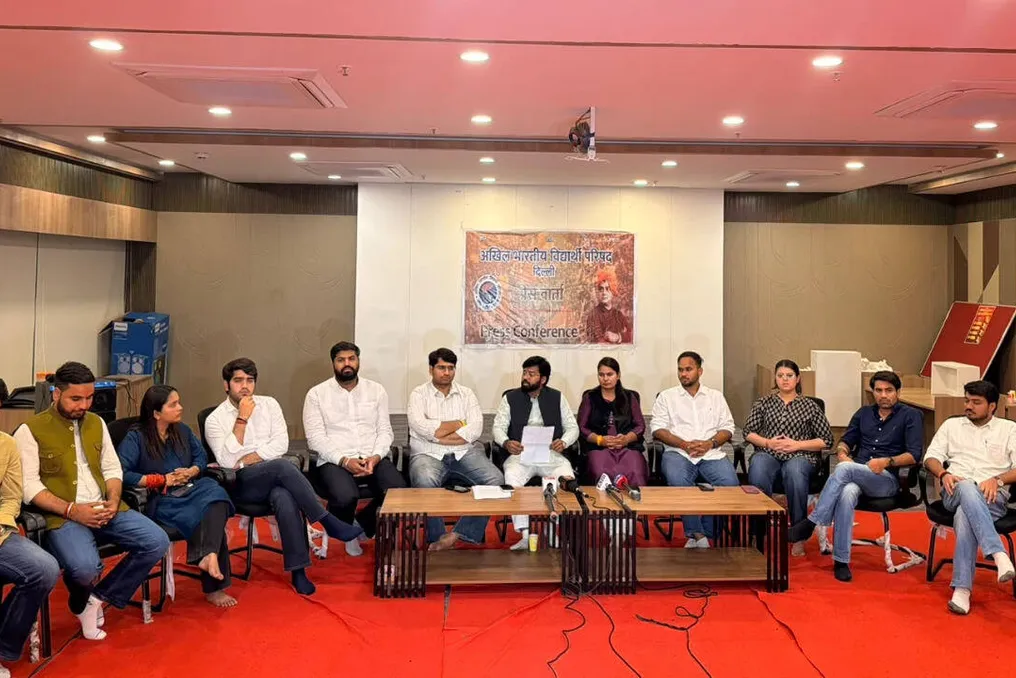
UPSC announces results of the main civil services examination for 2026; interviews to be scheduled soon for qualified candidates

The Union Public Service Commission (UPSC) published the results of the 2026 Civil Services Main Examination on Thursday. Candidates who successfully passed this stage are now qualified to participate in the personal interview, although the dates for the interviews will be announced later.

The interviews will take place at the Commission's office located at Dhaulpur House on Shahjahan Road in New Delhi. Participants must bring original copies of their certificates.

The Commission stated that the main examination was conducted from August 21 to August 30. The civil services examination is conducted annually in three stages: the first is the preliminary examination, the second is the main examination, and the third is the interview.

It is through this procedure that employees are selected for services such as the Indian Administrative Service (IAS), Indian Foreign Service (IFS), Indian Police Service (IPS), and others.

During the interview, candidates must present their authentic documents, including certificates related to age, education, caste or community, as well as certificates for Economically Weaker Sections (EWS) and Persons with Disabilities (PwBD). Additionally, all necessary paperwork, such as the TA form, must be carried.

The Commission emphasized that all documents should be prepared in advance for verification. For candidates claiming reservation or concessions under SC, ST, OBC, EWS, PwBD, and veterans quotas, their certificates must have been issued before February 27, 2026, which coincided with the deadline for applying for the preliminary examination.

Written notifications will not be sent; instead, email invitations will be available on the websites upsc.gov.in and upsconline.nic.in at the designated time. If there are any issues downloading the electronic invitation, candidates should immediately contact the Commission at phone numbers 011-40303444 and 24041001, send an email to csm-upsc@nic.in, or submit a formal application.

According to the Commission's information, requests to change the date or time of the interview are generally not considered. Candidates are advised to regularly check the websites for updates. The final result will be published after the interview, and the evaluation forms will be posted on the website within 15 days and remain accessible for 30 days.

Uzbekistan teachers can apply online for housing subsidies
Read more
uzdaily.uz

Uzbekistan teachers can apply online for housing subsidies

Teachers in Uzbekistan who meet the established criteria now have the opportunity to apply for a state subsidy for purchasing housing. The application process is carried out through the Unified Portal of Interactive Public Services my.gov.uz or the MyGov mobile application.

To submit an application, one must log into the portal or the application, select the service titled 'Subsidy for housing purchase for teachers,' fill in the required information, and send the application. Additionally, documents can be provided through public service centers. This service is provided free of charge.

According to Cabinet of Ministers Resolution No. 69 dated February 19, 2026, the government will cover 25% of the initial down payment on a refinanced mortgage loan using budget funds.

The right to participate in the program is available to teachers under the age of 60 with at least 15 years of work experience and possessing the highest qualification category corresponding to the senior teacher position. The program covers employees of educational institutions of all levels, including schools, academic lyceums, technical colleges, colleges, and higher education institutions.

The subsidy is intended for the purchase of apartments on the primary housing market, and applicants can acquire real estate at their permanent place of residence. However, an exception is made for residents of Tashkent: they can also receive a subsidy for purchasing housing within the Tashkent region.

When evaluating applications, factors such as the teacher's work experience and current place of employment, the highest qualification category, credit history, and information about residential property owned by the applicant and their spouse are taken into account. An important condition is that neither spouse should own more than two residential properties registered in their name, and neither should have previously received a housing subsidy.

The government plans to allocate up to 200 billion soms annually from the state budget to implement this program.

Popular